
To commemorate the 90th anniversary of the Civil War, José Ángel Mañas recreates in Zenda, day by day in this section, what happened in 1936, perhaps the most pivotal year in all of Spain’s recent history.
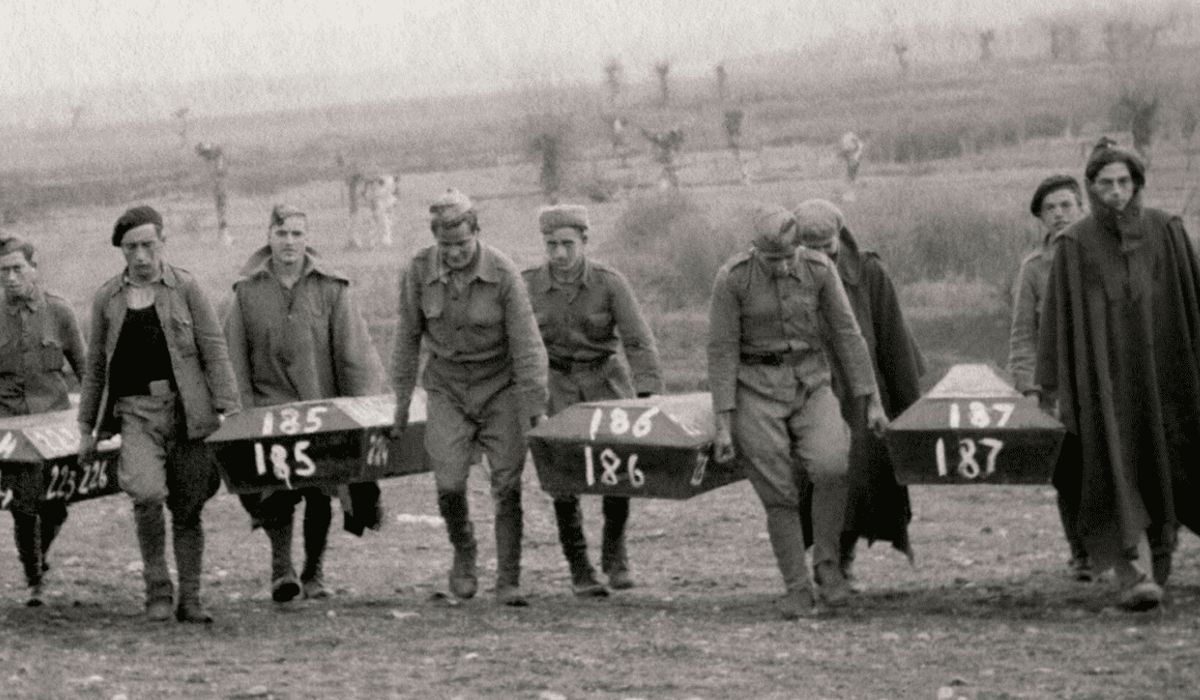
Monday, November 9, 1936: Road to Paracuellos
Why are we stopping?
The rain and the wind seemed to ease. The night remained cold. They had stopped beside another bus. Through the open door, activity could be heard in the darkness: muddy bootsteps, car engines, voices.
The bus had left the Modelo prison half an hour earlier. It was transporting in the early hours several dozens of prisoners who were tied. It rolled off along the road toward Barcelona. The night was clear. No sooner had Madrid been left behind, four Italian bombers circled overhead. They made a dull, threatening noise. The Fiat C-32s could be recognized by their lights. Some prisoners were seeing them for the first time. It was whispered that the planes were theirs. At some point a distant boom of bombs could be heard. Columns of smoke rose. One exploded not far away. That unsettled them.
—Silence, everyone! —exclaimed a guard in the front row, behind the driver. And he waved his rifle.
Silence settled. Along the road a line of trucks and two-deck urban buses followed. The transfer order came from the Ministry of Public Order, the Defense Board. In each vehicle rode sixty prisoners and a dozen militiamen.
The prisoners were not calm. They knew they were being moved to another prison to distance them from the front. They knew that, for several days, militiamen had been arriving at Madrid’s prisons, whom they called “rear-guard sentinels,” sent, it was said, by the Russians. They were political commissars who checked rosters and drafted lists that included professional soldiers, career men, and in general anyone capable of joining the fifth column, the obsession of the Ministry of Public Order. It was rumored that there had been several telephone calls from the Minister of the Interior, who, on his way to Valencia, ordered the definitive evacuation of inmates toward Alcalá de Henares. And Paracuellos del Jarama, to which they were bound, remained on the road.
—Perhaps there is some kind of facility here. Anyway, I don’t like not being allowed to bring personal belongings —muttered a prisoner.
Since anarchist García Oliver took charge of the Justice Ministry’s portfolio, and especially since he returned to Madrid, the change was noticeable. The main concern of the fascist leader was the eight thousand prisoners in the jails who, if Madrid fell, would join the rebel army. “Eight thousand? —he told his secretary—. Well, within a week I want them down to five hundred.” The anecdote spread throughout Madrid. The prison guards were aware and, through them, some inmates heard about it.
—If it’s true that they want to transfer us to Alcalá, we’ll have to thank God when we get there… Everything is very strange… And what they say about Santiago Carrillo…
No one said more. Since he had taken the helm of the Ministry of Public Order, Santiago Carrillo had aimed to eliminate any internal resistance. The evacuation of prisons was part of his strategy. The Communist Party handled the maintenance of public order, and Carrillo’s prominence grew undeniable.
The bus trailing them slowed to a stop. They weren’t far from the rise on which Paracuellos del Jarama stood. The prisoners stirred, like animals being led to the slaughter.
—I said, silence! —shouted the same militiaman.
All the entries for 1936 day by day
Interview with José Ángel Mañas about 1936 day by day