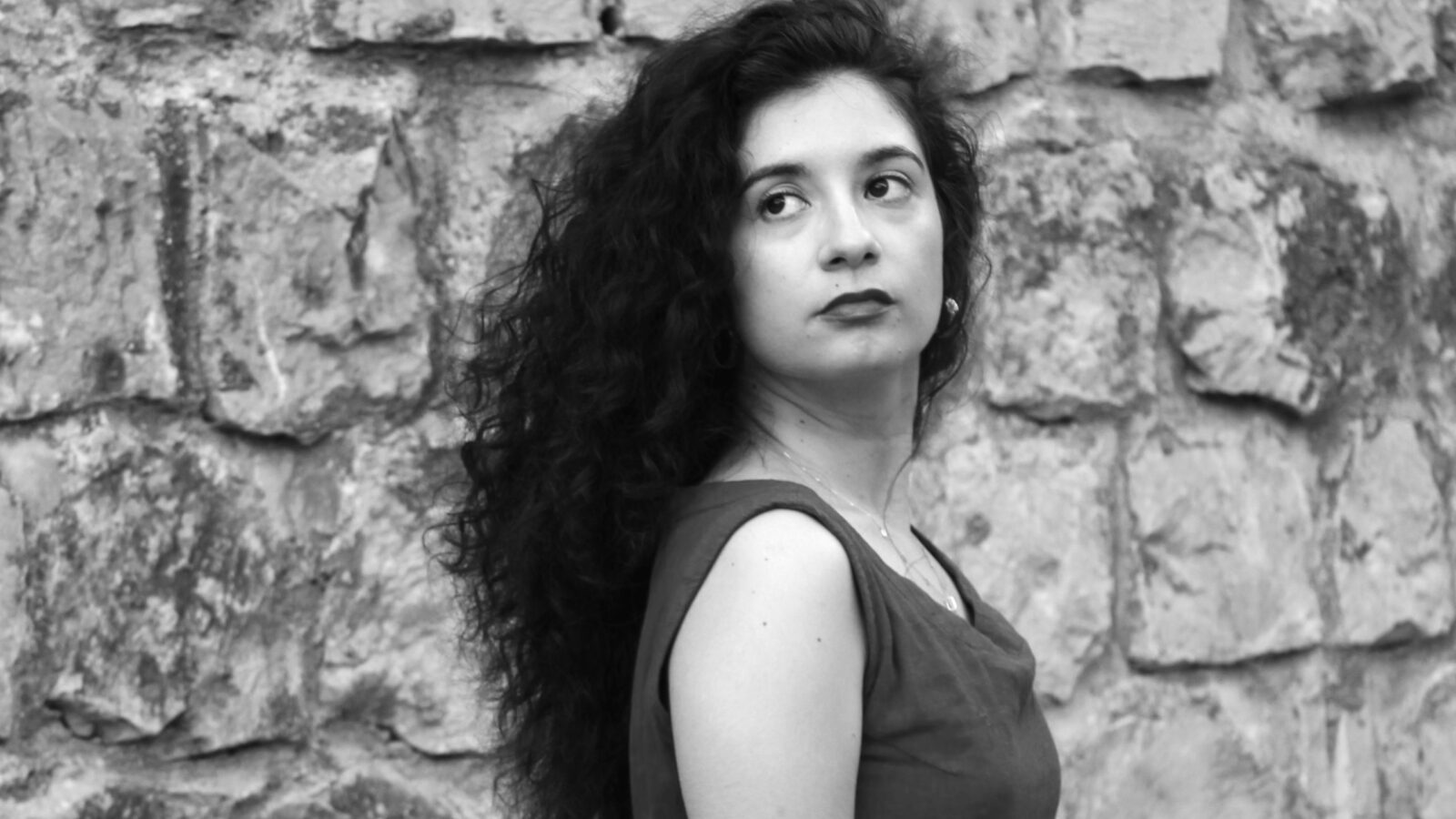
Photo: María Elena Higueruelo.
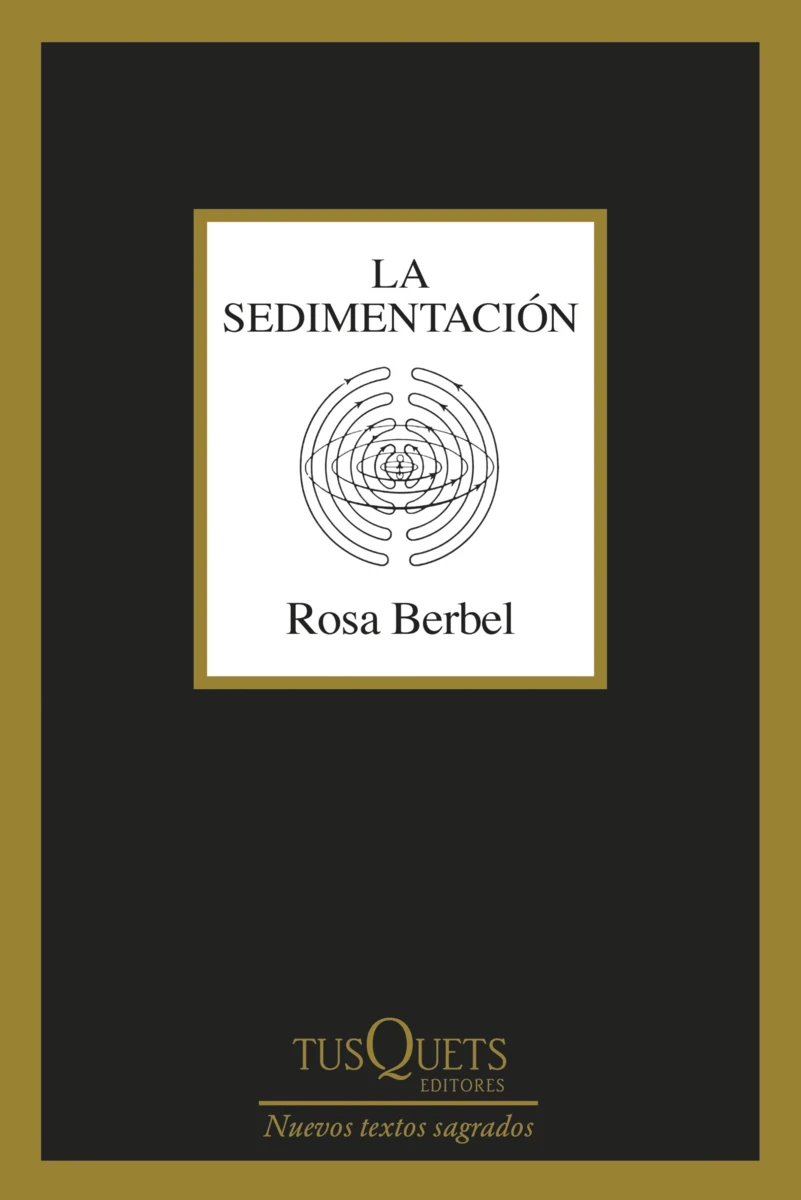
Rosa Berbel is a poet born in Estepa, Seville, in 1997. She holds a degree in Comparative Literatures and a PhD in Literature from the University of Granada, a city where she has lived for several years. Her first book, Las niñas siempre dicen la verdad (Hiperión, 2018), was awarded the XXI Prize for Young Poetry Antonio Carvajal and subsequently earned the Andalucía de la Crítica prize for Best Debut Work and the Ojo Crítico de Poesía 2019 prize from RNE. She is also the author of Los planetas fantasma (Tusquets, 2022). We present a sample of poems from her latest collection, La sedimentación (Tusquets, 2026), a work that understands poetry as a geological task, in which strata accumulate and different times mingle to emerge in unexpected forms. Building on some intuitions she already addressed in Los planetas fantasma, La sedimentación peers into a landscape explored by underground currents: those of affection, loss, and desire, which leave deep marks on matter. A new contribution from one of the foundational voices of contemporary Spanish poetry, in which geological time and intimate time overlap to give rise to a discontinuous, musical and plastic narrative. Like sediments carried by the current, the poems in this book settle in layers and form a series with no beginning or end, traversed by repetitions and insistent images. Among those strata there remain two crucial questions: what forces shape our lives and what remnants remain after erosion.
***
In the glass of the painting
the reflection of the people moving through the room,
from wall to wall.
The painting was about movement.
I found it admirable
that the glass could
render the abstract redundant.
Undermining meaning.
Pensé en el fetichismo de lo que no se dice,
en todo aquello que, a nuestro pesar,
se descompone.
Pensé en las grandes vigas del museo
y en cómo en el metal anidaron
anoche los pájaros.
Pensé en la indisciplina de los materiales.
All paintings are about movement.
Nada logró moverse,
salvo aquel deambular de la materia,
que no cesa.
La luz de lo posible parpadeando.
***
Un país de líneas rectas
asombra a sus amantes.
El amor desafía
y se rinde a lo geométrico.
Va encontrando sus propias, sinuosas
maneras de afirmarse.
Desde el cielo se ve la intransigencia,
lo fácil que sería que el jardín
rebasara su parcela, la torpe
rigidez de los contornos.
Wayward in its form, our Europe contains frustrations
that lack it.
How would you have loved me if you had come from a place
more imperfect?
Would our hands have stained themselves
more?
Would you have stretched the bow
of tenderness until the string broke?
***
A fuerza de insistir en lo imposible,
el amor también crea
sus geometrías.
Como esos agujeros perfectos
en la roca: la erosión piensa nuevas
estructuras,
un patrón que se inventa de camino,
burlando toda lógica.
Aunque nunca del todo.
By insisting on the impossible, love too creates its own geometries.
Like those perfect holes in rock: erosion imagines new structures,
a pattern that is invented along the way, defying all logic.
Though never entirely.
En el baldío de al lado, la hierba
crece siempre más hermosa,
retorciendo fronteras,
confiando en lo salvaje,
in the vacant lot next door, the grass grows ever more beautiful,
twisting boundaries,
trusting in the wild,
hacia donde llegaran a fundirse
la tierra
y sus desórdenes.
toward where the earth and its disorders would merge.
***
¿De dónde proviene eso
que llamamos la fuerza?
Where does that thing we call force come from?
El maestro dibuja un círculo a nuestro alrededor
para que no podamos traspasarlo.
Todo lo que ocurra dentro de él,
en este mundo mínimo,
debe estar dominado por la fuerza.
La espera, la admiración,
el gozo.
Algo que viene de un lugar más oscuro,
más antiguo.
The teacher draws a circle around us so that we cannot cross it.
Everything that happens inside it, in this minimal world,
must be governed by force.
Waiting, admiration,
joy.
Something that comes from a darker, older place.
Al amparo de la fuerza
todo se convierte en un milagro.
Los cuerpos pueden lo que no,
hacen lo que no,
aman lo que no.
Como en un sueño todo
es y no es al mismo tiempo.
Under the shelter of force, everything becomes a miracle.
Bodies can what they cannot,
they do what they cannot,
they love what they cannot.
As in a dream, everything is and is not at the same time.
Cuando acaba la clase, el círculo se expande
más y más hasta engullir la sala,
la ciudad, nuestro mundo.
When the class ends, the circle expands more and more, until it swallows the room, the city, our world.
Nuestro gran mundo,
enteramente fuerza.
Our great world,
entirely force.
Puedo lo que no,
hago lo que no,
amo lo que no.
I can what I cannot,
I do what I cannot,
I love what I cannot.
***
La mancha negra se extiende por el fresco
un defecto de conservación
los ruidos de la historia dejan huella
pero no es defecto la palabra que busco
sino pureza
la pureza de la superposición
de la mano que oportunamente yerra
en su gesto.
The black stain spreads across the fresco,
a conservation defect.
The noises of history leave traces,
but the word I seek is not a defect but purity,
the purity of layering,
of the hand that, opportunely, errs in its gesture.
La ingenuidad del que conquista
es de una pureza sin límites.
The naïveté of the one who conquers is of boundless purity.
Una tras otra las capas se acumulan,
sedimenta lo importante
y en una de esas capas estamos hoy
atravesando ruinas que no acaban jamás
porque quieren decirnos algo:
fenicias, romanas, árabes,
templos de la cristiandad,
Layer after layer, the strata accumulate,
sedimenting what matters,
and today we are traversing in one of those layers ruins that never end
because they want to tell us something:
Phoenician, Roman, Arab,
temples of Christianity,
de las que entramos y salimos
como si se hubieran creado todas al mismo tiempo.
from which we enter and exit as if they had all been created at the same time.
Miramos el pasado desde distintos hemisferios:
yo boca arriba y tú boca abajo.
We look at the past from different hemispheres:
me on my back and you on your belly.
La ingenuidad del que mira
es también de una pureza sin límites.
The naïveté of the one who looks is also of boundless purity.
Ingenuo quien cree que es posible una mirada
diferente, invertida,
emancipada.
Naive is he who believes in a gaze that is different, inverted,
emancipated.
La historia nos coloca en esta grieta
en la que compartimos
una mancha
la mancha negra que desdibuja rostros,
purifica paisajes que también
hoy conquistamos
con nuestras torpes maneras contemporáneas,
History places us in this crack in which we share
a stain
the black stain that blurs faces,
purifies landscapes that we too today conquer
with our clumsy contemporary ways,
vuelve espectral el fresco.
the fresco becomes spectral again.
Lo importante mancha.
What matters stains.
***
Lo sagrado es el punto en que se cruzan
horizontal y vertical.
Una célula comiéndose a otra célula:
lo sagrado.
El microscopio que las mira:
lo sagrado.
Lo sagrado es el error.
Lo sagrado no está donde tiene que estar.
La textura a contrapelo,
el estremecimiento:
lo sagrado.
The sacred is the point where horizontal and vertical cross.
A cell devouring another cell: the sacred.
The microscope that watches them: the sacred.
The sacred is the error.
The sacred is not where it is supposed to be.
The texture in reverse, the shiver: the sacred.
Si lo atrapas, no es sagrado.
Si tiene nombre, no es sagrado.
Si es solo para ti, no es sagrado.
If you trap it, it is not sacred.
If it has a name, it is not sacred.
If it is only for you, it is not sacred.
—————————————
Author: Rosa Berbel. Title: The Sedimentation. Publisher: Tusquets Editores. Purchase: All of her books.