
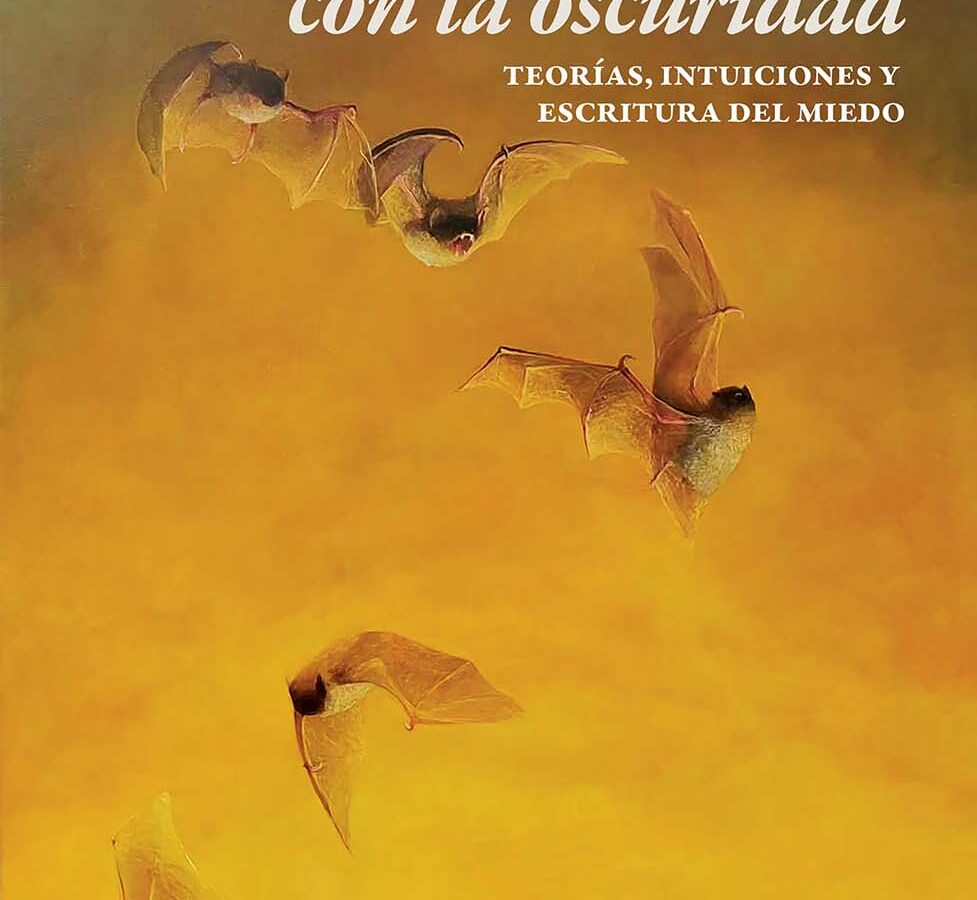
Mariana Enriquez (Buenos Aires, 1973) is an indisputable figure in contemporary Spanish-language literature; the author of several novels, short story collections, an essay, and diverse texts, she has become one of the most prestigious writers of fiction that tackle horror, fantasy, terror, and the marvelous. In this study she offers, on one hand, an intriguing compendium of literary works and films belonging to these genres, in which writers such as Lovecraft, Stephen King, Sabato, Toni Morrison, and filmmakers: Natalie Erika James, Ari Aster, or David and Brandon Cronenberg, among many others. In addition, she reveals details of her novels and stories that show the full awareness she has of her work in relation to the literary tradition in which it is framed and its dialogue with the historical-social context of Latin America and of Argentina in particular.
En el presente ensayo exhibe sus conocimientos del horror bajo una mirada penetrante a partir de la categoría de lo gótico, cuyas huellas rastrea hasta la actualidad. La obra de Walpole, El castillo de Otranto, 1764, es el punto de partida, en el que constata la fuerza de esa veta. Si el castillo medieval fue el símbolo del lugar cerrado amenazador, otros espacios después han manifestado igualmente el terror: lugares siniestros, sin salida: habitaciones, cárceles, hospitales, cementerios, hoteles, laberintos, también las casas encantadas o los barrios desolados por las crisis. «El espacio en el género del terror no puede pensarse como un mero escenario», nos dice. «El espacio actúa. El espacio hace algo. El espacio gótico se define ante todo por su cualidad opresiva». Hay una presencia del mal retenido ahí que lo vuelve insoportable. Enriquez lo ejemplifica también con lugares reconocibles que aún permanecen bajo el peso de la memoria de la ominosa dictadura argentina: edificios incluso bellos arquitectónicamente que albergaban en su interior el espanto del secuestro, la tortura y el asesinato. Incluso el hogar, recinto en principio sagrado y seguro, fue violado impunemente por los militares, quienes entraban en las casas de noche para llevarse a la fuerza a sus ocupantes. «El hogar dejó de ser refugio. Esa alteración perceptiva se inscribió en los cuerpos de una generación entera». Se puede reconstruir así una «cartografía afectiva del miedo». No es sólo el caso de su país: «El gótico latinoamericano tiene esa base [de lugares malditos], un territorio marcado por la violencia política que produce sus propias figuras del horror».
The gaze of this author on cities such as Detroit, abandoned by the industrial crisis, or on entire neighborhoods in Buenos Aires where companies have closed, workshops fell silent, streets ceased to be traversed, and houses have been overgrown by weeds, reveals her ghostly condition: «they are the ruins of consumption and socialization that late capitalism produced and then dismantled before its users could even understand what they were losing». Her interpretation of the large shopping centers is eloquent: «An abandoned shopping mall represents a more specific message: a promise that was made and not kept, a way of life that was sold and then withdrawn. The horror of contemporary ruin is the horror of betrayal».
What links these spaces to the varied forms of fear is the presence in them of a time that has not finished passing: the time of trauma without closure. «The trauma is this: something to which one keeps returning, a demand for justice that cannot be resolved».
Ghosts, vampires, the undead are other creatures that live in an anomalous temporality. All of them inhabit a temporal loop from which they cannot escape. The past does not end up passing, nor does the future arrive to overcome the present. The horror tales featuring them describe a time in which certain wounds did not close as they should and are doomed to repeat their agony. Also here, Mariana Enriquez translates the traditional fear tale into collective experience. During the dictatorship, the term «detenido-desaparecido» was used for a situation in which the man or woman who had fallen into the hands of the police or army remained in the category of indefinition: neither was it declared where they were, nor that they had died. This radical suspension of identity, this theft of the body, shocked their families and friends who, in this way, could never begin their mourning. It thus constituted a mode of action by the State, whose «necropolitics engenders liminal beings: dead who do not fully die and living who do not fully live».
This essay also addresses, moreover, other recurring elements of horror fictions: the body and its malformations, amputations, metamorphoses; beliefs in life after death and the possibility of communicating with the deceased; the benevolent power of certain individuals venerated by popular belief; disease as a threat (AIDS); the obsession with halting the process that leads to death («there is not yet a cultural framework that allows relating to aging in any way other than denial», she tells us)…
Horror stories (referencing a threatening presence) or horror (where only a glimpse is seen) possess, perhaps contrary to appearances, the power to illuminate the state of our culture. Thus, after analyzing several examples from literature and cinema, she concludes that «each version of the vampire is, in the end, a commentary on what its era does with time». Enriquez shows us in this splendid essay the inexhaustible power of the genre, which allows us «to demonstrate, for example, that link between horror as a narrative form and the processes of political, social and economic violence that organize the historical experience of the Southern Cone». Far from the degrading labeling of the horror story or the horror film as mere entertainment, it asserts its own rightful place that, while not ceasing to be fiction, makes a particular contribution to what has not yet been or cannot be resolved: «Terror works with materials that realism tends to neutralize, incarnates figures that documentary language cannot produce, and keeps open a wound that a neatly ordered narrative tends to close too soon». The genre does not permit resting; it challenges anyone who approaches its artistic forms, «it produces a real modification in the state of the reader, it activates fears that were latent, it makes visible what culture preferred to keep invisible».
At the end of her text, she responds to any judgment that might object to the genre of terror as mere fatality, irredeemable repetition. Unable to deliver a happy ending, she tells us, Latin American Gothic at least has the virtue of naming what is real and inscribing it in history. An excellent work by Mariana Enriquez, full of suggestions, book and film titles to explore, and opportunities for enjoyment and reflection.
—————————————
Author: Mariana Enriquez. Title: Conversations with Darkness: Theories, Intuitions, and Writing of Fear. Publisher: Páginas de Espuma. Sales: All Your Books.