
To commemorate the 90th anniversary of the Civil War, José Ángel Mañas recreates in Zenda, day by day in this section, what happened in 1936, perhaps the most pivotal year in all recent Spanish history.
Sunday, November 15, 1936: The Francoist Offensive
There they are!
Robert Capa
peered through the viewfinder of his Leica. It was early afternoon. The Moors and the legionnaires of the vanguard of the rebel army had just blown apart the walls of the Casa de Campo. To the north of the Puente de los Franceses, opposite the gardens of the Moncloa Palace. The explosion was seen by the brigadists and militiamen who waited in the Ciudad Universitaria. Through the breaches passed the first two Italian tanks in revolt, which soon descended to the banks of the Manzanares and fired shells at La Modelo and the rest of the government positions.
—They’re going to cross the Manzanares!
Soon it was also the regulares of the third tabor from Alhucemas who crossed the river, the water to their knees, rifles and hand grenades held high. They were followed by Moroccans from the Tetuán tabor. It was four thirty, and the hardest phase of the Battle of Madrid began.
The men of Varela wanted to end the stubborn resistance. In the morning they repelled an offensive ordered by Vicente Rojo to retake Cerro Garabitas, on the other side of the railway line. That ended with a government rout, including the Barcelona anarchists.
The first Moroccans that Durruti had to contain —and before whom his men retreated— now climbed the slope toward the School of Architecture. Robert Capa looked through the lens. After his first encounter with the Army of Africa, the anarchists fled toward the Rosales promenade. The Moroccans climbed up the West Park. They attacked the House of Velázquez, next to Architecture. It was defended by Hungarians from the International Brigades. All were doomed.
—Ramper is right. The regulars are better —observed a militiaman.
The regulars’ preparation was superior. The brigadists’ training was better than that of the militiamen, though not by much. Capa had spent the week accompanying General Lukács, the name by which Hungarian writer Máté Zalka was known, at the head of the XII International Brigade. He later joined the German Thälmann Battalion. He had photographed the front, taken some pictures, though not his best. The best ones were those from the rear.
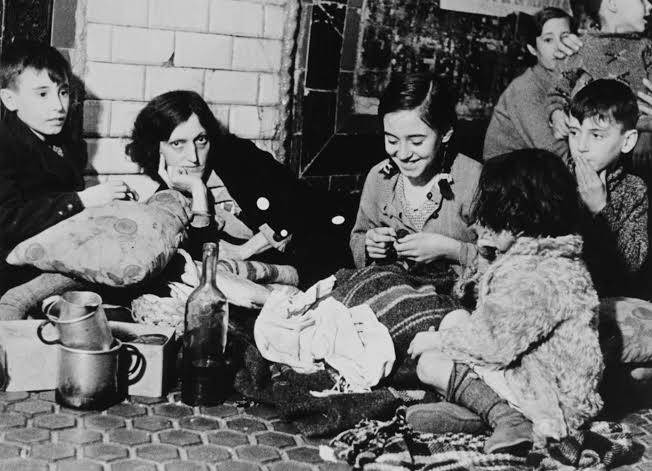
In Vallecas, Robert captured the devastating effect of the German air force. Through his Leica he immortalized hundreds of Madrileños seeking shelter in the Metro. There were no more smiles like in the war’s early days. Everything was rubble. Entire families dragged mattresses onto the platforms. Mothers watched over children playing with cups and bottles. A woman, leaning against the wall among cushions, left a lasting impression. Capa found it hard to forget her piercing gaze, dark eyes, and recalled Nietzsche’s line: if you gaze into the abyss, the abyss gazes back at you.
Right now, the abyss of war was closing in on him in the form of legionnaires and regulars crossing the Manzanares.
All the day-by-day entries of 1936 Day by Day
Interview with José Ángel Mañas about 1936 Day by Day