
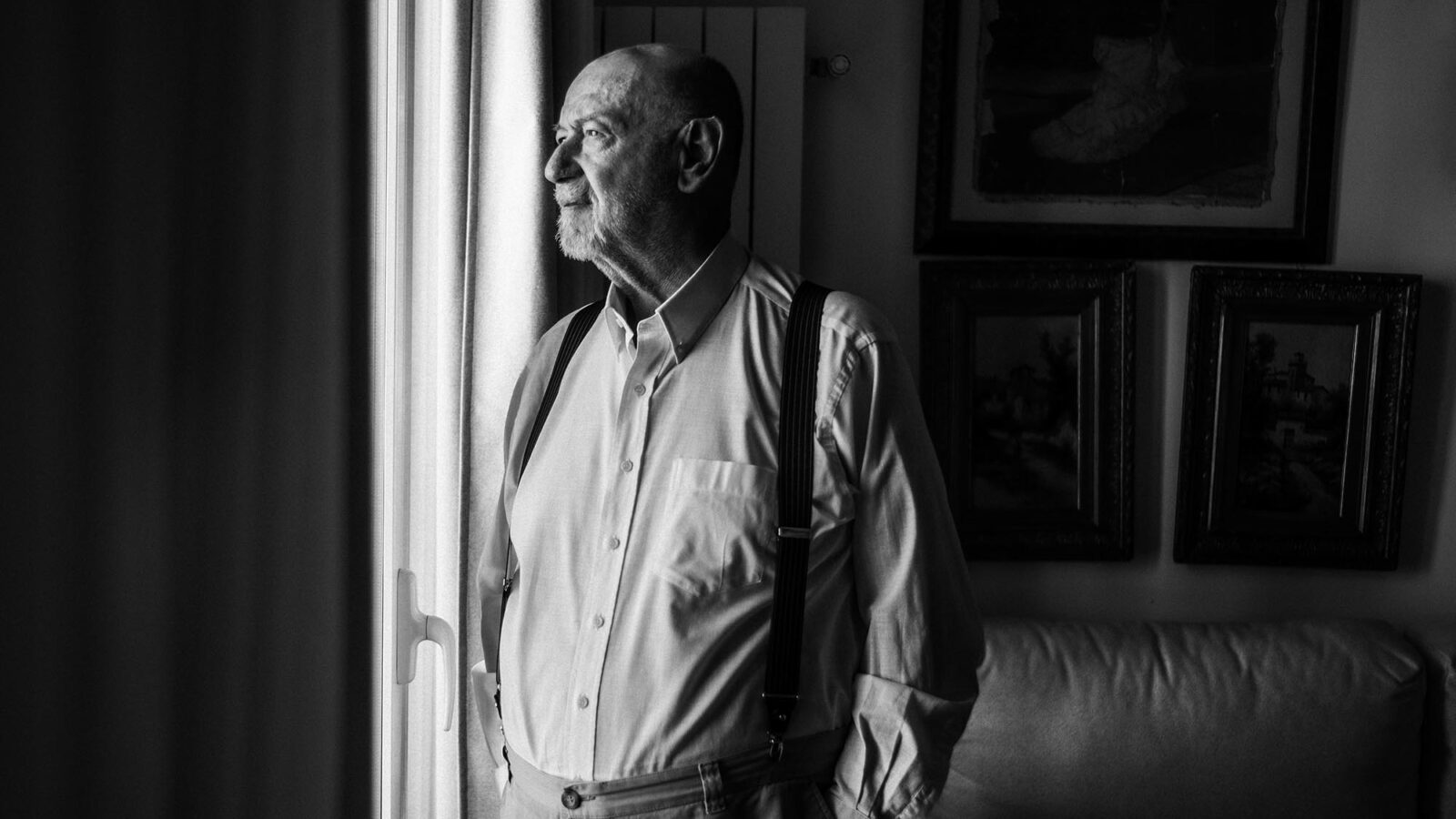
Juan Eslava Galán returns with The Cold War Told for Skeptics (Planeta 2026), a journey through a world born from the ashes of World War II and that, among spies, atomic bombs, dictators and political absurdities, ended up resembling too closely our own. We discussed old enemies, new powers, and that incurable human habit of tripping over the same stone.
*****
—Juan, after reading the latest chapters of your book, I’m left with a rather unsettling suspicion: are we living a second Cold War?
—Undoubtedly. But with a fundamental difference. That war was ideological, communism versus capitalism. Now that confrontation no longer exists. Everyone is capitalist, even the Chinese. The question is to produce more, sell more, and snatch the market from the neighbor. That is the war ahead of us.
—Before there were two players. Now we have three great powers at the board: the United States, Russia, and China. Who has the better cards?
—China, without any doubt. We think about tomorrow, and the Chinese think about tomorrow’s tomorrow. They’re half a step ahead of us. In addition, they possess an extraordinary virtue: secrecy. If they send something to the Moon and it works, they announce it. If it fails, they keep quiet. Here we hold a press conference even to announce a failure.
—And Europe, which during the Cold War was the center of the board, where does it stand now?
—Europe is dissolving into its own history. It has no future if it continues like this. We are heirs of the French Revolution, of human rights, of a civilization that took centuries to build. And we are losing the ability to defend it. It’s a decline that reminds me a lot of the Roman Empire, except that empire lasted three hundred years, and ours could be completed in fifty.

—What a hopeful panorama. And we’ve not even reached Trump, Putin, Iran, or Taiwan yet. What is the most dangerous place on the planet today?
—Iran, because of the possibility that it could manufacture an atomic bomb. Israel has possessed nuclear arms for a long time. The problem would be if Iran also obtains them. That scenario could become extraordinarily dangerous.
—And Putin? You present him as a new czar, albeit with weaknesses far less imperial.
—Putin wants to recover the grandeur of the Soviet Union. He has something in common with Napoleon: both are short. And beware of short politicians! But Russia has a very serious problem: it depends heavily on its oil and gas exports. It has not developed a technological industry comparable to China’s.
—You recount a fascinating story of industrial espionage, microchips, and a Soviet oil pipeline that ends up exploding.
—It’s a terrific story. The Soviets stole Western technology because they couldn’t produce it themselves. A KGB agent, known as Farewell, provided thousands of documents to the French in the early Eighties. The Americans thereby learned what the Russians were doing and, as was later claimed, sent them manipulated technology. That would have caused a colossal explosion in a Siberian gas pipeline. Imagine the warfare: instead of sending tanks, you dispatch a software program. Of course, the KGB uncovered the treachery and the agent was executed.
—Modern warfare seems to be less about soldiers and more about engineers. Is Ukraine the new Korea?
—In a sense, yes. The great powers test their strength in peripheral wars. It happened in Korea, in Vietnam, in Afghanistan, and it is happening now in Ukraine. They test armaments, strategies, drones, new technologies. And the destruction is borne by a third party. That is one of the great tragedies of these wars.

—Let us return to the original Cold War. Was a nuclear catastrophe averted by diplomacy, intelligence, or merely luck?
—Fear saved us. There was a doctrine called mutual assured destruction. If the Soviets launched a nuclear missile, the Americans could respond before it arrived. And vice versa. The outcome was that both disappeared. So no one dared to start. Fear was the great peacemaker.
—A rather unedifying conclusion for two civilizations that prided themselves on representing the future of humanity.
—But human history is like that. We are far less reasonable than we like to believe.
—There is a chapter especially interesting for Spaniards: the one about Franco. How did he go from being internationally ostracized, an old ally of Hitler, to becoming the guardian of the West?
—Pure geopolitical interest. After the war, nobody wanted anything to do with Franco. Spain was isolated. But the confrontation with the Soviet Union arrived, and Eisenhower needed strategic military bases. And Spain, with the Strait of Gibraltar, was a superb position. So the Americans decided to understand Franco.
—That is to say, democratic principles could wait if there was a good air base in the bargain.
—Exactly. Franco ceded portions of sovereignty in exchange for international recognition. The Americans did a great business. And Franco came out of his isolation. International politics has those things: principles last until they stop being convenient.
—And we arrive at Carrero Blanco. You revisit the Spanish nuclear project and the admiral’s drive to obtain the bomb. How close did Spain come to having it?
—Very close, because there was know-how, materials and a project underway. The Palomares episode proved important for Spanish technicians. And when Kissinger learned that Spain was pursuing that path, he came to try to persuade Carrero to abandon the project.
—And the day after the meeting, ETA assassinated Carrero Blanco. A coincidence that has fed all sorts of theories.
—Indeed. There are many suspicions about that. I think other services may have intervened, but that is not proven. What is certain is that ETA carried out the attack and that Carrero’s death changed many things.
—Let’s return to the original Cold War. Was a nuclear catastrophe averted by diplomacy, intelligence, or simply luck?
—Fear saved us. There was a doctrine called mutually assured destruction. If the Soviets launched a nuclear missile, the Americans could respond before it arrived. And vice versa. The result was that both disappeared. So no one dared to start. Fear was the great peacemaker.
—A rather discouraging conclusion for two civilizations that prided themselves on representing the future of humanity.
—But human history is like that. We are far less rational than we like to believe.
—There is a chapter especially interesting for Spaniards: the one about Franco. How did he manage to go from being an international outcast, a former ally of Hitler, to becoming a guardian of the West?
—Pure geopolitical interest. After the war, no one wanted anything to do with Franco. Spain was isolated. But the confrontation with the Soviet Union arrived, and Eisenhower needed strategic bases. And Spain, with the Strait of Gibraltar, was a superb position. So the Americans decided to understand Franco.
—In other words, democratic principles could wait if there was a good air base involved.
—Exactly. Franco ceded parcels of sovereignty in exchange for international recognition. The Americans did a great business. And Franco came out of his isolation. International politics has those things: principles last until they stop being convenient.
—And we come to Carrero Blanco. You revisit the Spanish nuclear project and the admiral’s determination to obtain the bomb. How close did Spain come to having it?
—Quite close, because there was know‑how, materials and a project underway. The Palomares affair turned out to be important for Spanish technicians. And when Kissinger learned that Spain was pursuing that direction, he came to try to persuade Carrero to drop the project.
—And the day after the meeting, ETA killed Carrero Blanco. A coincidence that has fed all kinds of theories.
—Indeed. There are many suspicions about it. I think other services may have intervened, but that is not proven. What is certain is that ETA carried out the attack and that Carrero’s death changed many things.
—Let’s go back to the original Cold War. Was a nuclear catastrophe saved by diplomacy, intelligence, or simply luck?
—Fear saved us. There was a doctrine called mutual assured destruction. If the Soviets launched a nuclear missile, the Americans could respond before it arrived. And vice versa. The result was that both disappeared. So no one dared to start. Fear was the great peacemaker.
—A rather disquieting conclusion for two civilizations that prided themselves on representing the future of humanity.
—But human history is like that. We are far less reasonable than we like to believe.
—There is a chapter especially interesting for Spaniards: the Franco chapter. How did he manage to go from the international pariah, an old friend of Hitler, to becoming the guardian of the West?
—By pure geopolitical interest. After the war, no one wanted to hear about Franco. Spain was isolated. But the confrontation with the Soviet Union arrived, and Eisenhower needed strategic bases. Spain, with the Strait of Gibraltar, was a magnificent position. So the Americans decided to strike a deal with Franco.
—That is to say, democratic principles could wait if there was a good military base involved.
—Exactly. Franco ceded parcels of sovereignty in exchange for international recognition. The Americans did a great business. And Franco left his isolation behind. International politics has a way of bending principles when it’s convenient.
—And we come to Carrero Blanco. You revisit the Spanish nuclear project and the admiral’s determination to obtain the bomb. How close did Spain come to possessing it?
—Quite close, because there was know‑how, materials and a project in motion. The Palomares affair proved important for Spanish technicians. And when Kissinger learned that Spain was moving in that direction, he came to try to persuade Carrero to abandon the project.
—And the day after the meeting, ETA assassinated Carrero Blanco. A coincidence that has fueled all sorts of theories.
—Indeed. There are many suspicions about that. I think other services may have intervened, but that is not proven. The fact is that ETA carried out the attack and Carrero’s death changed many things.
—Let’s leave the bombs aside and go to the cinema. You argue that Hollywood won some battles the Pentagon could never win.
—Of course! America lost Vietnam, but then along came Rambo and he won the war on his own. And Rocky defeated the Soviets in the boxing ring. These are the great cinematic victories of the United States. Propaganda is also a formidable weapon.
—One of the things I like most about your books is those barber‑shop conversations you use to explain major historical events. Where do those characters come from?
—A university that, I suspect, would not have passed today’s quality controls.
—But you learned a lot! And for free. Today they would probably talk about Amazon and what it costs to fill a cart.
—You’ve written around fourteen books trying to tell history for skeptics. Do your readers never stop learning, or do you not lose hope either?
—It’s a game between them and me. I include myself among the skeptics as well. History shows that man is the only animal who trips over the same stone again and again.
—And yet we know less and less about our own history. What future does a society have that has renounced understanding its past?
—Very little. If we knew our history well, we wouldn’t be repeating so many errors. But we prefer to forget it and start anew, as if everything were new.
—You end the book by recalling that times are changing. After traveling with you through half a century of nuclear threats, espionage and wars, I wonder if we have really learned anything.
—We have learned to manufacture more sophisticated weapons. That much is true. As for everything else, I have my doubts.
—Then we will have to keep reading history. If only to recognize the stone before we stumble again.
—And to know who put it there!