
The Prado Museum pays homage to the Austrian poet and novelist Rainer Maria Rilke, who fell in love with the Spanish paintings by El Greco, Velázquez and Goya, and transformed them into poetry.
The exhibition Rainer Maria Rilke and Spanish Art, which can be visited until March 7, presents the profound imprint that the art, landscape, and culture of Spain left on the works and travels of the great European poet born in Prague in 1875.
To mark the centenary of his death, in 1926 in Montreux, the Prado has gathered many of the paintings that affected the poet and a magnificent collection of manuscripts, letters, photographs, and travel notebooks that attest to the profound impact they had on his work. The works are not only by El Greco, Velázquez, and Goya, but also by artists such as Pablo Picasso, María Blanchard, or Ignacio Zuloaga, with whom Rilke corresponded over the years.
The exhibition comprises “all works that we know for certain Rilke saw, that moved and inspired him”, as the museum director, Miguel Falomir, stated at the show’s opening. He noted that it cost a little over 777,000 euros. Among the works loaned by institutions, collections, and museums are a View of Toledo by El Greco, lent by the Metropolitan Museum of Art in New York, and three magnificent paintings, also by El Greco, loaned by the Musée Bonnat-Helleu in Bayonne, which “are making their first departure from the museum.”
Especially moving is a large painting of the Immaculate Conception, also known as the Immaculate Oballe, which guards the parish of San Nicolás de Bari, in Toledo, to which Rilke sang “Ay óle, as I raise you up I think, a column of blue incense: your smoke stains,” as can be read in manuscripts exhibited beside the painting.
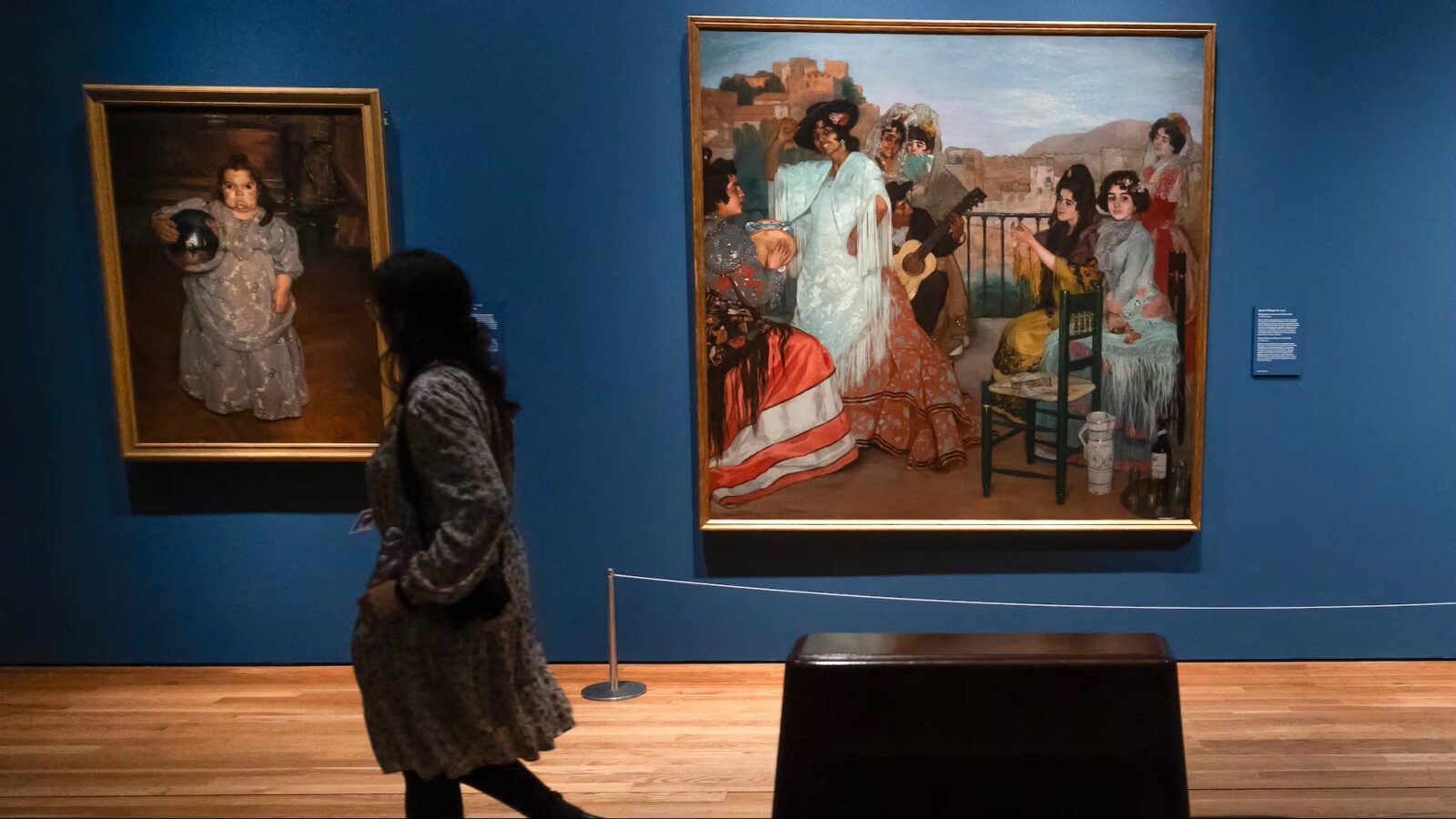
Rilke’s first contact with Spanish art was the painting La enana doña Mercedes, by Zuloaga, of whom he was an unconditional admirer. He followed with exhibitions in Vienna, Munich, Rome, Paris and Berlin, which cemented his interest and enthusiasm for Spain.
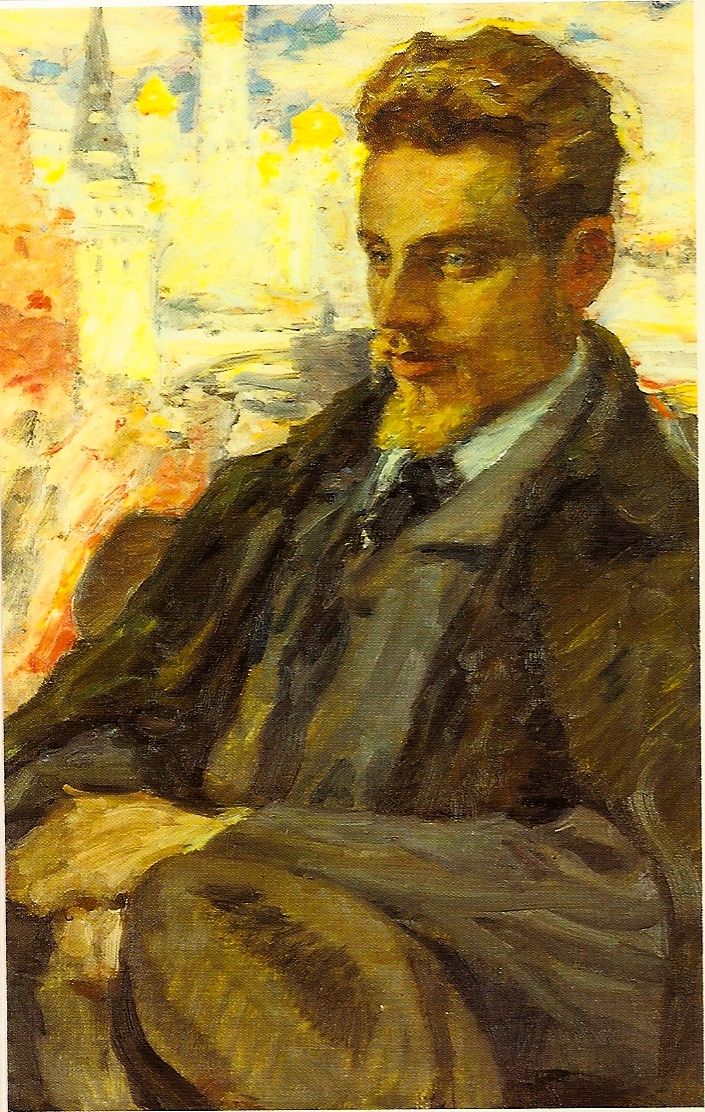
Portrait of Rainer Maria Rilke, by Leonid Pasternak
Thus, Rilke visited with “special interest” the exhibition dedicated to El Greco at the Salon d’Automne in Paris in 1908, where he encountered the View of Toledo, which has been loaned by the Metropolitan, and which proved something of a revelation for him; also the “grecos” from the collection of Marczell von Nemes exhibited at the Alte Pinakothek in Munich in 1911, together with the Spoliation there kept, and the Laocoön, loaned by the National Gallery of Art, in Washington.
And then he traveled to Spain; a four-month journey from November 1912 to February 1913, which took him from Madrid to Toledo, Córdoba and Ronda, with long stays in Toledo and Ronda that left a deep mark on his literary production.
The show also presents very early writings of the poet, such as his sonnet “Velázquez” and the psychodrama “Murillo”; the letters he exchanged with Zuloaga and the poems that his paintings inspired, and old photographs of the rooms in which the works of the great masters were exhibited, both in exhibitions across Europe and in his journey through Spain.
Never before had an exhibition focused on Rilke and his fascination with Spain been organized, as “no other poet has ever existed so intentionally turned toward the painting, sculpture, and architecture of Spain” says the director of the Prado’s Centre for Studies, Javier Arnaldo, one of the show’s curators. The other, the recently retired head of the 19th-Century Painting Collection, Javier Barón, closes with the inauguration of this exhibition a “happy circle” of his 24-year career at the Prado.