
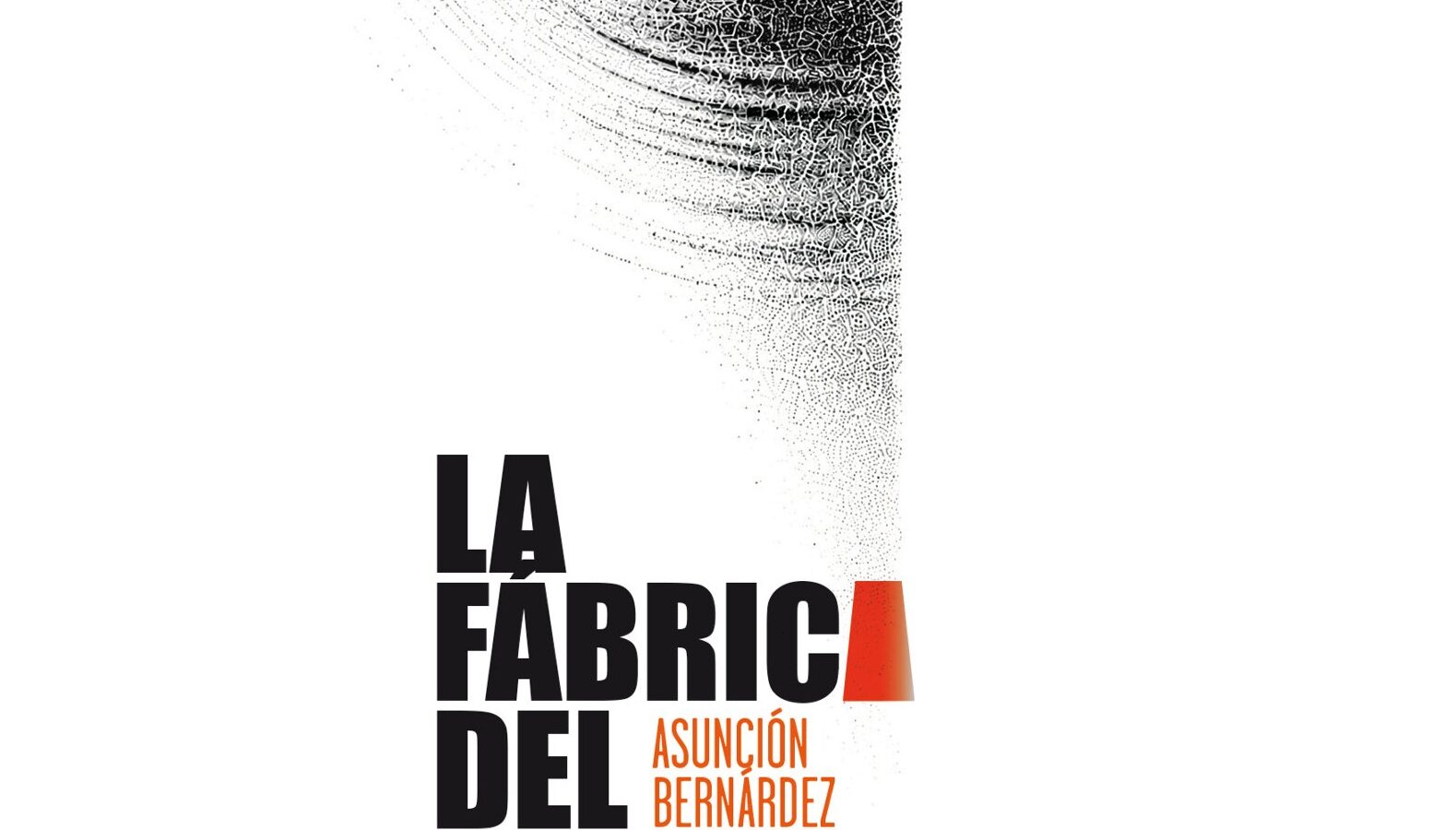
Facing the spread of communities organized around rejection and dehumanization, Bernárdez proposes reclaiming vulnerability as the starting point to rethink the common good. The ethics of care, media responsibility, and the rebuilding of ties appear here as necessary alternatives to a culture ruled by fear and polarization. With clear language and a solid theoretical foundation, The Factory of Hate invites readers to understand the mechanisms that sustain rejection of the other… and to imagine forms of resistance that would make possible a more just and habitable coexistence.
Asunción Bernárdez points to Zenda some key insights into the writing of her book The Factory of Hate (Plaza y Valdés).
***
This book was born out of an unease I struggled to name for a long time, and that, I sensed, many people shared: perplexity in the face of public discourses that a few years ago would have sparked second-hand embarrassment. People who seek to represent us feed on personal insults, leaders who trivialize violence and practice anti-politics and even defend hatred of those who are different as if it were an established right. Yet, what truly pushed me to write wasn’t what happened in parliaments, on social media, or on talk shows, but what began to happen around me.
I noticed it in lectures and even in conversations with people close to me. Suddenly, I heard individuals ardently defending the need to dismantle Social Security, privatize public health care, close our borders to immigration, or eliminate equality policies. I also heard, without the slightest blush, supposedly educated people say that the rights won were a luxury we could no longer afford in the Western world, and they spoke of it with the calmness of discussing the weather. The climate of opinion had shifted. Often, behind those remarks was a video seen on a phone, a news item pulled from a platform or from some newspaper that does not meet the most basic standards of professional ethics.
I have spent many years studying the media, and I have witnessed up close how the rise of social networks disrupted the relationship between them and their audiences. In my latest project, together with a group of teachers, I have delved into the forums and channels of the manosphere to understand how online misogyny operates. It wasn’t always easy to read those things. But there I began to understand something that now seems evident: hatred is very old, and the networks have given it a new architecture. It matters what is said, of course. It also matters how it is told and who profits from telling it that way, in a society where attention has become currency.
I wrote this book to understand. For a period, perplexity left me paralyzed until I formulated some questions. How is it possible that in the wealthiest societies in history we fear losing everything? Why does that fear, which could push us toward cooperation, end up becoming hatred toward certain groups or entire peoples? And above all, the one that opened the book: what has happened for environments to talk about human rights as a burden, about equality as a privilege not to be shared, and about solidarity as a weakness to overcome?
Behind all these questions there was a word that at first I did not know would become so important: vulnerability. It comes from the Latin vulnus, “wound,” and denotes something we share with any living being: exposure to harm. Our culture, however, experiences it as a defect to eradicate, and it teaches us to pretend a strength that no one possesses. The 9/11 attacks, the 2008 crisis, the pandemic, and the climate emergency have shattered that illusion of invulnerability in the global north, and today no one is safe from multiple crises, even though blame isn’t distributed equally.
As I wrote, I realized that this vulnerability can be narrated in two ways. It can be the starting point for recognizing and caring for one another, or the fuel of resentment. The far-right has chosen the second path, and it does so very well: it presents privilege as a wound and equality as a loss. Its spokespeople complain on behalf of the discriminated man or the displaced “decent citizen.” That resentment of someone who feels stripped of what they believe is theirs did not originate with anyone in this century.
The Readings of a Lifetime
To try to answer these questions I needed the thought of others, because no one thinks in isolation. I have been accompanied, above all, by ecofeminist works that place care at the center of our shared problems, with authors such as Alicia Puleo or Yayo Herrero. Also the ethics of care, which has been fundamental to my own way of looking, guided by Carol Gilligan, Joan Tronto, or Judith Butler. And I must confess my fondness for those who hold a hopeful view of what we are as human beings and believe our future lies in cooperation, rather than the logic of competition, war, and unbridled capitalism. Rebecca Solnit, David Harvey, or Ernst Bloch are just a few names that have shaped my own thinking.
I have also worked with many reports and data. Taking them into account is, for me, a political strategy against a far-right that doubts any figure that displeases it, that fuels anti-science and that, above all, has made anti-journalism one of its banners.
The text gradually took shape, though I did not start from nowhere. I began by asking myself what hatred is. I was less interested in it as a psychological or purely emotional issue than as a narrative: how has our culture represented it and how have the powers that be used it. I soon began thinking of it as a technology of affect and started looking for its pieces. Hatred penetrates the body. It is tied to disgust, visceral rejection, and it works by passion rather than reason. If hatred is manufactured, I thought, we can also attempt to trace all those and the components of the factory. And so the book can be read today as a metaphor for a guided tour through its halls.
In the first hall there is the raw material, which is fear. In the second, the machines: media that no longer merely inform, but produce affective narratives, and algorithms that do not need to be programmed to hate, because they are enough to optimize attention. In the third, the pieces come off the line, which are the words: humor that mocks downward, dehumanization, the theft of terms like freedom, family or victim, and that “I have nothing against, but…” that wounds without leaving a legal trace.
Then comes the template, which is all of us. In the old model there was a sender, a message and a receiver; today, every time we forward an indignant video, even to criticize it, we are lending a hand to the production line. Then come the owners, because working in the factory does not mean it is ours: there is funding, think tanks, pseudo-media and an ideology, which has been given the name “Dark Enlightenment” that aspires to leave behind equality and democracy. At the end is the warehouse, with its catalog of hatreds, and, like in any factory, an emergency exit.
The greatest difficulty wasn’t theoretical but practical: organizing current data and verifying them. Writing about misinformation in the midst of misinformation itself has a paradoxical edge. A new case appeared every week, a new figure, a new hoax, and one had to trace each one to its source, because with so much information and so many distortions it’s very easy to err. A book that exposes how false narratives are manufactured could not afford to repeat one. That compelled me to go back over dates, statements and figures again and again, and to remove quotation marks from phrases that circulated widely but could not be documented. It was slow, and it was also a lesson on how fragile truth is today.
There was one idea that cost me especially to develop: that networks don’t affect only the young. It’s what everyone expects to hear, and it’s convenient because it places the problem outside of us. But what is happening is much more general and has to do with the platformization of life: work, leisure, information, politics and even affections now pass through private infrastructures designed to capture our attention. We are all implicated in this, including those who are outraged by what adolescents see while we forward to the family group the video that confirms our prejudices.
That is why it bugs me so much when youth are blamed. They are the first to bear the impact, but they did not build the factory. And thus there is a dilemma for which I do not have a wholly satisfying answer: regulation. I believe it is essential that platforms be held accountable for their design and that we know who funds the media that informs us. But any mechanism of control can change hands, and what was meant to curb hatred can end up serving to silence those who expose it. How can democracy be defended without creating a power that others could wield against it? I have not solved that question. I have tried, at least, not to make it disappear.
What does worry me without nuance is the radicalization of the world and the assault on democracies, which does not always arrive with tanks: often it consists of gradually eroding the material conditions that sustain them and governing from fear. Democracy is young and fragile, and there is no guarantee it will endure.
Throughout this work I have come to discover that all hatreds resemble one another: misogyny, xenophobia, ableism, LGTBQ-phobia or hatred of environmentalism use the same machinery and are activated when a group that was at the bottom seeks rights. I have also learned that contemporary hatred has little to do with chaos: it classifies, hierarchizes, and manages. And the factory runs because it finds material, institutional, and communicative conditions that make it profitable, more than because society has lost its values.
But the idea I began with was reinforced: only by turning care into active policy will we emerge from the present vulnerability. I am talking about infrastructures, far from private consolation or domestic virtue: health care, schooling, housing, transport, time. Where care is the norm, hatred loses its effectiveness. It remains there, but stops being the only language available to name discontent.
The book ends outside the factory, with those who have long lived in the open air. With pacifist activism, which continues to take to the streets whenever war again seems to be a solution to our problems. With journalism that understands its craft as a tool for justice and peace, which verifies and gives voice to those who do not have it. And with the politics of people capable of imagining a possible future when everything invites us to think that the only option is to defend ourselves. Ernst Bloch called that the principle of hope. I have learned it by looking around me, just as I learned to see hatred. The emergency exit exists. We must seek it in common and dare to open it.
—————————————
Autora: Asunción Bernárdez. Título: The Factory of Hate: Discourses of Hate and Global Vulnerability. Editorial: Crítica. Venta: Todos tus libros.