
To commemorate the 90th anniversary of the Civil War, José Ángel Mañas recreates in Zenda, day by day in this section, what happened in 1936, perhaps the most momentous year in all of Spain’s recent history.
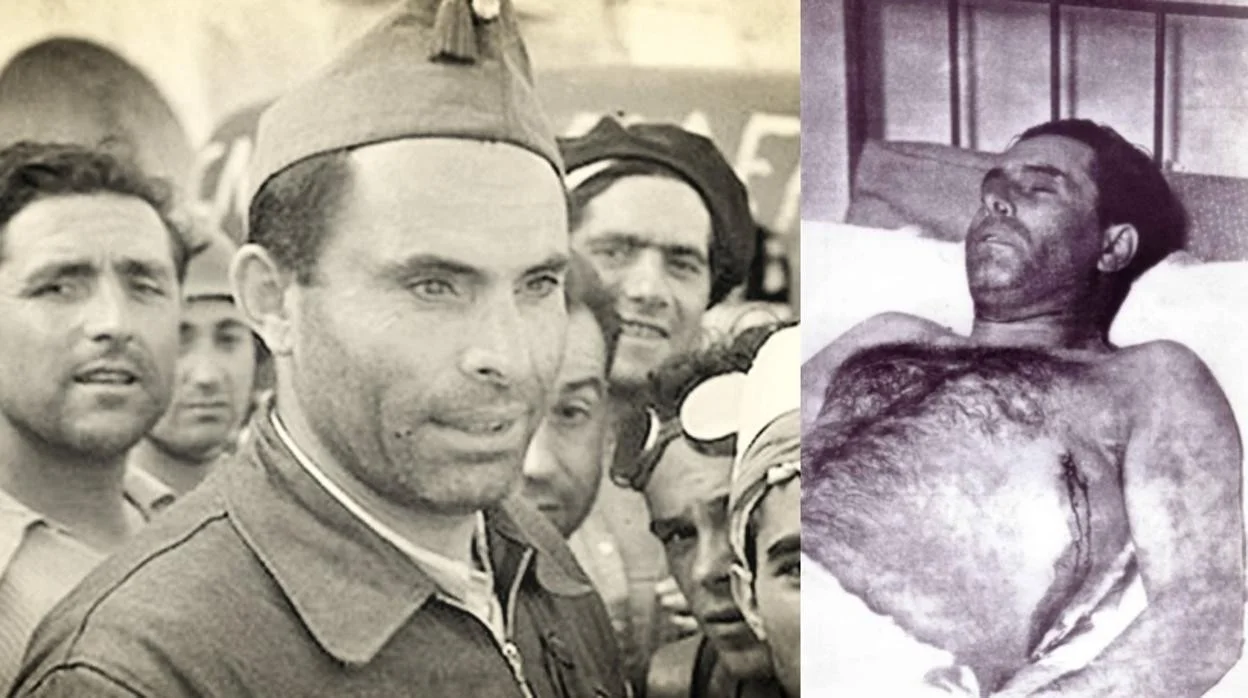
Thursday, November 19, 1936: Death of Durruti
We had to recover the Clinico by any means, and Durruti was returning to the front in his black Packard. The car climbed up to the roundabout now known as Cuatro Caminos, descended along the Avenida Pablo Iglesias. Along Avenida del Valle it turned toward Moncloa, between abandoned little hotels, and stopped in front of the Dentistry Pavilion to the north of the hospital.
The afternoon filled with autumn sun. The car stopped in front of a group of militiamen who were sunning themselves beside a wall. Hurt by the fame they were gaining, Durruti stepped out to admonish them and just as he was about to get back into the car, a fatal bullet struck him. It was never sure whether it came from a machine-gun burst fired from the Clinico, or from some resentful man for his words, or the “orange rifle” carried by his companion or even his own rifle, which could have discharged accidentally as it struck the ground when he re-entered the Packard.
The fact is that they had to reverse course, with Durruti mortally wounded. This time they did not stop at their headquarters on Miguel Ángel but sped along Castellana to Neptuno and halted in front of the blood hospital at the Ritz hotel.
—It’s Durruti! Quick! Find him a bed!
Ángel Navarrete, who was accompanying a wounded comrade in the hall, tried to lend a hand. In the lobby they took charge of Durruti. Two medics cleaned the wound and moved him to the first floor. They laid him down and his men waited below, anxious. They did not trust the doctors. They were so tense that one, feeling his mouth dry, reached for a bottle and, once to his lips, spit it out in horror. He brought a hand to his throat.
—They’ve poisoned me! The water is poisoned! Murderers!
The lobby caught fire. The militiamen drew their weapons. A nurse approached to examine the bottle: it became clear that it was a disinfectant for washing wounds. As the national air force resumed bombing, a shell exploded nearby. The engines of planes buzzed nearby. Upstairs, the hulking Durruti, shirtless and bandaged, was fading, slipping into spells of unconsciousness. It was nearly impossible to save him. The doctors murmured that the bullet lay near the heart, that surgery would be risky. One went out to explain it to the anarchists.
—We will operate only if Manuel Bastos says so… He is the best surgeon.
—Where is that comrade?
—In the Palace.
Two anarchists went out on foot and crossed, amid more bombs, the square. The Palace hotel lay on the other side of the Neptuno roundabout. Returning with the doctor in question, he confirmed that there was nothing to be done. The entry wound was in the chest, a few centimeters to the right of the left breast. The bullet, large-caliber, had pierced the lungs and affected the pericardium. By dawn, four doctors signed the death certificate of Buenaventura Durruti: death by pleural effusion.
—The fun is over. They’ve killed Durruti — Angel Navarrete heard a Catalan militiaman, one who used to drink downstairs, say in the Ritz bar.
Todas las entradas de 1936 día a día
Entrevista con José Ángel Mañas sobre 1936 día a día