
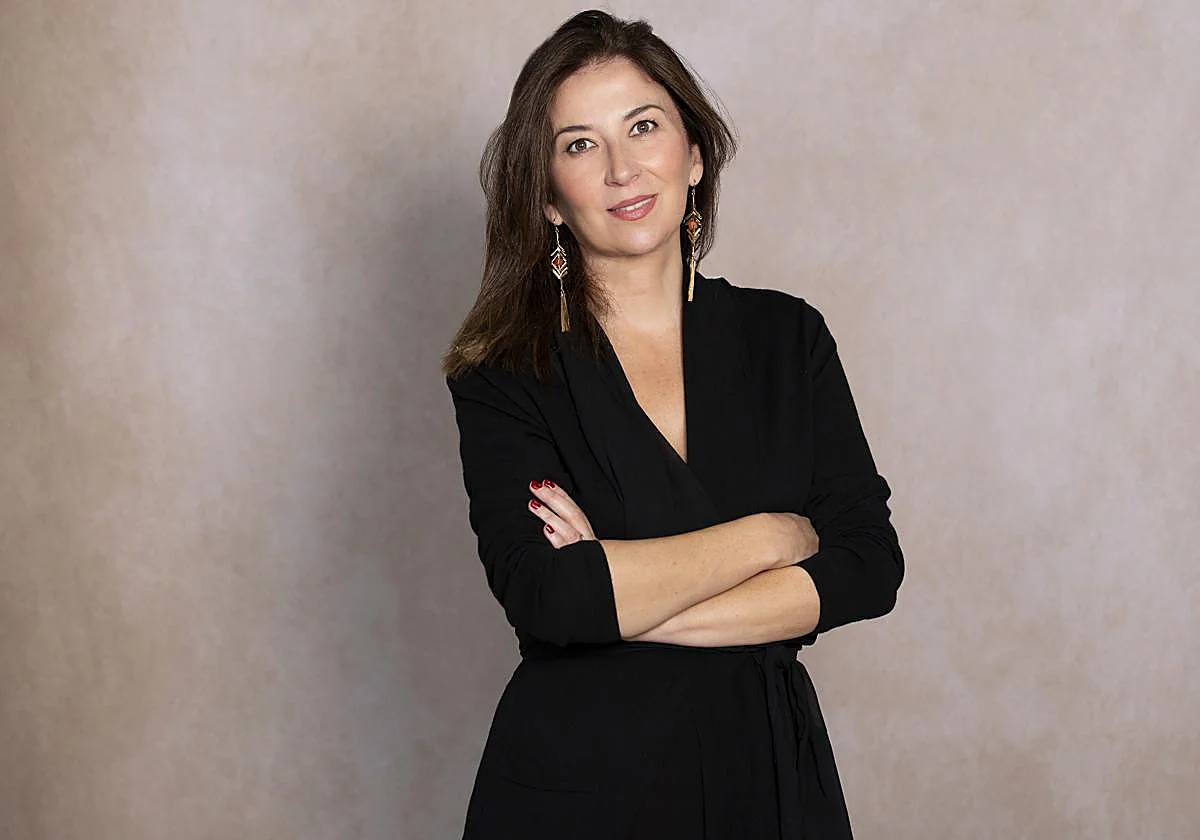
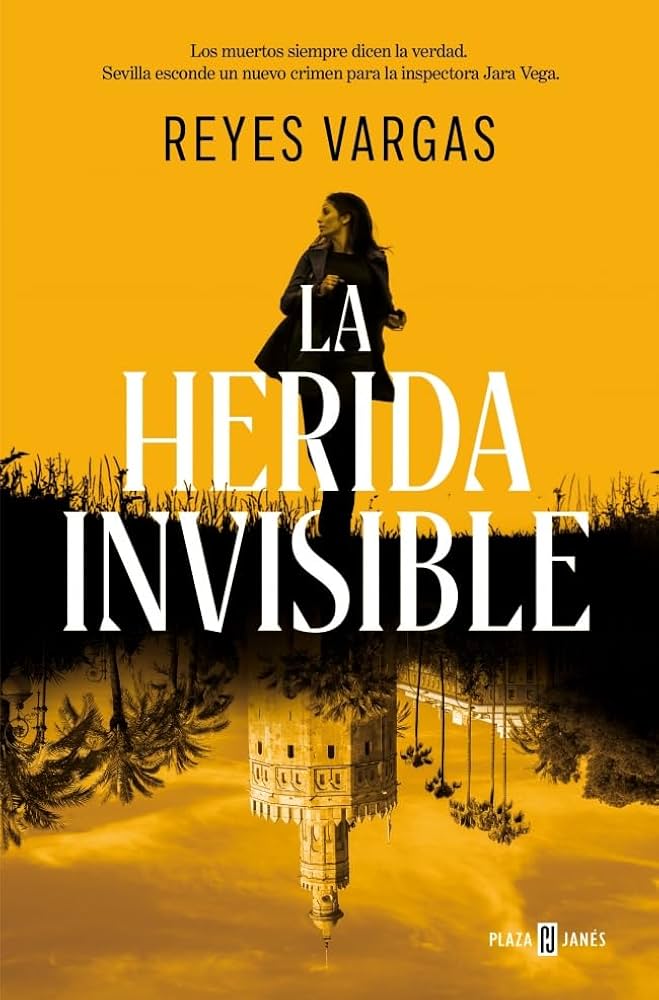
We carry into adulthood many things from our childhood; in some cases that inheritance is rotten, due to both genetics and the education received, and the environment of those formative years. The predisposition to evil can be softened by empathy and solidarity, but there are certain families that act as accelerants of perversity. Reyes Vargas places a spotlight on these moral dilemmas in her second novel, The Invisible Wound (Plaza & Janés), which is also the second installment starring inspector Jara Vega, a liminal figure who must manage others’ dramas while contending with her own demons. This is an ambitious police thriller, given the breadth of themes it tackles, which the author manages with distinction thanks to meticulous research, a brisk rhythm, and the deft blending of multiple plot strands. Andalusia Noir has its face, and it is Jara Vega.
We spoke with Reyes Vargas about people who feel complete by cutting their calves, about the dangers of the incel movement, and about the origin of evil.
*****
—What is it about Seville that makes it such a perfect setting for your literary crimes?
—My emotional map is drawn in Seville. I had tried to write in Málaga —where I live now—; I wanted to bring Jara to Málaga, but I couldn’t. I was very interested in including that strong symbolic charge that Itálica carries. With this novel I wanted to explore the shadows concealed by a city so luminous as Seville. In Feria de sombras I aimed to reveal the tourist façade of Seville and also the social issues of that other Seville known to those who live there—the 3,000 viviendas and the shantytown of the Vacie. I’m interested in showing how these areas integrate into the city even though we try to sweep them under the rug. And in The Invisible Wound I introduced the Aljarafe, which has proven to be the perfect setting to map the circle in which the killer operates.
—That Aljarafe is a perfect, idyllic urbanization that attracts many foreign tourists when they arrive in Andalusia to settle. Then there’s a clash with reality and we see the failure of that romanticized dream.
—Yes. There is a failure to that idealized dream because in the end we are human, and we cast a shadow over everything. And it happens in that spectacular Aljarafe development, a magnificent area. The plot begins in Itálica, in Santiponce, and then moves to a Seville recognizable to everyone. It also touches on Triana. In that way I touch on the city’s tourism dimension, that cultural collision that exists. It’s something I’ve also experienced in Málaga.
—Nothing is held back in that spectacular opening of the thriller at the ruins of Itálica. What is the origin of that scene?
—I don’t know, that’s just how my mind works… (Laughter) I visited the ruins of Itálica when I was fourteen, and I was overwhelmed. I asked myself many questions: what happened here? What could have happened? How much blood has been shed? Innocent blood? People were currency in ancient times. I felt as if even the stones were whispering to me; I love their labyrinths, the sand… Rome is also a tragically charged era, and there stood that amphitheater. Itálica is spectacular.

—In this new Jara Vega installment, you introduce readers to the world of the manosphere and the incels. A reality unknown to many, but with a large following online.
—I wanted to highlight this form of violence against women, a misogynistic mission amplified through social networks, grounded in the resentment of those who participate and their inability to relate to women in a natural way. I wanted to show how that digital reality they express has consequences in real life. It isn’t just something on a screen that stays there; these individuals translate it into life. I find it brutal that this exists today. It’s a regression: people who organize on the networks to attack female dignity. When I began researching, I could not believe such a phenomenon existed and that it did so with such intensity and scale.
—Reading your novel, Hannibal Lecter came to mind when he said: “One from the census tried to survey me. I ate his liver with some fava beans and a nice Chianti.”
—I love Hannibal, really. (Laughter) I’m a big fan. The Silence of the Lambs is a book that marked me, as are the other two in the series. For me, it marked a before and after because that character defined the darkness I try to express in my novels. I also greatly admire Juan Ramón Biedma, a Sevillian author with similarly dark novels; I’ve read them all. The topic behind that line is complex… I’m trying to… It’s almost a spoiler.
—Just a little.
— (Laughter) Let’s leave it at this: I aim to present this theme from a psychiatric perspective and from the angle of extreme sadism, which also appears when individuals are affected by this “illness.”
—There is a subplot in the novel that takes us into the world of swingers clubs, venues where people and couples who don’t know each other engage in sex. But there are also extreme transformations, bodily alterations, and even amputations.
—It was my son who first mentioned extreme transformations to me. This topic clicked in my mind, and I began researching it obsessively; I approached it from psychological and psychiatric angles, uncovering the connotations. It’s a very dark world. In the novel I lay out an alternative setting that I don’t know if it exists in the real world: a central-Seville club where people have undergone those bodily changes. From there, I write about violence against the body itself and the control over it. We’re not talking about tattoos or little horns; this is a different form of violence, one that individuals inflict on themselves as a way of exerting control. With apotemnophilia there are divergent views within the community. In Spain injuring yourself is a crime. Some defend the need those people feel to, for example, cut off a leg above the knee, because, intriguingly, that is how they feel most complete.
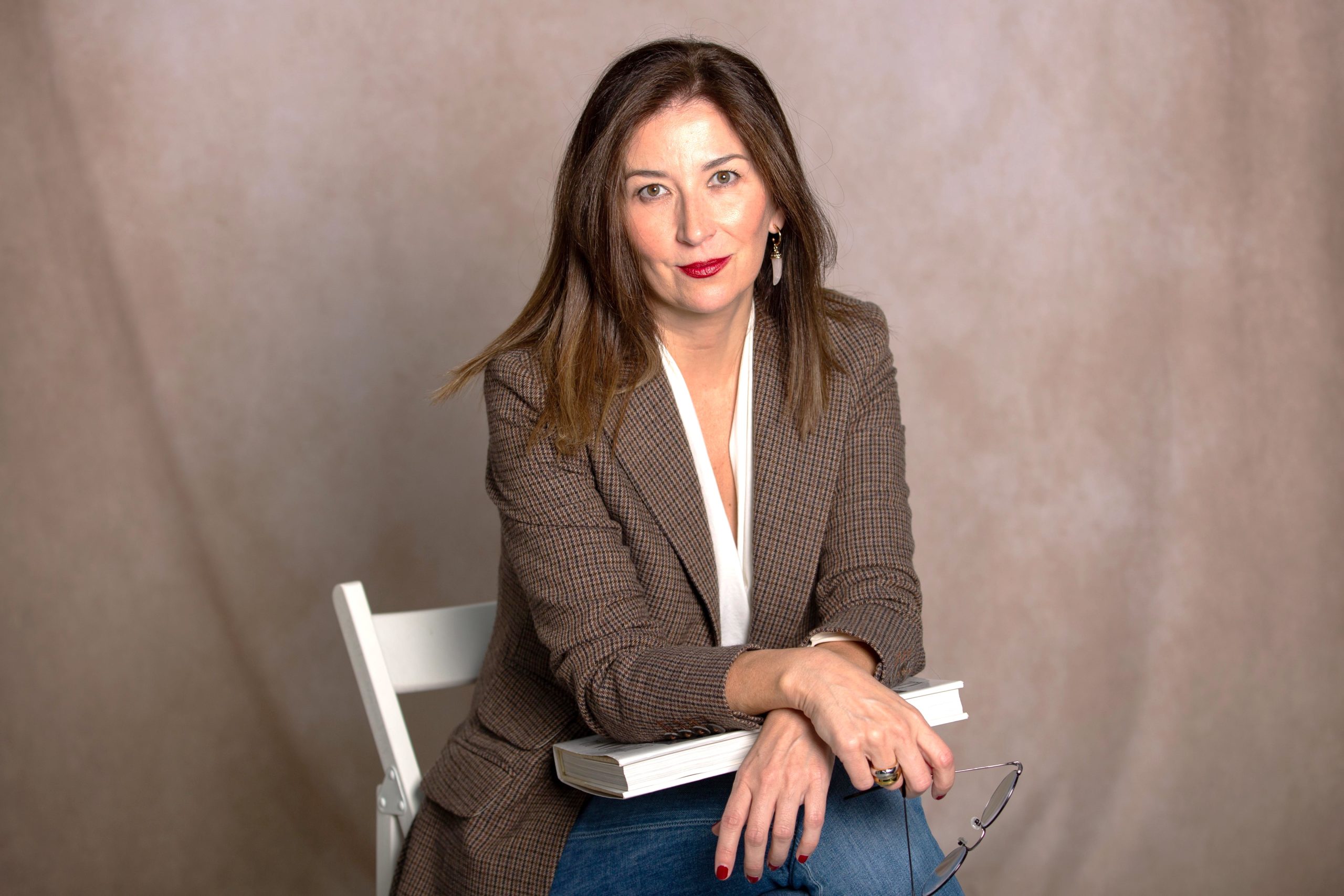
—How do Feria de sombras and The Invisible Wound connect?
—They connect through Seville and thanks to Jara. It isn’t necessary to read the first one, Feria de sombras. In this second installment, one chapter explains the inspector Jara Vega’s personal life, why she’s in Málaga at the start of the book, and what she is trying to reclaim. Through Jara’s character I defend solitude as a way of life. You don’t need to be in a relationship to feel complete. As a woman, or as a man, you can live in fullness in solitude. I have a partner and children, but I am very solitary. I have spent a lot of time alone and I like solitude.
—Jara isn’t a perfect police officer: she makes mistakes and owns up to them.
—We all make mistakes. We are humans, and we err with our families, with our friends, and in our work. I’m not advocating for error, but for normalizing it and also for owning the consequences of our missteps, taking responsibility for them, as Jara does.
—When you write, which weighs more, your background in Law or your work in neurocriminology?
—Look, today it’s true that I can’t help it and my training in law shows. I practiced as a lawyer for five years and, sadly, I discovered that legality has little to do with justice. This theme appears in the novel. In the book we see wolves in sheep’s clothing—the best disguise they can adopt. The topic of neurocriminology I discovered later, born from the need to understand why some people can cause so much harm; people who do not tremble in such situations and who feel no remorse. I can’t hide my legal training, but on the other hand, I think neurocriminology gives me another view, both of the victim and of the perpetrator. This training lends real connotations to the characters, who are not simply bad for no reason. From neurocriminology I ask why, what lies behind that evil, and often the answers are simple: it’s a person with hypofunction in the prefrontal cortex and in the temporal lobe. Then I imagine what consequences that could have in real life. Often they are terrible, and other times not: it depends on triggers, invisible wounds, and the traumas we carry.
—Do we inherit evil?
—Evil is in our genes. The MAOA gene is to blame; they call it the warrior gene. What a fitting name! This gene is responsible for violence in roughly 40 to 60 percent of cases. And then there are the triggers we mentioned earlier. On this matter, I always refer to the neuroscientist James Fallon, who discovered he was a psychopath through a functional MRI. He was one of the first to claim that there are brain structures conditioned by genes that could make a person capable of violence. Add to that the environment, the traumas, the upbringing… It’s also important to distinguish between antisocial violence and psychopathic violence. Sometimes they converge, but not necessarily; when they do, you’re looking at an extremely tricky Molotov cocktail to manage.
—Finally. When can we expect the next Jara Vega installment?
—Well, the next Jara book is going to have to wait for now… I’m going to take a break from the inspector, and so should readers. The next novel will be a standalone story, independent of the previous ones. The only thing it will share with the first two is Seville.