
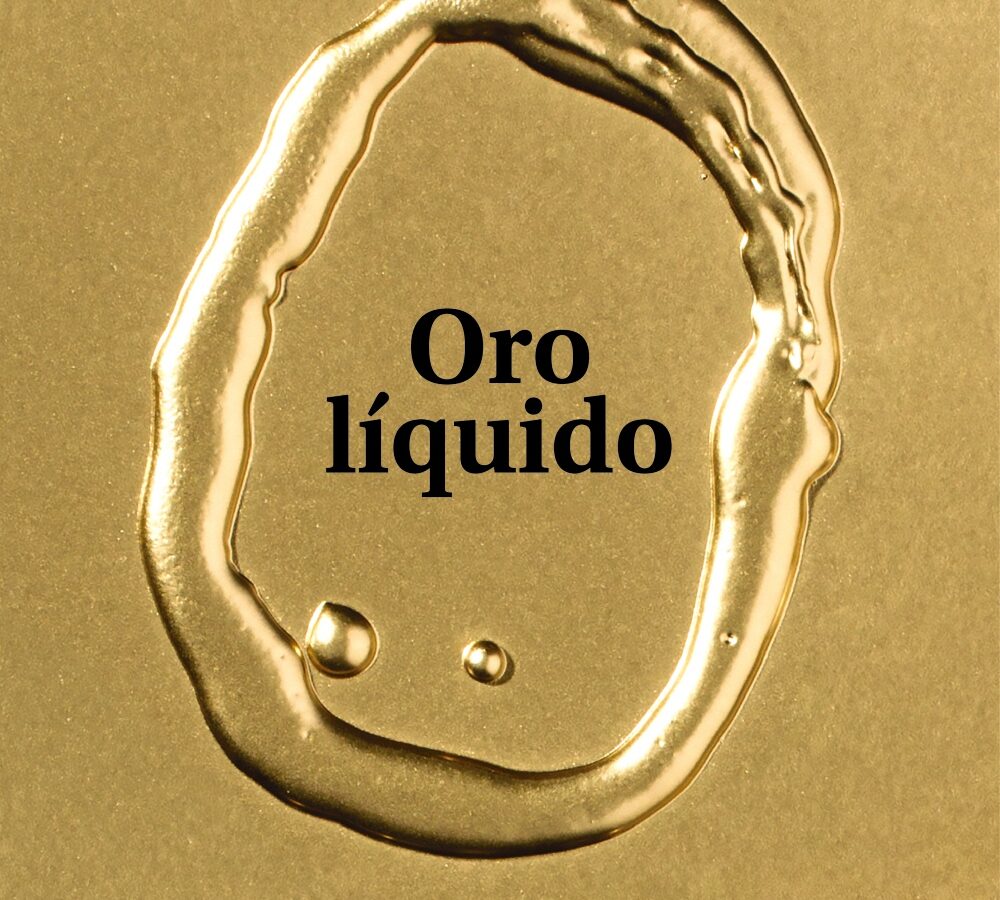
As money lost its value and words ceased to obey things, the authors of the seventeenth century found in alchemy a path to name the disquiet of an entire century. This book reveals the liquid, uncertain, and mutable reverse of the so‑called golden ages: a world of transmuted words and empty coins.
In this making of Ana Garriga explains how she wrote Oro líquido (Alianza).
***
In September 2018 I had to submit to one of the many passage rituals that hide in United States PhD programs: the preliminary exams. The idea underlying this delirium —one hundred books, a seven‑century arc, eight hours of writing split across two mornings— is to ensure that, when you walk out through the door of the carpeted little office where the exams take place, you can move with ease in the epic construction of the Cantar de Mio Cid, but also in the delicious sonority of Trilce, by César Vallejo. So much literature, in a way, overwhelmed me. Perhaps that is why, while I flipped through the list of seminars offered that autumn of 2018 by the history department, the premise behind a course titled Making Meaning: Extracting Knowledge From Matter in Early Modern Europe captivated me so deeply. Building historical meanings from matter was exactly what I needed after a summer so saturated with words. The seminar remains, to this day, one of the most stimulating intellectual experiences I have had. Although we were given the option to submit a final paper that did not pass through the textual route, it seems I had already forgotten that flood of words and I was ready to return to them. That said: I needed a text overflowing with materiality. I don’t know whether it was a pure unconscious slippage linked to the bombardment that the Golden Century had undergone in my years of Spanish Philology or because gold has always carried a strong affective force in my imagination —my grandmother’s hands full of rings are among my earliest childhood memories—, but I began to seek texts that hovered around this metal. I wasn’t interested in the long satirical poems that criticized the consequences of the greed for gold, nor in economic treatises that conceived gold as a utilitarian abstraction. Thus, at some moment I cannot recall, I came upon an early seventeenth‑century print whose title made me want to keep reading: Relación y memoria de los maravillosos efectos, y notables provechos que han hecho y hazen los polvos blancos solutivos de la quintaesencia del oro.
Since that distant 2018, I have read and reread this strange treatise signed by a certain Alexandro Quintilio, I have traced its history and handled its pages, and I can confirm, without hesitation, that the operation this Italian merchant set in motion between Madrid and Valladolid between 1598 and 1618 is essential to understanding the social, material, economic, and discursive profitability of gold and alchemy in the early years of the seventeenth century. I discovered that, far from what I thought, gold was (materially as well as symbolically) a ductile and malleable metal, fragile and uncertain, perfect for thinking about the economic and epistemic psychosis that sustained the seventeenth century. From here, I set out to relate two moments, in my eyes, closely linked: on the one hand, the arrival in Madrid of Gongora’s Soledades; on the other, the massive minting of copper coins starting in the reign of Philip III.
Oro líquido relates these two moments to illuminate a decisive aspect of the literary work of the seventeenth century: some of the most celebrated voices of the moment found in alchemy a conceptual compass to navigate an increasingly confounding social, linguistic, and epistemic landscape. Halfway between sophisticated science and fraudulent ruse, alchemy is an ideal hinge for reading, in dialogue, the anxieties arising from colonial expansion, economic decline, and the transformation of language at the beginning of the seventeenth century. The authors who populate these pages understood that, in a world where money was becoming increasingly unstable and words seemed to have emancipated themselves from things, the crisis of value found in alchemy — obsessed with the transmutation of matter and the invention of symbols and languages — a privileged way to become text. Alchemy thus reveals itself as an unexpected key to decipher the underside of the so‑called golden centuries and to bequeath us a valuable timeless lesson: when money loses value, language revalues itself because words, after all, are always free.
—————————————
Author: Ana Garriga. Title: Oro líquido. Publisher: Alianza. Sales: Todos tus libros.