
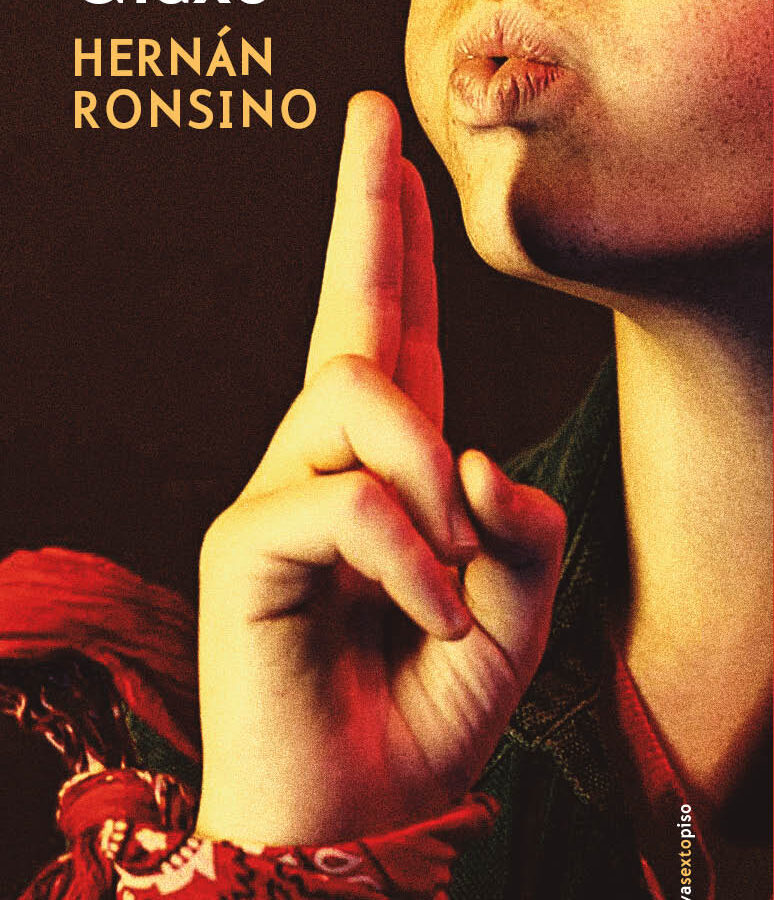
With a highly refined neowestern aesthetic, applying a dry and corrosive language to the action, the characters gradually carve out their space in this intense book defined by the places described. An old factory, the Glaxo, a gray and green wasteland that still contains something poetic and much of loss, of predestination and death.
Todo gira en torno a una acción impredecible y contada en cuatro momentos temporales con los mismos personajes, tiempo que va desplazando al espacio y a la trama, puntos de vista que tienen como fondo una historia que se va metamorfoseando según quien la cuente.
¿Qué es la verdad en narrativa, qué lugar ocupa la realidad en una novela?
O cómo pasa el tiempo mientras el espacio es el mismo, son algunos de los acertijos que nos desvela el autor de esta obra. En realidad, se trata de la segunda parte de la trilogía pampeana de Ronsino:
La descomposición
, (2007), la primera,
Glaxo
(2009) y
Lumbre
(2013). Por lo tanto, esta que nos ocupa abunda en el conocimiento de ciertos personajes: Vardemann, Bicho Souza, La negra Miranda, Ramón Folcada, y todo gira en torno a la explicación de una muerte de lo más insólita en una ciudad de Chivilcoy, y cómo esta muerte tiene que ver con cada uno de los personajes de un modo distinto.
A homage to cinema is paid, especially to the western, and in addition, the characters stage different moments from films, so their attitudes pick up patterns of cinematic behavior. There is also a lot of Roberto Arlt in Ronsino, the extreme attitudes, the underworld, the deaths, the betrayal, the madness or the passion that dominate the characters, as well as the Boedo school, the lunfardo school and unleashed passions, as in a tango that knows everything; the Rioplatense lesson from the master Onetti and his private world of Santa María is also present. However, this book is not a homage: the setting changes, the characters too, they don’t have that innate disposition toward pessimism, but act by exchanging roles in a work they do not know they are performing.
Glaxo is a shot in a sunlit duel: “But La Negra has that personality. A woman with that character and that body in a town like this. It’s bound to draw attention. That’s why it’s easy for someone to take her. Surely someone will take her. And it’s not crazy to think that La Negra would settle with some fool. Some fool who rises against La Negra and takes her as if he were taking Marilyn Monroe. Of course. A powerhouse woman like La Negra.”
With that repetitive and casual style, in an inner monologue that develops the thoughts of the spectators of the spectacle of decadence, love and death. A dry, cutting style. The characters seem to inhabit that western that Ronsino speaks of, The Last Train from Gun Hill, (1959), by John Sturges. With Kirk Douglas, Anthony Quinn, Carolyn Jones and Earl Holliman. Here the characters perform their roles in a plot similar to that film to which they had been playing since childhood, pointing and shooting into the air, or falling to the ground when wounded, but over time, death is real, as is blood and betrayal.
“I think of Ramón Folcada, I think of Anthony Quinn and Ramón Folcada. There is something that unites them, the arrogance of power […]. With my son justice does not intervene, Quinn maintains […]. There isn’t much difference between Ramón Folcada and Anthony Quinn. Both stand on the same stones.”
Nevertheless, the novel is a tour de force among the protagonists, like a four-way duel under the relentless sun. They fight against themselves, but they do not know they are fighting against destiny. Everything is already written.
No hay una intención redentora, los malos y los buenos saben su papel, pero ese papel se lo asigna el lector, esa es nuestra labor partícipe de la obra, observar con los propios ojos lo que está sucediendo y ser el testigo de cargo de un juicio que no se ha celebrado aún.
“The night advances, without respite, across the field. It seems to close in on us. I place the padlock. I turn the key, twice. I fumble before leaving, to know if it has been properly closed. […] The opaque light and the sweetish air of fried onions strike me. I remove the apron with which I work. (The white apron is part of my skin, I think).”
—————————————
Author: Hernán Ronsino. Title: Glaxo. Publisher: Sexto Piso. Sales: Todos tus libros.