
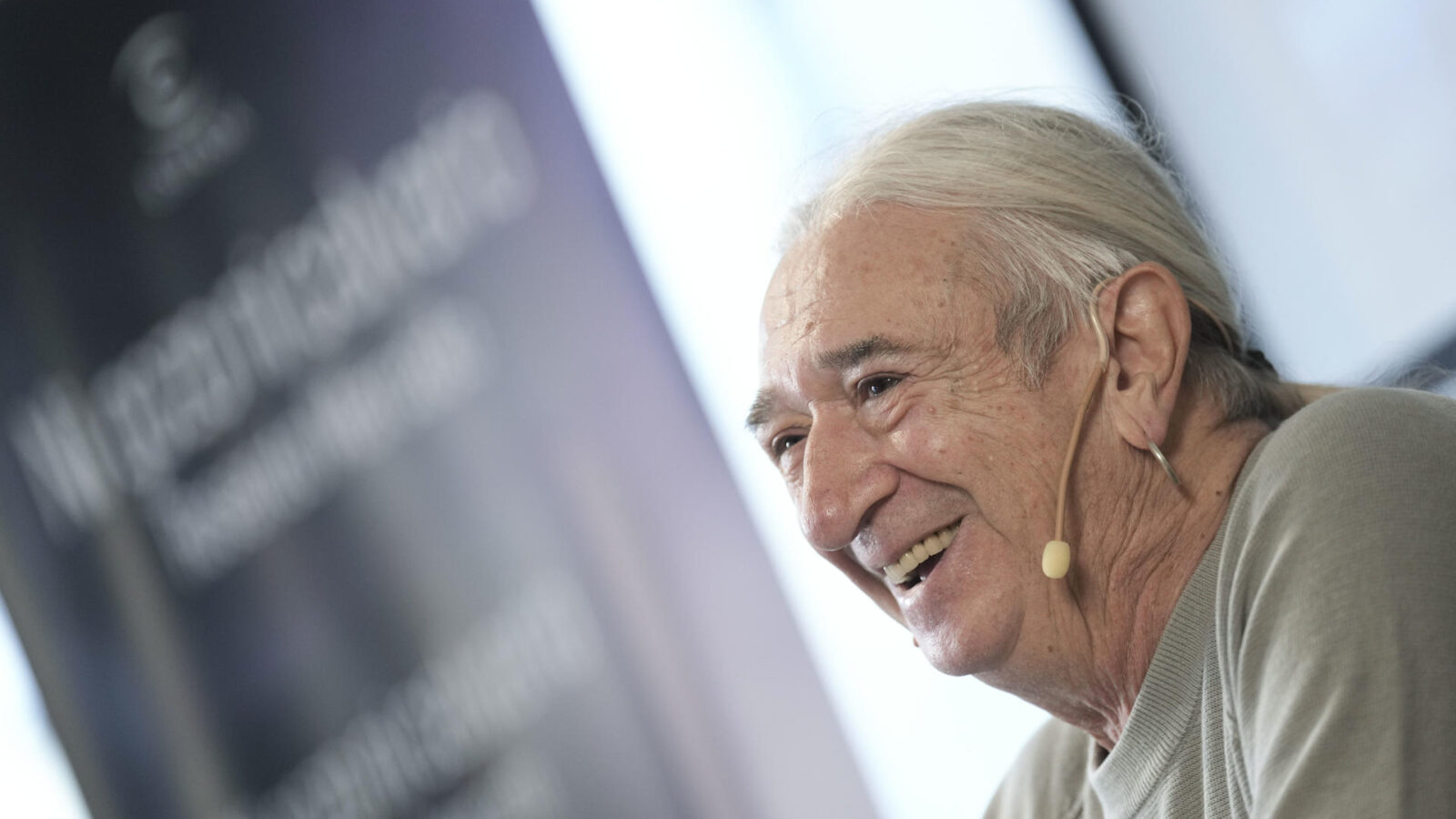
Almost eight years after his full retirement, Rosendo has returned to the public spotlight with the publication of memoirs in which, beyond revealing his intention to release a new album or the reason that accelerated his retirement, he again presents himself mainly as “a worker.”
“I am a legend because they have made me that way, but that is not what I intended,” he reiterated at the book’s press conference, where he debuts as “an author, not a writer,” Ni gozo ni calvario (Espasa), whose title already signals the premise of fleeing from heroic poses.
He has devoted the last five years to its preparation. “It’s what I still had left to do,” Rosendo Mercado (Madrid, 1954) has stated, in contrast to prior biographies about his figure that he didn’t quite believe, one even from when he was barely “thirty-something.” “This is what I have lived and felt.”
For someone who says he led a somewhat “boring” life as a retiree between Madrid and Burgos (“Ni soy cocinillas ni me gusta la huerta,” he joked), the assignment came at an opportune moment. “I kept playing at home and was working on some songs with the intention of releasing an album at some point,” he revealed about a project that “fizzled,” among other things, due to an arthritic condition that required surgery on his hand, which forced him to stop playing the guitar. “Now I’m considering picking it up again, but not in a hurry.”
Regarding the reasons for his retirement, he insisted: “You get older, not to say old, and the body asks for something else. I used to say I would endure until I burst, but circumstances aren’t as you imagine and there comes a moment when you see yourself out of place.” In the book he reveals a motive that could have foreshadowed that retirement “one or two years” earlier: “It cost me to recount the discord with my band in those last years, when things were at their best. I got along well with the rest, but not with them, and I wanted to tell it without offending anyone, but perhaps it was the reason I ended a little earlier.”
“I don’t miss it,” he has also asserted about his past on stage, although that first summer without concerts might have led one to think: “What am I doing here, if I should be wandering?”
Rosendo reviews in the work all of his stages, from childhood to his time with legendary groups such as Ñu or Leño (“a painful separation,” he said this Wednesday), and also his subsequent consolidation as a central figure of national rock. “When I was active, what worried me was getting to Sunday to be paid”, he said, in contrast to the scale he himself might have imagined his artistic contribution at the time. “And I feel very lucky to have reached retirement with a remnant,” added someone who also said he does not believe in the idea of “rock survivors.”
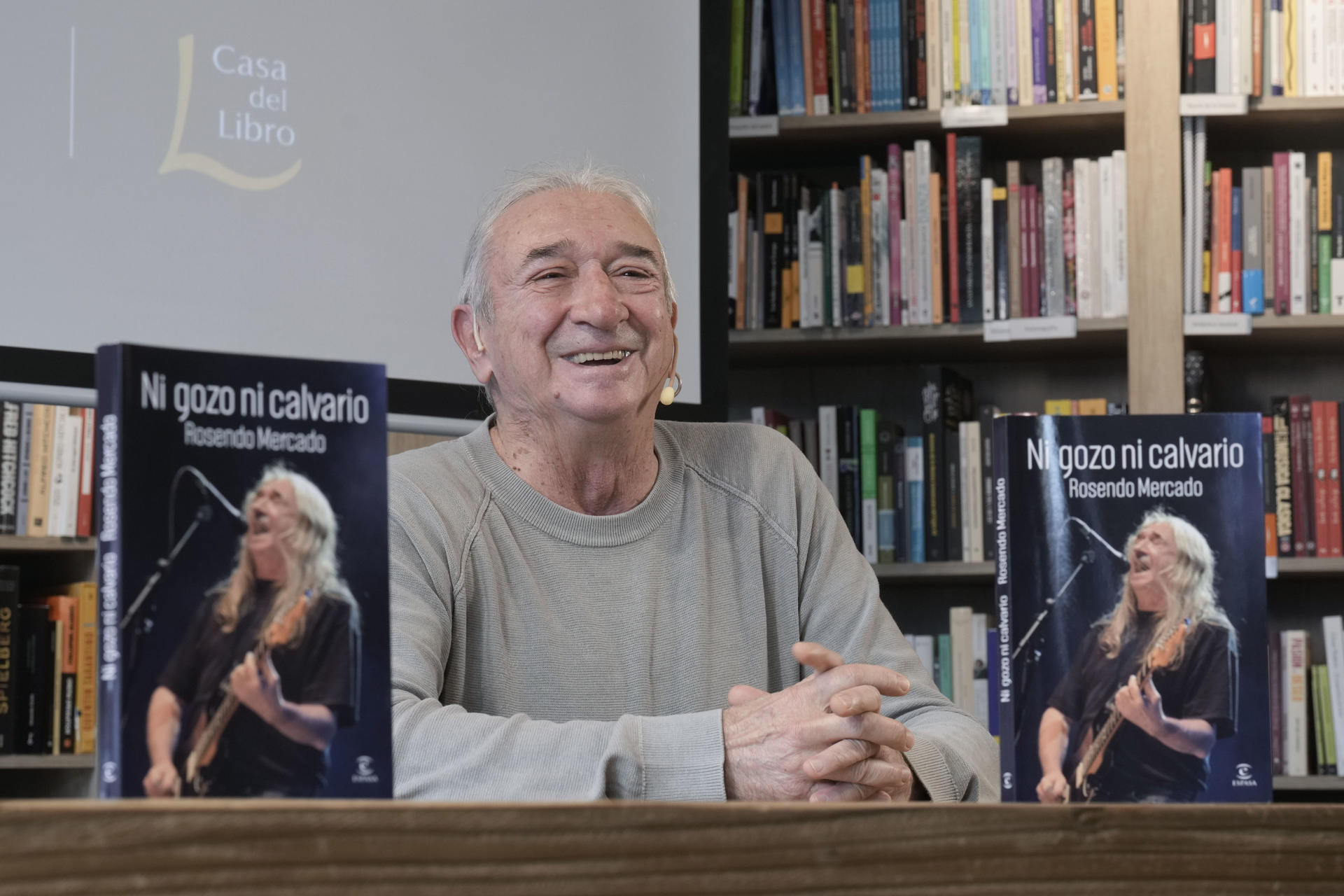
Efe / Borja Sánchez-Trillo
“I won’t deny that at first I wanted to be very famous and to pick up many loves, but then you realize that life isn’t that easy. Not achieving early success helped me understand that it was a job like any other, and I was fortunate not to have to get up at six in the morning to cross all of Madrid.”
He has not stopped talking about Madrid, his Madrid, to which he has also stripped away any hint of a legend in the face of headlines in international media labeling his neighborhood as one of the “coolest.” “If Madrid is a dump, Carabanchel is the back part, and I love it and wouldn’t trade it for any other. I have a sense of neighborhood and of the worker,” affirmed the man who partly wrote this book so that his 12-year-old grandson could read it and who has presented himself as “the son of a shoemaker who spent his life working to support the family.”
Who opens this work by stressing the significance of growing up under a dictatorship in his pursuit of freedom has nevertheless not wished to make explicit political comments given the proximity of elections this Sunday. “Since democracy arrived, there have been problems that worsen when those who could govern hold reactionary ideas at that level. But I don’t want to make any kind of propaganda. I consider myself a worker and I stand with the workers,” Rosendo has stated; he did, however, urged everyone to undertake a mission on this 29-N: “We must go and vote, and whatever comes out, let it come out.”