
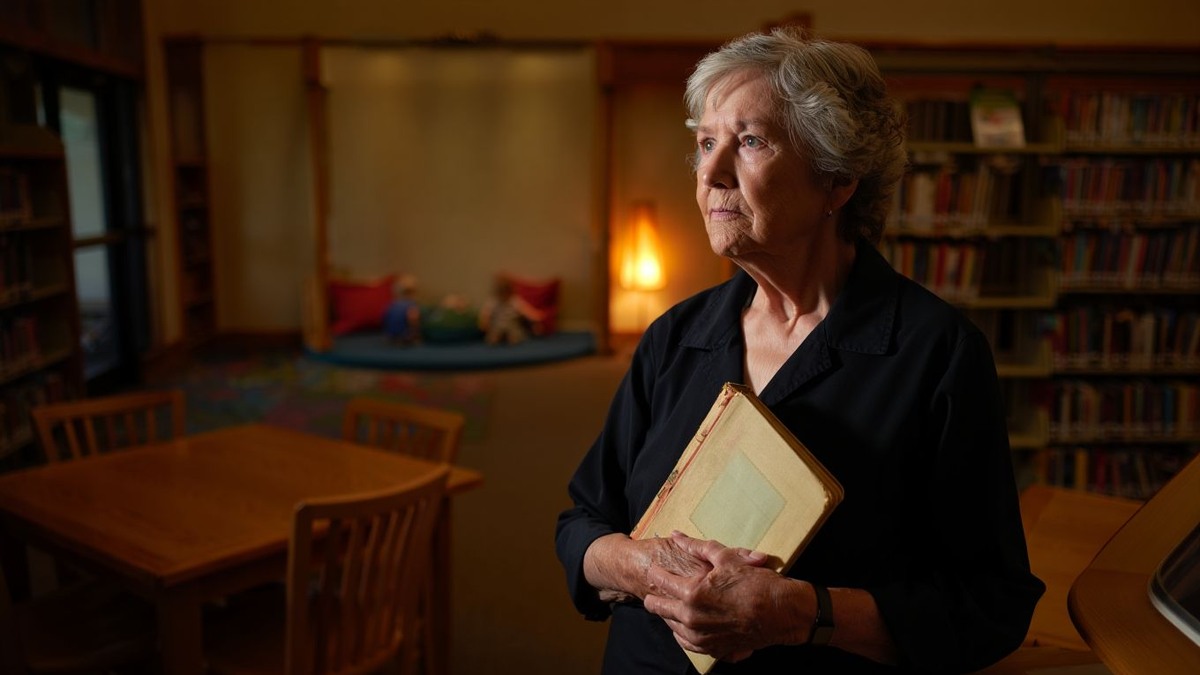
There is a kind of worker who has technically earned the right to leave and keeps showing up anyway. In public libraries across the country, some of them are older staff who could retire and choose not to. The reason is rarely dramatic. It is usually a quiet arithmetic about what would happen to the people they serve if they walked out the door.
The Math Of A Thin Schedule
Understaffing is not an abstraction at a service desk. It is a specific person realizing that if they take their pension now, the branch may not backfill the position. In many systems, a departure does not trigger a hire; it triggers a reshuffle, or a reduction in hours, or the quiet cancellation of whatever that person happened to run.
An experienced librarian can see this coming. They know the budget conversations, the hiring freezes, the way a vacancy tends to be absorbed rather than replaced. So the choice to stay is often a choice about continuity for someone else, made by a worker who has done the calculation and does not like the answer.
Programs That Vanish Quietly
The clearest casualty of thin staffing is programming. Story times, homework help, newcomer language circles, and sessions for isolated older adults depend on someone being reliably present to run them. These programs rarely end with an announcement. They end because there is no longer anyone to staff them, and a recurring event simply stops appearing on the calendar.
For a regular attendee, the disappearance is bewildering. A child who came every week loses a routine. An adult who lived alone and used the program as one of their few structured social contacts loses it without explanation. A librarian who has watched this happen before knows exactly which faces will go missing, and that knowledge is heavy.
Staying on is, in part, a way of keeping those programs alive by force of individual will. That is also precisely the problem, because a service that survives only because one aging worker refuses to leave is not a stable service. It is a countdown.
Continuity Is A Form Of Care
Much of what a long-serving librarian offers cannot be handed off in a transition memo. It is the memory of which patrons need patience, which teenagers are quietly struggling, which older visitors come as much for a familiar face as for a book. This institutional knowledge accumulates slowly and disperses instantly when someone leaves an under-resourced branch with no one trained to receive it.
For isolated patrons in particular, that continuity is not a luxury. A person who has few regular human interactions comes to rely on the fact that the same staff will be there, will remember them, and will notice if they stop coming. Losing that recognition is a real loss, even if it never registers in any performance metric.
Underfunding, Without The Rescue Fantasy
It would be easy to turn this into a story about a heroic individual holding the line. That framing is tempting and misleading. It quietly excuses the conditions that make the heroism necessary, and it puts the weight of a systemic failure on one person’s shoulders.
The plainer truth is that chronic underfunding has made some libraries dependent on the goodwill of staff who decline to retire. When a public service leans on unpaid extra years and personal sacrifice to keep basic programming running, that is not resilience. It is a shortfall being absorbed by the people least able to fix it.
A librarian who stays past retirement is not a solution to that shortfall. They are evidence of it. The continuity they provide is genuine and valuable, and it is also a stopgap that ends the day their own health or endurance runs out.
The reason described here is heartbreaking not because it is unusual, but because it is so quietly common. The remedy is not more sacrifice from the people already sacrificing. It is funding decisions that let a public institution keep its promises without asking one tired person to keep them alone.