
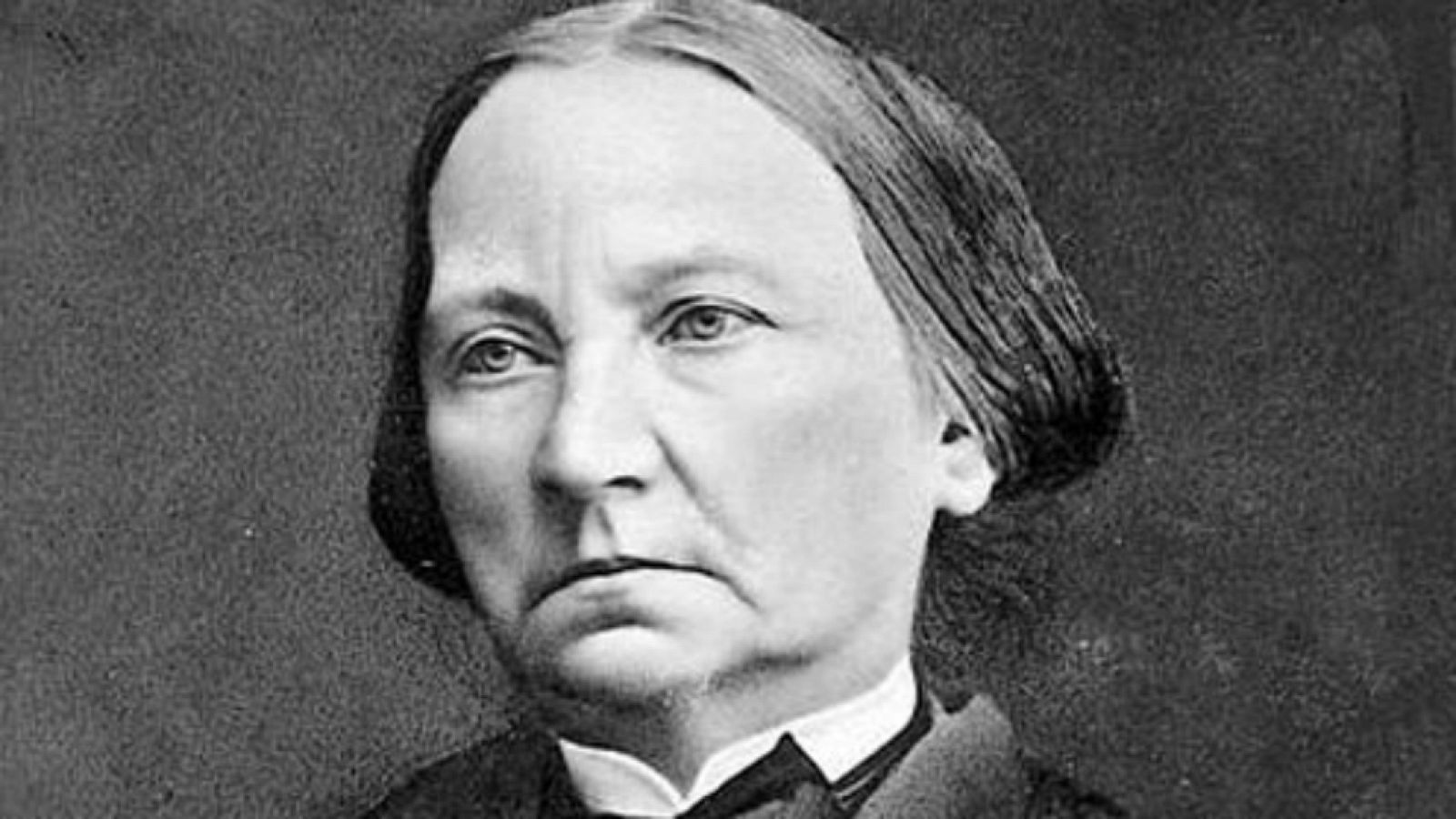
Thus, following her example, I will now consider a point that a few days ago some colleagues in the literary trade were debating with me. If I were a man, would I sell more books? I think I know quite a bit about the subject, so with Concepción Arenal’s permission I will venture to say yes. And I am not saying it as the temper tantrum of a writer whose business isn’t working, because I am doing well and I don’t complain. However, given the kind of novel I write, would I have reached more readers if I were a man? I am utterly convinced, yes. How can I know? Because I have lived it, and because I have been doing comparative study, unintentionally, since my first literary appearance.
“It doesn’t matter that my books include science, history, or meticulous forensic reasoning: the general impression is that the most solid and serious novels come from the male pen.”
It does not matter that my books feature science, history, or careful forensic reasoning: the prevailing sense is that the most solid and serious novels come from male authors. I know this because I have attended numerous literary gatherings, both in Spain and abroad. Roundtables, fairs, miscellaneous events where press rooms were shared… If the colleague was male, the more serious and higher-profile media interviewed him, even if he had just released his first book and I was among the country’s best-sellers at that moment. If I found myself abroad with a colleague who wrote a genre similar to mine, it did not matter that we were both unknown: his rooms were fuller, and once again the most prestigious press outlets catered to him, not to me. It wasn’t a matter of blunt belittlement, but of subtle condescension. And take note, because we women are the ones who end up filling those rooms with male authors and leave a certain gap in the women’s rooms.
This does not happen all the time, of course. And not in every genre, let’s be realistic. In romance the queens are female: Danielle Steel, Corín Tellado, Barbara Cartland… In young adult J. K. Rowling is one of the authors who has sold millions of books in history. In children’s literature, Enid Blyton has sold so many books that she undeniably sits at the very top of the podium. And, for good measure, in mystery novels the major sales leader remains Agatha Christie, far surpassing her near-contemporary Arthur Conan Doyle.
However, on this last point, let us not forget that Doyle’s production consisted of only four novels and five books of short stories, while Christie wrote sixty-six novels, fourteen collections of short stories, and half a dozen romance novels, not to mention her stage works. Don’t you find the difference curious, when it would seem that Sherlock Holmes is as famous or perhaps more famous than Poirot?
These male authors, do they deserve their success? Certainly. If they were women, would they have sold less? Very likely.
Let us return to the so-called “serious literature,” the timeless kind that makes its creators immortal. The drama and the more agile and accurate narrative, the best-selling one, remain masculine: Shakespeare, Cervantes, Dumas. As for horror and darkness, Stephen King is the most read. And in crime fiction, James Patterson, Dan Brown, or Stieg Larsson sit at the pinnacle of the triumph pyramid. These male authors, do they deserve their success? Certainly. If they were women, would they have sold less? Very possibly. At least, they would not have been taken so seriously from the start, I assure you.
Some will tell me that the case of Carmen Mola disproves my theory, because under a female pseudonym three men produced many crime novels and, in addition, won a Planeta Prize. Allow me to disagree: from its first novel, the story itself was not all that mattered—the mystery of who had created it mattered just as much. And that mystery faded when their identities were revealed: I have no figures, but I bet they now sell somewhat less. Not because their quality diminished or because they are men, of course, but because that magic dissolved. The same happened with Elena Ferrante, who after the unveiling of her female identity seems to have lost some of her grip.
In short, and just as Concepción Arenal stated in the brief preface of The Woman of the Future, I “do not try to persuade you or convince you; all my ambition is limited to the hope that, when you finish these pages, you doubt and say, first to yourself and then to others: will this woman have any validity in what she says?”