
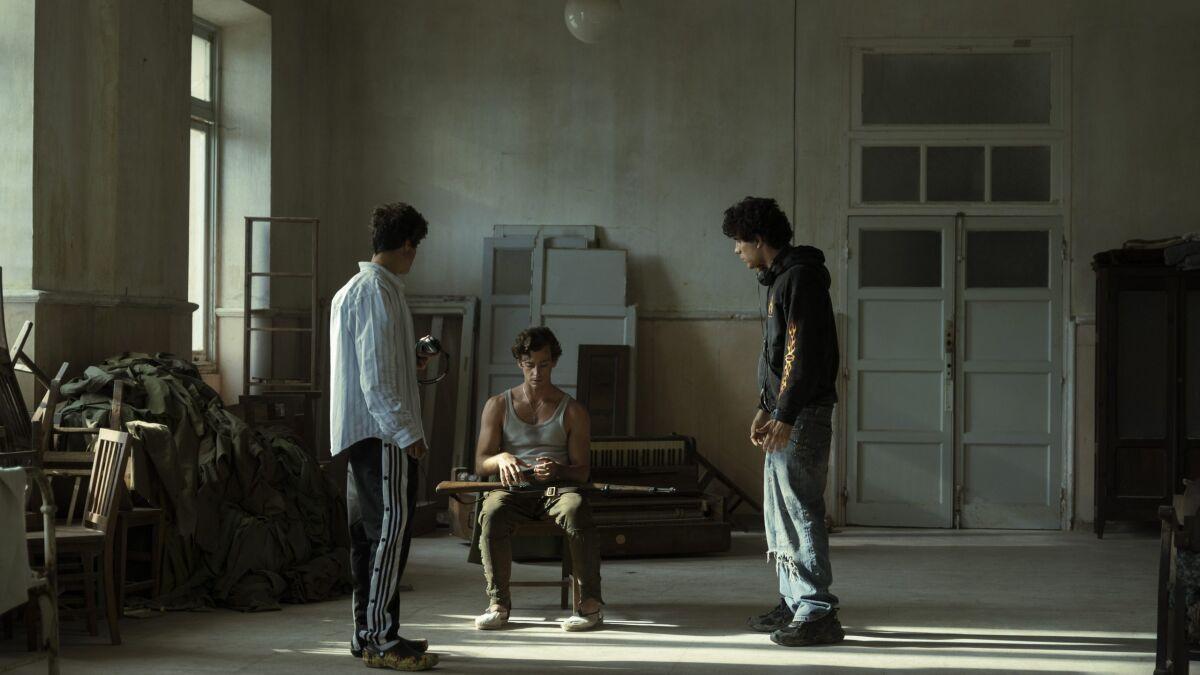
More than a decade ago, Javier Calvo and Javier Ambrossi attended a performance of La piedra oscura by Alberto Conejero, and pictured it on cinema. The result is La bola negra, where the playwright, who also participates in the screenplay, states that the Javis “have taken on the risk” of “giving the film a poetic breath.”
La piedra oscura, a theatrical work published by Antígona in 2013 and by Cátedra in 2026, premiered at the María Guerrero Theatre in 2015, centers on the final hours in a military hospital in Santander of Rafael Rodríguez Rapún, secretary of La Barraca and Lorca’s great love.
“The directors have been very faithful to their wish to bring something of the play’s poetic breath and of the life and work of Federico to the stage, a ‘risk’ for which Conejero shows his admiration, since it diverges from the realism prevailing in cinema. “They have been very firm in that bet to grant the film a poetic voltage.””
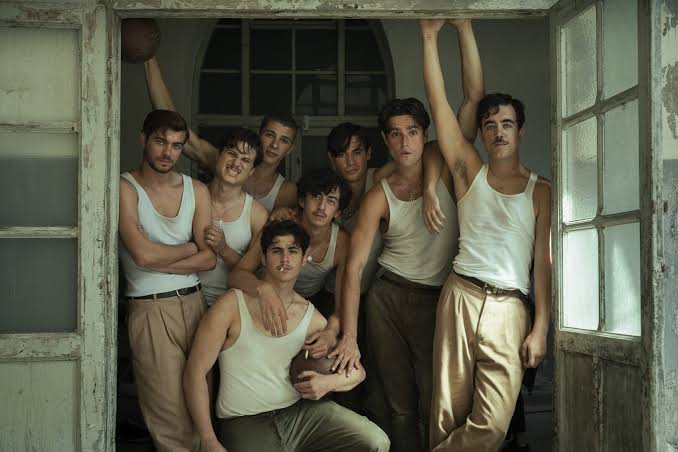
The filmmakers, who previously earned an award for this film at the Cannes Film Festival, went to see the stage production more than a decade ago, and “since then the possibility of bringing it to cinema existed,” Conejero explains. “A couple of years ago they reached out to me again, and this incredible journey began.” The film is set to premiere this autumn of 2026, the same year that marks the 90th anniversary of the poet’s execution in Alfacar (Granada), a date largely commemorated on August 18.
La piedra oscura is “one of the early and great duels” after Lorca’s assassination, the author emphasizes. The text sits on a factual plane, with data, names, and events derived from the research into the papers of Rafael Rodríguez Rapún, which Conejero was able to access through his brother Tomás, to whom he dedicates the work. Alongside these facts, the writer imagines a meeting between the imprisoned Rafael and a young guard from the Francoist side named Sebastián, portrayed in the film releasing on September 25 by Miguel Bernadeu and Guitarricadelafuente, respectively. A story with “a decidedly humanist spirit,” says Conejero, because “it speaks of the most unexpected and profound communion between two men” who at the outset are separated by age, ideology, or training “and who, in a sense, end up being each other’s savior.”
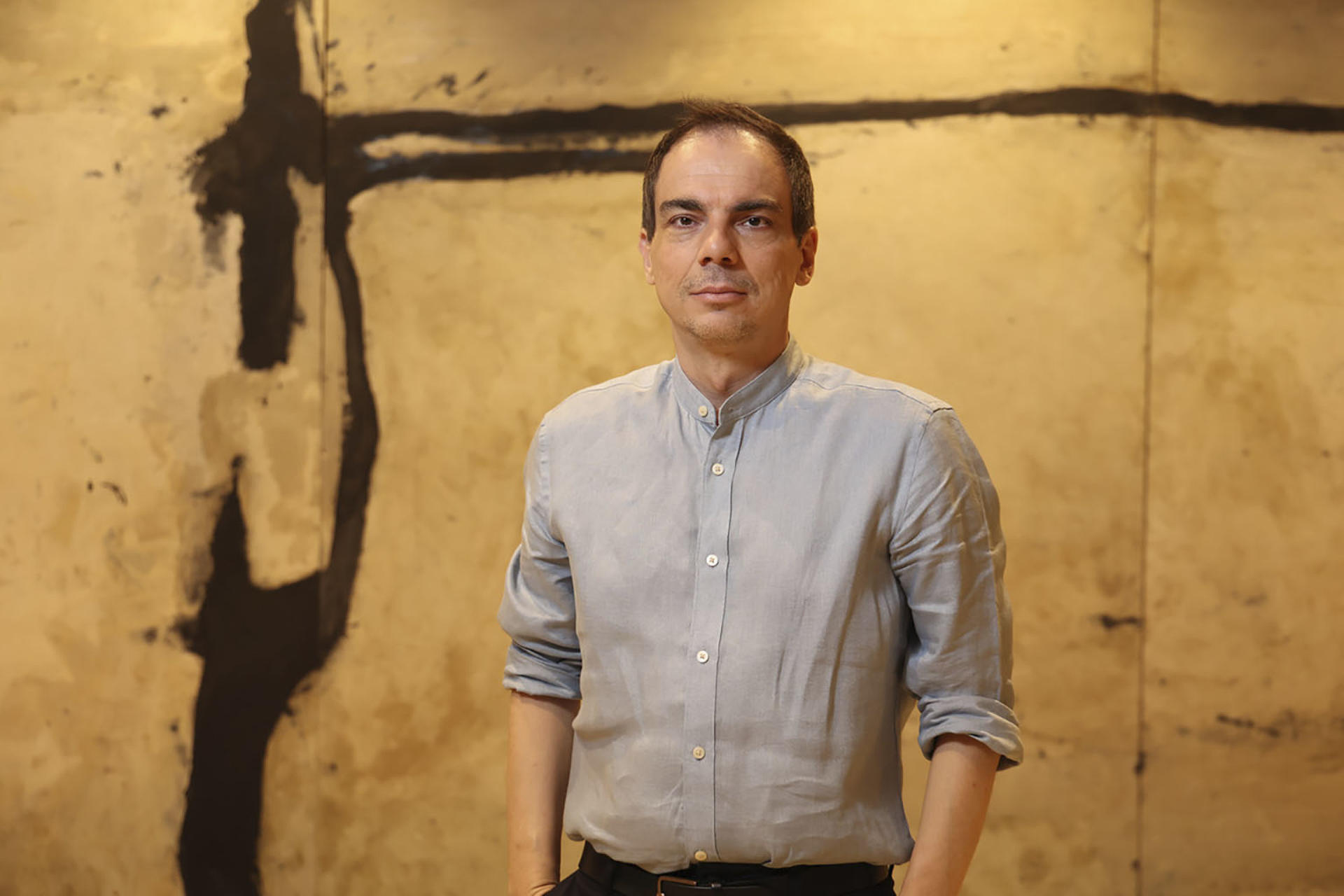
Efe / Álex Ros
National Prize for Dramatic Literature in 2019 for The Geometry of Wheat, a work for which he has also written a screenplay, Conejero conceived that meeting as “an attempt to restore human dignity in that bloody disaster” that was the Spanish Civil War, he explains. In reality, Rafael, perhaps the most important person in Lorca’s love life, did not die by firing squad, but was a victim of enemy shrapnel, on August 18, 1937, at the Santander Military Hospital, exactly one year after the poet’s murder.
The title of La piedra oscura is the second one that García Lorca himself conceived for a work of which only a couple of pages and the outline of its plot survive, as remembered by Victorina Durán and Cipriano Rivas Cherif, collaborators and friends of the poet. La bola negra / La piedra oscura was going to be a “drama of contemporary mores” whose triggering incident was the rejection—voted with white balls and black balls—of the protagonist’s entry into the Granada casino, a tale left unfinished upon which the film is also based.
In La piedra oscura, Rafael fights to ensure that the legacy of the shot poet is not lost in the chaos of war, “even as in his encounter with the young Sebastián the same themes Lorca’s play would have tackled unfold, mirroring each other: homophobia (including internalized), the need to live without masks, and the high price paid by many women and men for speaking their truth.”
—————————————
Source: Efe