
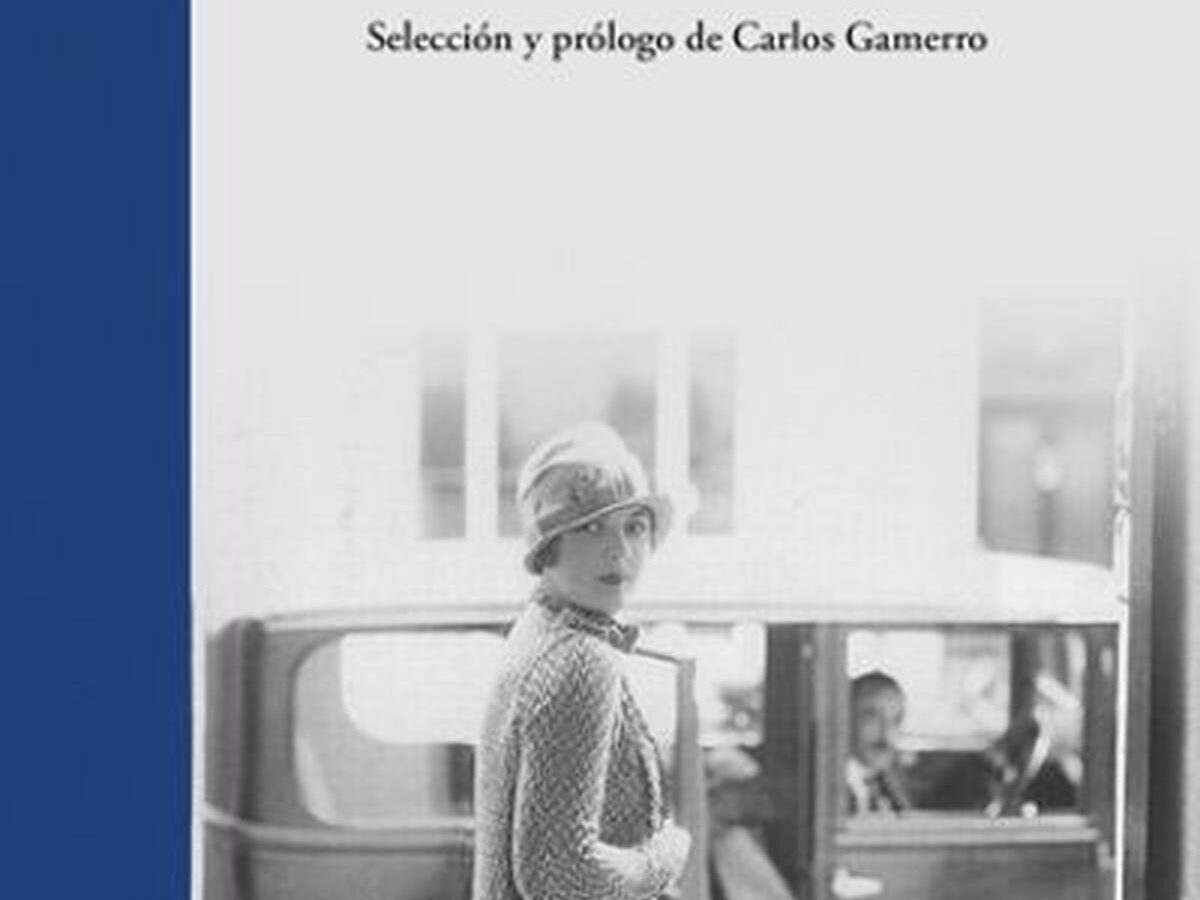
Francis Scott Fitzgerald conceived short stories as if they were novels. Not for their length, but for the emotions they were meant to evoke. Perhaps this explanation hides the key to his way of crafting stories: the best of them, many of which are superb, could have been novels.
At Zenda we reproduce an entire tale from Selected Stories (Edhasa), by F. Scott Fitzgerald.
*****
THE LOST DECADE
People from all walks of life wandered into the weekly’s office, and Orrison Brown maintained all kinds of connections with them. When the office hours were over, he was “one of the editors”; but during working hours he was simply a curly-haired fellow who, a year earlier, had been the director of Dartmouth’s Jack-O-Lantern, and who now settled for taking on the unglamorous tasks of the editorial room: from correcting illegible manuscripts to acting as a messenger without being asked.
He had already seen that man enter the editor’s office: a pale, tall man, about forty, with impeccably brushed blond hair and manners that were neither sullen nor shy, nor quite as otherworldly as those of a monk, yet possessing something of all three. The name on his card, Louis Trimble, stirred only vague memories, but lacking any reference point, Orrison let the matter drift… until a knock sounded on his desk and, by experience, he knew that Trimble would be the first course of his luncheon.
“Louis Trimble… Orrison Brown,” announced the source of all luncheon funds. “Orrison, Trimble has been away for a long time. Or he feels it’s been a long time: nearly twelve years. Many people would count themselves lucky if they had missed the last decade.”
“That’s right,” said Orrison.
“Today I can’t have lunch with you all,” continued his boss. “Take him to Voisin, or the 21, or wherever you like.”
Trimble believes he has missed many things. Trimble politely objected:
“Ah, I can manage it.”
“I know, old friend. No one knows this town the way you do. And if Brown insists on explaining what a horsedrawn carriage is, send him back to me at once. And you have to be back at four, agreed?”
Orrison tipped his hat.
“Have you been away for ten years?” he asked as they rode the elevator down.
“They were just starting the Empire State Building,” Trimble replied. “What year was that?”
“In 1928, more or less. But, as the boss says, you were lucky to miss so many things.” And, probing, he added: “Surely you had more interesting things to see.”
“I don’t think so.”
They reached the street. Noting how Trimble’s face tightened with the traffic’s clamor, Orrison offered another guess:
“Have you lived far from civilization?”
“In a sense.”
He said it in such a measured way that Orrison concluded the man would not speak unless he wanted to… and, at the same time, wondered whether he had spent the thirties in a prison or in an asylum.
“This is the famous 21,” he said. “Would you rather eat somewhere else?”
Trimble paused and studied the red brick building he faced.
“I remember when the name 21 began to become famous,” he said, “around the same year as Moriarity.”— Immediately, almost as if apologizing— “I thought we would stroll along Fifth Avenue and eat somewhere nearby: a place where we could see young people.”
Orrison looked at him from the corner of his eye and again felt thoughts of bars, gray walls, and more bars; he wondered whether the menu would include presenting easy girls to Trimble. But this did not seem to be his aim: his expression spoke of pure and deep curiosity. Orrison tried to connect his name with the Byrd expedition lost at the South Pole or with the aviators missing in the Brazilian jungle. He had been, or was, a person of some renown; that much seemed obvious. Yet the only solid clue to discover his origin—and that clue would not lead Orrison anywhere—was that, as a city man, he obeyed traffic signals and preferred walking on the sidewalk closest to the shops rather than along the curb. Suddenly, he stopped to look at a tailor’s shop window.
“Crepe ties,” he said. “I hadn’t seen ties like these since I left university.”
“Where did you study?”
“At the Massachusetts Institute of Technology.”
“A fine place.”
“Next week I’ll be paying them a visit. Let’s lunch around here… you pick.”
On the corner there was a decent restaurant with a small canopy.
“What would you like to see?” Orrison asked as they sat down.
Trimble thought for a moment.
“Well… the back of people’s necks—how the neck joins the body. I’d like to hear what those two girls are saying to their father. Not exactly what they’re saying, but whether the words float or sink, how their lips purse when they stop speaking. It’s a matter of rhythm… Cole Porter came back to America in 1928 because he sensed new rhythms in the air.”
Orrison was sure he had found the lead he was looking for, but, with gentle tact, he did not pursue it for a second, and even suppressed a sudden urge to tell him there would be a fine concert at Carnegie Hall that very night.
“The weight of the spoons,” Trimble said, “so light. A small bowl attached to a handle. The waiter’s slight squint. I’ve known him for a long time, but surely he doesn’t remember me.”
Yet, as they left the restaurant, the waiter looked at Trimble as if he questioned, as if he were about to recognize him. When they stepped onto the street, Orrison burst out laughing:
“After ten years, people forget.”
“Ah, I was eating here last May…,” Trimble suddenly cut himself off.
Orrison concluded that all this was somewhat absurd, and suddenly he became a tour guide.
“From here you can see the Rockefeller Center,” he said with enthusiasm, “and the Chrysler Building and Armistead, the father of all these new structures.”
“The Armistead Building.” Trimble looked toward the spot he indicated, obediently. “Yes, I designed it.”
Orrison shook his head and smiled. He was used to dealing with all kinds of people. Yet the fact that he had eaten at that very restaurant in May last year…
He paused before the bronze plaque on the building’s cornerstone. It read, “Built in 1928.”
Trimble nodded.
“But that year I began to get drunk, truly drunk. So this is the first time I’ve seen it.”
“Ah.” Orrison hesitated. “Would you like to go in?”
“I’ve gone in many times, many times. But I’ve never seen it. And right now that isn’t what I want to see. I wouldn’t be capable. I only want to watch how people walk and what their clothes, hats, and shoes are made of. And the eyes and the hands. Would you mind shaking my hand?”
“Not at all.”
“Thank you, thank you. That’s very kind of you. I suppose you’ll find it strange; people will think we’re saying goodbye. I’ll stroll along the avenue for a while, so yes: we must part. Tell the newsroom I’ll be back at four.”
Orrison followed him with his gaze as he moved away, almost expecting to see him slip into a bar. But nothing in Trimble suggested he drank anything.
“God,” he said to himself, “ten years drunk.”
He felt the fabric of his own jacket and then reached out, pressing his thumb against the nearest building’s granite.
—————
Author: F. Scott Fitzgerald. Title: Selected Stories. Translation: Carlos Gamero. Publisher: Edhasa. Sale: Todostuslibros.