

Each day it becomes more difficult to make this selection. Choosing only a dozen books from among all those that have starred in our month is a mission hard to fulfill. We hope we have been fair, and if we have not been, you can propose your favorites in the comments. We are delighted to read you.
The Books of the Month at Zenda
Over the past thirty days, we have gathered the dialogue between books from all origins. Once again this month, at Zenda we choose twelve books to summarize what has happened in bookstores over the last weeks.
*****
The Backpack, by Ander Izagirre
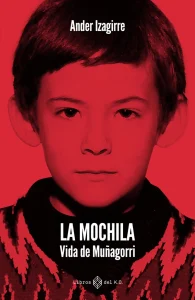 On June 25, 1982, ETA left a backpack bomb in a square in Rentería. It was meant to explode at midnight, but it did not go off until the following noon, just as Alberto Muñagorri, ten years old, was crossing the square with his friends to play football. The blast severed one of his legs, blinded him in one eye, and left him with lifelong aftereffects, some visible and others that would emerge decades later.
Many Basque children of the 1980s grew up with his name etched as a warning: never touch a abandoned bag, they told them at home, because it could explode on you just as it did to Muñagorri. Ander Izagirre was one of those children. For that reason, after publishing books and reports on child mining in Bolivia, violence in Colombia, or the cyclists who endured the Rwanda genocide, Izagirre returned to tell this story from his homeland and his childhood. He met Muñagorri and walked with him through his town.
This book follows Muñagorri’s life, repeatedly crossing the violent history of the last half-century in Rentería and in the Basque Country: ETA attacks, kale borroka, threats, the never-ending riots, the GAL, the devastation of heroin… up to an astonishing process of reconciliation in the town and Muñagorri’s encounters with former ETA members.
It is a gripping narrative, enriched by the voices of protagonists and witnesses of the episodes that shaped Muñagorri’s life and that of Rentería. It is also a reflection on the mechanisms of violence and peace, on memory, forgiveness, and coexistence. It does not offer comforting answers. As Muñagorri says when he goes out to train with his prosthesis: “Mine is not a story of overcoming. I run while showing the scars.”
—————————————
Author: Ander Izagirre. Title: The Backpack. Publisher: Libros del KO. Sale: Todostuslibros.
***
Mi amor no muere, by Roberto Saviano
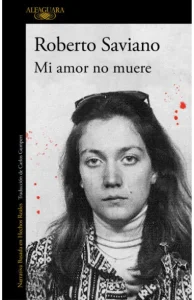 Rossella Casini is a little over twenty years old. She lives in Florence and has grown up in a loving family that has provided her with a calm and unprivileged life. But we are in Italy in 1977: the squares are buzzing with political protests, and the streets fill with rage, violence, and heroin. Everything changes when she meets Francesco, a Calabrian student who lives far from his homeland. An intense and unfamiliar love grows between them. However, after the first months of happiness, Rossella discovers that Francesco’s family is tied to a powerful mafia clan.
During a vacation in Palmi, to which she has traveled with her parents, she witnesses a war erupt between clans. The violence breaks out and drags everyone in its wake, but Rossella refuses to leave without Francesco. She is convinced that her love can break the spiral of violence. On February 22, 1981, after announcing her return home, Rossella Casini disappears without a trace. She will never be seen again. Although her body was never recovered, the Italian state recognizes her as a victim of the ’Ndrangheta.
Roberto Saviano reconstructs her story in a deep and harrowing novel, a tale of love, violence, and courage about one of the darkest chapters of contemporary Italy.
—————————————
Author: Roberto Saviano. Title: My Love Does Not Die. Publisher: Alfaguara. Sale: Todostuslibros.
***
El soñador de refugios, by Anna Caballé
 “A couple of months before his death, my brother let me know that he wished I would keep his notebooks and papers. Years earlier he had trusted me to help him find a path in poetry, but I, then young and inexperienced in many things, did not know how to do it, did not know how to help him, and time passed. It’s true that in the eighties I was already devoted to teaching literature, I read a lot and taught university courses to even less experienced students than me, but that was all. And besides, I lived immersed in my own concerns, which at twenty-eight or thirty constitute a whole world in themselves. Carlos, in the winter of 1993, was fading away before everyone’s eyes. When he died, on April 12 of that year, his widow considered that after all they had gone through together in the brief time their relationship lasted, those notebooks Carlos had carried from one place to another in search of a way to poetize the noise of his inner world belonged to him. It seemed the most reasonable, and also the fairest, after having had the chance to witness how L. loved Carlos and cared for him in the most difficult circumstances imaginable. No more was spoken, and for many years I knew nothing of her, worried, I suppose, about reorganizing her life again after the devastation suffered, as everyone does. Because dying of AIDS in the early nineties, as dying of leprosy in the early centuries of our era, meant that, the purest image of vital desolation, civil death, absolute rejection. People turned away from AIDS patients as from lepers who must be kept outside of communal life.”
Anna Caballé departs, in this unique and probably unrepeatable instance, from her usual framework of work to immerse herself in a family story that revolves around reclaiming the memory of her brother Carlos, a poet and musician who, driven by his star, died of AIDS in 1993. One more among the many young people who lost their lives under the same tragic circumstances—the drugs—in the eighties and early nineties. “It was twilight in the forest, but I woke because you were with me,” is the ending of one of Carlos Caballé’s unpublished pieces. And that is what this book is about.
—————————————
Author: Anna Caballé. Title: The Dreamer of Refuges. Publisher: Galaxia Gutenberg. Sale: Todostuslibros.
***
Agente Rossini, by Álvaro Soto
 “Sometimes reality surpasses fiction. The incredible life of FBI agent Mark Rossini, told at thriller pace, will fascinate readers of Soy Pilgrim and John le Carré”. (Juan Gómez-Jurado)
When journalist Álvaro Soto began researching Mark Rossini, he had no idea of the scale of what he was about to uncover. Rossini was an FBI agent who had been assigned to the CIA’s Counterterrorism Center, where he held pivotal information about two terrorists who could have thwarted the 9/11 attack. But his CIA superiors forbade him from sharing it with his New York FBI colleagues, who were tasked with pursuing al-Qaeda. No one could foresee at that moment how far the consequences of that decision would reach.
This book reconstructs, through the protagonist, the life of Mark Rossini: from his years at the FBI and CIA’s elite to his fall from grace and his reinvention. A journey into the heart of the intelligence services and the mistakes that shaped history.
On the 25th anniversary of 9/11, this investigation sheds new light on what happened. Rossini now lives in Madrid, far from centers of power, but with a burden that has continued to drag him since then.
—————————————
Author: Álvaro Soto. Title: Agent Rossini. Publisher: Ediciones B. Sale: Todostuslibros.
***
Rasca y gana, by Violeta Niebla
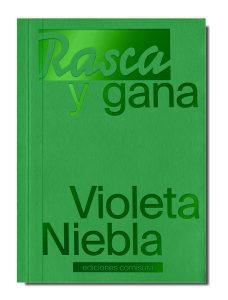 One secret requires little surface. Just the space between a mouth and an ear. This book has been designed with that exact measure.
Inside there are secrets. Some ridiculous. Others serious. Some childish. Others capable of ruining a life. To read some pages you will have to scratch. Literally. With a coin, with a key, or with your nail. With whatever you can grab. Beneath will appear something that someone decided to hide. But which, in turn, decided to share in this book you hold in your hands.
For more than ten years, Violeta Niebla has gathered anonymous confessions from hundreds of unknown people. With that archive she builds a unique artifact about the desire to know, the strange intimacy between confessor and listener, and the unsettling responsibility of keeping what is not yours. Even if we lower our voices, this book is already a secret spoken aloud.
As the secrets unfold, the anonymous voices collected by Violeta Niebla become a collective rumor. The confessions repeat themselves and eventually melt into a common molten mass. Deception, loneliness, fear of desire, domestic violence, money, the body, and guilt appear again and again. The archive stops speaking only about individuals and begins to reveal which issues a society keeps silenced and which forms shame takes across different ages, classes, and relationships, and it leaves several uncomfortable questions open that run through the entire work and prevent reading from turning into mere voyeurism.”
—————————————
Author: Violeta Niebla. Title: Scratch and Win. Publisher: Comisura. Sale: Todos tus libros.
***
Recuerdos, by Juan Ramírez de Luca
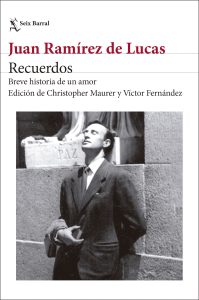 In the early months of 1936, Federico García Lorca and Juan Ramírez de Lucas, a young student and actor fond of poetry, maintained a secret relationship. The Civil War and Lorca’s murder cut that love story short forever. This volume, with its memories and documents, constitutes an exceptional literary and historical event: the direct testimony of the man who lived Lorca’s last months in Madrid until his departure to Granada, in addition to being the recipient of Lorca’s last known letter just before being killed.
Accompanied by an extraordinary collection of unpublished materials spanning nearly a century — drawings, a poem and a letter, photographs and autograph documents of García Lorca — Recuerdos. Brief History of a Love fulfills Juan Ramírez de Lucas’s wish to overcome “a dense tangle of preconceptions and taboos” and offer a new intimate image of the poet in the final months of his life, healing the open wound that this great secret caused in his life.
Edited by the Hispanist Christopher Maurer and the journalist Víctor Fernández, these pages illuminate one of the most fascinating and little-known episodes of twentieth-century Spanish literature and constitute an indispensable contribution to Lorca’s legacy, as well as preserving forever the closest and most personal voice of Juan Ramírez de Lucas.
—————————————
Author: Juan Ramírez de Luca. Title: Recuerdos. Publisher: Seix Barral. Sale: Todostuslibros.
***
Los últimos días de Alejandro Reig, by Miguel Pardeza
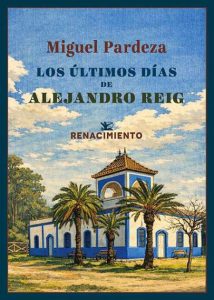 After leaving a steady job to devote himself to writing, the narrator of this story settles for a fall in Islantilla, on the coast of Huelva, convinced that isolation will allow him to finish a novel that no one seems willing to publish. There he seeks the counsel of Alejandro Reig, a veteran, brilliant, and sour writer, withdrawn from the literary world after a respected but unfinished career. What begins as an attempted mentorship gradually turns into an uncomfortable cohabitation crossed by disillusion, generational reproaches, and a deep distrust of literature as a form of salvation. In a landscape of empty beaches, persistent temporary structures, and provincial bars, the narrator is drawn into a web of relationships as unpredictable as disturbing: Frida, a fascinating and pragmatic woman, torn between desire and flight; Tess, Reig’s loyal companion, sustained by a melancholic lucidity; and Muriel, a fisherman with a murky past who embodies the moral ambiguity of a world where the line between legal and criminal is blurred. As the story progresses, the narrator witnesses both the physical and spiritual decay of his mentor, while at the same time his own decay unfolds, caught between guilt, desire, and the need to find meaning in his vocation. The novel unfolds as an intimate chronicle of failure, but also as a meditation on the passage of time, betrayal, literary vanity, and the fragility of human bonds.
Miguel Pardeza Pichardo. Born in La Palma del Condado (Huelva), he was a professional footballer in the eighties and nineties. While pursuing his career, he studied Law and earned a degree in Spanish Philology at the University of Zaragoza. After completing the Diploma of Advanced Studies in Spanish Literature of the twentieth century, he researched César González Ruano, for whom he edited Obra periodística, 1925-1936 (2002), Obra periodística, 1943-1965 (2003) and Necrológicas (2005). A regular contributor to print and radio media, he has participated in collective books such as Oscura turba, de los más raros escritores españoles (1999), Diez articulistas para la historia de la literatura española (2009) or Tomás Borrás, Cuentos Gnómicos (2013). In 2016 he published his first novel, Torneo, which won the Panenka prize for best book of the year. Of his debut, it has been written: “a Bildungsroman in every respect” (Vozpópuli), “impact, humor, and talent” (El Cultural), “a manifesto about freedom, rebellion against the rules” (El Español), “strictly unforgettable” (Cuadernos Hispanoamericanos). Angelópolis is his second work of fiction.
—————————————
Author: Miguel Pardeza. Title: Los últimos días de Alejandro Reig. Publisher: Renacimiento. Sale: Todostuslibros.
***
El año de la serpiente, by Camila Fabbri
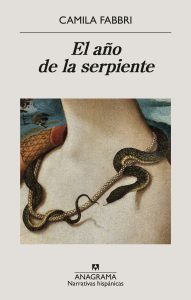 Everything begins with a smell. A deep and unbearable odor of decomposition: a presence with layers of meaning that settles in the hallways of a classic 1960s Buenos Aires building. Aldana, a neighbor whose resistance to mess and bacteria keeps her on high alert, is the first to notice it and, together with Gina, the building’s doorkeeper, decides to confront the mystery emanating from apartment 5.º C. There lives Celeste Blum, a young architecture student who appears solitary, yet recently has begun a relationship with Simón, an older man obsessed with reptiles whose devotion unsettles the couple’s intimacy in an ecosystem that teeters between fear and fascination.
But what begins as a scent attack soon becomes a growing concern: what happens behind the closed door of that young woman who always seemed to inhabit an absolute calm surface? In the toxic atmosphere of the apartment, among scale models of green spaces and gossip magazines, there floats something more than the trace of an absence: a creeping suspicion, a reptilian presence, an exotic and lethal force that could possibly reach further. Camila Fabbri constructs in The Year of the Snake a novel of domestic horror and psychological tension about the environmental dangers in human relationships: those invisible threats that germinate in affective bonds, in urban loneliness, and in the voyeuristic tone of neighbors who watch someone else’s tragedy as if it were a reality TV program.
After the success of The Queen of the Ball, Fabbri affirms herself in this work as one of the most magnetic and disturbing voices of Argentine fiction. The Year of the Snake is an exploration of the inheritance of trauma, psychopathology, tedious existences, the forms of violence that cross the female experience, and even the incel movement. As in the best nightmares, what harms here is the certainty that, at any moment, the wild will decide to reclaim its place.
—————————————
Author: Camila Fabbri. Title: The Year of the Snake. Publisher: Anagrama. Sale: Todos tus libros.
***
Escapar del capitalismo, by Clara E. Mattei
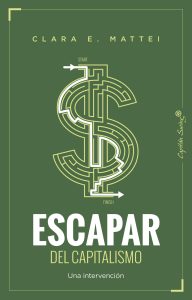 Capitalism is not inevitable, scientific, or natural: it is a relatively young system that can be replaced. Clara Mattei argues that persistent problems like poverty, unemployment, and inflation are not flaws of the economic system but fundamental characteristics of it. The tools of economic experts — spending cuts, interest-rate hikes, and regressive taxes — are sold as apolitical, but they hide a stark truth: they reinforce inequality. Economics rose as a scientific discipline after World War I, legitimized by mathematical formulas and new institutions too sophisticated for the average citizen to understand. The current economic institutions, from the Federal Reserve to the IMF, wield enormous power over monetary policy, yet they remain outside democratic scrutiny. Why should we accept a system that delegates life-affecting decisions to bodies in which we have no voice or vote? All of today’s great problems — from a healthcare system that puts profits before health to the rise of ultranationalism — originate in an economic system that does not serve the common good.
—————————————
Author: Clara E. Mattei. Title: Escaping Capitalism. Publisher: Capitán Swing. Sale: Todostuslibros.
***
La oscura historia de mi madre, by Ana Rodríguez Fischer
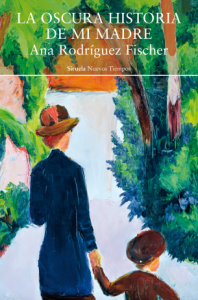 This book reveals the tortuous relationship that Hölderlin, Baudelaire, Van Gogh, Rimbaud, Virginia Woolf, Marina Tsvietáieva, Irène Némirovsky, and Marguerite Duras shared with their mothers. So complex and intense as it is deep and passionate, that bond left its mark on their lives and works. Therefore, when they sense the end of their days approaching, they feel the need to remember and to speak.
Narrated as a soliloquy directed at their respective mothers, the text is at once memory, autobiography, confession, portrait, and chronicle. The voices of eight singular figures, the variety of registers, the tumultuous historical circumstances that framed their lives, the profile of the recipients of this outpouring of emotions and feelings —ranging from affectionate memory to accusation and condemnation—, reflections on the human condition, or the struggle to forge a work that embodies their soul, along with the numerous details that tie these lives together more than we might suspect, are some of the traits that make The Dark History of My Mother a special, suggestive, and novel reading.
“A delicate literary trompe-l’oeil, with eight vibrant letters to the mother, in which Ana Rodríguez Fischer again demonstrates her talent for mimicking authors we thought were inimitable.” (Marcos Giralt Torrente)
“Eight of the great creators of the last three centuries confront their deepest wound: the relationship with their mother, which can be both the cause of existential unease and the source of their genius. Letters of high literary quality that do not pale next to Kafka’s ‘Letter to the Father.’” (Ignacio Martínez de Pisón)
—————————————
Author: Ana Rodríguez Fischer. Title: The Dark History of My Mother. Publisher: Siruela. Sale: Todostuslibros.
***
Estructuras invisibles S. L., by Teodoro Jiménez Pozo
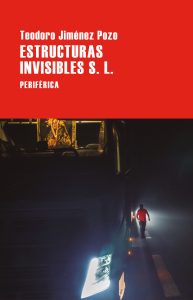 Estructuras Invisibles S. L. is a novel about work. Not a novel whose theme is work, but a novel that dares to tackle one of literature’s most arduous tasks: narrating work, that hell of repetition and sameness.
Bentor Marrero is a trucker who witnesses his own life in a semi-dazed and dissociated manner. The accidental death of one of his fellow drivers is not here a mere deus ex machina, but a gear that confronts us with a reality we generally prefer to ignore: the invisible thread that binds workers’ status to the penal code. After the accident, Bentor embarks on a forward-moving flight pursued by the ghost of the dead man while he continues to drive a colossal truck that fails to meet the minimum safety requirements to transport enormous structures around the island of Tenerife.
With a craft rarely found in a first novel, Jiménez Pozo constructs a raw and merciless narrative that needles precisely at the knots that make up a vast network: exploitation, the justice system, punitive measures, the overwhelming mess between work and existence. Estructuras Invisibles S. L. resists, however, from being trapped within that network: it is a brisk novel, with a gripping style that pays close attention to the speech of its characters, who are defined by their own idiolects. With touches of black humor, we are faced with a text that is new and yet anchored in a long tradition — a contemporary Lazarillo de Tormes, an involuntary rewrite of La familia de Pascual Duarte — whose protagonist tells his story and places us, the readers, in the position of judges of his guilt and of the system’s guilt.
—————————————
Author: Teodoro Jiménez Pozo. Title: Estructuras invisibles S.L. Publisher: Periférica. Sale: Todos tus libros.
***
¿Pero qué es esto?, by Alex Gamsu Jenkins
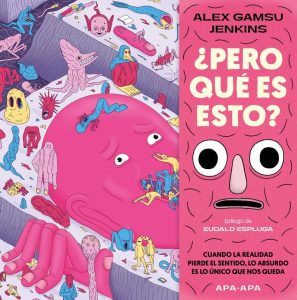 Having a coffee, glancing at the phone screen, waiting. In Alex Gamsu Jenkins’s universe, a small detour in the everyday is enough for reality to burst into the air and routine to become the nightmare of savage and grotesque humor.
Through a unmistakable stroke and a vivid color palette, Jenkins operates as a surgeon of modern discomfort. His panels distort the most banal gestures (office work, technological saturation, urban loneliness, anxiety before catastrophe) until they become warped mirrors of our own existence.
Without the need for artifices, this work unfolds a catalog of mental landscapes and situations as uncomfortable as they are irresistible, where the human body bends, melts, and loses its form to reveal the bitter comedy of living in a time on the brink of collapse.”
—————————————
Author: Alex Gamsu Jenkins. Title: What Is This? Publisher: Apa-Apa Cómics. Sale: Todos tus libros.