
The month of September has crowded our shelves with books. Among so many new releases, we strive to chart our little reading paths… and to leave a record of them.
The books of the month at Zenda
A lo largo de los últimos 30 días, hemos recogido el diálogo entre libros de toda procedencia. Un mes más, en Zenda elegimos doce libros para resumir lo que ha pasado en las librerías a lo largo de las últimas semanas.
******
The Wandering Lady, by Pío Baroja
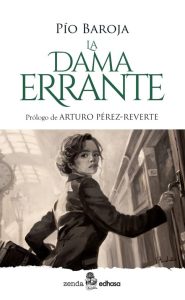 Madrid, 1906. Following an anarchist assassin attempt on Alfonso XIII and Victoria Eugenia, doctor Aracil and his daughter María are drawn, almost by accident, into a dangerous political pursuit that forces them to flee Spain. The escape begins, winding through roads, inns, villages and borders, from the rough Extremadura to Portugal, on a journey that will end with eyes toward England and a Europe promising a different future.
Yet, at the heart of the novel lies María Aracil, one of the most fascinating figures not only of Baroja’s entire corpus but of his era. A young woman ahead of her time, possessing the intelligence, sensitivity and independence of a heroine, and the drive of someone who, without fully realizing it, is destined to become a truly free woman.
First published in 1908, The Wandering Lady is a small jewel of our literature, in which Baroja’s refined and intelligent prose strips away a modern, ahead-of-its-time story. A work in which the road, the landscape, and movement matter as much as the characters, turning into an adventure of discovering the world… and of discovering oneself.
—————————————
Author: Pío Baroja. Title: The Wandering Lady. Publisher: Zenda-Edhasa. Sales: Zenda-Edhasa
******
This Is Your House, by Jon Bilbao
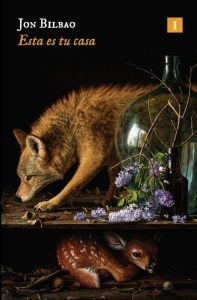
Jon Bilbao has spent years building a literary world centered around one house: a family home in a northern seaside town, visible from the far bank of the estuary, perched on a limestone massif full of caves. This Is Your House gathers nine stories that orbit around that house and around those who inhabit it, covet it, or fear it. They blend the postwar years with contemporary horror, the most exposed autofiction and the purest genre, childhood and the seas blocked by the Six-Day War. What unites them is the house as an organism with a memory of its own, capable of welcoming or expelling, guarding secrets or making them up. This Is Your House is the book with which Bilbao closes circles and opens new ones. Readers who arrived at it through Basilisco, Estrómboli, and Los extraños will recognize the same tension between refuge and threat, the same instinct to turn the domestic into a territory of suspense, but will find here something more intimate and more unsettling.
This Is Your House is the most personal work of Jon Bilbao: a writer who looks at his own life and sees all that he has deposited in it—the war, fear, desire, the dead who did not leave, the real house and the invented house, so overlapped that it is impossible to tell which supports the other.
—————————————
Author: Jon Bilbao. Title: This Is Your House. Publisher: Impedimenta. Sales: Todos tus libros.
******
Lázár, by Nelio Biedermann
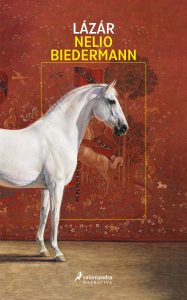
The snow from the dying century still rimmed the edge of the dark forest when Lajos von Lázár, a boy with nearly transparent skin and water-blue eyes, first laid eyes on the man who would be his father for life and beyond.
Lajos von Lázár enters the world at the dawn of the new century, and his birth is both a miracle and a curse: his true lineage is a secret he will never learn. The Lázárs have governed their Hungarian lands for generations. In their old castle on the edge of a dark forest that drives those who venture into it to madness, they fall prey to vices and live only to satisfy their desires. But the old order crumbles: the days of the Habsburg monarchy come to an end.
When Lajos inherits the title, a Baron is at last able to rekindle the lost splendor, but even his strength cannot withstand the ravages of war and occupation. It will fall to his children, a boy who talks to shadows and a girl who rejects her blue blood, to find a way to defy oppression and take the first, still uncertain, steps toward freedom.
Lázár, an epic novel that transports the reader from the dawn of the twentieth century to the Hungarian national uprising of 1956, is an extraordinary achievement for any writer. With an air of timeless wisdom, it reads like a rediscovered classic, made even more astonishing by the fact that the author wrote it at only twenty-one years old.
—————————————
Author: Nelio Biedermann. Title: Lázár. Translation: Alberto Gordo Moral. Publisher: Salamandra. Sales: Todos tus libros.
******
Canal, by Javier Fernández

«My brother Miguel died on March 5, 1975, three weeks before his sixth birthday. He died at noon; it was a cloudy and windy morning.» These lines open Canal, a long poem divided into sixty fragments and a coda, exploring the impact of the death of the older brother on the family unit.
This special edition of Canal reproduces the artistic intervention, previously unpublished, carried out by illustrator Aitor Saraiba in September 2016.
The editor Ángelo Néstore describes Canal as “one of the foundational books of Spanish-language literature of our century. Contemporary poetry cannot be understood without crossing Canal.”
—————————————
Author: Javier Fernández. Title: Canal. Publisher: Letraversal. Sales: Todos tus libros.
******
This Room Impossible to Eat, by Nicol Hochholczerová
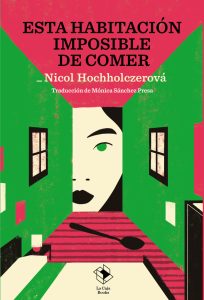
Tereza is twelve years old. Ivan, her forty-something drawing teacher. For more than five years they will be bound by a tangled relationship of power, imbalance, sex, and obsession. Tereza will confide in her friend Silvia and seek words to name the sensation that churns inside her. Ivan will keep the secret and dream of clocks that tick and chase him. When he gets drunk, he repeats: “You resemble my daughter so much, do you know how terrifying that is?”.
Nicol Hochholczerová has written a deliberately ambiguous novel. Her prose, sharp with minimalism and symbolism, follows Tereza in her compulsion to devour what does not feed her. The gray hairs that fall into Ivan’s lap, the limbs of his other lovers, the walls of his childhood room. Tereza chews and swallows, but her body cannot digest and assimilate the world that opens before her. She chokes on her hunger for pleasure and pain, for understanding the bulimic mechanisms that govern her desire.
Translated into eight languages, finalist for Slovakia’s most prestigious prize—the Anasoft Litera—and at the same time banned in schools by the prize sponsor, This Room Impossible to Eat arrives in Spanish bookstores as one of the most controversial and challenging debuts of recent European literature.
—————————————
Author: Nicol Hochholczerová. Title: This Room Impossible to Eat. Translation: Mónica Sánchez Presa. Publisher: La Caja Books. Sales: Todos tus libros.
******
The Silver Book, by Olivia Laing
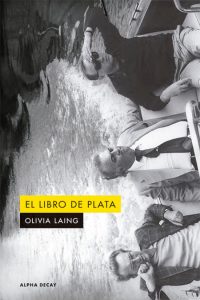
September 1974. After leaving London in a hurry, the young Nicholas arrives in Venice, where he happens to meet Danilo Donati, the legendary costume designer and production designer who made Fellini’s visions real. Danilo has traveled to the city to prepare the first sketches for Casanova, and a young artist eager to learn is exactly what he needs.
Together they move on to Rome and the Cinecittà studios, that vast theatre of illusions where Fellini’s Venice emerges from cardboard and Styrofoam. There, among sets, spotlights, and costume fittings, Nicholas discovers a dazzling world filled with filmmakers, actors and technicians, while his relationship with Danilo grows more intense. Shortly after, they will accompany Pasolini during the filming of Salo, the disturbing parable about fascism that would be his last film.
But Nicholas has arrived in Italy fleeing from something. While the country endures the Years of Lead, the young man’s past begins to crack the fragile universe built on artifice.
With hypnotic prose and an extraordinary recreation of 1970s Italian cinema, Olivia Laing crafts a story of love, desire, and obsession in which beauty and violence, art and imposture, move forward inseparably until they become indistinguishable.
—————————————
Author: Olivia Laing. Title: The Silver Book. Translation: Albert Fuentes. Publisher: Alpha Decay. Sales: Todos tus libros.
******
Sol y sombra y fiesta, by Rodrigo Fresán
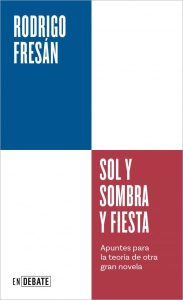
An exemplary essay in which Rodrigo Fresán marks the centenary of one of Ernest Hemingway’s indisputable classics.
The Sun Also Rises / Fiesta, by Ernest Hemingway, reaches 100 years old, and Rodrigo Fresán invites us to celebrate it with this compact manual for discovering and rediscovering it. Here, the secrets of the author’s writing, the explosive celebrations, the impotence of an impossible love, the sinners and the Sanfermines, the existential anguish and the vibrant killer and a mythic and fatalistic femme fatale, the film of the novel, the people-characters, the cheerful Paris and the euphoric Pamplona, the bottles to drain and the bulls to bullfight, the modern dialogues and timeless passions, the disturbances of its author and the rites of expatriate life that made it an ever greater Great American Novel.
—————————————
Author: Rodrigo Fresán. Title: Sol, Sombra y Fiesta. Publisher: enDebate. Sales: Todos tus libros.
******
A Night in 1947, by Ángeles González-Sinde
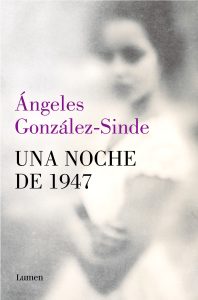
In a small village in the Teruel mountain range, Nieves, the new doctor, tries to help Micaela, a girl who has stopped sleeping and going to school, and who seems to live besieged by an unnamed fear. What begins as a clinical case draws Nieves closer to Clementina, the girl’s grandmother, and to a family history shaped by the hardest years of the postwar period, when Francoist guerrilla activity, repression, and secrecy marked the fate of many places forever.
In her search for answers, Nieves understands that some sufferings cannot be addressed without listening to what decades of silence relegated to the intimate sphere. The relationship with Micaela, Clementina, and the town’s residents also transforms her own view on care, loss, and the bonds that join generations, even when collective silence seems to have erased all trace. With suggestive writing and remarkable psychological precision, Ángeles González-Sinde builds a novel in which memory moves through everyday life and through characters of great humanity. A Night in 1947 explores the footprints left by postwar violence on families and rural life and shows how the past continues to shape the present from what is remembered, but also from what was never told.
—————————————
Author: Ángeles González-Sinde. Title: A Night in 1947. Publisher: Lumen. Sales: Todos tus libros.
******
The Art of Traveling Without Moving from the Site, by Hilario J. Rodríguez
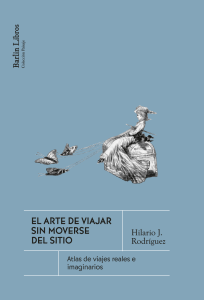
Since travel has become a spectacle and tourism an industry of mass, the experience of traveling seems to have drained of meaning: interchangeable destinations, predictable images, standardized routes. In response to this consumer landscape lacking wonder, this book proposes a radical investment: reclaim imagination as the first territory of travel. Inspired by the narrative cadence of W. G. Sebald and Jorge Luis Borges, Hilario J. Rodríguez shapes in The Art of Traveling Without Moving from the Site a lucid itinerary that traverses memory, cultural criticism, cinephilia, and marginal literature. Across its pages, the reader accompanies a constellation of atypical nomads: from Ricardo Piglia’s insomnia in impersonal hotel rooms to Reinhold Messner’s silent mountaineering, or Judith Schalansky’s cartographic gaze at unreachable maps. Traditional cartography, often a tool of control and appropriation, yields to storytelling and fantasy here: ways of traversing the world without submitting to it. As the author recalls, taking up Michel de Certeau’s mantle, “what the map cuts, the narrative traverses.” Far from a simple homage to the adventurer, this essay also probes the ruins—natural, cultural, political—of the West. From inhospitable territories such as Jan Mayen Island to the veiled plunder behind Europe’s baroque palaces, the author sketches a map where the literary archive and the resilience of the natural world emerge as the last refuges against contemporary amnesia. A evocative essay that, far from a conventional travel log, returns travel to its critical power and its capacity to estrange. Perhaps traveling today means something else: not moving, but learning to look.
—————————————
Author: Hilario J. Rodríguez. Title: The Art of Traveling Without Moving from the Site. Publisher: Barlin. Sales: Todos tus libros.
******
The Hour of the Monsters, by Miguel Ángel Santamarina
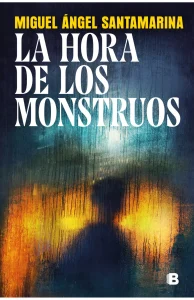
Two months have passed since Mario and Bruno, two teenage boys from Ciudad Real, disappeared. When a high-rating program extracts data that even the police do not know, the case becomes a media circus packed with lurid details.
Consumed by obsession, journalist Javier Redondo will do anything to uncover the truth that lies behind this incident. He will soon be drawn into a dangerous plot in which he uncovers the atrocities humans are capable of while putting his own life at risk.
This is a story about the most terrifying monsters in our society: those who reveal themselves in broad daylight. A gripping investigation that leads us to the heart of corruption and depravity, where every clue brings us closer to danger and every suspect sits closer to power.
—————————————
Author: Miguel Ángel Santamarina. Title: The Hour of the Monsters. Publisher: B. Sales: Amazon.
******
A Day in Clarita’s Life, by Rosa Montero
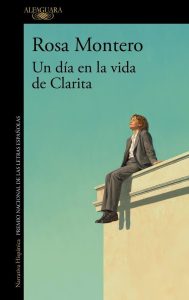
Clarita has spent thirty years working at a bank, clinging to an almost invisible precision within a narrow world where every gesture is preordained. Solitary, meticulous, and used to taking up little space, she approaches her retirement day as someone who stands at a uncertain frontier: on the other side, she imagines not a new stage but a nameless emptiness.
But that day, meant to pass amid listless farewells, constant humiliations, and the inertia of a relentless office, is altered by an unforeseen event. Forced to act, Clarita steps away from the role others have assigned her and that she has accepted for too long. In a few hours, something that seemed dormant surfaces: intelligence, desire, anger, a glimpse of freedom.
With psychological intensity, sharp humor, and a prodigious sense of intrigue, Rosa Montero offers a moving story of self-affirmation and transformation. It could be the tale of a homely duckling becoming a swan, though more accurately it is the tale of an unlikely frog transfigured into a Tyrannosaurus.
—————————————
Author: Rosa Montero. Title: A Day in Clarita’s Life. Publisher: Alfaguara. Sales: Todos tus libros.
******
Aquamarine, by Carol Anshaw
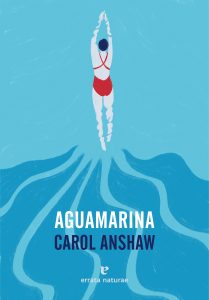
At the 1968 Mexico City Olympics, seventeen-year-old Jesse Austin loses the 100-meter freestyle by a few thousandths of a second to an Australian swimmer. That cruel, decisive moment, frozen forever in the pool’s green-blue water, torments her for the rest of her life. Or, rather, the rest of her lives.
Because after that primal scene, Carol Anshaw makes a prodigious leap forward to 1990, the year Jesse turns forty, and from there the narrative splits into three possible lives for her. Each path reflects different choices after those Olympics, leading her to marry, divorce, or stay single, to love men or women, to remain in her native Missouri or to flee as far as possible from it. Each life carries the weight of that failure; but it also gathers loves lost and found, family relationships that strengthen or blur…
United by the emotional ties that connect Jesse to her past, this remarkable literary triptych seduces us not only with its varied versions but also with the resonances of similarities across each life, unchanging. Jesse is always Jesse, and yet she is not. Her three lives, shaken by decisions both good and bad, reveal Anshaw’s mastery, who crafts this narrative amusement with captivating audacity, sharp humor, and deep compassion, and who touches us, delights us, and intrigues us at once. We become adept swimmers, diving into these refreshing stories with pleasure and finding it hard to stop reading. And when, to our regret, we reach the end, they continue to prompt us: they make us reflect on our own lives, while we wonder about all we have discarded. How would we be now? What ghosts would pursue us and what joys would we cling to?
—————————————
Author: Carol Anshaw. Title: Aquamarine. Translation: Regina López Muñoz. Publisher: Errata Naturae. Sales: Todos tus libros.