
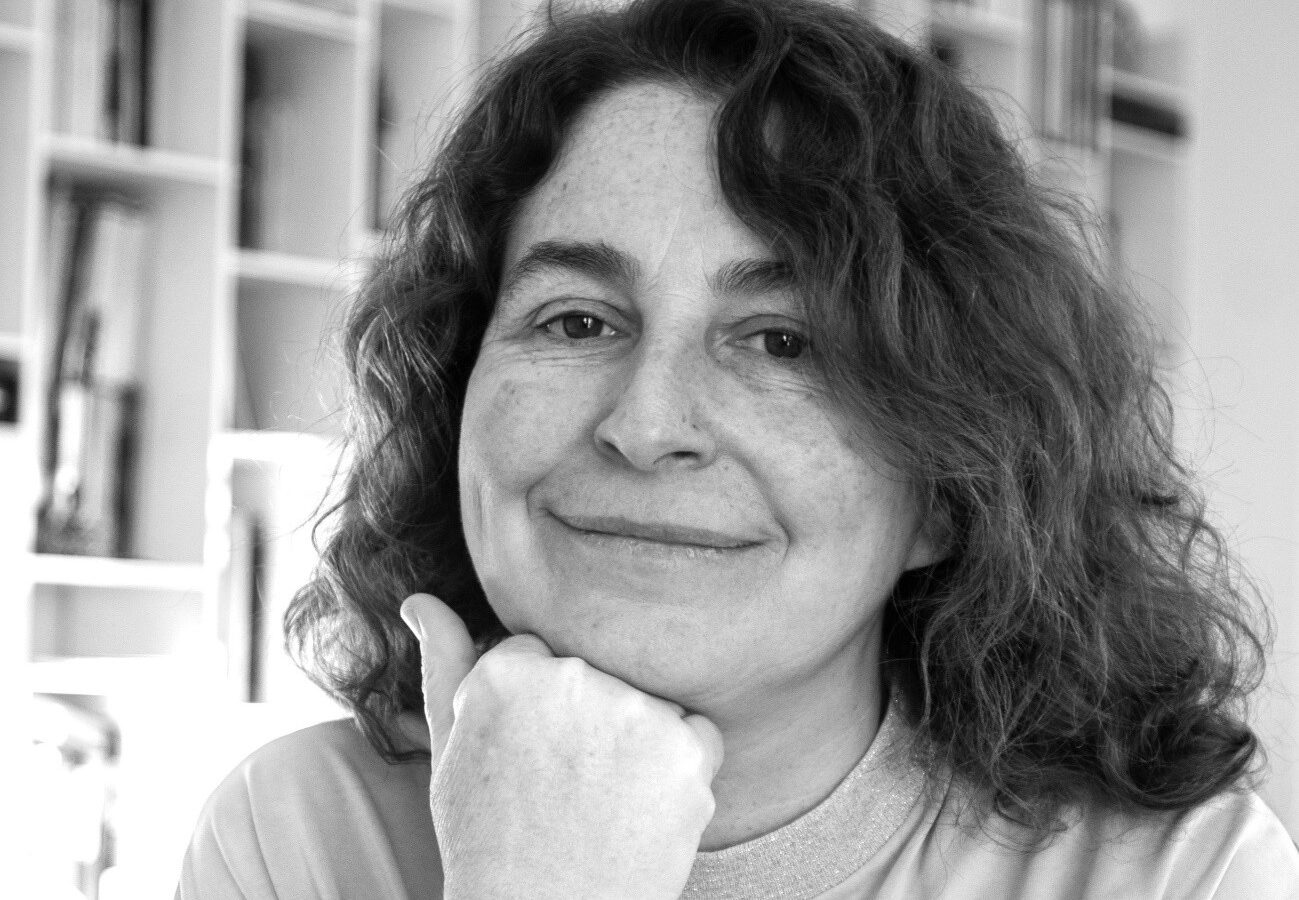
Claudia Prado is a poet born in Puerto Madryn, Argentina, in 1972. In 2015 she received a Creation Grant from the Queens Council on the Arts. From 2006 to 2011 she was one of the facilitators of the poetry workshop “Yo No Fui” at a women’s detention center in Ezeiza (Argentina). While living in the United States, she began facilitating creative writing workshops in Spanish for numerous immigrant organizations in New York and New Jersey. She publishedThe interior of the whale (Nusud, 2000); Learning from the parents, with collages by Víctor Florido (Rijksakademie van Beeldende Kunsten, 2002); Traveling by night (Editorial Limón, 2007), First (Caleta Olivia, 2019); The interior of the whale / The Belly of the Whale, bilingual edition translated by Rebecca Gayle Howell (Texas Tech University Press, 2024). She co-directed the documentaries Oro nestas piedras, about the poet Jorge Leónidas Escudero, and The Secret Garden, about the poet Diana Bellessi. She works as a writing workshop coordinator. In our country, Ediciones Contrabando, within its La Coz collection, published in 2024 Nothing Shines in the Corners, an anthology of her poetic work from which we present a sample.
***
Goodwill
Among all the walks we took one: we looked at the map
the dotted lines that connected one lake to another
or wandered off in a zigzag,
we paid careful, deliberate attention to the photos
—the ill-printed blue of the sky,
the branches frozen in the current of a river—
and you wrote with steady handwriting
on the back of a flyer that times and prices.
We chose well, after all.
That afternoon
at the Devil’s Throat I saw a condor glide, and you
lifting your hand in a tiny salute to me,
you had managed to reach so far.
Throughout the walk we smiled
as if we had found the path back
to happiness.
***
the bread. Clarisa
What would grandma tell the dogs, what would she say to the parrot.
She lived in isolation, ate apart,
very rarely was she called by name.
She let the goats go free or she herself would get lost.
She appeared far away on rainy days.
Mom, me, we were kicked out
when they could of that house.
Just to see her, we returned
from visits now and then; I remember her
pulling out a hard bread, a tortilla
that she had hidden
under the pillow for me.
Was this what you were looking for? That bite was good
the kind that other kids
would have found revolting.
Her old sister,
owner of everything, offered us better things.
I did not accept.
***
far away
Suddenly, in that noonday place, there by the clothesline or the washbasin
where at this hour she moves about by herself, she sings. There couldn’t have been many times.
The old, childish words and the voice of a grown woman
a thread barely spoken, sustained only just by the music.
She always told us: Deaf as a wall.
In this house we don’t know how to sing.
She works when the house is quiet,
shakes out a sheet, folds it, creases it;
the gestures she repeats are older
than that little piece of song.
One could not say she is happy.
It is something else.
In the middle of the night when I read I think of her—the poor, shy voice.
The book says she never heard her mother sing.
But she has a sweet mouth.
And I feel a jolt, a hollow, as time slips away.
I am far away.
My mother sometimes sings.
***
one eye. Aide, Jessica, Daniella
they share the same memory
girls from different decades
The favorite toy, a rag doll or plush, ages. The colors fade the most, the seams loosen,
it looks indolent in the embrace. One day it loses an eye. It is hard
to sustain that incomplete gaze. If it had been missing something as distinctive as a mouth, they would have accepted it differently.
But it still retains the shine of a plastic bead, now solitary,
and the other side of the face smooth. The missing eye does not appear, it did not roll
to any corner, it is not under the bed where they check, with a relief, that the fears of a woman with the face hidden under the hair do not live there. No, there is nothing bright in the corners, nothing dark, only a little lint.