
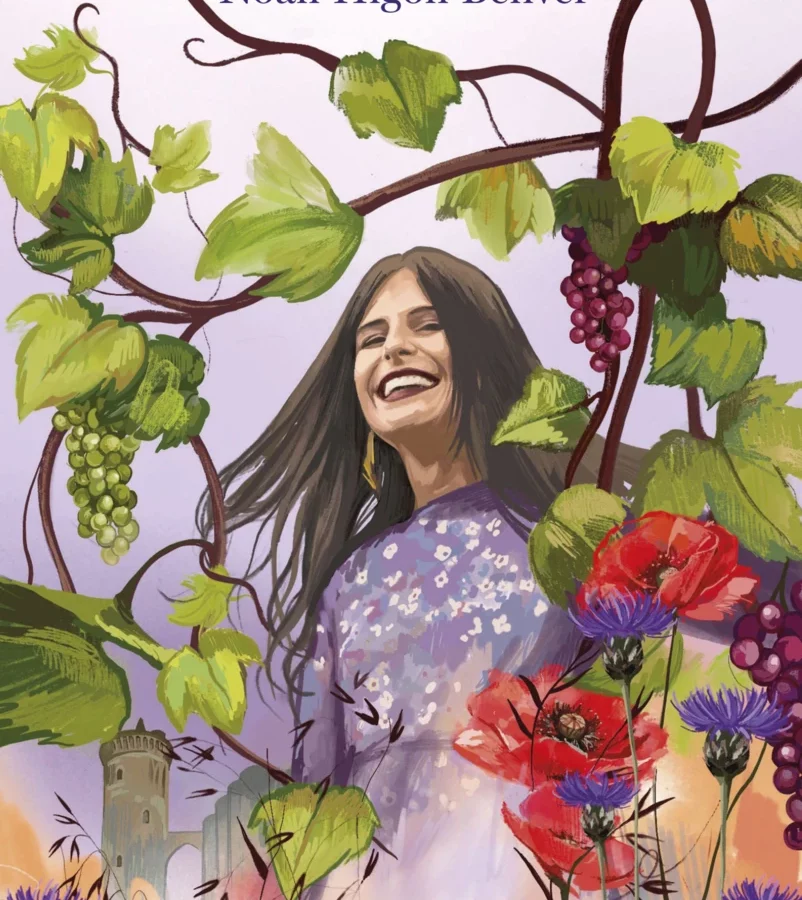
This poetry collection is a journey to the very heart of intimacy. A dialogue between the wound and hope, between memory and the skin that keeps beating. On its pages, the poetic voice stands before pain without surrendering to it; it observes it, names it, and transforms it into learning, tenderness, and a root.
In Zenda we reproduce five poems from Todavía soy raíz (Espasa), by Noah Higón Bellver.
***
Choosing Without Fear
I choose to breathe without asking for permission,
I choose to release what does not add to me,
I choose to be only mine
without apologies,
without explanations.
I choose to look at my reflection
and recognize the strength
that is born from wounds.
I do not seek to save anyone,
nor to be saved.
I only walk,
step by step,
growing
like someone who learns to bloom
in the middle of the desert.
***
The Patience We Give to Sadness
There are days when sadness asks for no permission.
It simply appears,
when the analgesics fail to help,
when the body breaks in its own places of
[always
and hope is left speechless.
Then I breathe.
And I make room.
To sadness, I say.
I offer it a chair beside the bed,
as to an old acquaintance
who never quite left.
It does not shout at me, it does not blame me.
It simply is.
It weighs on the lids,
slips between the ribs,
and reminds me that this illness hurts not only in
[the body.
It also hurts in memory.
In the desires.
In the time that never was.
I have learned not to fight it.
Not with anger.
Not with shame.
Because shouting at it to go away
is like yelling at chronic pain:
it won’t leave because you want it to,
it leaves when it can.
So I let it be.
Let it cry if it must.
Let it accompany me if there is nothing more.
Sometimes it speaks softly to me,
tells me everything I have lost.
And though it hurts, I listen,
because it also reminds me of who I still am.
What I endure.
What I love, even so.
Living with illness is living with presences that others do not
[see.
And yes,
one must have immense patience
for sadness.
As one has for life
when it insists
on staying.
***
I Am This:
a contradiction that breathes,
a tenderness that defends itself,
a rage that learned to cry
when no one was watching.
I don’t know how to fit in,
but I hold myself up.
And that, today,
is a sufficient way of existing.
***
The Day I Stopped Waiting for You
You are there, but not.
You go,
even if you do not close the door.
You prefer the music of other bodies
to the silence we had to learn.
And I,
who has stayed so many times, begin to understand
that loving isn’t always the same as staying.
It’s not that you leave,
it’s that you never fully come back.
And I no longer want waits
that last longer than hugs.
There is a loneliness that does not stem from silence,
but from sharing space with
someone who no longer looks at you.
When the one you love chooses someone else
and again you are far apart,
you begin to understand
that choosing yourself is not selfish:
it is coming home.
Because love should not hurt
more than it accompanies.
And the presence that does not care does not fill.
And the waiting that brings nothing is empty.
I choose not to stay where only I stay.
I choose to be the one who leaves,
before I stop being.
***
Where Everything Falls
It was not a collapse,
it was more like
a slow way of unmaking.
First, the clock stopped making sense,
then the names of the days
and, finally,
the strength to hold
what had never belonged to me.
Not everything that falls breaks,
sometimes it just finds the ground that belonged to it.
—————————————
Author: Noah Higón Bellver. Title: Todavía soy raíz. Publisher: Espasa. Sales: Todos tus libros.
BIO
Noah Higón Bellver (Cheste, Valencia, 1998) is a lawyer and political scientist, as well as one of the most recognizable voices in Spain in disseminating information about rare diseases and advocating for scientific research. Her public presence has grown steadily in recent years, solidifying as a collective reference thanks to a sincere, combative, and deeply sensitive voice. Her poetry, as luminous as it is combative, is part of her battle. The publication of two books (De qué dolor son tus ojos and De esperanza marchita) and projects such as the documentary Noah, her symbolic presence as the central ninot in the Valencian Fallas and her constant involvement in any event or media outlet bring her story, her commitment to medical research and public health to thousands of people, and call for empathy, commitment, and participation. Diagnosed with several rare diseases since adolescence, Noah began her medical journey at barely twelve years old. Since then, she has undergone a long process of diagnoses, hospitalizations, and treatments, facing a complex reality that has deeply marked her life. Far from resigning, she has made her experience a tool for collective transformation. Her work focuses on making visible the urgent need to invest in medical research and to improve diagnoses and treatments. She does so with the conviction that her voice can contribute to change. Noah Higón Bellver is a unique example of resilience.