
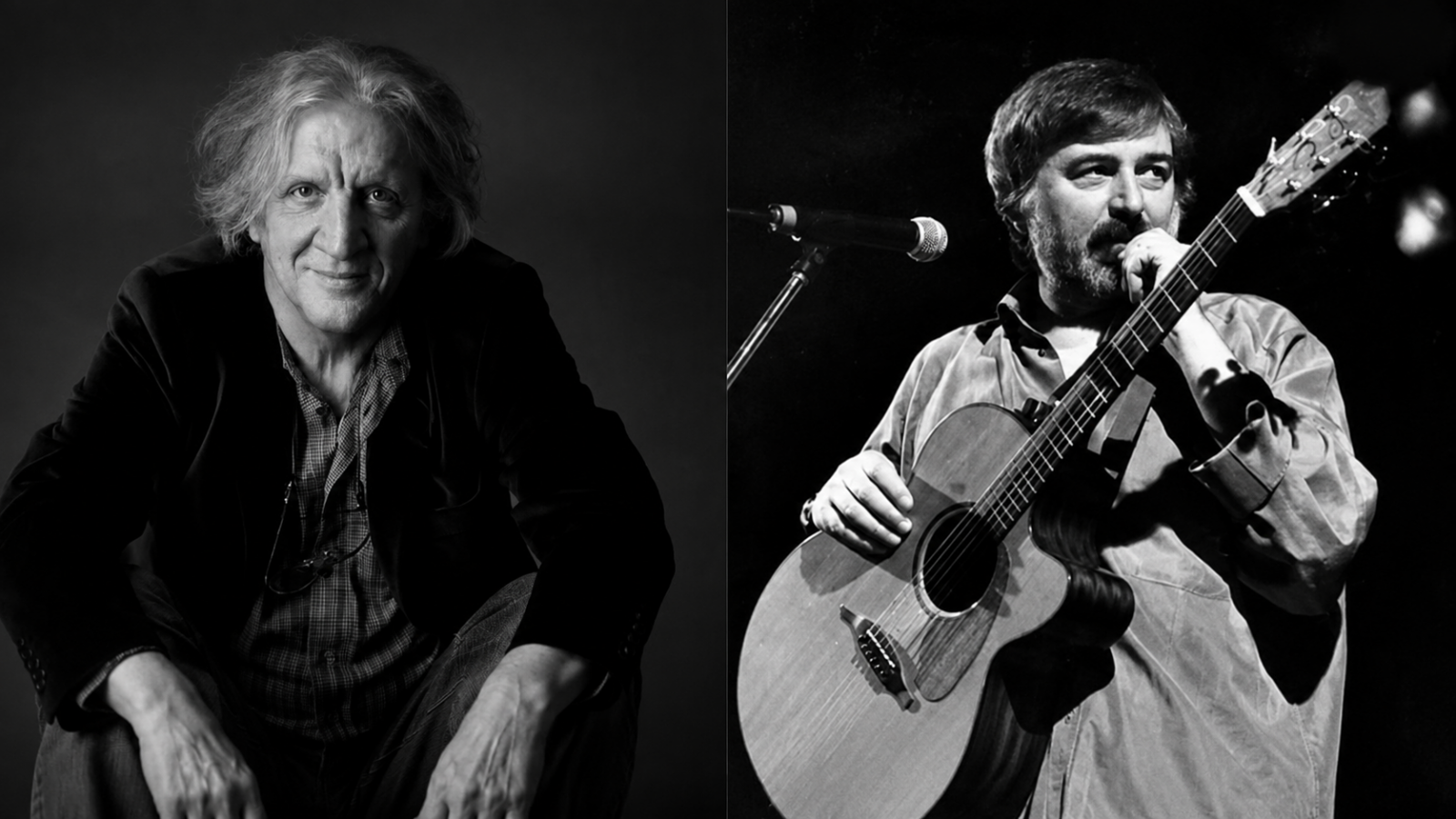
With singer-songwriters, the reality is that, however famous and prestigious they may be, as soon as they cross the borders of their country or their language they become complete strangers. It is usually the case that no Spanish enthusiast has heard of Francesco Guccini. Likewise, only a small portion of Italians who still glance at song credits will recognize the name Joan Manuel Serrat, perhaps indirectly due to his connection with titles as disparate as the dialectal La ziatta or Mina’s Bugiardo e inconsciente. Fortunately, on rare occasions there emerge people like Sergio Sacchi (Milan 1948 – Girona 2026), who was not merely a connoisseur of both worlds, but devoted his life to surpassing boundaries and erasing borders, creating a higher territory — or rather an ideal kingdom — where artists and melodies find new ways of relating and end up forming an unexpected community, a multilingual and free space, with no other objective than occasional happiness, which is the best way to create beauty.
Metaphors and ordinary valuations (the bridge between cultures, the essential figure of the Spain-Catalonia-Italy dialogue and so many others that clearly deserve it) fall short in defining Sergio Sacchi, because among the many achievements of his life was the making of the singer-songwriter the best of the “going-and-coming” genres. His way of creating did not consist only of leading by example, but in convincing others that they could do things they had not anticipated. I must confess that, although I have translated the Commedia, the Orlando furioso, the Jerusalem Delivered and some other Italian literary classics, whenever he proposed something I felt a great insecurity, because the best example of song translation I know was and remains Sacchi’s work with the texts of Joaquín Sabina.
The undeniable literary value of Sabina’s lyrics creates enormous difficulties for anyone who attempts to render them cantabili in any other language, as they abound in wordplay, internal rhymes, double entendres, colloquialisms, cultural references, quotations from other poets, and nods to current events or history. In the versions included on the album Molto più di un buon motivo, performed by Lu Colombo, Sergio Sacchi deployed such a variety and effectiveness of resources that his work will forever stand as a masterful piece of adaptation. With a keen ear for prosody and rhythm, he was content with literal fidelity when feasible (Jugar por jugar > Giocare per giocare, Contigo > Insieme a te), and when that wasn’t feasible he found imaginative and unobtrusive solutions to the numerical problems (19 días y 500 noches > 19 giorni e 600 notti), toponymic ones (El café de Nicanor > Al chiosco di Giosuè) or idiomatic ones (Cerrado por derribo > Chiusura per fallimento, Noches de boda > Lune di miele, Camas vacías > Camera vuota, Nos sobran los motivos > Molto più di un buon motivo). The modification in the titles may seem minor, but it is in reality the hallmark of a great rewriting job, which, like in the best poetic translations, takes all possible liberties to achieve maximum fidelity. The best example of Sacchi’s talent is undoubtedly his version of De purísima y oro, in which postwar Spain is transformed, with the title Millenovecentoquarantasette, into postwar Italy. The same emotion for a different audience. It is possible that the names of Miguel de Molina and Totò say little to today’s youngsters, whether Spanish or Italian, but in Sabina and Sacchi’s verses they acquire that intangible purity of things that will never go out of fashion, because they deserve the permanence of things well done.
And now it turns out that Francesco Guccini has just died, one of whose latest publications was precisely a piece about Sacchi in the Italian edition of Rolling Stone. Outside Italy, where, as is natural, he has received enormous coverage, the news of his death in August has been reduced to a news agency note picked up by a few newspapers, but if among the readers of these lines there is someone who still hopes to find good literature in songs, all it takes is to listen to a handful of songs that have already outlived the infamy of time and the scrutiny of the zoilus critics, for living with them will always be better than continuing to ignore them: La locomotiva, Incontro, Auschwitz, Via Paolo Fabbri 43, Eskimo, Autogrill or Vorrei are some masterful pieces of a great writer who has left us hundreds of songs and a dozen books between essays and novels.
Exactly half a century ago Guccini composed and recorded L’avvelenata, a lucid and disruptive evergreen manifesto. A few days ago, Marta and I (that is, Marta y Micó) decided to include it in Spanish in the repertoire of our latest concert, in the “Giardino delle Rose” of Florence, before an audience of puzzled tourists and Italians grateful for the memory of their recently departed admired compatriot. To understand the importance and uniqueness of Francesco Guccini, simply read what we sing:
FRANCESCO GUCCINI
LA VIPERINA
Traducción de José María Micó
Si yo hubiese previsto todo esto,
viendo el fin, el pretexto y tales conclusiones,
¿os creéis que por estas cuatro perras
y esta gloria de mierda habría hecho canciones?
Vale, lo admito, sí, me he equivocado,
y me podéis gritar “¡Crucificadlo!”,
pero debéis saber que en mi linaje,
prolífico y variado, nadie más ha estudiado.
Mi padre con razón solía decirme
que cobrar la pensión es lo más importante;
mi madre, siempre dando en el clavo,
decía que un graduado vale más que un cantante.
Joven e ingenuo, perdí la cabeza,
y con mis libros, mi provincianismo,
mi jeta de don nadie, mi arribismo sin fe,
mi pasotismo, esto es lo que me queda.
Y así a vuesas mercedes, militantes,
críticos y pedantes, les pido mil perdones:
jamás he dicho que de las canciones
florezcan la poesía ni las revoluciones.
Yo canto cuando puedo y me apetece,
al margen de silbidos o de aplausos:
si os vendo o no mis discos no me afecta,
no los compréis y luego cubridme a escupitajos.
Según vosotros qué puede importarme
tomarme la molestia de estar aquí cantando;
me da mucho más gusto emborracharme,
o masturbarme en casa, follar de vez en cuando…
Si estoy de mal humor escribo hurgando
en lo más hondo de nuestras miserias:
suelo tener que hacer cosas más serias,
como el andar tirando, aún vivo y coleando.
¡Yo todo y nada, imbécil, borrachuzo,
yo poeta y bufón, yo anárquico y fascista,
yo rico, yo pelón, yo radical,
diferente e igual, negro, hebreo, comunista!
¡Yo maricón, yo seductor cantante,
yo falso, yo veraz, cretino y genio,
yo con mi angustia aquí de madrugada,
con mi vino y mis ganas de decir sacrilegios!
Según vosotros quién me obliga a estar
atendiendo a cualquiera que tenga un calentón;
el médico sentencia “Es depresión”:
ni dentro del retrete me gozo mi momento.
Y yo que siempre he dicho que era un juego
esto de componer rimas y versos:
¡la broma es ya pesada, compañeros,
comprad mis posaderas, que las vendo a buen precio!
Colegas cantautores, grey selecta,
que se vende en la noche a cambio de millones,
vosotros que podéis hacéis muy bien
llenándoos los bolsillos, no solo los cojones.
¿Qué más puedo decir? ¡Seguid cantando,
que siempre existirá (no hay quien lo niegue)
un músico frustrado, un criticastro,
un cura o un beato soltando estupideces!
Si yo hubiese previsto todo esto,
viendo el fin y el pretexto, quizá volviera a hacerlo;
me gusta hacer canciones, beber vino,
me gusta armar jaleo, y soy de nacimiento
tan tonto que por eso visto siempre
mi ropa de diario sin disfraz:
aún tengo muchas cosas que contar
a quien quiera escuchar, ¡y a la mierda lo demás!