
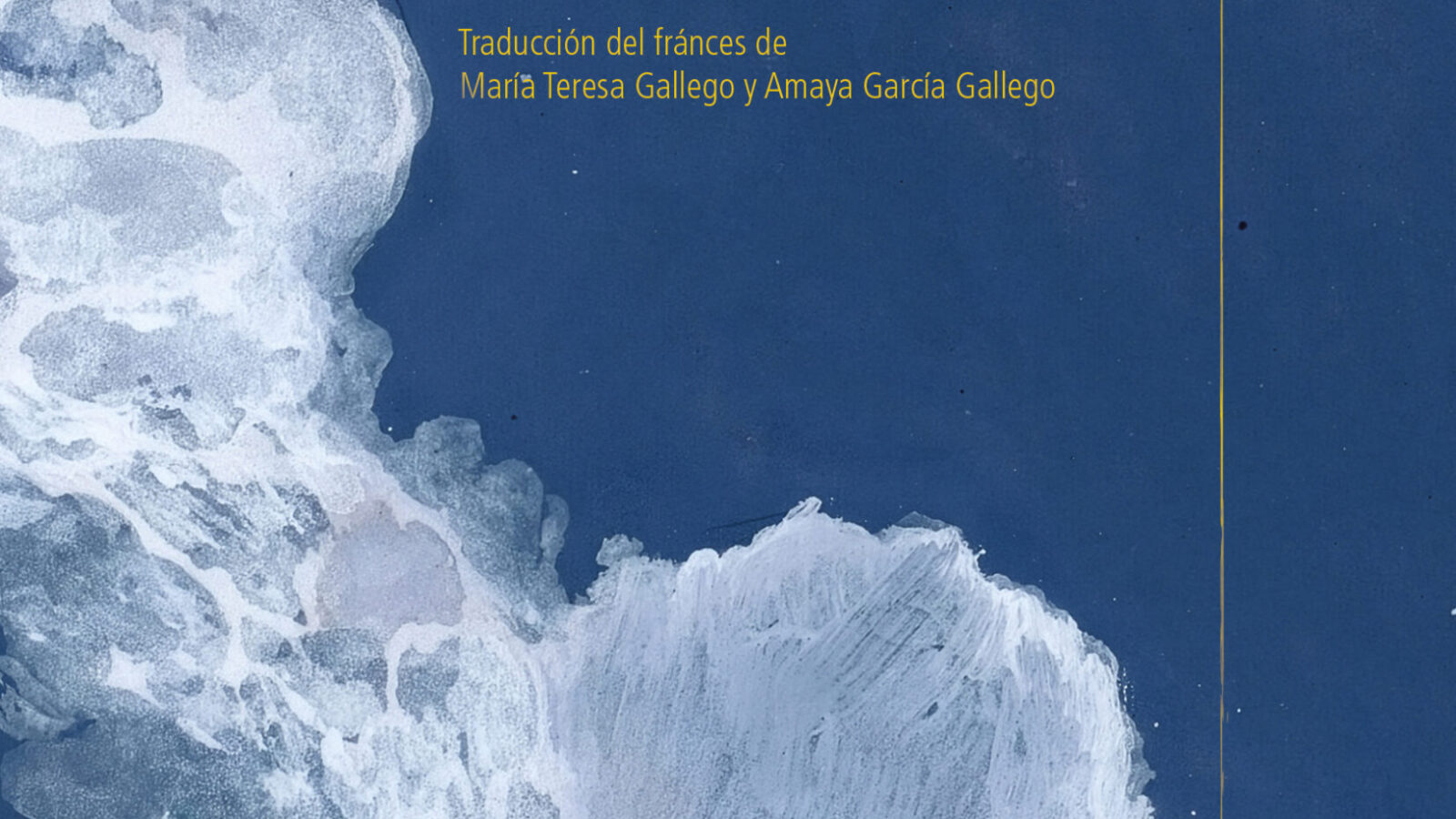
“Here the night is beautiful.” This is how the novel The Fierce Souls by Marie Vingtras opens, recently published by Nórdica Libros in a translation by Maria Teresa Gallego Urrutia and Amaya García Gallego.
The night may look lovely and calm, yes, but the souls do not feel peace; they endure a prolonged tremor instead. The focus of this novel advances not only in discovering who, how, and why someone commits the murder of a teenage girl in a small town in rural America, but also in what mystery surrounds the murdered girl’s soul and the secrets and truths concealed by the inhabitants of her community. The Fierce Souls tells a story that draws us closer to the psychological depths of the human soul.
The novel is structured in four parts —Spring, Summer, Autumn, Winter— which function not chronologically, but as an emotional cycle that accompanies the moral disintegration of the town and its residents. The reader comes to know characters, both main and secondary, who depart from clichés. Lauren, the sheriff who is a lesbian; Donegan, the sheriff’s deputy, who breaks the stereotype of a tough, closed-off police officer; Lucian, the depressed banker; Leo, the dead adolescent who never let us glimpse how her soul trembled. All live with silences, scars from the past, and secrets in a fragile balance that gives the appearance of calm. Hidden truths that will cease to be hidden and will reveal their consequences.
As the novel progresses, none of the characters answers to the image we might expect of them. In those nuances we end up dispelling the preconceived idea of a single culprit. In fact, the novel does not aim to point to a culprit so much as to show how violence, pain, and silence pass through every inhabitant of a town in all their emotional complexity. No. No traditional thriller; it is a novel about guilt, identity, the violence that is transmitted, and the impossibility of fully understanding those we love. A novel that probes far more than the identity of the murderer.
Regarding the narrative style, polyphonic, you will not find dialogues. But you can imagine them. The construction of the characters happens through introspection and by considering what they think about others at the moment when this or that occurred. Not very long sentences that move between thoughts and retrospective actions. Descriptions, strictly necessary. What we can do is visualize the places of that town which does not exist on any map, but which feels as real as the name the author invents for it, Mercy.
For me, who loves poetry, this novel has reminded me of the poetry collection A Village Life by Louise Glück. Not because of the plot, but because in both works, Glück’s and Vingtras’s, the village is a fictional entity rendered with remarkable realism. Vingtras employs four narrators to reconstruct the life and death of Leo — Lauren, the sheriff; Benjamin, scarred by a dark past; Emmy, Leo’s best friend; Seth, Leo’s father —; while Glück interweaves voices of various inhabitants with the poet’s reflections. In both works, truth is understood only polyphonically, and it is always incomplete.
In my view, at the end of reading The Fierce Souls, one can be left with the sense that secrets always drift toward the darkest corners of the soul to turn against oneself. Is it worth having secrets?
I invite you to read this 21st-century novel that converses with the thriller without surrendering to rules, to see what feeling you are left with. What I can assure you is that the rural setting of the story, that imaginary town called Mercy, will make you think of real places you may have passed through—and you may not regard its residents in the same way again. You may sense that beneath the surface many tremors are beating.
———————
Author: Marie Vingtras. Title: The Fierce Souls. Translation: Maria Teresa Gallego Urrutia and Amaya García Gallego. Publisher: Nórdica. Availability: Todostuslibros.