
Books
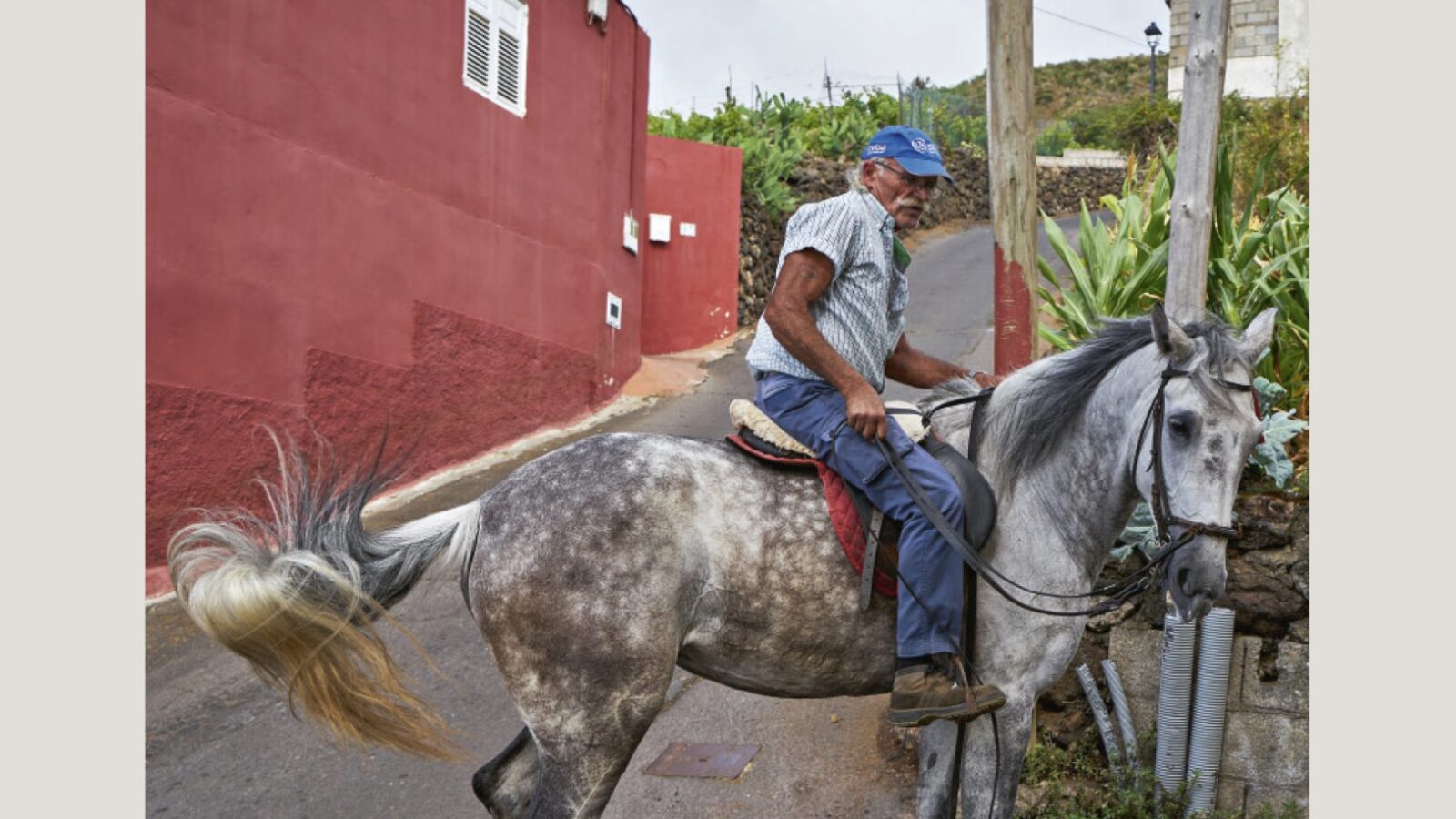
A White Horse with a Tiny Painted Mark Barely There
Pajaritos preñados is not the teacher who will leave you behind if you don’t master the nine-times table for the next class, but that native who has no idea of Spanish and from whom you must learn English through conversation, gestures and so much effort that, pure exhaustion, you’ll go home saying hello in a pronunciation that neither the native nor your mother will understand, but that proves that something, a fisco, has stuck with you.
Andrea Abreu
does not chew conscientiously the plot, the form, or the vocabulary of her new novel only to regurgitate it as a lump into the mouths of readers, so that they feel closer to the Canary Islands. From the first page, she makes clear how she wants to tell her story and demands that the reader be attentive, that they learn from the hands of Higo Pico, La Macha, Chachiraxi, El Churrero and the other neighbors
what the rules of that Tenerife world that doesn’t appear in postcards
, what its symbols are, its words, its ways of dreaming, of facing up to life and of transgressing when it presents itself as the only possible solution to a life that gives no respite.
Los pajaritos preñados come from the minds of the two protagonists: El Tiznado and Cathaysa, father and daughter, one renamed with a nickname that testifies to the abuse suffered at the hands of his mother; the other baptized as María Cathaysa, María by the priest’s obligation and Cathaysa by the Guanchitos, poor things.
El Tiznado is written with sincere tenderness that makes the reader an accomplice in his dreams and actions, in his most hopeful thoughts and the darkest. A man battered by life, who moves forward convinced that God has everything planned and that every step he takes is preordained by a higher force, whether the divine or Destiny itself. El Tiznado knows how to interpret symbols, bad omens, knows how to ask the brujentas for help and distinguish what harms him and what helps him, but his mind and soul are so attached to fatalism that everything ends up mixing together until black and white swap places and threaten to twist his steps.
Cathaysa lives her youth clinging to the desire to go from party to party without facing life, to enjoy her freshly turned sixteen, to be eternally beautiful, sensual, desired and loved, above all by her beloved father. El Tiznado is Cathaysa’s model to follow, that man who dreams, who tells stories, who finds treasures in scrap, and who gave her a Guanche name because they come from the Guanchitos, poor things. She is a young woman full of vitality who detests her mother Engracia’s madness, who shrinks from the gossip of the old women, who is drawn to those caleteros who bring trouble with their motorcycles and who get high in the bathrooms of bars.
El Tiznado and Cathaysa intertwine, dialogue, and fight in their hearts against conflicts, if not identical, at least similar. The years that separate them, the gender difference, as well as the possibility that one can see themselves reflected in the other, are fundamental elements for understanding the situations they live and suffer and the decisions they make or feel forced to make.
As had already happened in Panza de burro, Andrea Abreu is not afraid to talk about sexuality, abuse, violence, and how all of this shapes a person’s life until it becomes what it is and how it processes concepts such as love or existence.
Thus, identity is granted by others: «Whenever Cathaysa needed to feel that she still existed, she only had to look for her cousin with her eyes». Everything one can offer is based on one’s sex: «[…] because out of the parts arose all that he could give, out of that bolt like a clod of millet arose all that he thought he could give». And love is to fall in love at first and to shout at each other afterwards: «That was love, that was what Cathaysa knew about the men and women who Always moved together: that there was no need to love in order to put up with, that there was no need to respect each other, that rather one should disrespect the other until one loses track of what it means to respect a person».
And with each statement, a moment of uncertainty, for the reader knows that both Cathaysa and El Tiznado guard secrets that none dares translate into words. Is love about rubbing up with La Macha or with El Higo Pico? Is the white horse with a black fisco not really gray? Is the dog that bites and tears and tortures you all night a disguise of the Devil?
Pajaritos preñados cannot be fairly reviewed without considering the work as a whole. Unfortunately, reviews must avoid spoilers if they don’t want to scare readers away, so all that remains is to say that anyone who dares to enter this work should prepare to think and speak like El Tiznado, Cathaysa, and the rest of the characters, to spend days under the donkey’s belly and to dream of a light that guides hermits on a road full of road-tripping bugs.
—————————————
Author: Andrea Abreu. Title: Pajaritos preñados. Publisher: Anagrama. Availability: Todos tus libros.