
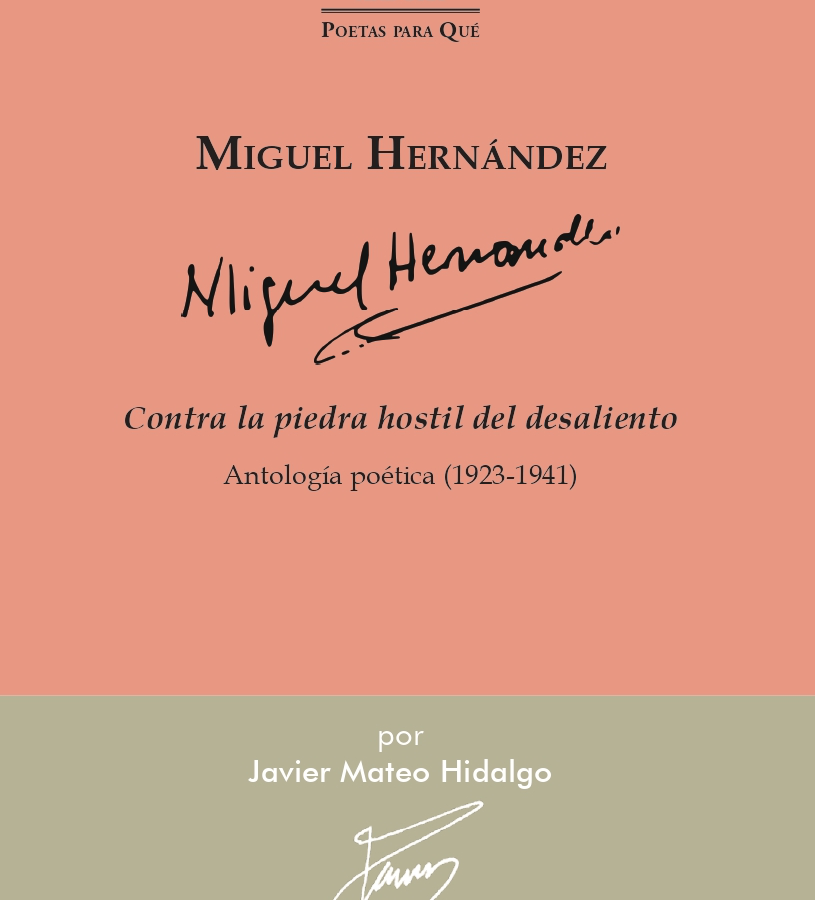
Earlier in the year, from Árdora Ediciones I was asked to undertake a poetic anthology about a pivotal figure in classical poetry, analyzed from my own perspective as a poet. The proposal struck me as as suggestive and original as the rest of the ideas the founding partners had been shaping into life for this magnificent imprint, which had earned the National Award for Best Cultural Editorial Work — awarded by the Ministry of Culture in 2020.
Joining Árdora was more than a gift: it symbolized a genuine challenge to live up to its prestige.
The collection in which the anthology would fit,
Poets for what, aimed to demonstrate that those classical poets remained modern, deserving today more than ever to spread their words to new generations. The collection began with the publication of two volumes that studied two indispensable names of Spanish and universal poetry: Miguel de Unamuno, anthologized by José Luis Gallero, and Antonio Machado, studied by José María Parreño. To these were added other classical poets anthologized by contemporary poets: Juan Ramón Jiménez by Julia Castillo, Rosalía de Castro by Begoña Paz, Francisco de Quevedo by Lucas Martí Domken, or César Vallejo by Alan Smith Soto.
The present anthology bears the title Against the Hostile Stone of Despair, stark words from Hernández contained in the poem España from Viento del pueblo and that perfectly define the poet’s personality, who through his attitude and his work battled against every adversity encountered along his life and career. Alongside a careful selection of his poems — including the early ones, which help understand his creative process in search of his own style — there is a prologue — where the author of these lines has sought to explain the importance of Hernández’s work and the mark he left on this humble poet —, a consulted bibliography and a justification where the reasons for selecting the poems present in the book are explained from the spirit that defines each poetic block. The aim is thus to achieve homogeneity in the overall collection through the affinity of both form and content among the chosen texts. The work concludes with a biography of the Orihuela-born author.
From all the ingredients mentioned, Against the Hostile Stone of Despair aims to differentiate itself from the previous Miguel Hernández anthologies and to serve as a catapult to boost the potential interest this author may arouse in today’s reader audience, always wary of poetry in general and of the misinterpreted “classical” in particular.