
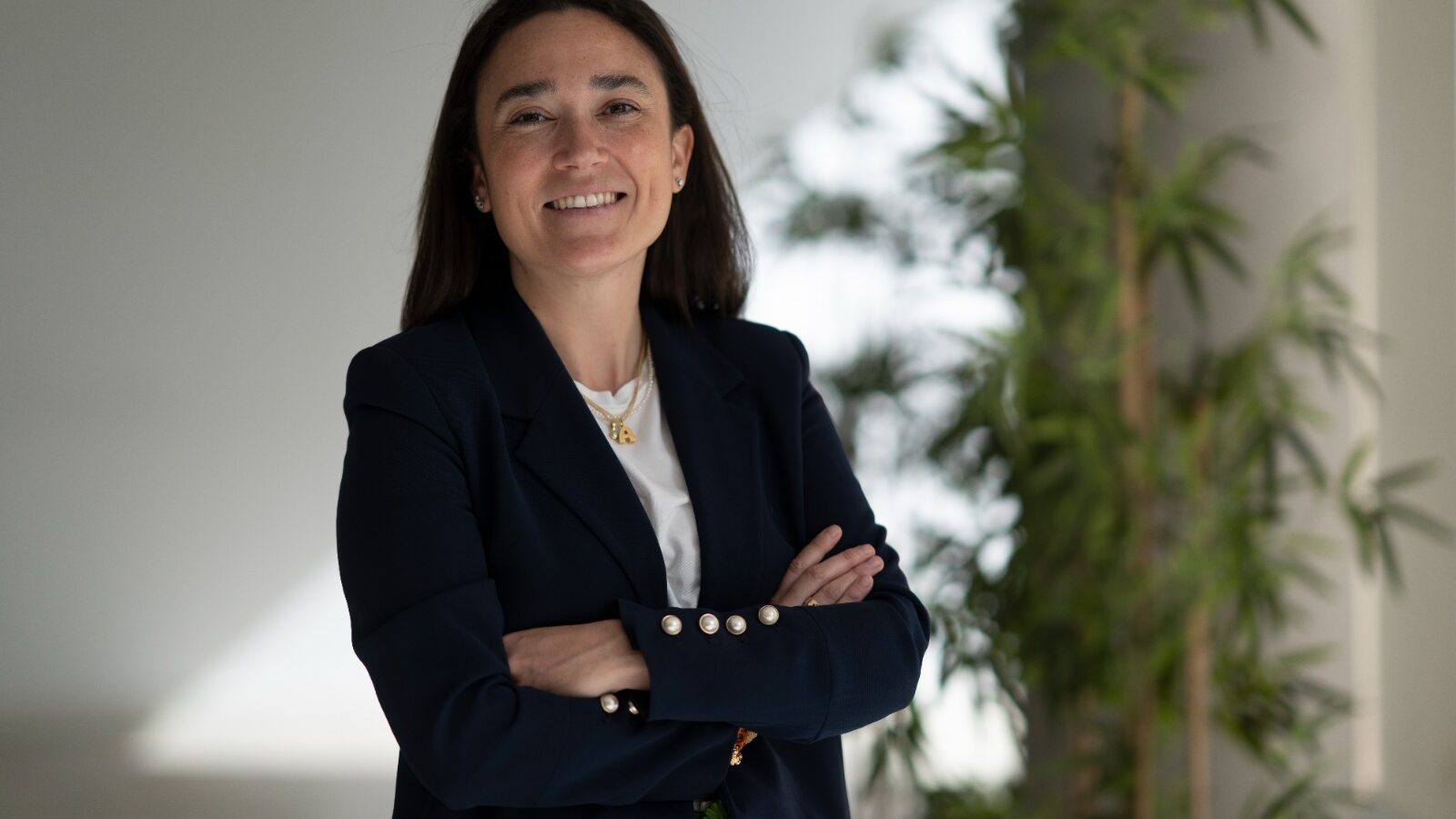
The journalist Angie Calero reconstructs in her book, Leonor de Borbón Ortiz (La Esfera de los Libros), the still relatively brief biography of Princess Leonor through more than thirty interviews and testimonies from teachers, scientists, and people who have known different stages of her upbringing. The result is not intended to be a definitive biography (hard to claim that at twenty years old), but a portrait of a young woman educated from childhood to one day assume the head of state.
—Let’s begin at the beginning. How did the assignment to write a book about Leonor come about?
—The publisher, La Esfera de los Libros, wanted to publish something related to the Royal Household. I arrived with several proposals, still a bit rough, because we weren’t entirely sure what kind of book we wanted to write. Writing another book about the king seemed pointless: there are many, and some have been written by excellent colleagues. We also thought about the queen, but we couldn’t quite settle on an angle. Then they said: “We had in mind a book about Princess Leonor.” My first instinct was, “But she’s a girl who’s barely twenty-one; what can I tell?” I asked for time to reflect. And then I understood that, in fact, the most important event of her period as Princess of Asturias had already occurred: the oath to the Constitution. That’s where I found the starting point.
—And you decide to tell it through the people who have known her.
—Yes. From the outset I was clear that the book had to rely on interviews. I wanted to build a profile of Leonor through authoritative voices, people who had been close to her at different moments and could help us discover what she is like beyond the institutional image.
—Let me ask you directly: why did you finally agree to write about a girl who is barely twenty?
—Because I believed it was worth assembling in one book what Leonor has accomplished to date. To create a kind of first portrait through brisk, easy-to-read reportage that could appeal both to readers who regularly follow the Royal Household’s affairs and to younger readers. In the end, she belongs to that generation and will necessarily have to relate to it.
—After you wrote the book, who is Leonor when she is no longer the princess? Or does she never stop being one?
—I think her parents’ intention is precisely that she can be Leonor even when she is not performing official duties, that she can have a life outside work. It’s naturally very complicated. There is an inevitable contradiction. We must see her as a girl trying to live a normal life, but that normality, in truth, is impossible. She knows very well that she isn’t an ordinary young woman. I think that duality (wanting to live with a degree of normality and at the same time knowing who you are and what your responsibilities will be) is part of her life.
—And what is she like in close contact, according to the testimonies you gathered?
—Very sunny. It seems she adapts well to situations and possesses extraordinary composure. I think from her father she inherits prudence and that way of observing before acting, a calm presence. And from the mother she has inherited a great curiosity. That almost journalistic side of wanting to know everything, to ask, to understand, and to squeeze what’s in front of her. She also consistently appears as a very discreet person who wants to do things well.
—How far did you manage to go beyond the institutional persona?
—That was one of the main challenges. I tried to speak with people who could tell me more private facets of her life. For me there were two fundamental stages: her years at school and her stay in Wales. If I hadn’t obtained testimonies about those periods, the book would have lost much of its meaning. Ultimately I was able to dedicate an entire chapter to her time at Santa María de los Rosales, thanks in part to the testimony of one of her History and Art History teachers. That helps bring closer the girl who grew up at a school trying to be just another student and to understand how she behaved, how she studied, or what activities interested her. There are charming details, such as the theater or the famous model-making room, that help complete the portrait.
—In her formation, which weighs more: Felipe VI or Queen Letizia?
—In these early military-training years there is probably much of the father. But there is also a lot of the mother, especially in terms of preparing her public appearances. The speeches we hear at the Princess of Asturias Awards or Princess of Girona carry that same care for communication that we associate with the queen. But, when it comes to learning the craft, the king’s influence is evidently decisive. Leonor is watching her father perform as head of state. That daily observation is likely the most direct instruction she can receive.
—And what role does Queen Sofía play in her granddaughter’s life and in her future as queen?
—It’s one of the aspects I would have liked to understand better. We know very little about the private dynamics of that family: the role of grandmothers, how they relate to each other, or what life is like when the institutional dimension recedes. We can see public appearances, but not much more. So I prefer not to assert what I don’t know. It’s true that there has always been a sense of a very close relationship between Felipe VI and his mother, but we have little public information about the concrete relationship between Queen Sofía and Leonor.
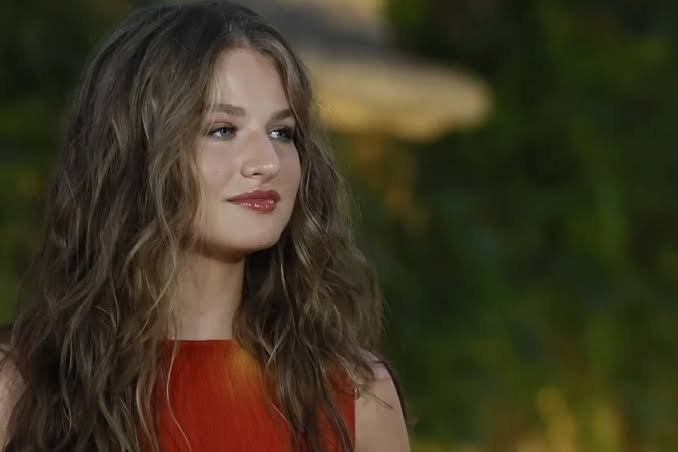
Photo: Efe
—Leonor, in just a few years, moved from school to Wales and then through several military academies. In what way do you think military training has changed her?
—Does it make sense that that military formation preceded the university path?
—At the time it was explained by her future role as commander-in-chief of the Armed Forces, but I think there is another reason: the formation of character. Between eighteen and twenty, you are still shaping who you are, and surely they considered that this learning could be especially valuable at that moment. From a personal standpoint, it might have been simpler to start with university, surrounded by peers her age. In the military academies, that hasn’t always been the case. Precisely for that reason the experience also demanded a significant capacity for adaptation. And another important point: since finishing the third year of secondary school, she has changed environments several times—Wales and then the military academies. According to the testimonies I gathered, she has adapted well to all of them. For someone who will have to move constantly among environments and people very different, that adaptability will be crucial.
—When you conduct a reportage, you end up developing professional empathy with the person you’re writing about. I suppose at some point you have asked yourself what it means to be twenty and know your future is written.
—Yes. And in fact that is one of the ideas that most interested me. Leonor seems to me a figure who is highly contracultural. She belongs to a generation constantly told that she can change her mind, her career, her city, her partner, her job; that if she makes a mistake she can turn back and choose another path. There is almost an obligation to keep redefining oneself. Leonor does not have that option. She has a path laid out: to prepare to be queen. And she must do so in a constant way. Moreover, from what I have learned, she has a perfectionist streak and there is also the king’s desire that his daughter arrive even more prepared than he was. That means growing up inside a very defined lane and embracing it from a very young age.
—And it seems she has taken it on board?
—The testimonies I collected indicate that she has. People who have known her convey that she shows a genuine interest in what she is doing and a fairly clear awareness of her responsibility. That is striking precisely because of her age.
—What, in your opinion, will be one of the great challenges ahead for her?
—Institutional legitimacy does not erase the need to generate social trust. Especially in a society that may become increasingly fragmented and polarized. That is why the line “trust me” in her Constitution oath speech stands out as a direct plea. She knows the path ahead will not be easy, and that trust must be built over time.
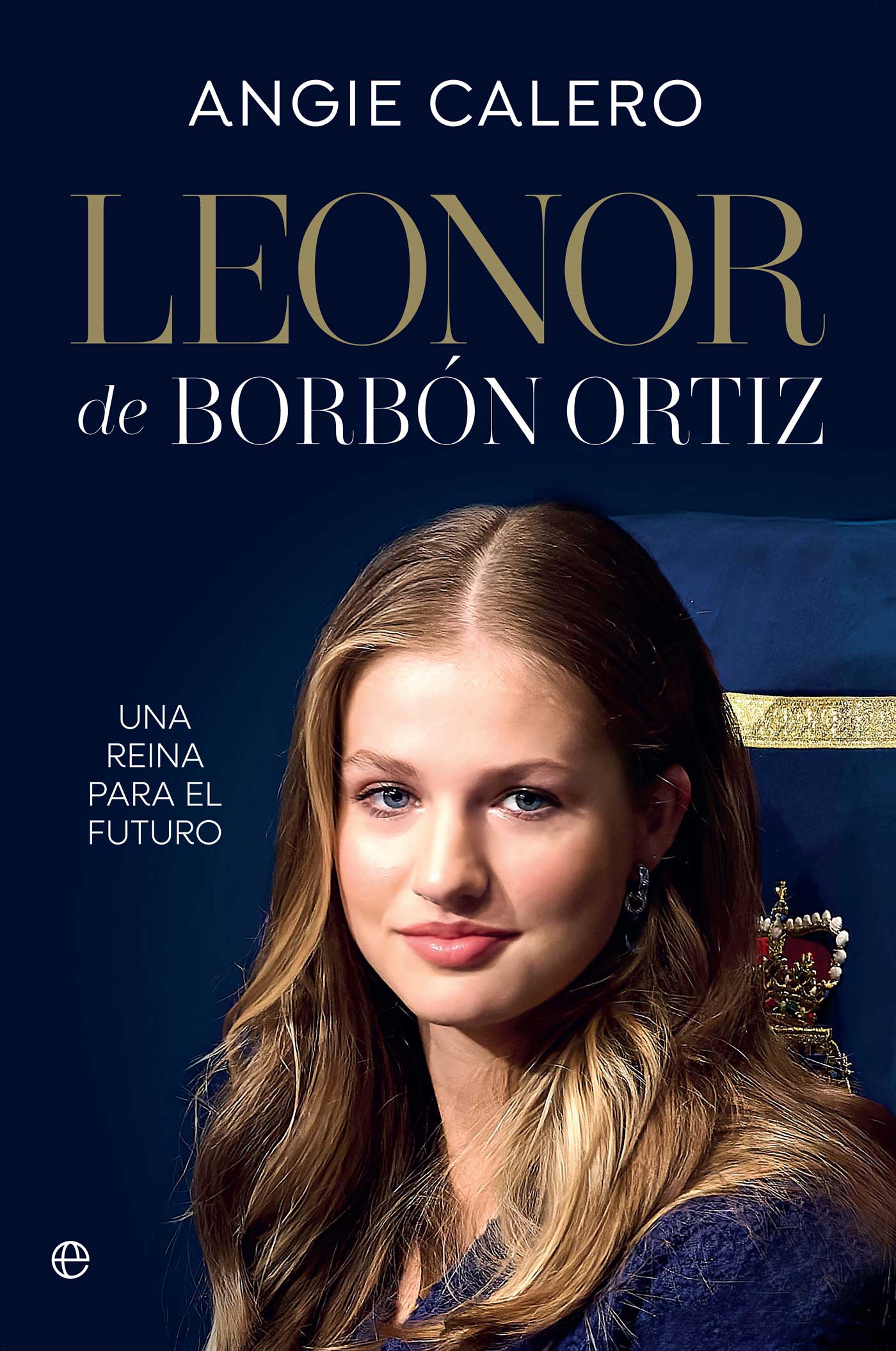
—Last question. If Princess Leonor read your book, do you think she would recognize herself?
—I’d like to think so. I have strived to make a book faithful to what has happened and what we know of her life. There are more than thirty interviews with names and surnames, plus other sources that aren’t identified. Naturally, if someone writes a book about you, there will always be something you don’t fully agree with. Perhaps an episode you remember differently, or an interpretation that doesn’t match yours exactly. That is inevitable. But I hope that, taken as a whole, it will be recognized. Because my aim was not to fabricate a character, but to approach—a journalist’s tools—a twenty-year-old about whom we know a great deal as a princess and still very little as a person. I wanted to offer, if I may borrow the word, a “real” portrait.