
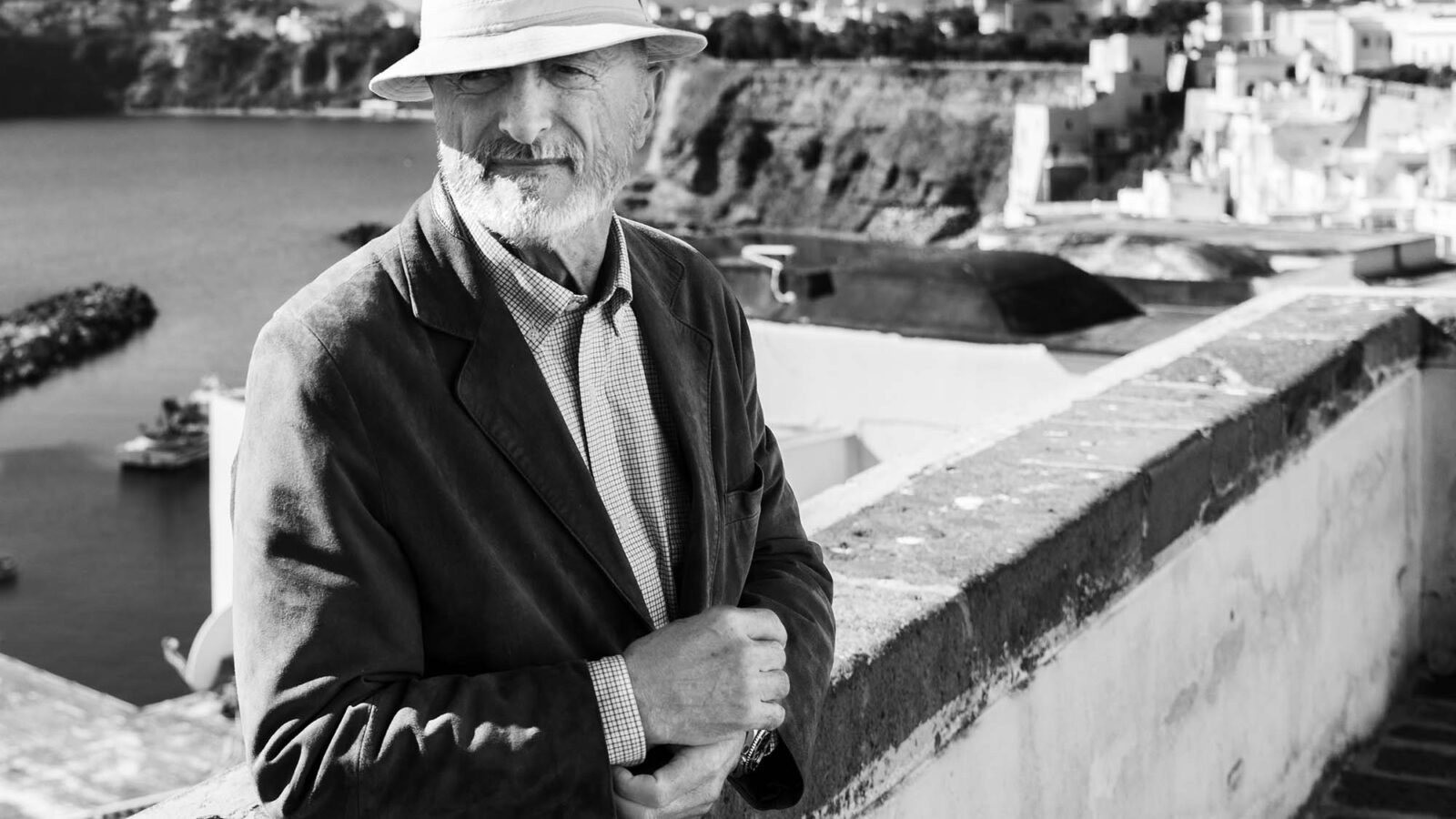
Cover photo: Jeosm
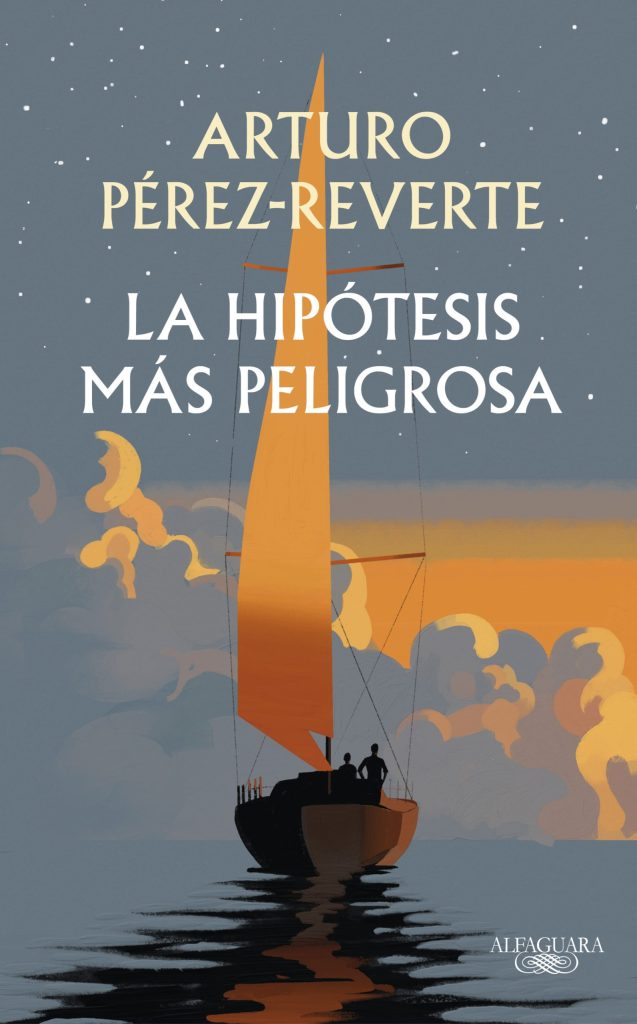
The Most Dangerous Hypothesis (Alfaguara, 2026), the new novel by Arturo Pérez-Reverte, seems to bring together two foundational experiences: that of the journalist who for twenty-one years watched and reported on some of the cruelest wars of the twentieth century and that of the sailor who has spent decades navigating the Mediterranean.
The novel, an adventure in its purest form, can also be read as a highly personal nautical chart: the places visited, the dangers endured, and the stories the author encountered there now reappear transformed into fiction. This is a very personal reading by the author above. Perhaps not the most dangerous, but certainly the most beautiful.
I have the chance to tell Pérez-Reverte this as we talk in Procida, where a sizable group of journalists from different media outlets have gathered for the book’s launch. On Arturo’s island, the one Elsa Morante turned into a literary territory, I ask him about that Mediterranean of his, so often sailed, where literature and life eventually blur into one another.

Photo: Jeosm
—“The journey of this story was already there, scattered across my articles,” he answers me. “All that was needed was to gather it and lend part of my gaze to Asier Lerrant. The reader now has to do the rest.”
So we set sail, then, aboard Asier Lerrant’s boat, the Nostos, which in a sense is like imagining the schooner Pérez-Reverte steers every time that damp, rain-soaked November of the soul that Melville spoke of calls upon him to head to sea and chase his own white whale.
The name of the vessel is not accidental. Nostos was what the Greeks called the return home, and much of Mediterranean literature concerns departures, shipwrecks, and men who come back after a long voyage — ever since Ulysses chose to complicate his life.
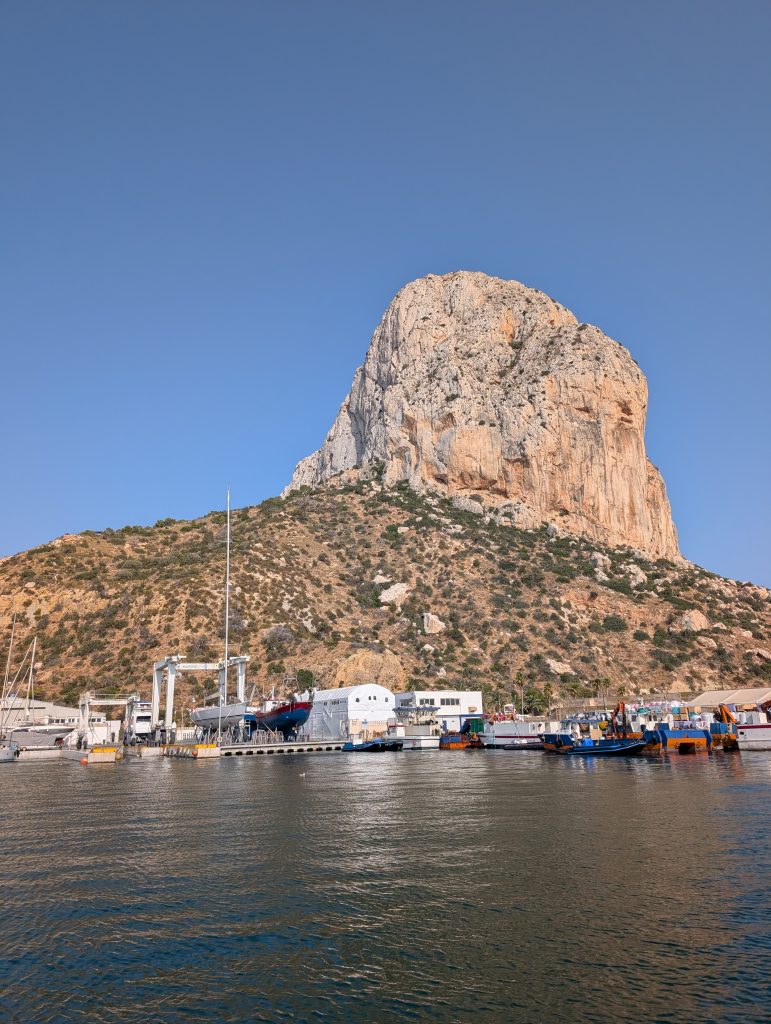
The voyage begins in Calpe, beneath the great Mass of the Peñón de Ifach, that formidable rock which the ancients knew as a reference point along a coast trodden by Phoenicians, Greeks, and Romans. In the sheltered port, the encounter between the enigmatic Asier Lerrant and the sixteen-year-old orphan Cal Gadea takes place, and the two set course toward the east. The boy will quickly learn that on the sea the truly important things are not usually explained twice. You must look, listen, read the wind, and accept the importance of obedience. He will also learn that every island, every strait, and every harbor hides a story, often written in blood.
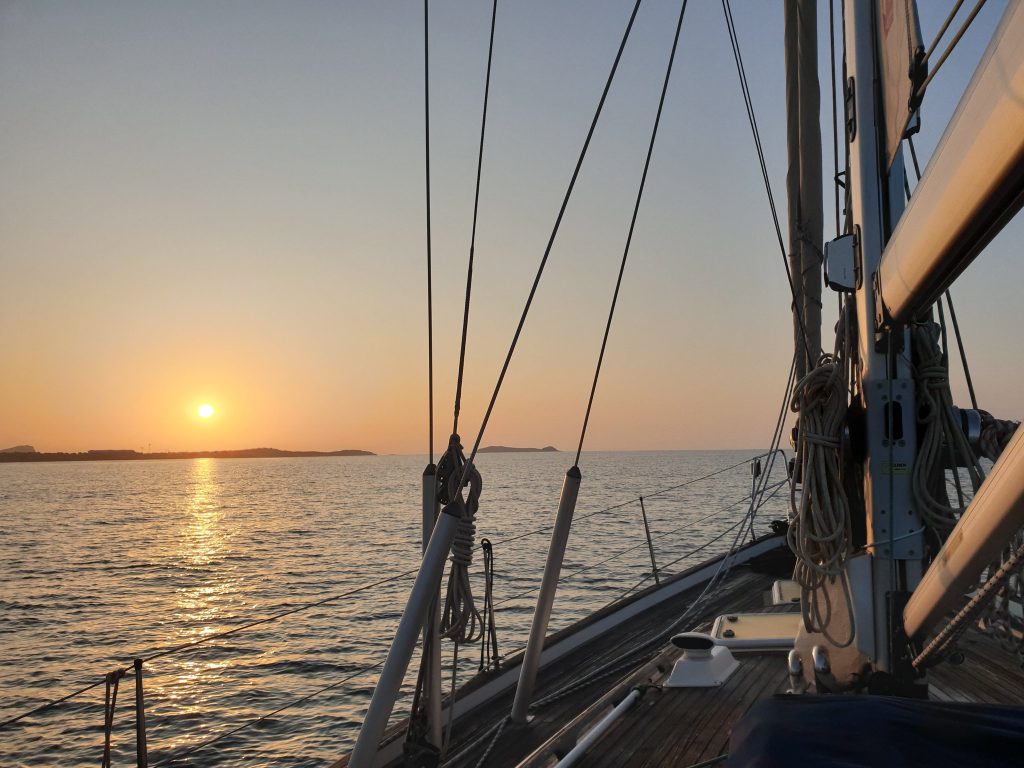
The first leg of the journey heads toward the Balearic Islands and Sardinia. In Formentera we encounter one of those scenes that seems written long ago to eventually become part of a novel. “After several days of sea and sky I drop anchor in Formentera before the Molí de la Sal,” Pérez-Reverte writes in one of his nautical pieces. Five meters of depth, thirty-five of chain and a book in hand: Youth, by Joseph Conrad. From the deck he watches the maneuvers of other sailors, their blunders and imprudences, while the reading returns him to those years when sea and life seemed without limits. In the Formentera of the novel, Lerrant meets the love of his life, Irene Gadea, Cal’s mother, a woman who is dead but who, paradoxically, acts throughout the story as the true axis of life between the two protagonists.
In another article written by Reverte in these same waters, “The Boys of That Summer,” the author watches teenagers who dive into the sea from the rocks and recalls the summers of his own youth, first loves, and that wondrous carefree ignorance of those who still have their whole lives ahead of them. There is something moving about imagining the seasoned sailor looking at those boys without knowing that, years later, he would embark a sixteen-year-old, Cal Gadea, on the Nostos. As if that Conrad book, read sheltered by Formentera, had ended up finding its continuation in the novel. Because this, too, is a coming-of-age story: that of a boy who discovers the world through the guidance of a man who already knows its dangers all too well.
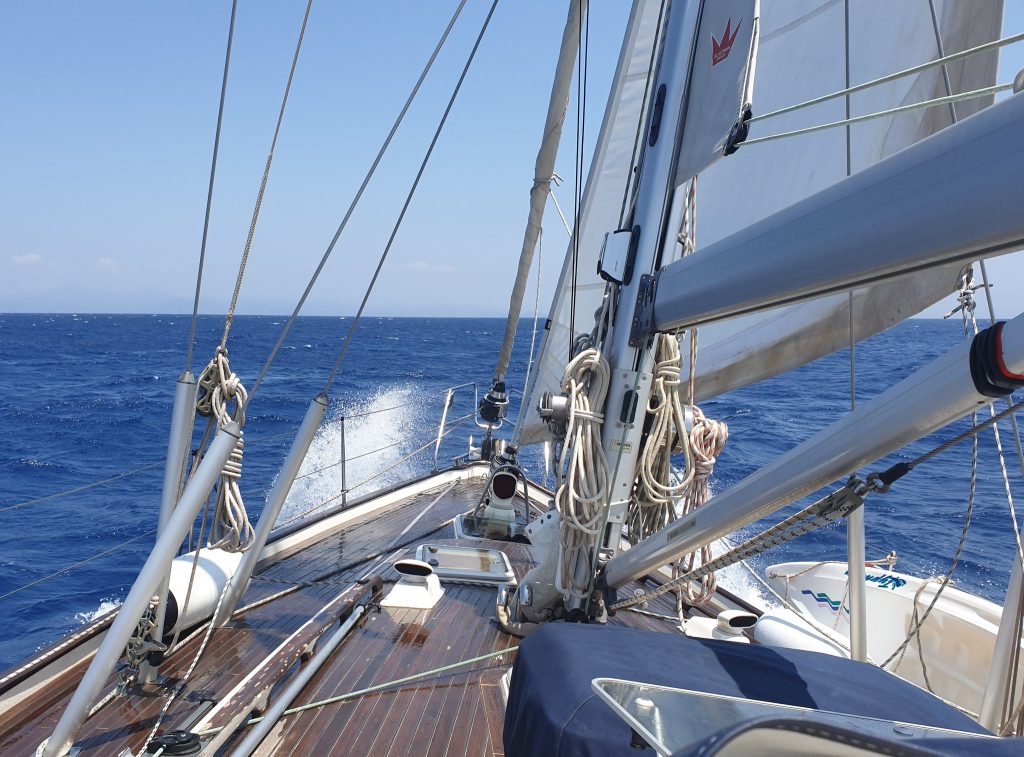
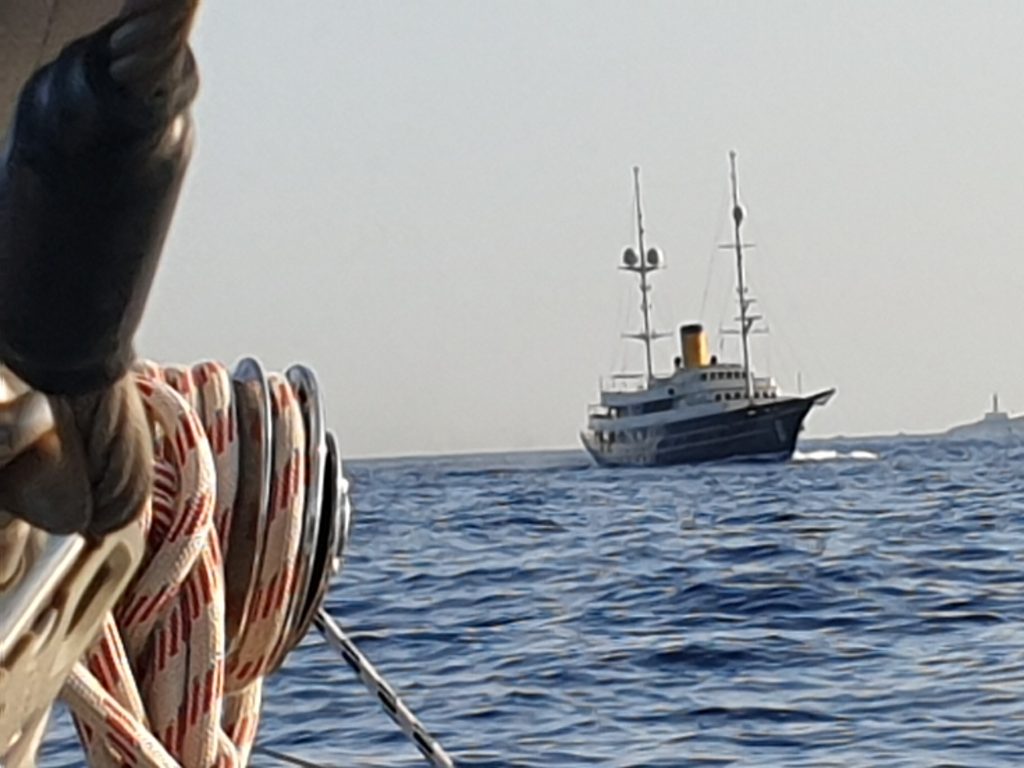
Some years later, in “Collision Course,” Reverte returns to tell another experience. It was three forty-six in the morning. He was sailing between Menorca and the southern part of Sardinia when the lights of a merchant ship appeared in the dark, following a disturbing course. What follows is a small lesson in navigation, prudence, and cold-blooded decision-making. A man on watch, a huge vessel approaching, the position lights, the calculations, and the need to decide. There is no heroism, only craft. And that craft is precisely what the roving seafarer tries to teach his son in the novel.
From Sardinia, the Nostos continues toward the Strait of Messina, that narrow passage where the ancients placed Scylla and Charybdis. It is worth remembering that for a Greek mariner those monsters were not merely mythical creatures: they represented real dangers—currents, whirlpools, and treacherous coasts. Then the Ionian Sea opens up, the realm of classical grand navigation, and further east the deep trench of Herodotus, whose name seems tailor-made for an adventure novel. Here the Mediterranean ceases to be a vacation landscape and regains its true historical stage. Across these waters have sailed Phoenician traders, Greek triremes, Roman galleys, Byzantine fleets, Crusaders, corsairs, and mariners of every banner.
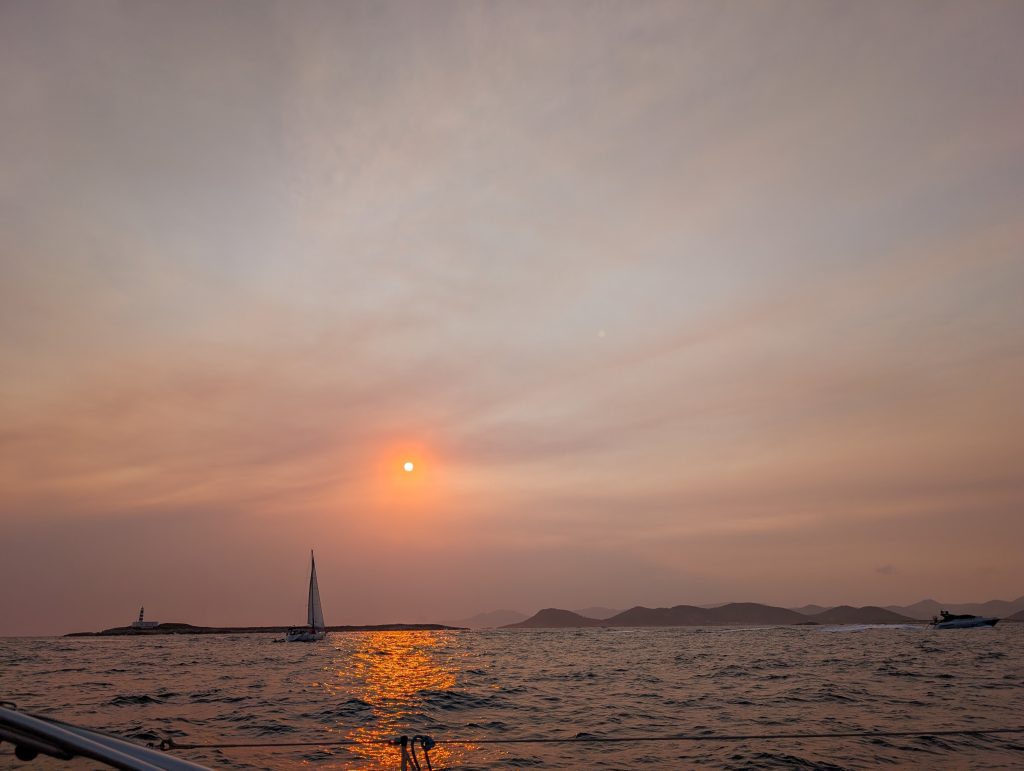
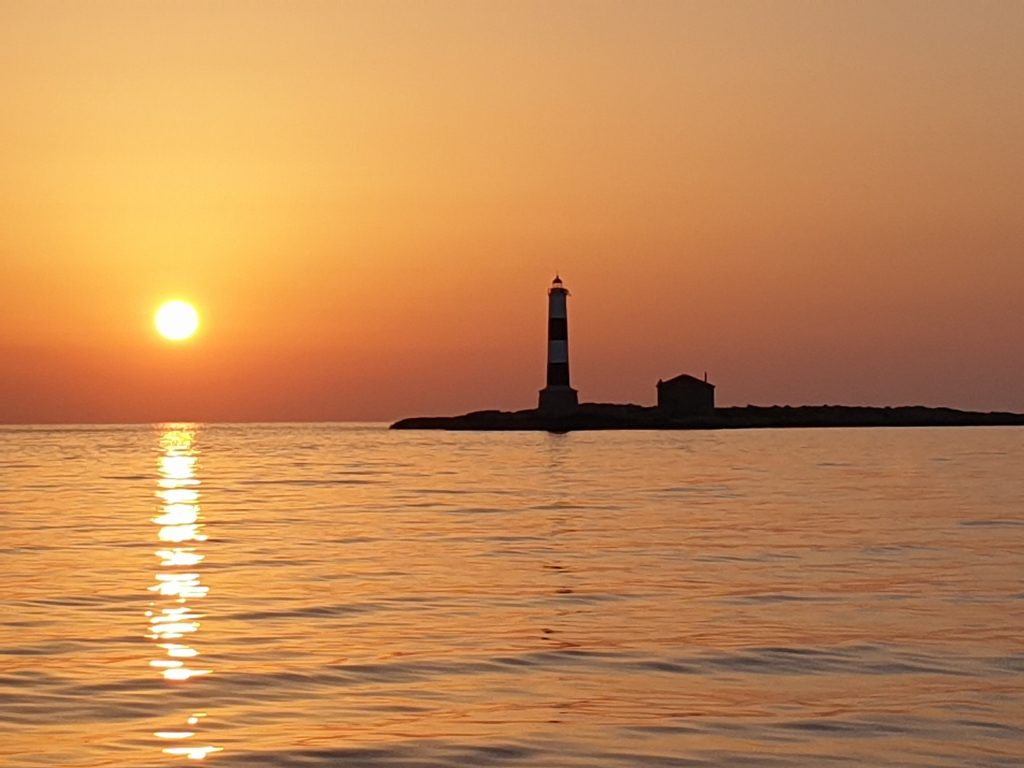
Pérez-Reverte has spoken in “Lights in the Night” about his fascination with those guard hours when the world narrows to the deck of a ship and a handful of distant lights. Sailing at night carries something of an ancient ceremony. The shore disappears, time takes on another measure, and one understands that under the keel there is not only water. There are shipwrecks, defeats, and the victories of those who sailed before. The writer confessed in that piece that earning the yacht captain’s license was one of the happiest moments of his life. It’s not hard to understand why. After so many years recounting wars elsewhere, being able to command his own boat must have felt like a reasonable form of freedom.
But the voyage of The Most Dangerous Hypothesis has a destination that makes all this navigation more than a mere maritime adventure. That destination is Tyre, on the coast of present-day Lebanon. And there awaits us a story that began long before the existence of Asier Lerrant, Cal Gadea, or the Nostos. Even before Pérez-Reverte became captain of his own sailboat.
On June 12, 1974, a very young Arturo Pérez-Reverte arrived in Tyre by bus. He was twenty-two years old, working as a reporter, and seeking contact with the Palestinian guerrilla movement. Two individuals began to follow him, convinced, apparently, that the Spaniard who asked too many questions might be an Israeli spy. The situation grew so tense that he sought refuge in a church. There he found a priest, Father Isard, who welcomed him and eventually showed him a medieval crypt.
What he witnessed then would accompany him for decades: the tomb of a Templar knight, a mutilated stone figure, survivor of a world that had disappeared. He told it forty-four years later in “The Templar’s Tomb,” one of those pieces where the former reporter and the novelist shake hands. For Tyre was no ordinary city. It had once been one of the great Phoenician capitals, a commercial power whose mariners roamed the Mediterranean long before the Romans. Alejandro Magno even had to build a dyke to conquer it. Centuries later it was a crucial Crusader stronghold, and its stones kept the memory of that Eastern Latin world that eventually vanished.
I imagine the twenty-two-year-old reporter gazing at that tomb while outside the church two men hunted him for reasons having nothing to do with the Crusades. And I think of the writer today, seventy-four, returning literarily to the same place after having turned through so many wars, so many books, and so many seas.
There is, moreover, something deeply Revertean that recurs in this novel. Its characters do not travel through places unknown to the man who invents them. On the contrary: they walk through towns he has traversed, sail on seas where he has spent guard nights, and encounter ghosts that the author himself knew long before they existed. Imagination handles the rest. In the end, perhaps The Most Dangerous Hypothesis is also that: the story of a man who revisits his own navigational chart to teach another how to read it. From the Peñón de Ifach to the ruins of Tyre, the Mediterranean appears as a vast library whose books are written in stone, salt, and blood. Reverte lends his voice to the wandering Jew, and Cal Gadea, a Telemachus figure, looks on with the gaze of someone who still has everything to discover.
—————————————
Author: Arturo Pérez-Reverte. Title: The Most Dangerous Hypothesis. Publisher: Alfaguara.