
To commemorate the 90th anniversary of the Civil War, José Ángel Mañas recreates in Zenda, day by day in this section, what happened in 1936, perhaps the most pivotal year in all of Spain’s recent history.
Wednesday, August 19, 1936: José Giral at the Ministry of War
That’s the way. They are waiting for him.
Mikhail Koltsov was impressed by the Buenavista Palace.
Before entering, he walked a moment through the gardens where, beside the
statue of the Grand Captain Gonzalo Fernández de Córdoba, new wings of the General Staff were joined to the building. The interior was lavish: staircases and halls filled with marble, tapestries, much Republican military and political figures chatting at tables beside the telephones. Many members of Congress. Some stayed for hours and even days trying, with pleas or threats, to extract five hundred soldiers, three hundred, one hundred, or fifty. And if not, rifles or machine guns, or trucks for their districts. The Ministry, haggling, distributed what it could.
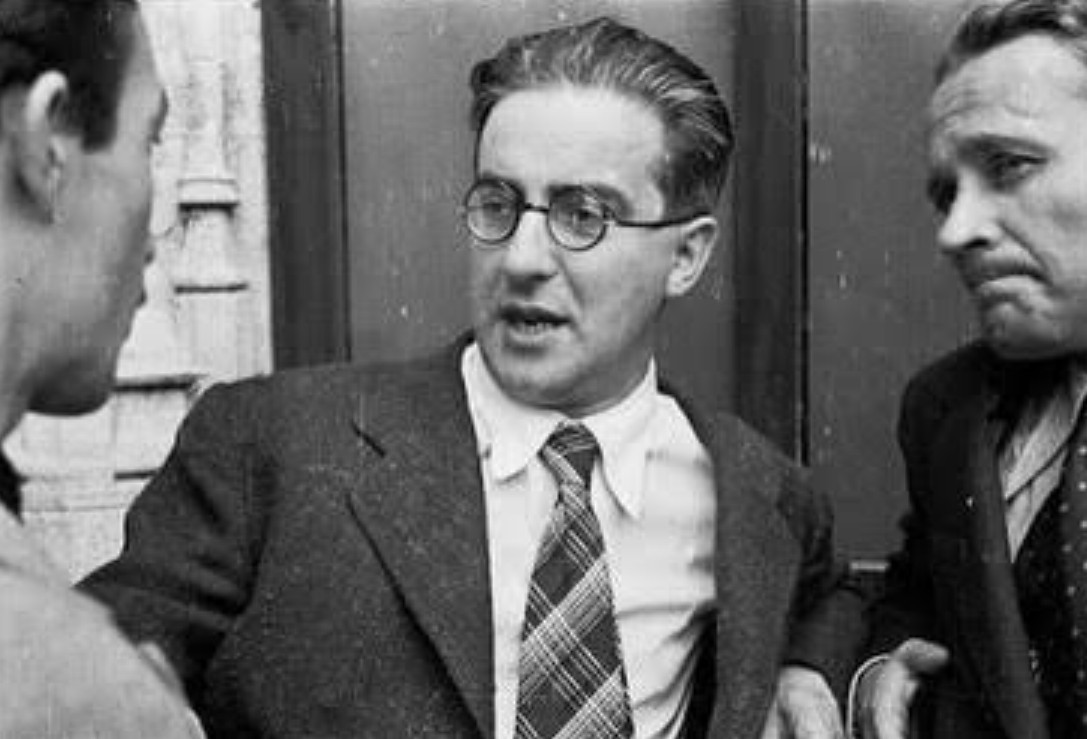
The Minister of War, General Hernández Sarabia, who had recently been Azaña’s personal secretary, was supposed to receive him. But he found that the head of the Government, José Giral, himself, came out to greet him—a mature man, with neat appearance, round-framed glasses, a stiff starred collar, a chemist by training and a close friend of Azaña. Giral was a composed politician who did not lose his temper. To speak privately, he took him onto the balcony, and Koltsov did not waste the opportunity.
—The capture of Badajoz has allowed the rebels to join the rebel-held territories in the north and the south. With Badajoz in Franco’s hands, the war enters a new phase. Until now, the zones controlled by the rebels had been separated. In some places, the factions formed concentric circles, as in Córdoba, where the Republican province besieges the rebel city, while inside the fascists besiege the workers’ neighborhoods. The same in Asturias, Toledo or the Balearic Islands. But now the separated patches have united into continuous blocks that stretch toward Madrid. Doesn’t that worry you?
—The fall of Badajoz is not so dramatic. The monstrous thing is the organized slaughter by the fascists. The nightmare of that execution of four thousand workers, women, and children in the bullring. But, even controlling the city, it will not be easy for them to advance. In the Guadarrama our units remain firm. In reality, the only catastrophic thing is the lack of weaponry. We need airplanes, artillery, tanks, and rifles. That is why we are asking for weapons from all non-fascist countries of Europe and America, at whatever price; tell it in your newspaper. We have people. There are brave and enthusiastic volunteers, and new columns are forming everywhere. But weapons are lacking. That is our great concern.
—How long can the war last?
—With sufficient weapons, half a year. It could even be settled in three weeks. The problem is that Germany and Italy are aiding the rebels. This very morning a fugitive from Seville arrived confirming that the insurgents have German pistols. On our side, we are blocked by the French Government, which, under pressure from London, has signed an incomprehensible international neutrality agreement. Germany and Italy mock that neutrality. But, overall, we will crush the rebels, make no mistake.
—Regarding the intellectuals, I’m told that today the president Azaña was with Juan Ramón Jiménez. Is it true that a passport has been provided for him to travel to Argentina?
—I have not yet spoken with the president. I cannot tell you anything.
—And Federico García Lorca? Is he still missing in Granada?
—I cannot know that because Granada is in the hands of the rebels, though I am sorry to say that I would not be surprised. The civil governor is a monster in the style of Queipo de Llano. He has allowed hundreds of executions. I hope that is not the case. I promise that I will try, as soon as I can, to verify those rumors. And now, if you will permit me, I must attend to some colleagues from the Congress — said José Giral.
Todas las entradas de 1936 día a día
Entrevista con José Ángel Mañas sobre 1936 día a día