
To commemorate the 90th anniversary of the Civil War, José Ángel Mañas recreates on Zenda, day by day in this section, what happened in 1936, perhaps the most pivotal year in all of Spain’s recent history.
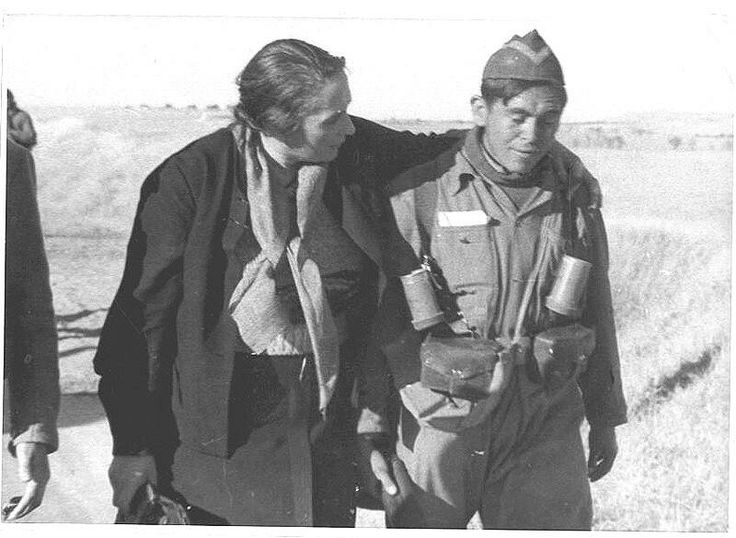
Thursday, August 20, 1936: With La Pasionaria at the Front
The front is fixed at the three key passes of Guadarrama: Somosierra, Navacerrada, and Alto del León. In all three we have managed to halt the fascist advance —said Dolores Ibárruri.
Early in the morning,
Koltsov
had come to pick her up in a car at the foot of the new
Political Bureau on Serrano Street.
Leaving by
Fuencarral,
they headed toward the mountains. The car was a
Chevrolet
with a dented fender. The driver, a member of the
PC,
could boast of being the most prudent driver he had drawn so far. A magnificent road crossed
El Pardo
and continued among the suburbs’ estates and Madrid’s summer resort towns at the foot of the range, where the wealthy used to rest, fleeing the August heat. The houses were wrecked by fires, looted, or simply abandoned.
Cercedilla and Guadarrama were the last towns before the front and held many buildings in ruins. In some houses only the doorway remained standing. In one a sign hung: INSURED AGAINST FIRES. Telegraph poles, cables, and artillery casings lay on the ground.
—Here the fight continues, comrade Koltsov. Mola’s fascists do everything possible to cross the barrier of the Sierra, but they do not succeed. On the other hand, Lieutenant Colonel Mangada, with his battalion, has arrived with his men nearly to the walls of Ávila —said La Pasionaria. A cannon shot echoed through the canyons—. Do not be afraid, this is the bread and butter of our daily life. Each day, until late at night, groups of militiamen loyal to the Government climb the crags, attempting to envelop the enemy and cut him off from his positions. The fascists do the same… And at night, we count all the casualties.
—I can see you are very popular —said Koltsov, when a group of government soldiers stood up to offer them bread and wine from their canteens.
—Thank you very much, comrades; we’re well fed. Save your rations.
They tried to hold her back (“Look at my scars, Dolores”, “Here, a letter for my mother”, “Try my machine gun”), but La Pasionaria was in a hurry and exchanged a few words with an officer, before turning back to Koltsov.
—Today our forces want to take advantage of Mangada’s success, but they suspect that the fascists are prepared for the challenge.
Again, cannon fire and machine guns. The soldiers shouted at them to throw themselves to the ground. Dolores and Koltsov simply lowered their heads, like the others. Dolores said that next time she would come with an umbrella. That drew laughter from the militiamen.
The two communists entered a ruined little house. A group of soldiers guarded some fascist prisoners. One approached to complain about the food.
—What? You’ve been two days without vegetables? I’ll fix that right away. Tomorrow you’ll have watermelons and tomatoes here, good man. It’s intolerable —murmured La Pasionaria, as they were leaving again—. In that house just ahead is the General Staff. Now you will meet Colonel Asensio and the former Prime Minister, Casares Quiroga, who will offer us a coffee.
—What is a former president doing here?
—He was the head of the Government when the uprising began. He did not heed the warnings. He became so obstinate when it happened that he submitted his resignation… Since then, he has tried to wash away his guilt at the front.
All the entries of 1936 day by day
Interview with José Ángel Mañas about 1936 day by day