
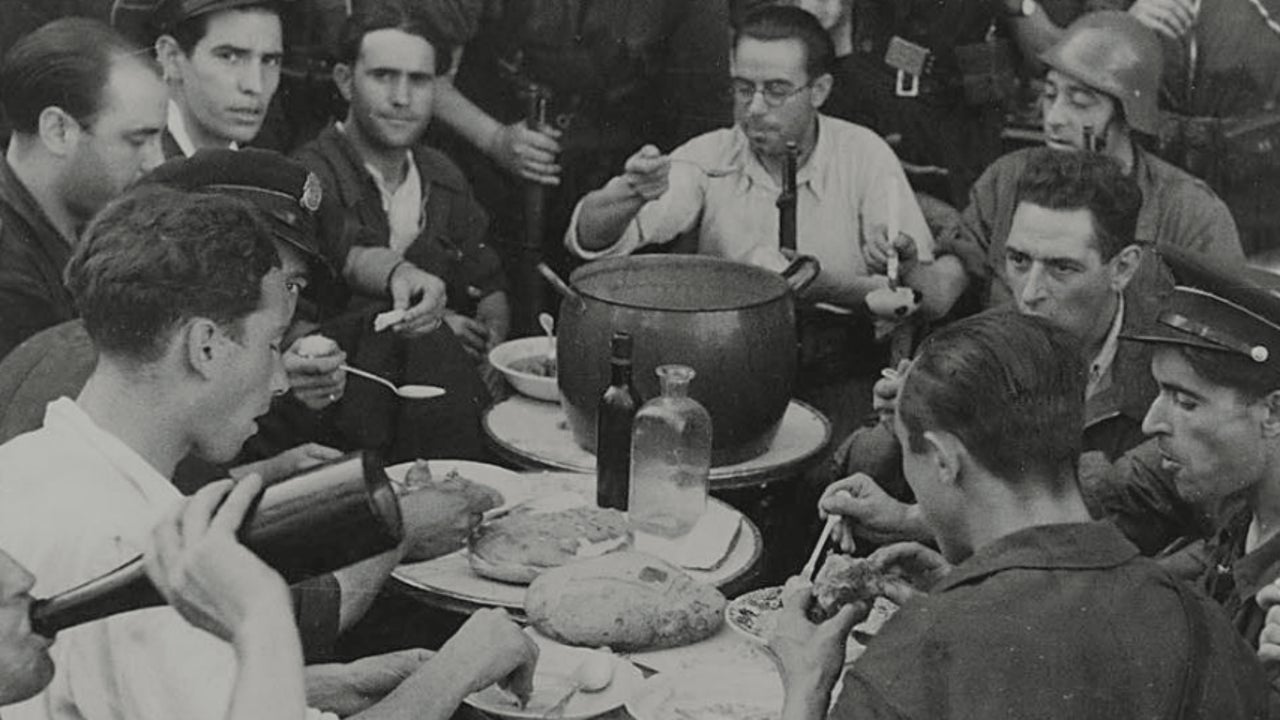
To commemorate the 90th anniversary of the Civil War, José Ángel Mañas recreates in Zenda, day by day in this section, what happened in 1936, perhaps the most pivotal year in all of Spain’s recent history.
Friday, August 21, 1936: The stew of the war
For the moment, the stew did not fall short. It was comforting to see the pot full and rounded. In the morning, early, while Pepe and Mariana tended the shop and Luis Mañas rested upstairs, Rosa and Inés lit the flame and seasoned the stew. At one, the bread, chopped hard-boiled egg, and dried spearmint were placed into the soup tureen. And then, with caution, the broth from the pot was poured in.
A Pepe the scent brought back sensations of times gone by and memories of his mother bustling at the stove. The smell of childhood and quiet happiness. While the stew simmered, he took advantage of the moment when no one entered the shop to write to his girlfriend in Ciudad Real. Life, behind closed doors, went on.
At noon, once the shop was closed, the family sat around the kitchen table. Luis Mañas presided. Rosa or Inés began serving the stew. First they set the steaming tureen in the center. The risen bread looked like a flower, red with the heat of the chorizo. Then the wide porcelain dish with a mountain of chickpeas — there were still good chickpeas in Madrid —, the tomato sauce from the garden, the dish of cooked cabbage sautéed with garlic. Like a village inn menu, the meat from the pot, chicken, the chorizo, the bacon, was served in another dish to accompany the chickpeas.
Each person ate it in their own way. Luis Mañas preferred everything separately, Spartan-style. By contrast, Mariana and her cousins liked to leave some soup and mix everything on the same plate; it made it juicier. Pepe varied. Sometimes he followed his father’s example, sometimes that of the women.
There was still dessert in the early days of the war. It could be torrijas, arroz con leche, or an apple or a pear. And in the summer, melon or watermelon. It was cut into wedges and placed on a large platter. Fruit was not yet scarce.
Restaurants and bars stayed open, though supply problems began to surface. Among other measures, the City Council shortened business hours. In the morning they sold potatoes, legumes, sugar, or coffee. The shop remained open to the public from nine to two. In the afternoon the butcher shops and fishmongers opened, and the women went out to shop accompanied by Pepe. Following Navarrete’s advice, Luis Mañas stayed at home and tended the veggie patch, the little plot behind the house, or listened to the news on the radio.
For Luis Mañas, living shut in felt endless. He grew irritable, complained about the routine of meals, though in reality he longed for the lost freedom and his long horse rides, when he would disappear for days without anyone knowing where he had gone.
“As long as there are chickpeas, we will eat them,” Mariana said. “The shop remains stocked. But fewer goods are arriving at the market. Fish is scarce, and the butcher is starting to have problems. The stew is running short of meat… — she observed. And it hadn’t even been a month since the war began —. When will this end!”
Mariana could not know that would last nearly three long years, and that neither she nor her husband would see the end.
All the entries of 1936 day by day
Interview with José Ángel Mañas about 1936 day by day