
To commemorate the 90th anniversary of the Civil War, José Ángel Mañas recreates in Zenda, day by day in this section, what happened in 1936, perhaps the most pivotal year in all recent Spanish history.
Monday, 31 August 1936: Azaña’s Brother-in-Law and Ortega
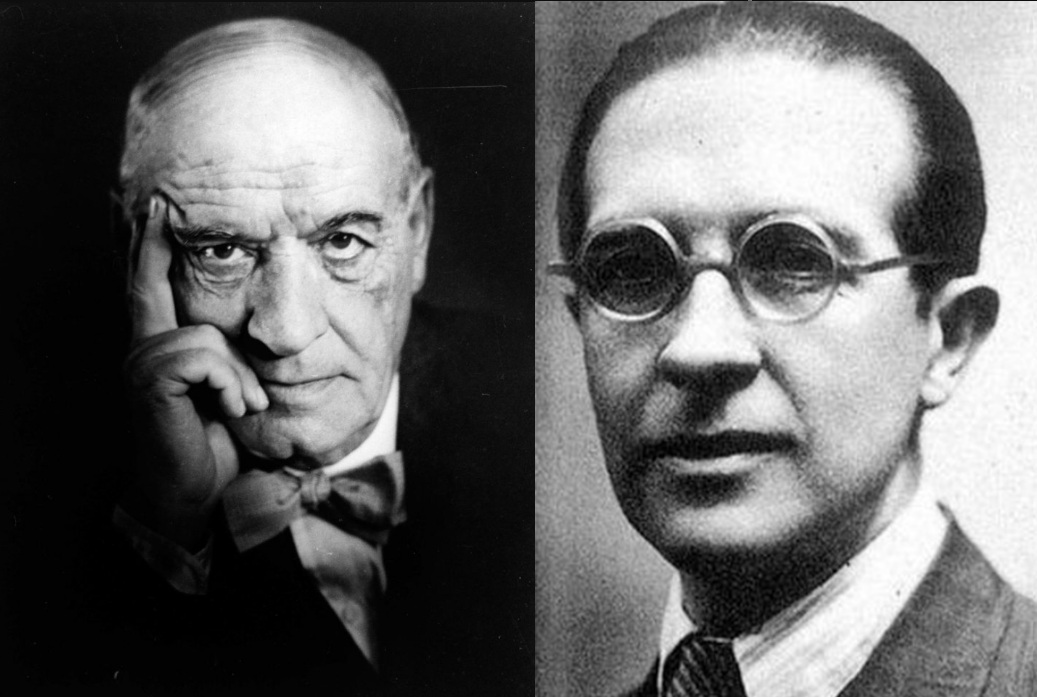
Madrid was a sinking ship, and the rats were fleeing. Cipriano Rivas Cherif abandoned it at the end of the month. But he was not alone. In the same train he traveled with his wife and children, he also happened to encounter the renowned José Ortega y Gasset. Ortega arrived at the station escorted by two cars of armed militiamen: the influence of his brother Eduardo.
In the carriage, Rivas Cherif found him looking extraordinarily aged. The illness began to gnaw at the illustrious philosopher. Cipriano would not have recognized him had Ortega not arrived at the station arm in arm with his brother Eduardo, whom, of course, he greeted. Ortega was traveling to Alicante with his wife and his three grown children, who had been spared from their military duties by special favor of the Government of that Republic to which he had contributed so much to denigrate.
The philosopher was among the many fugitives fleeing the capital, and Cipriano guessed that the country, to which he had given so much of his mockery, might fade from view; yet while they spoke on the train, Ortega confided that he planned to stay in Alicante and would not take any further ticket.
When he asked where he was headed, Rivas Cherif answered that he would first go to Marseille. His ship was leaving the next day. His final destination was Geneva, where he would stand in for a consul who had fled, recently switching to the rebel side.
Ortega observed nothing. And yet the next day, the thirty-first, Cipriano met him again on the deck of his steamer. He assumed that Ortega had understood it was wiser to travel by sea to Marseille than to traverse Valencia and Catalonia, although he detected something burdened about the great intellectual.
Moreover, the French steamer, an official mail from Algeria, turned out to be a filthy little boat where Rivas Cherif was obliged to cede Ortega the only decent cabin, since he was so delicate in health, as his wife told him.
Once aboard, both of them had the chance to see a British cruiser depart the harbor, carrying many fascists fleeing the revolution as refugees. Many wore armbands plainly bearing the Cuban flag. The scene was lamentable, and Cipriano commented on it to Ortega.
—You know, when the river is rough… —replied Don José. And he dramatically pointed to the coastline—. Do you think it’s possible that civilization could ever return there?
The voyage was not easy. Everyone crowded into tiny cabins. The deck was packed, despite the exorbitant fare. For many, Rivas Cherif embodied the revolutionary hydra, and while at first they looked upon him with respect, almost with fear, as they moved further from land they began to show him a hostility that only grew with the passing hours.
Even Ortega himself, who at departure had been talkative and even pedantic, did not take long to lose interest and distance himself. And still, Cipriano took the opportunity to probe his son about the possibility that the Madrid-born philosopher might be willing to accept an ambassadorial post in one of the European capitals where vacancies were increasingly available.
All the entries of 1936 Day by Day
Interview with José Ángel Mañas about 1936 Day by Day