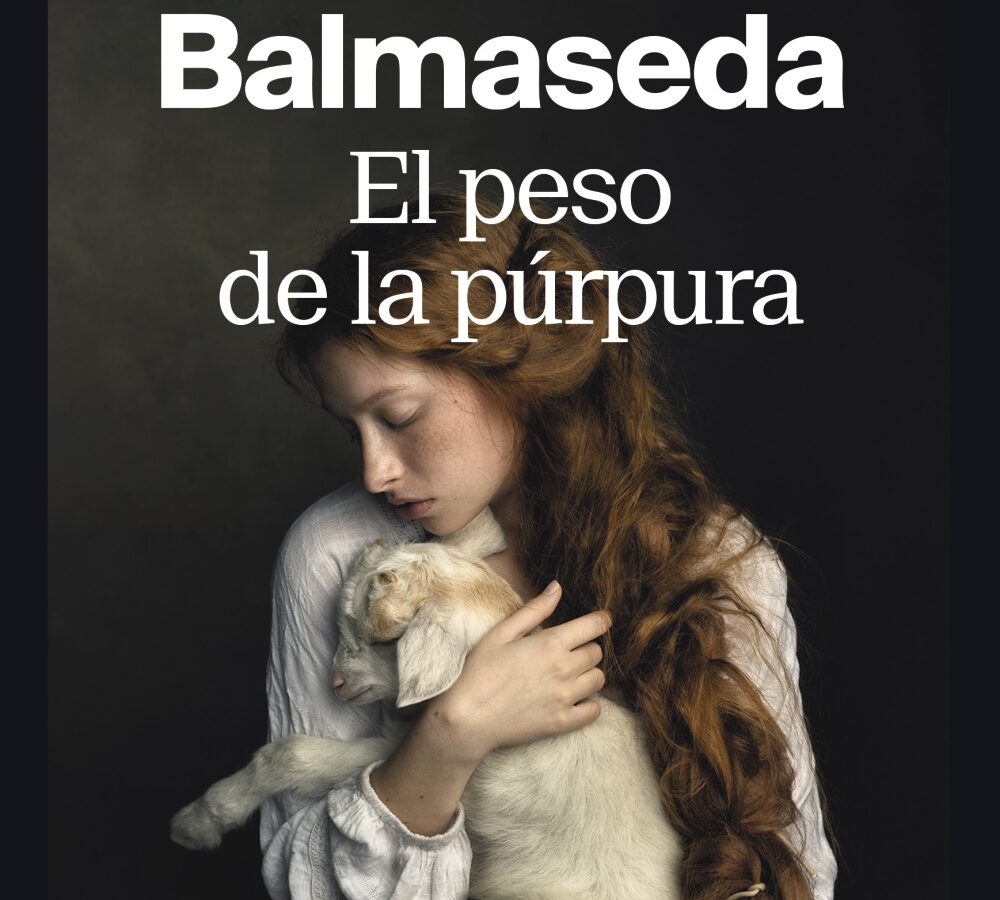
In the unstoppable process of mestizaje through which the noir genre is undergoing, Carmen Clara Balmaseda risks a new fusion: she blends the detective novel with the picaresque, that distinctly Spanish genre, here represented by El Lazarillo de Tormes and Guzmán de Alfarache.
Su protagonista, el escritor Guzmán Preciado, es un seudónimo formado con el nombre del pícaro de Mateo Alemán y el apellido del principal narrador en Pedro Páramo. Y del mismo modo que El Lazarillo de Tormes refleja la “sociedad emponzoñada y decadente, capaz de pervertir al ser más bondadoso, al más inocente” del siglo XVI, también El peso de la púrpura intenta reflejar algunas aberraciones de la sociedad del pasado siglo XX en que se ambienta.
Its protagonist, the writer Guzmán Preciado, is a pseudonym formed from the name of the picaro in Mateo Alemán and the surname of the principal narrator in Pedro Páramo. And just as El Lazarillo de Tormes reflects the “poisoned and decadent society, capable of corrupting the most benevolent, the most innocent” of the 16th century, so too El peso de la púrpura attempts to reflect some aberrations of the society of the past century XX in which it is set.
Su acción transcurre en Madrid y en la Sierra de Gata, convertida en otro foco del género negro. Al festival que cada verano organiza Luis Roso con tanta solvencia se añade ahora el hecho de servir como escenario de la novela de Carmen Clara Balmaseda.
Its action takes place in Madrid and in the Sierra de Gata, turned into another focal point of the noir genre. To the festival that each summer Luis Roso organizes with such prowess is now added the fact that it serves as the setting for Carmen Clara Balmaseda’s novel.
“Su mayor obsesión es encontrar al hombre que las secuestró, y ya se sabe que la culpa y las obsesiones son fructíferas en la escritura, de modo que es posible que en el futuro aparezcan más entregas“
“Her greatest obsession is to find the man who kidnapped them, and it is well known that guilt and obsessions are fruitful in writing, so it is possible that more installments will appear in the future.” “
El peso de la púrpura habla, pues, de una geografía real y de antecedentes literarios con pleno conocimiento y de manera genuina. Hace unos días, en la columna semanal que la autora mantiene en el diario Hoy, advertía de los peligros de la utilización de la IA para escribir novelas: “Espero, sin embargo, que nunca tengamos que lamentarnos de haber perdido nuestra capacidad de imaginar o crear en favor de la comodidad que nos ofrece la tecnología. El arte es, sin duda, una de nuestras más hermosas virtudes. Quizá sea, incluso, el último vestigio de humanidad que nos quedará algún día”.
“El peso de la púrpura is the novel of a young writer who is seeking to give her best, combining the various virtues she undoubtedly possesses“
The protagonist, Blanca Sayago, one of the early police officers of the Transition, is a tenacious inspector, sensible in her proposals, intelligent: she asks the right questions and does not uncover the culprit by serendipity while she tracks down other clues. At thirty-nine, she lives alone, unable to overcome the consequences of the kidnapping she suffered when she was ten years old, together with her younger sister, during which they develop a deep guilt complex… and a phagophobia disorder, so she feeds almost exclusively on chocolate. But she does not lack emotional warmth and has a tormented inner life. Her greatest obsession is to find the man who kidnapped them, and it is known that guilt and obsessions are fruitful in writing, so it is possible that more installments will appear in the future.
La protagonista, Blanca Sayago, una de las primeras policías de la Transición, es una inspectora tenaz, sensata en sus propuestas, inteligente: formula las preguntas adecuadas y no descubre al culpable por serendipia mientras va rastreando otras pistas. Con treinta y nueve años, vive sola, incapaz de superar las secuelas del secuestro sufrido cuando tenía diez años, junto con su hermana pequeña, entre las que encuentran un profundo complejo de culpa… y un trastorno de fagofobia, de modo que se alimenta casi exclusivamente de chocolate. Pero no carece de emociones afectivas y tiene una atormentada vida interior. Su mayor obsesión es encontrar al hombre que las secuestró, y ya se sabe que la culpa y las obsesiones son fructíferas en la escritura, de modo que es posible que en el futuro aparezcan más entregas.
And whereas Blanca Sayago conveys emotional closeness and is easy to empathize with, the opposite happens with the antagonist, who has three identities and states about himself: “Know, Your Grace, that my real name is not Guzmán Preciado, but Alejandro Lázaro Martín, and that, above all things, they call me Lázaro de Torre.”
“El peso de la púrpura is the novel of a young writer who is trying to give her best, combining the various virtues she undoubtedly possesses“
The novel is an inquiry into these three identities, starting from a boy battered by misfortune in the postwar period, to whom experience had “taught him to distrust kindness.” But an ill-fated childhood in all respects (the terrible combination of misery, social repression, and orphanhood) does not excuse his later silence before the worst atrocities and despicable acts by others. Although at times he tries to justify himself to the reader with his first-person discourse, his cowardice in exchange for success, in dressing in purple with the toga of success, “for the sake of the Roman emperors, who wore the purple toga,” is unforgivable.
En uno de los abundantes apuntes metaliterarios, uno de los personajes ha escrito “una obra con tintes policiacos, pero también sociales y de aventura. Una novela preocupada por la trama y los personajes y no solo por la innovación en la forma”. En esas frases queda reflejada la intención de El peso de la púrpura, escrita con una redacción impecable, con todos los puntos y comas colocados en el lugar adecuado, algo que agradecerán los lectores.
In one of the abundant meta-literary notes, one of the characters has written “a work with detective overtones, but also social and adventure elements. A novel concerned with the plot and the characters and not only with innovation in form.” In those phrases lies the intention of El peso de la púrpura, written with impeccable prose, with all punctuation in the proper place, something readers will surely appreciate.
Quizá el relato se dilata con algunas vueltas cronológicas mientras contrapuntea entre la picaresca y lo policial, y algunos cambios en el comportamiento de los personajes resultan bruscos y podían haber sido más matizados, pero no alteran el buen uso de las referencias literarias —siempre oportunas, que evidencian la sólida formación en letras de la autora— y el acertado retrato de la protagonista femenina.
Perhaps the tale stretches with some chronological detours as it alternates between the picaresque and the detective, and some shifts in characters’ behavior feel abrupt and could have been more nuanced, but they do not alter the good use of literary references—always timely, evidencing the author’s solid education in literature—and the apt portrait of the female lead.
El peso de la púrpura es la novela de una escritora joven que está buscando dar lo mejor de sí misma, combinando las distintas virtudes que sin duda posee: imaginación, dominio del lenguaje, ambición y valor para asumir riesgos.
El peso de la púrpura is the novel of a young writer who is seeking to give her best, combining the various virtues she undoubtedly possesses: imagination, command of language, ambition, and courage to take risks.
—————————————
Autora: Carmen Clara Balmaseda. Título: El peso de la púrpura. Editorial: AdN. Venta: Todos tus libros.
Author: Carmen Clara Balmaseda. Title: El peso de la púrpura.Publisher: AdN. Sales: Todos tus libros.