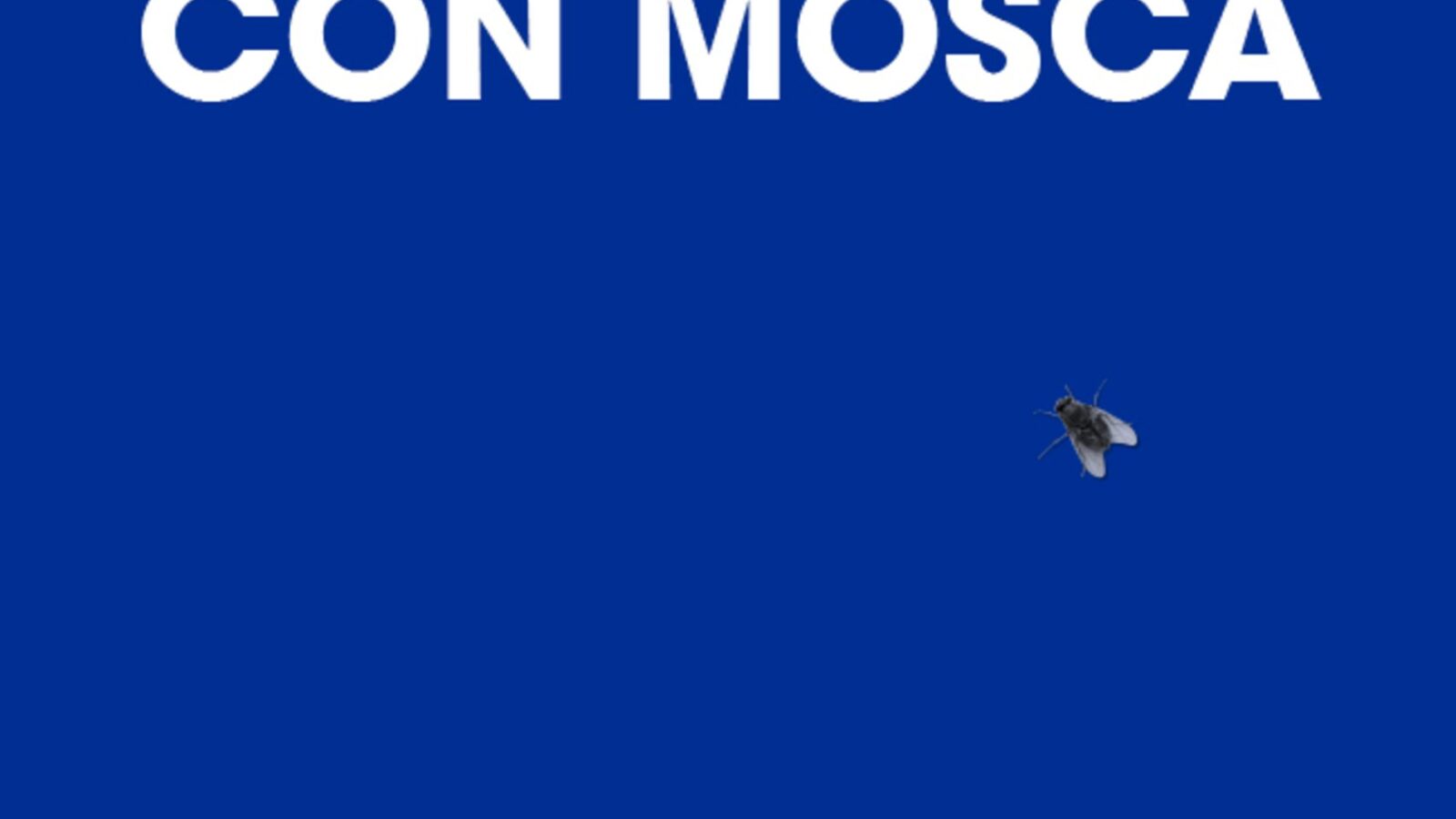
In European painting of the 15th and 16th centuries it was common to render a fly with an extraordinary degree of realism in order to demonstrate the artist’s technical dexterity. It isn’t entirely clear whether what lies within these pages are tales, but this book is certainly teeming with flies.
At Zenda we reproduce the tale “Potato, potato, potato,” found in Blue Book with a Fly (Reservoir Books), by Luis Mario.
***
Potato, potato, potato
What every image, regardless of its form, must share with reality in order to be truly—right or wrong—depicted is the logical form, that is, the form of reality.
Tractatus Logico-Philosophicus, 2.18,
Ludwig Wittgenstein
Good grief, Ludwig, what nonsense.
Luis Mario
The first potato, as planned. The man wakes up to his radio and the couplets—the radio and its couplets—and gets up, gets dressed, heads to the allotment to dig potatoes with his hoe and basket in hand, and then, the first potato. As planned. This is the first, which is also the second. And the third. The fourth, obviously. The fifth. The sixth potato he digs out. All as expected. But what will be the man’s bewilderment when, after the seventh and when everything seemed to point toward the eighth—the eighth potato—, the wretch goes ahead and digs up the last: the last one he digs up, the last potato.
This may seem merely anecdotal, yet this man is keenly aware of the tragedy taking place: that the eighth potato remains buried somewhere in his allotment, this he knows well—the eighth and thus the ninth, the tenth, the eleventh. And the twenty-third and the forty-ninth and the eighty-first and, why not, that there were no frosts this year, this man now frets as he ponders that—likely, perhaps overwhelmingly—that the ninety-fourth potato he would have pulled also remains buried somewhere beneath this vast earthy mantle, and the one hundred twenty-third, imagine what I’m telling you, and how miserable he feels and how miserable he feels and that the poor man is, unfortunately, correct in lamenting that the penultimate tuber he meant to retrieve this morning from his allotment also waits, expectant, latent, a tuber, surely not far from the penultimate, and both beneath the clay-loamy earth that, damp from the recent rain, threatens these and the rest of the potatoes buried in this garden with impending rot. And could this man ignore this fact narrated here, ignore it and continue after that last potato by pulling the eighth and the ninth and thus perhaps reach all the way to the one hundred twenty-third potato—and perhaps not today, perhaps to continue tomorrow, perhaps after his radio and his couplets and his rising—and then pull up the penultimate as well. But ignoring it would imply that this last potato that this man pulled then was not the last; and if it wasn’t the last, then who could guarantee this poor man—indeed, how!—that this last potato, which is no longer last, would still nonetheless be a potato after all. And how to prove then that the earth remains earth, that the hoe remains a hoe, that the house, the allotment, the third potato that already rests in his basket—even though it remains a basket!—indeed continues to be—though one might not even claim it to be—the third, but at least a potato, and that his radio and his couplets still exist. Enough! That much, no. Without his couplets and his radio he is not prepared to contemplate his own existence because, after all, without his radio and especially without his couplets, this man would no longer be the same, would no longer be himself: so who could guarantee to this poor wretch that in this allotment anyone would have, three months and five days ago, even sown potatoes.
—————————————
Author: Luis Mario. Title: Blue Book with a Fly Publisher: Reservoir Books. For sale: Todos tus libros.