
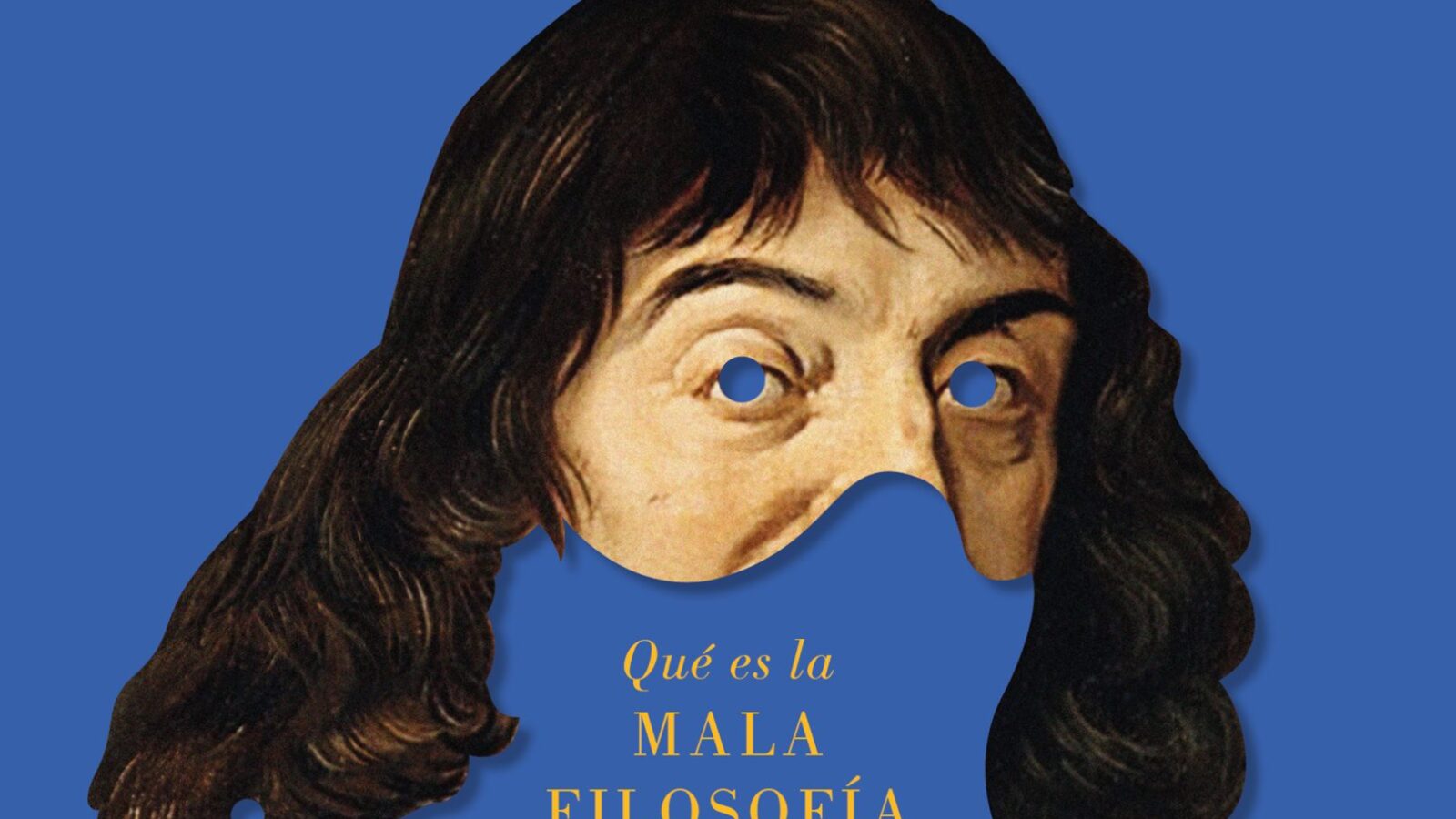
In philosophy not everything goes. This book is a guide to distinguishing rigorous thought from darkness dressed up as depth, and to recognizing why bad philosophy is not a harmless eccentricity, but a form of intellectual noise with cultural, political, and practical consequences.
In this making of Óscar Teixidó explains how he wrote Mediocre Thinking (Taurus).
***
And both decisions proved correct as time has shown. On the one hand, the topic is novel and to some extent draws in the reading public (I suppose an eye-catching cover helps, too). On the other hand, the editorial process was fairly swift and comfortable, in my view — I hope it was for my editor and my proofreaders as well. It was done with that certain flexibility which, never too lax to the point of losing the thread of what had been done, gave enough room to write, weed out irritants, and meet delivery deadlines with equanimity. Justice and good rhythm, in short; I suppose that is also a good life. And so, like the good life, began the making of Mediocre Thinking.
My new work of philosophy, or, more precisely, philosophy about good and bad philosophy
.
Of course, there are always problems and inconveniences: a new paragraph that the author decides to insert at a particular point in the already revised text; a humble but busy prologuist; a foreword where one seeks the balance between rigor and appeal to the potential reader. But they are trifles, as perhaps the reader of these lines might suppose. I also think we resolved them very well. They are obstacles that clog a task without making it irreparable, but which are worth sidestepping. As far as I am concerned, gathering new bibliographic sources, rummaging through the already known bibliography, scraping it clean, and organizing all the references has surely been the most costly part of carrying it out. Nevertheless, it is essential that any properly conducted work have its informational base explicitly stated. Be it in science or in philosophy. Also in its respective dissemination. A costly stage, but one that easily pays off.
The central ideas I have been investigating for some time, as my most faithful followers can attest, in articles and academic threads I have woven over the last two years. The intuitions about a properly competent philosophy rooted in transparency, rationality, and natural study are of little use if they do not precipitate into concrete ideas about precision, inherent coherence, and attainable scientific compatibility, as well as synergy with the latter. These are the most defined, more precise concepts that lie at the heart of what I now consider a “serious philosophy of minimalism.” They are the ones I have tried to present and exemplify again and again in the text at hand. Their antithesis, bad philosophy, seems transparent: vagueness, incoherence, scientific incompatibility, and theoretical isolation from other available knowledges. Against this I direct this book, against mediocre philosophical thinking.
It is never easy to write a book, especially when the book is academic, even if it has a popular tone. Less easy is when, in parallel, one is pursuing a doctorate in experimental science. And even less easy when two other philosophy books, each more rigorous than the last (or so I attempt), are being written in parallel. I suppose my greatest challenge in writing Mediocre Thinking has been balancing all aspects of my life in this intense year 2026. And I think I have achieved it, more or less. Although it is for the reader to decide, at least in regard to the public philosophy I have been developing in these years.
—————————————
Author: Óscar Teixidó. Title: Mediocre Thinking.Publisher: Taurus. On sale: All Your Books.