
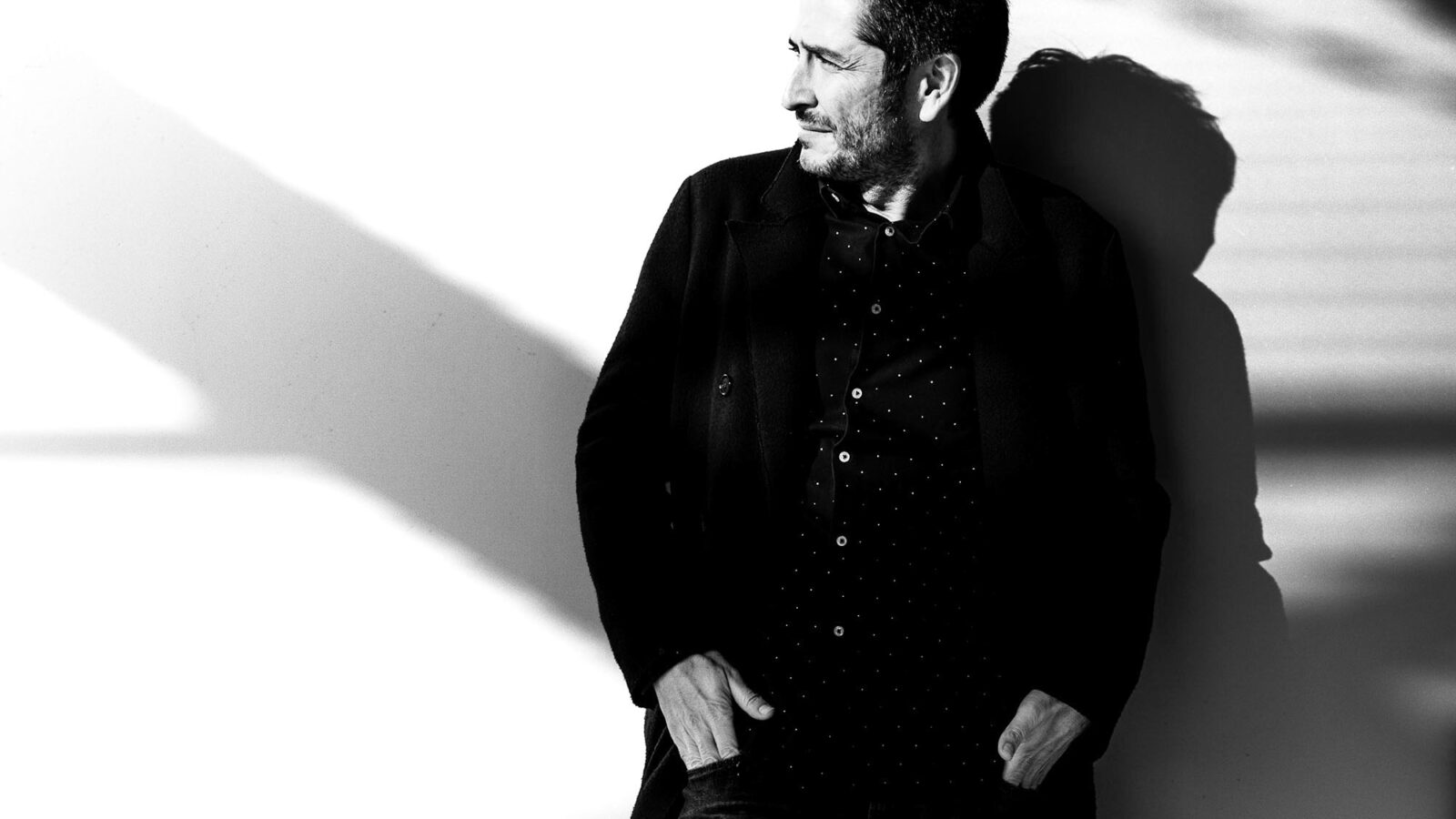
I have photographed Carlos del Amor on several occasions and for a variety of assignments. He has always given me the liberty to work freely, open to collaboratively creating a distinct image that goes beyond the standard promotional portrait.
His artistic sensibility, especially his passion for painting, has allowed me to conceive portraits in which composition and light take on as much prominence as the person portrayed, something rather uncommon in this kind of work.
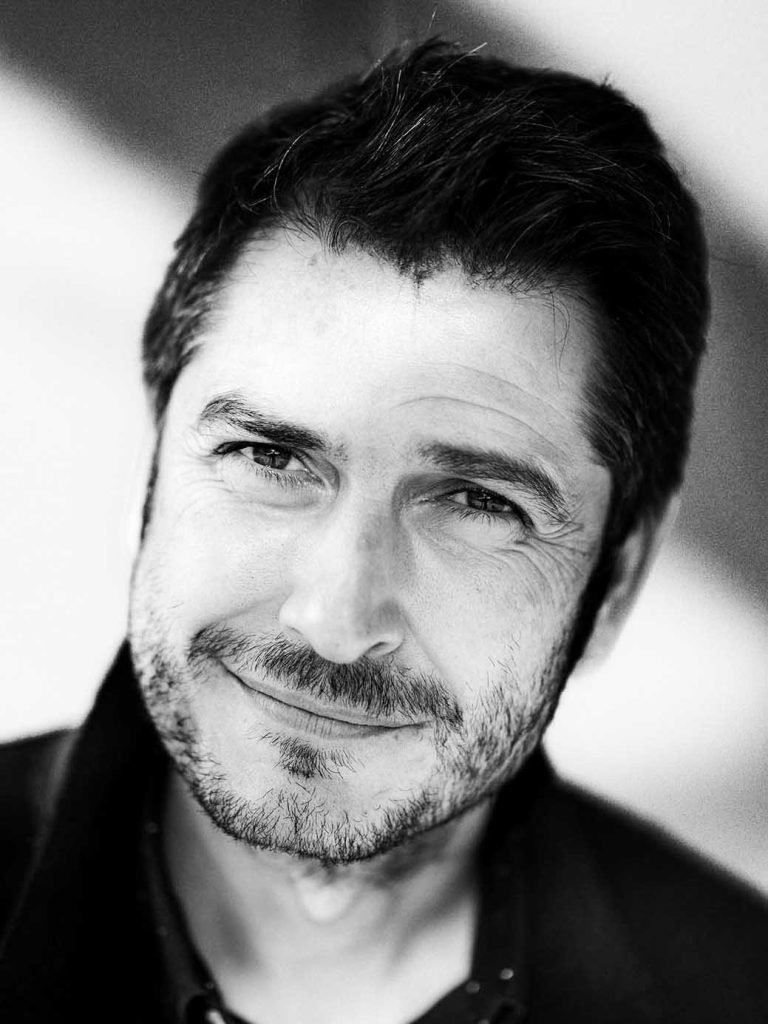
The first time we met was in October 2020, at the offices of Planeta Editora in Madrid. Carlos had just published Emotionarte: The Double Life of the Paintings, a work awarded the Espasa Essay Prize 2020.
María José Solano was interviewing him, still masked due to the restrictions of the pandemic.
Solano, as a good historian, got straight to the point:
—Does an image sometimes say more than a thousand words?
—Sometimes yes. In many cases, a single image in the moment carries a silent, eloquent message.
While they talked, I took a few photographs of the conversation, where art and literature flooded the room.
Terminando la entrevista, llegó mi turno. Bajamos al exterior del edificio, donde la luz diagonaba sobre nosotros. Decidí trabajar sin flash de relleno, buscando un contraste intenso: la luz delineando su rostro, el fondo blanco y la sombra de su figura proyectada en la pared.
I remember how the sun hammered its rays onto Carlos’s face, making it difficult for him to keep his eyes open. I showed him the first photograph and he returned a smile of surprise and approval. I took four or five more shots and we considered the shoot complete.
During the ride back, chatting about the photos with María José, he looked at me with a conspiratorial grin and, nudging me with his shoulder, said:
—That’s badass, bro! The Calling of Saint Matthew.
I answered with a smile, grateful that the three of us knew exactly what game we were playing.
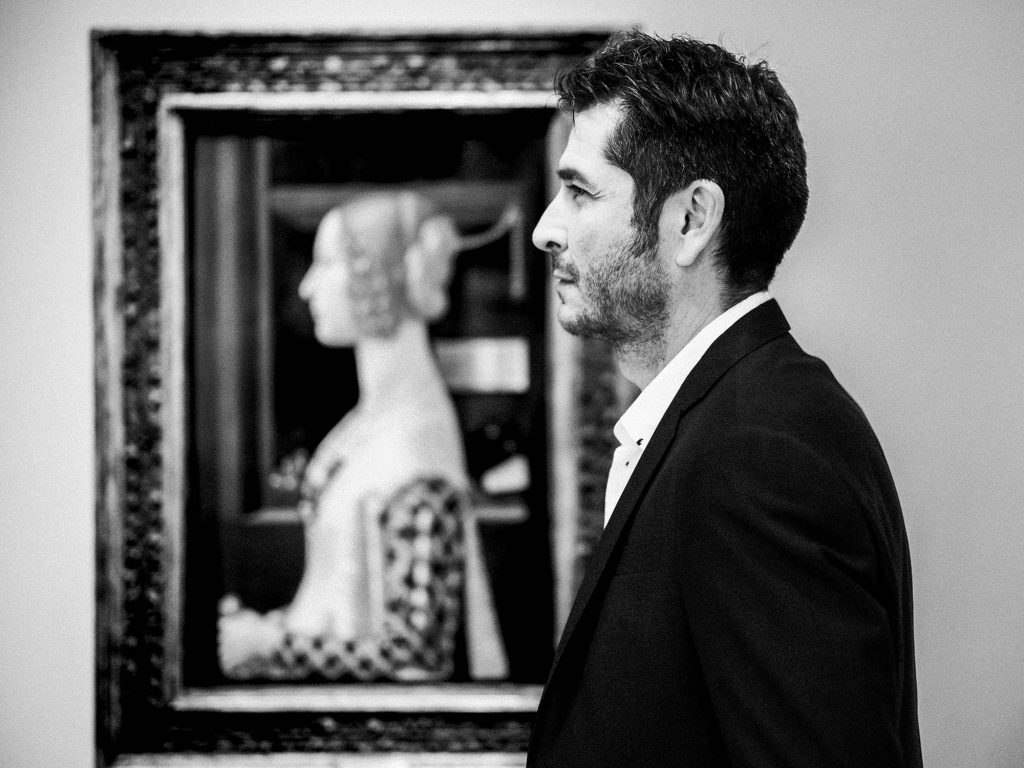
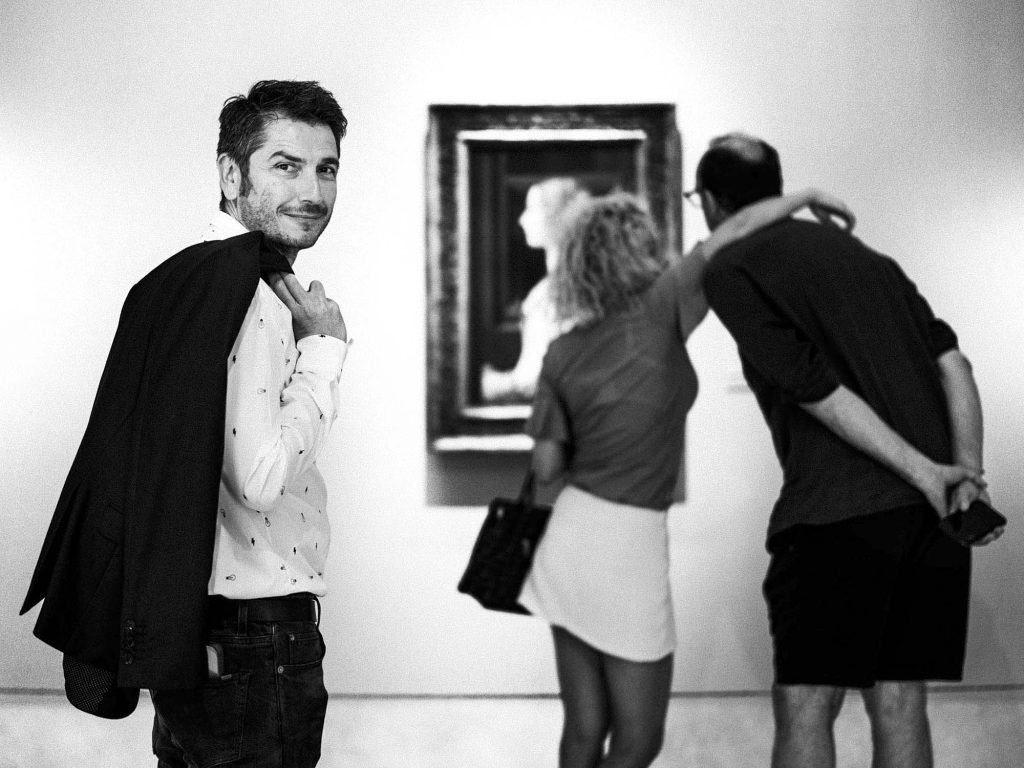
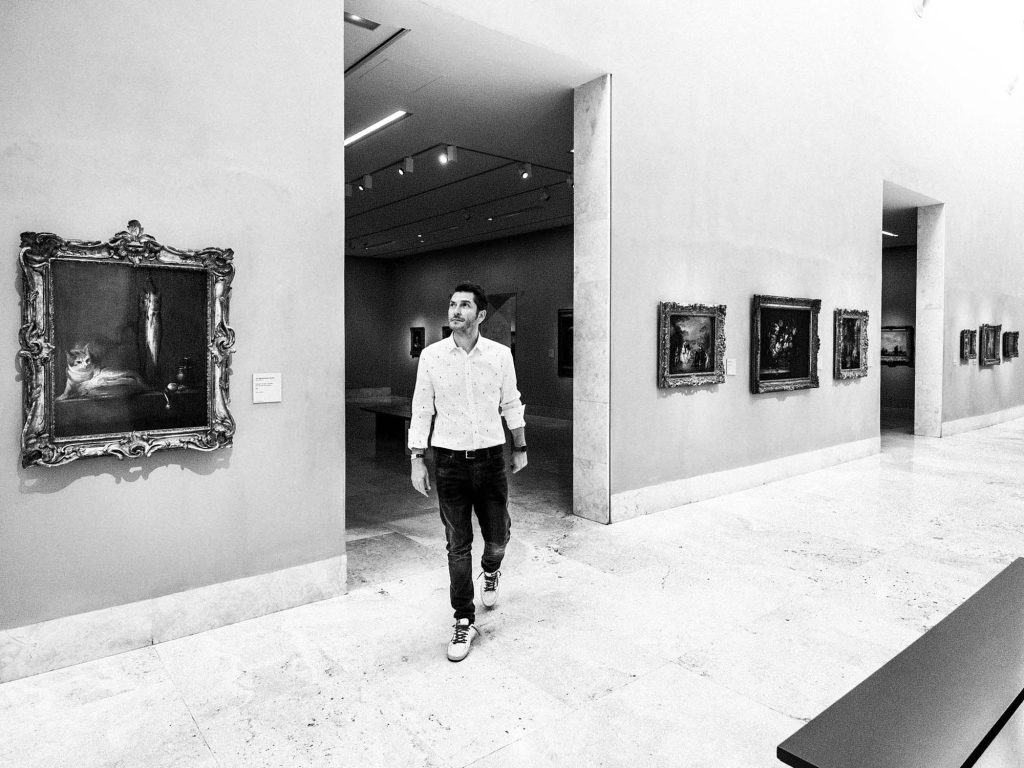
In 2022 I returned to portray Carlos on two occasions: first for a promotional session tied to the publication of his new book, Portraying You (Espasa, 2022), and then for another interview by Carlos H. Vázquez at this house.
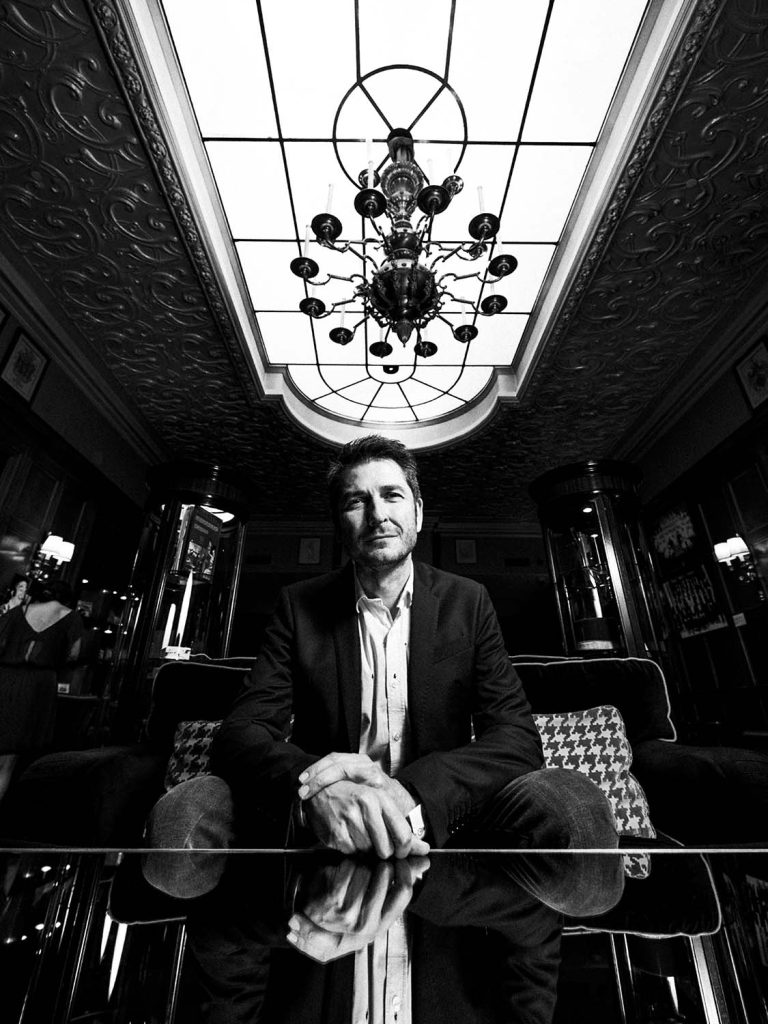
The promotional session took place in two locations: the English Salon at the Palace Hotel and the National Thyssen-Bornemisza Museum.
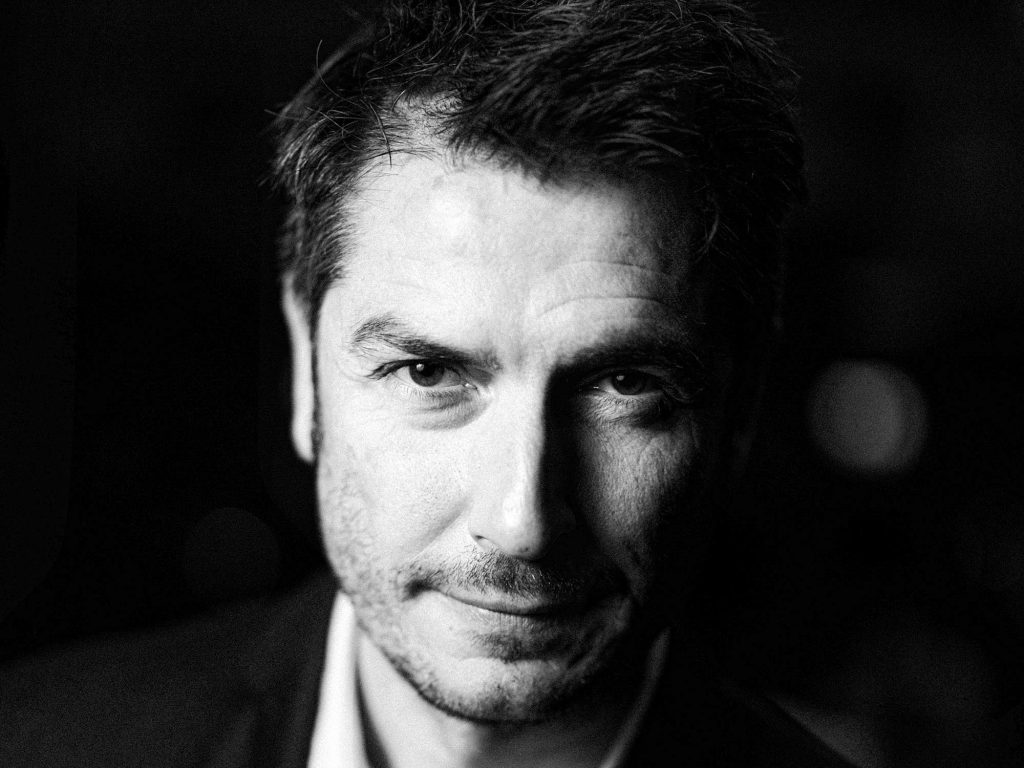
Before starting, we had a coffee and talked about painting, more specifically about portraiture. We briefly discussed the Rembrandt triangle, and from that conversation I began to frame the session from a different perspective. In addition to using a wide-angle lens to capture the palace’s majesty, as if Carlos were Parmigianino in his work Self-Portrait with a Convex Mirror, I also wanted to endow the lighting with drama, creating an atmosphere reminiscent of Rembrandt’s Young Man Sitting at a Table.
To conclude with a more explicit homage to the master of Dutch Baroque, this portrait emerged, featuring his famous triangle beneath Carlos’s left eye.
That initial conversation with Carlos directly influenced my approach to the portraits we would, once again, build together.
We left the hotel and headed to the Museum National Thyssen-Bornemisza, where we took several photographs beside some of his works. Here Carlos appears as what he is: someone who is passionate about painting.
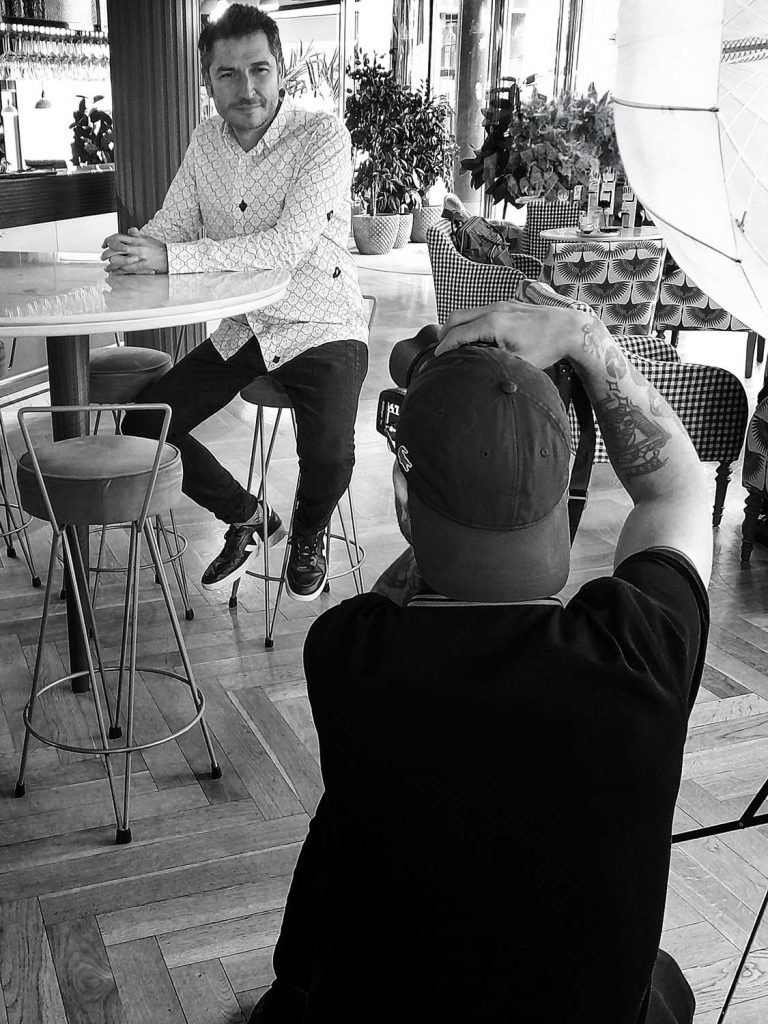
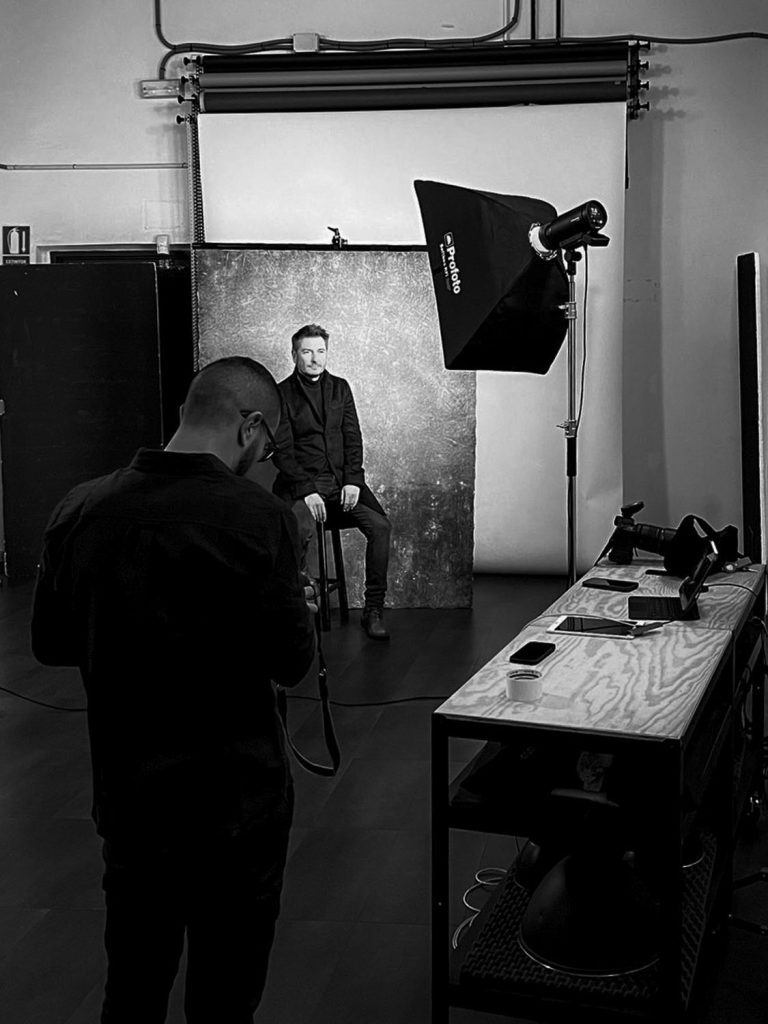
In 2025 we met again, commissioned by his publisher, to photograph him for the promotion of his novel, Unknown Lady (Espasa, 2025).
The session took place in a photography studio, where we had more time. Before we began, we talked, together with his press chief, Desirée Rubio de Marzo, about the approach they wanted to give to the work. Again, Carlos showed himself willing to produce portraits that were different yet tied to his personality.
During the session we worked with different lighting setups, several backgrounds, and various lenses, aiming for a result that matched the requested concept.
In addition to the promotional photos, we created several images with painterly references. In one of them, Carlos is perched on a ladder behind the backdrop, a wink to the painting The Half-Submerged Dog by Francisco de Goya.
We also recreated the cover of his novel, but with Carlos’s own face.
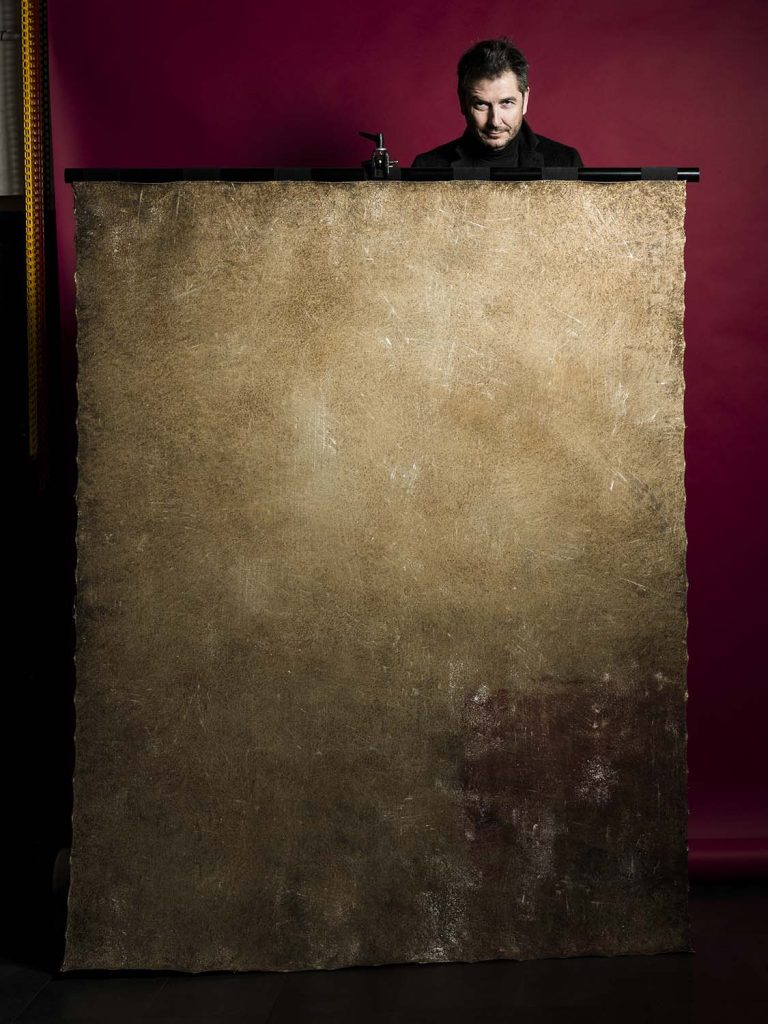
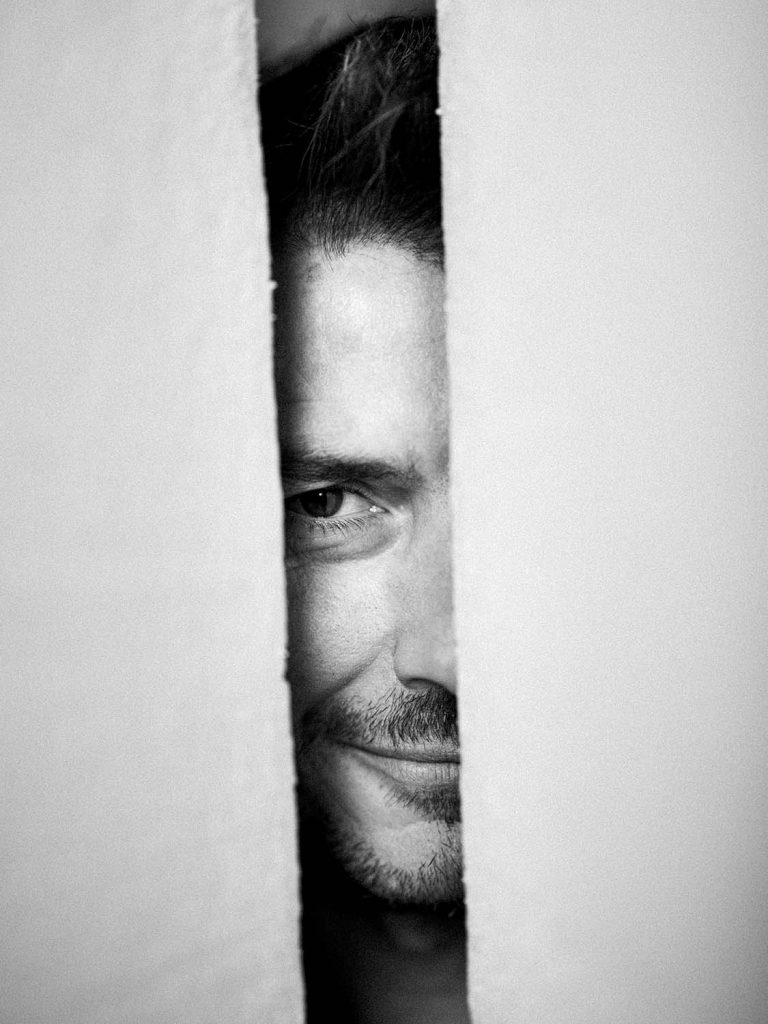
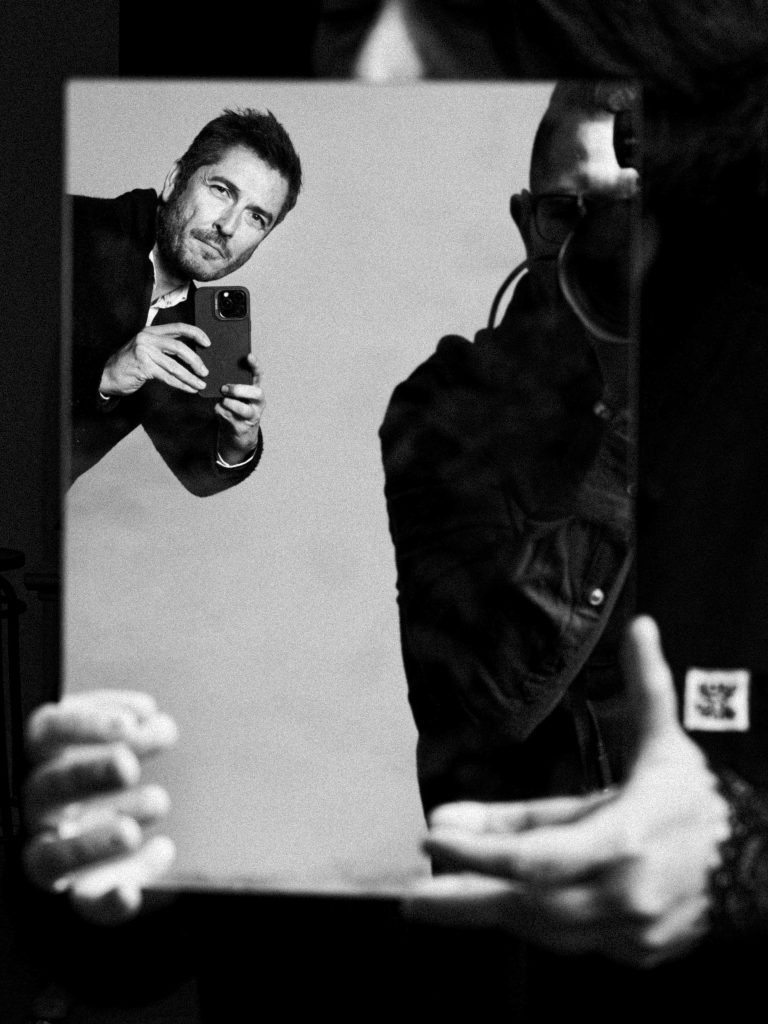
Para terminar, hicimos lo que él llamó, en sus palabras, la metafoto: Desirée sostiene un espejo, cuyas manos parecen desenfocadas en primer plano, y en el reflejo se muestra cómo yo fotografío a Carlos y él, a su vez, me retrata con su teléfono. Una imagen que juega con distintos puntos de vista y convierte el acto de fotografiar en parte del retrato.
In my work, it is a luxury to meet people with Carlos’s level of sensitivity, who trust my eye, grant me creative freedom, and, above all, are willing to contribute ideas. When this happens, the portrait ceases to be merely a photograph and becomes a dialogue between photographer and subject, where the personalities of both are reflected in the final image.
Thank you, Carlos!