
The four words of «This sentence is false» give us plenty to ponder. Much like contradictions and paradoxes. Do they threaten the foundations of classical logic? We tend to assume that a statement is either true or false.
If it is true, would we have to acknowledge that this sentence is indeed false and carries within it a contradiction? If it is false, would it be a lie that it is false and, therefore, would it also incur a contradiction? This closure — this aporia — reveals the limits of our language when we try to use it to speak about itself. The aphorisms that he noted, between 1914 and 1916, those perceptive lieutenant of the Austro-Hungarian army, Ludwig Wittgenstein, maintained that every function of language consists in having meaning. And the most famous: “The limits of my language mean the limits of my world.” It is usually translated as “The limits of my language are the limits of my world.”
And as his friend Bertrand Russell objected, with whom he kept correspondence, can logic actually cross the boundaries of the world, as if it observed those limits from the other side? As if it could traverse the curvature of the Earth.
Granted, language allows uniting contradictory meanings and interpreting them with a fresh sense. Who hasn’t witnessed a thunderous silence? Has anyone lived through an eternal moment? Who hasn’t grasped the expression dress me slowly, I’m in a hurry, an adaptation of the Latin proverb festina lente, a quintessential oxymoron? Like something or someone that escapes us at full slowness.
It is not uncommon for microfiction to lean on humor, even to toy with words and with disagreements, contradictions, and human nonsense and falsities. Humor serves to rebuke, to disapprove, to critique, to discredit. To keep on living.
José Javier Alfaro Calvo —Pepe Alfaro—, born in 1947 in Cortes, the last village of Navarra at the southern tip of the autonomous community, bordering Aragon, or the first, depending on where one comes from, is a teacher, poet, illustrator, storyteller, and stands out in those and in other crafts that belong to goodness. He has spent years directing reading and writing workshops, is part of the editorial board of the literary magazine Traslapuente. He is jovially witty, a prodigy of children’s literature, with briskness and grace. With humor. Poemímame, Magiapalabra, Nanas para dormir animales, Maneras de quitar el polvo are among his notable titles.
I asked him for a micro-story and it took me more than a moment to choose just one of his works. I picked «Coincidencia», which traverses two singular journeys that converge at the same destination: an island situated in the western part of the Mediterranean Sea.
One itinerary stops in the capital of Qatar, Doha, a city whose name, apparently in Arabic, means “great tree” or “great roundness”, whether referring to the tree that once stood in that fishing-town origin, or to the curved shape of the bays that encircle its coast. The second route halts in the port city located on Florida’s southeast coast: Miami. That is: one pursues the west while the other pursues the east. Two possible routes. Opposites.
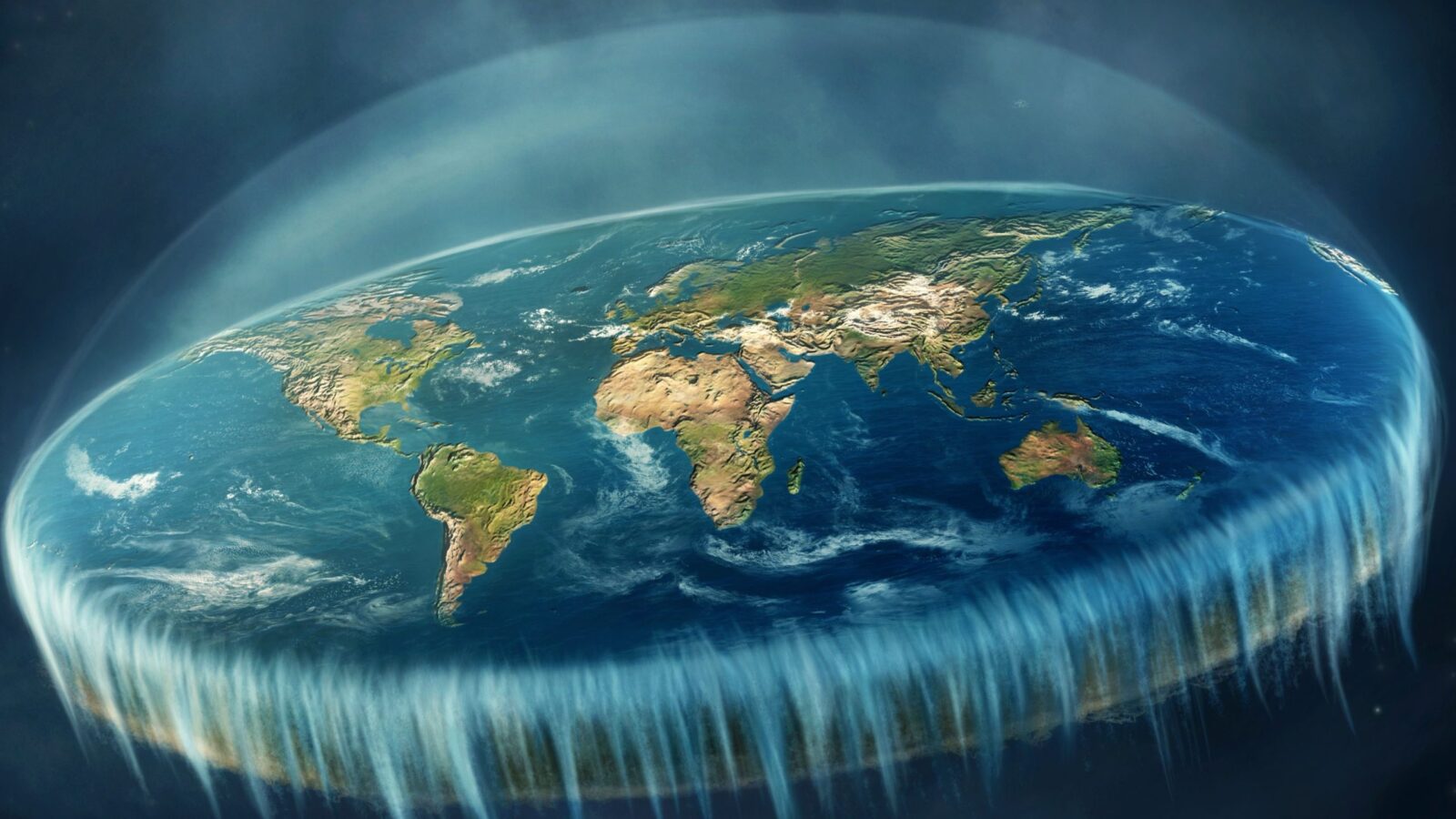
Paradoxical and extreme are also kin to those of us who persist in believing that our planet has an empty interior, hollow, like a dried gourd, or those who see it as flat, like a monstrous tablecloth — perhaps sewn and with folds and dragon fumes — and that it has purposes and conclusions and perhaps stays up on columns. There are those, they say, sensitive or even immune to kryptonite, without being third-generation reptilians. Or people who fear looking up at the sky: they suspect that the broad white contrails left by airplanes above concentrate harmful chemical or biological agents to control the climate or alter it, or to spray diseases on the population. There are those who refuse vaccination… And beings like John and Clark, and their thousands of kilometers of geographies and some coincidences they share. Although we don’t know if they exchange a single word. Ironies of life.
Anyway, returning to the previous point… As my friend Gabriel Unzu Olaz says, the paradox with those four words above could lessen if you double the dose and repeat it this way, with a different intonation: “This sentence is false: ‘This sentence is false’.”
The young Wittgenstein closed his book —and an entire chapter— with this single, definitive aphorism: “Of what cannot be spoken, one ought to be silent.” A blunt assertion. Round. Like the globe. Similar to the meaning of a word as brave as, far away, ineffable.
****
Coincidencia
John arrived in Palma de Mallorca from New Zealand, traveling west, with a layover in Doha. There he ran into his neighbor Clark, who had traveled east, with a layover in Miami. Both were speakers at the First International Congress of Flat-Earth Advocates. ■
——————
Microfiction included in the book You Write (2024)