
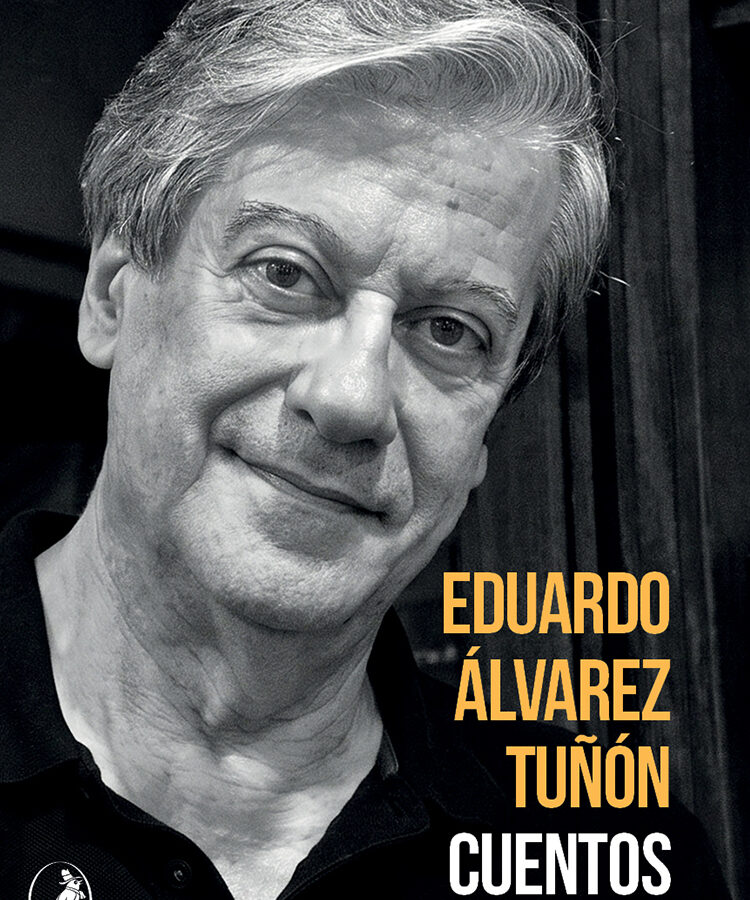
In Complete Stories, for the first time all of Eduardo Álvarez Tuñón’s short fiction is gathered, as well as his unpublished work, “The Last Fervor.” A creator of the “unbelievable realism,” master of a singular charm, his stories, based on real events, provoke perplexity and astonishment in the reader, who wonders whether what is narrated could have happened.
Next we reproduce the tale “The Last Fervor”.
*****
To Javier González, who urged me to write this story
I
It had been a month since he had died, and the moment had arrived to tell the things that his father would not return to. He could not imagine how to carry out such an act that, depending on how far he allowed it to go, might project itself across the entire universe. He decided, then, that he should confine it to the objects he had loved, without which he could not conceive his daily life, those things that, over time, had remained in his mahogany desk. Some bound volumes, William James’s works, an antique English edition of Keats’s Odes, the inkwell with the bust of Plato, a gift from José Ingenieros, and the pens that no one would ever again use with the same intelligence and joy. To the father it was hard to convince his wife that what she regarded as a chaos hindering weekly cleaning concealed, within it, a secret and precise order. Always, when he thought of him, he pictured him at that desk, absorbed in reading, surrounded by a unique light that emanated from the books and which, later, by his own experience, he came to identify with happiness. In that very spot, on a distant afternoon, before the family trip to Geneva, he spoke to him of the brevity of life, distinguished beings from things, and told him that objects endure longer than we do, they ignore that we have left for good, and it is an insult, a form of ingratitude, not to tell them, in some way, that we will not return. Now he remembered his childhood anxiety upon hearing those words and the slow tenderness with which his father stroked those books and the paper-cusher, sword-shaped, brought from Toledo. He asked himself how one tells things that we will not return to, if we lack a common language. He must seek a language that was not composed of words. To speak with objects and be understood was a fiction he, as a writer, could not permit himself on rational grounds. But the idea seemed coherent—a notion of the poet he had once wanted to become. He opened the window and, seated in his father’s chair, looked at each object in the vain search for complicity. A fresh breeze from outside and a scent he recognized at once arrived: It announced the end of summer. He thus felt that he was in the presence of a different language, the language of aroma, more effective even than that of sentences and voices. He must imitate, in some way, what nature did and do away with words. He had a risky idea and sensed that it was apt to put an end to all his hesitations. He would do something that, if he were still alive, he would undoubtedly consider sacrilege. He would move the objects around, alter their locations, separate the William James volumes from the John Keats book, would move the inkwell with the bust of Plato to the small desk in his room. Removed, distant, far from those notes with no reader possible, the things would notice that their silent owner had departed forever.
The task took him longer than expected because it became a kind of farewell ceremony. He lingered over each object and even returned again and again, to the page of William James’s Pragmatism, which his father had marked and which, perhaps, together with Keats’s Ode to a Nightingale, was the last thing he read. Without surprise, with persistent admiration, he verified that he had chosen those texts with the wisdom that was habitual to him: William James, in clear prose, demystified everything, and Keats asserted immortality in that poem.
His mother entered the room, laid a hand on his shoulder, and rejoiced that he was finally organizing, once and for all, that which his father allowed nobody to touch and which gave that beautiful desk a deplorable aspect. He nodded with resignation. He did not think it appropriate to explain to her that what she saw as a simple and necessary task of cleaning and tidiness concealed something profound: telling the thing that a final has arrived, to spare it a wait as useless as eternal. In the face of his mother’s statements that betrayed an interpretation so far from what he had proposed, he thought that perhaps he had chosen the wrong method. But it was too late to attempt another. After all, it was not unusual in the universe for an act to be interpreted according to the gaze of the observer. He thought of Alexander the Great’s soldiers when they first saw a man reading in silence and, in the stillness, believed it was their way of sleeping in that unknown and distant village.
For a moment he doubted whether he had done the right thing. He wondered whether he had erased the few traces that remained of his father in the world, his most intimate setting. He thought, sadly, whether he had contributed to his forgetting. He told himself, to reassure himself, that memory does not need things, though they can help bring back to the present a moment we believed lost. For a moment, he contemplated putting everything back where it belonged. His mother returned to offer him a cup of coffee, as every afternoon, and praised how the desk looked. The emphatic praise, uncommon in her, led him to desist. She also told him that he should empty the drawer. He felt that task was foreign to him. It was likely that there were no things there worth saying goodbye to. It would then be merely a cleaning. He did not remember ever seeing his father open or close that drawer. Perhaps it would be better if his sister and her husband attended to it. But once again, as so often, he did not dare disobey his mother, especially upon noticing that her voice not only bore the tone of an order but also a compliment for a job well done.
He reviewed the drawer with indifference and haste, as one who performs a minor and forgettable activity. There were loose papers that no longer mattered, the rent receipts for the Mallorca apartment where they had lived for three months, a few cards bearing his father’s name and the address of the old Palermo house, vestiges of days gone by, nothing that warranted the wastebasket. A large envelope drew his attention because it was almost hidden at the bottom. Perhaps it contained the title deeds for the apartment on Avenida Pueyrredón. He thought his father would never have kept such careful evidence of something material. When he laid it on the desk, he saw that it contained no papers. It seemed to be an old notebook or something similar, and he felt curious. He opened it and, with emotion and astonishment, found that it was the exemplar of “Fervor of Buenos Aires,” his first book. He remembered the afternoon of March 1923 when he went to fetch it from an old printer in Palermo, who only did almanacs and accepted the job because he had been a friend of Carriego and believed poets to be good people. He remembered the joy of seeing his name on the cover and his sister Nora’s drawing, with whom he had shared complicities since childhood. He remembered the moment he brought it home, decided to number one copy as the first, and took it to his father with a simple dedication, which he now reread. “To Father, with admiration, this book to which he owes almost everything.” Both he and Nora used the vocatives “Father” and “Mother,” without any preceding article, and he could never know the origin of that habit that differentiated them from other kids. He also remembered, this time with precision, how he chose each word of that dedication: Father preferred admiration to affection. He likewise despised emphasis, denied sincerity, and that is why he had decided to limit the scope of his filial debt with the word “almost.” To claim he owed him everything would have seemed an incredible act of obsequiousness. Fifteen years had passed since that day and he felt moved to think that his father had kept that first book with care, he who was a man with such detachment from all that bound him too much to the earth. He placed the book on the desk, looked at it with the emotion that, since death, everything that had been in his hands caused him, and thought that this belated discovery remedied his silence and his indifference toward the publication. He had never told him a word about that first work and, seeing how he had preserved it, he felt that perhaps there was no greater praise. Father had opposed publishing it, even before reading a line. He judged, in a dogmatic way, that it would be premature and reckless. He believed it should wait. It was useless to tell him that it was the concretization of his literary experiences with European avant-gardes and to appeal to the argument, to seduce him, about the philosophical description of the city. He had returned to Buenos Aires after eight years away and had surprised him with his low houses, his courtyards, and the presence of the countryside on the horizon. No argument was effective to convince him. Father, with a wisdom that he took time to understand, distrusted literary schools, cultivated an individualism in keeping with his English ancestry, and despised any exaggeration of local color, where he saw the origin of absurd nationalisms. It was Mother who managed to make him agree to pay for the edition. She reminded him of his own anxiety to publish his first (and only) novel, “The Leader,” set in Entre Ríos and incomprehensible to the Mallorca audience where they lived at that time. Father had to concede. That book had had no possible reader. Mother, too, gave one final decisive argument: Nora had spent many afternoons drafting a cover design. It was beautiful and would suffer a great disappointment. Father finally agreed and said he would pay for a small edition.
No podría decir cuánto tiempo estuvo sentado, recordando, en silencio, hasta que se dispuso a hojearlo, no para releer sus versos (nunca lo hacía), sino para recorrer las mismas palabras impresas que su padre había recorrido, encontrarlo donde había estado y ya no estaba. Lamentó que jamás subrayara los libros, ni escribiera comentarios en los márgenes. Siempre lo había considerado un acto de soberbia, un intento de darse eternidad sin merecerla y ahora ese prejuicio era un límite que les impedía una suerte de conversación, que no había tenido y añoraba. Al abrirlo comprobó, con perplejidad, que su padre había hecho una excepción con su primer libro. Reconoció su letra prolija de profesor en las anotaciones de casi todas las páginas y vio varios de sus poemas tachados con una enorme equis. Pasó de la alegría de un encuentro al vértigo. No imaginó que aquellas palabras de Padre retornarían como una obsesión a lo largo de los años y jamás podría volver a recitar en la noche, para vencer el insomnio, algunos de esos versos sin que lo invadiera la duda, la vergüenza y el miedo.
II
“To the poems I have crossed out, only destruction or oblivion can save them.” He read this sentence first and immediately wanted to see which texts those were. He was about to go page by page when his mother returned, questioned the slow pace at which he did everything, and told him that cousins would arrive very soon. He did not want them to see the house in disarray nor feel that it had been tidied up especially for the visit. He had to achieve a just middle ground, and Nora would take care of it. He also asked him whether he had found anything important in the desk drawer. She reminded him that his father tended to keep the disposable, preserve useless things, and throw away the essential. He decided, then, to hide the discovery from his mother. He feared she would seize the book for herself, sketch some irony, relativize the notes, and, above all, intervene in that miraculous dialogue—undoubtedly the last—that he hoped to have with his father. She had an invasive affection for him; she looked after him in an authoritative way, and it was predictable that she would believe, not without reason, that critical opinions would hurt him. She did not realize that he had learned from his father to privilege the exercise of intelligence in dialogue, bright discussions, over the pain that a demonstrable truth could cause.
He endured, in silence, the cousins’ visit; he heard the stock phrases spoken in the face of death, the clichés and vulgar consolations. He would have liked to be alone, in his room, reading, even though he trusted that what awaited him would not be the usual reading, but something different. He awaited the voice of his father, the one he had lost and missed, the subtle phrases that had surprised him since childhood. Indifferent to the gathering, he repeated to himself, “To the poems I have crossed out, only destruction or oblivion can save them.” The line had a poetic lucidity. He would have liked it to be his. Oblivion as salvation and memory as condemnation. He felt admiration and thought, as a consolation, that at least those poems had served to write those words. He could not imagine that, in a distant future, he would use them in a short story, without confessing their origin, when he would already be the Director of the National Library and glory would overwhelm him.
Nunca estuvo tan pendiente de la llegada de la noche. Había guardado el libro en el mismo sobre y lo había ocultado en el fondo del cajón de su mesa de luz, hasta que llegara el momento de leerlo. Cuando todos se fueron, simuló cansancio, dejó a su madre con Nora y su cuñado, les dijo que no cenaría y se recluyó en su habitación. Sentía que todo lo que había oído esa tarde acerca de su padre era vano. Él no estaba en esas palabras gastadas ni en esos recuerdos de anécdotas menores y cotidianas que la muerte provoca. Nada más ajeno a Padre que la actitud de dar ánimo frente a lo irremediable. Lo hallaría en las anotaciones de su primer libro y descartaba que, aun con alguna sugerencia de supresión, hallaría frases inteligentes para plagiar y alabanzas que lo entusiasmarían y cambiarían el clima de esas tardes.
Apenas lo había hojeado y sentía mucha curiosidad. Ignoraba el número de poemas tachados y cuales tenían el privilegio de haber sido anotados. Prefirió no dejarse llevar por impulsos, disfrutar de aquello que, aun con críticas, veía como un encuentro mágico que nunca hubiera creído posible. Pero se preguntaba por qué su padre no habría hablado jamás con él acerca de su poesía, cuál era la razón que lo hizo dejar su opinión por escrito en las mismas páginas del libro, él, que jamás subrayaba una línea impresa.
Se dispuso a leerlo como su padre lo había leído. Tenía la certeza de que recorrer ese mismo camino podría llevarlo a comprender cada una de las observaciones. Él había escrito una introducción, quizás algo temeraria. En Ginebra se fascinó con las menciones de Walt Whitman a los lectores futuros que habitarían el mundo cuando el ya no estuviera y quiso imitarlo. Se dirigió, entonces, a un ser indeterminado, fuera del tiempo y del espacio y tituló “To Whoever Reads” esa prosa deliberadamente barroca. Su padre no lo había pasado por alto y había escrito una suerte de advertencia y reto. “A first book should not carry a prologue by its author. It is an act of arrogance, especially when it pretends to reflect an aesthetic”. Sintió que había algo de cierto en esa dura sentencia. Pero todo era irremediable. Pensó que si su padre hubiera leído su libro antes de llevarlo a la imprenta y su consejo hubiera sido oportuno, nada hubiera cambiado, él no le hubiera hecho caso y la suerte no sería distinta. Tenía, como todos los jóvenes, una necesidad imperiosa de existir y, lo que es más grave, de ser moderno. Tampoco había pasado por alto la muy poco feliz frase inicial “Prefaces are usually…”. Se preguntaba cómo se le había ocurrido ese sustantivo tan extraño. No podía recordarlo. Le sonaba a Baltasar Gracián, a esa pretensión de originalidad propia de los inseguros. Su padre la había subrayado y había escrito en el margen “¿Prefaces? Nunca había leído esta palabra y espero no volver a leerla”. Siguió adelante y comprobó, con alivio, que las otras páginas de ese prólogo no tenían más anotaciones, salvo en su último párrafo: “If in the following pages there is a verse achieved, forgive the reader the audacity of having composed it before him. We are all one.” Esta frase, lo descubrió después, motivaron el único elogio de su padre en todo el libro. Había escrito, casi en el borde de la página, con letra firme “Extraordinary. Pure Schopenhauer.” Esos adjetivos que no eran habituales en él, ese énfasis tan ajeno a su escepticismo inglés, le produjeron una sensación de felicidad que disipó, por poco tiempo, sus vergüenzas y temores. Luego, cuando hubo leído todo aquello que su padre había observado y vio que era una solitaria alabanza, aislada y parca, comprendió que la aprobación tenía una razón secreta: Su padre se encontraba reflejado en ese párrafo, veía una síntesis de aquello que le había enseñado: los conceptos básicos de la metafísica y el menosprecio a la realidad.
He read those last words of his prologue, again and again, with his father’s voice. It did not cost him to imitate it. Mother always told him they shared the same tone. They both recited Omar Khayyam’s poems in Fitzgerald’s version and, when they talked about Plato, she, from the bedroom, did not recognize who was speaking.
For a moment he had a fleeting sense that that praise would bring other praises and that his father’s comments would be essentially philosophical. The first poem, “The Streets,” showed him that his intuition was mistaken and that it was a mix of naivety and desire. The first two lines said: “The streets of Buenos Aires are already the marrow of my soul.” Father had noted, “Marrow and soul? Contradiction. Nothing so distant from the soul as the marrow. It is advisable to discard metaphors of butcher’s imagery.” The observation confronted him with the ridiculous, and from the strictest logic he found it apt. He wanted to salvage that opening by telling himself it was a metaphor and, as such, could not be read literally. After all, Shakespeare had written that men “are made of the same wooden stuff as dreams” and no one would have said it was a metaphor of carpentry. Yet there was something in that verse—the viscerality of the noun “marrow”—that gave him reason. Without a doubt, and now he saw it, it was not a beautiful image. His father had mortally wounded a poem that he had liked as much as to place at the book’s opening. He remembered the afternoon he wrote it and that sense of pleasure that creation brings and that would accompany him in every poem, in every tale, but now without the intensity that surrounds what we do for the first time.
Several of the poems that followed had attracted no comment, and he felt that not all was lost. Upon reaching “Patria Música” he discovered that Father had underlined the last two lines: “The traveler/ feels as if his heart is being examined by the hand” and added a question that exposed him to all of his blunders, “With what other part can one touch if not with the hand?” With time, he would not recall having lived a moment of so much humiliation. He wondered how he could have committed such a grave error, he who boasted of seeking the right word and aspired to write like Quevedo. He wondered if any other reader would have noticed his inexplicable fall and he had to suppress the urge to tear out that page. He told himself then that the error lay not in it but in him, and the desire not to destroy something that bore his father’s marks outweighed his self-disgust.
The twelve poems that followed did not deserve observations. He doubted whether his father approved them or whether, after that sin against the language, he had judged all critical warnings useless. But when he reached the poem “Arrabal” he knew he had been mistaken. The comments were more incisive than before. A cross marked the line “Judicious as a sheep in a herd,” and one could read in the margin, “I don’t think being prudent is an attribute of the sheep, and I don’t think that if it has it, it loses that attribute when it’s alone.” That poem was dedicated to Nora’s husband, Guillermo de Torre, who had accompanied them that afternoon and at that very moment was in the room, talking with his mother. He could hear his voice. They had shared literary salons in Madrid, had walked the streets of Buenos Aires, and although they were separated by some ideas about the vanguards, he had a singular affection for him, which time had worn down, but which still endured. Father had written with cruelty: “I think it’s fitting that such a bad poem be dedicated to my son-in-law.”
But the observation that injured him most was the one about the poem “Sábados.” The dedication read “To my girlfriend Concepción Guerrero.” It began with the line “Benjuí of your presence” and continued with a somewhat bizarre line: “In our love there is no revelry.” Father had written: “With these two lines the courtship could not prosper.” He thought that, in truth, he had loved her and had suffered the breakup and her absence. He enjoyed Saturdays’ waiting and, when evening fell and he left her at the door of her house in Palermo, he felt the happiness of beginning the eve of a new encounter. He never knew why she left him. Precisely one Saturday, a few months after his book appeared, he received a card telling him she needed to be alone for a while to think. Now, confused, he wondered if the breakup wasn’t due to those lines hard to understand without a dictionary at hand and devoid of any charm. But he immediately abandoned that silly idea. Poems, all poems in the universe, lacked the power to impose love or heartbreak. The excuses of that girlfriend, over time, would be repeated by other women he loved and would become a commonplace of all his abandonments and breakups.
III
Many years had passed since that afternoon of discovery. He could no longer walk the streets alone nor read: two forms of happiness that had gradually abandoned him. The company he relied on forced him to maintain trivial conversations. It would have been unfair to lament the passing of time. It had brought him some benefits: the admiration of others, the possibility to publish whatever he wished without enduring questions from superficial editors, and the fact of working, if one may use the verb, at the National Library. But the fame, which others envied, caused him some discomfort. He had become, despite himself, a recognizable figure to people who felt indifferent toward him. From the most diverse circles they invited him to give lectures; deliberately he suggested, unsuccessfully, topics that would provoke rejection. He felt he was wasting his time and slowly drifting away from the only thing that mattered to him: the vast literature he had not yet exhausted.
Pese a todo, la obsesión por las críticas de su padre a su primer libro lo invadía cada tanto, en ciclos irregulares, que no podía prever. A veces las olvidaba durante un tiempo y de pronto retornaban, lo llevaban a dudar y volvía a preguntarse si eran acertadas o no. En soledad, repetía los poemas en voz baja y salvo alguna excepción, seguían gustándole y advertía en ellos sutilezas que luego había desarrollado en cuentos y ensayos. Había atravesado ya los umbrales de la vejez y aún le costaba discrepar con su padre. Pensaba, con algo de dolor, que era un hombre culto, con formación filosófica, pero la poesía no había sido su destino. Sus lecturas eran propias del siglo XIX y quizás fuera insensible a las nuevas formas y metáforas. Algunos comentarios le parecían lúcidos, pero no justificaban la condena de toda esa obra primera. Había una diferencia esencial entre “Fervor de Buenos Aires” y los otros libros de juventud que él mismo decidió no volver a publicar, como “El tamaño de mi esperanza”, “Inquisiciones” o “El Idioma de los Argentinos”. En esas páginas de ensayos exponía opiniones, juicios categóricos que ahora consideraba errados y ya no podría sostener. Pero “Fervor de Buenos Aires” era distinto. Esos poemas lo reflejaban. Aún ahora, cuando caminaba acompañado por alguien que le concedía la gentileza del silencio, los recordaba y encontraba hallazgos que lo hacían viajar a través del tiempo.
Había aprendido a convivir con aquellas ironías de su padre y ya no le resultaban tan dolorosas. Pero, extrañamente, esa calma, consecuencia irremediable del tiempo, le causaba algo de tristeza. Creía que lo alejaban de él y le hubiera gustado mantener vivo ese estado entre la sana indignación y la duda, que se fue disipando con los años mientras desaparecían de la tierra los poquísimos ejemplares de esa primera edición y quizás también sus lectores.
Demoró la respuesta porque también le resultaba difícil prescindir de las observaciones de su padre y presentía que, con su estilo no desprovisto de cierta crueldad, su intención había sido preservarlo de la ridiculez. Padre no había optado por hablar. Su estrategia había consistido en ocultar el ejemplar con sus críticas para que lo hallara en el momento oportuno en que fuera un escritor reconocido y lo convocasen para editar sus obras. Tal vez lo mejor sería optar por una solución intermedia: No negar la existencia del libro. Permitir que se publicara “Fervor”, pero con las supresiones que Padre sugería. Podía recordar cada una de los comentarios, incluso el lugar en que los había escrito con aquella letra clara que siempre parecía consignar verdades. Sintió entonces, una suerte de rebeldía que la vejez le impedía calificar de juvenil. Ahora no quería corregir al que había sido e incluso iba más allá: Hasta le gustaban algunas fealdades que no hubiese tolerado en otro poeta que no fuese él.
Esa noche, como la primera, casi no pudo dormir. A la mañana siguiente un hecho vino en su ayuda. Recibió una invitación, con sellos solemnes, para dar tres conferencias en España. Estaba ante una oportunidad inesperada. Decidió aceptar de inmediato y le dictó a su madre una carta sencilla que condicionaba la propuesta a que ella lo acompañara y a permanecer todo el tiempo en Madrid. Agradeció por un motivo secreto y trató que las universidades no percibieran hasta qué punto le era indiferente la convocatoria. Su alegría era íntima y ni siquiera su madre, que tanto lo conocía, llegó a descubrir la causa. Lo único que le importaba de ese viaje era visitar a su antiguo maestro, el escritor andaluz Rafael Cansinos Assens, con quien había compartido lecturas, pasiones y manifiestos. Hacía cuarenta años que no se veían, extrañaba su erudición y era el árbitro ideal para someter a su juicio las correcciones de su padre y aceptar su consejo.
Ahora se enfrentaba a una extraña aventura que daría una luz distinta a la rutina de sus días. Debía trasladar el libro sin que Madre, hacedora eterna de su maleta, lo advirtiera. Había logrado ocultarle por años la existencia de aquel ejemplar. No quería que lo descubriese y frustrara su plan. Podría contar con la complicidad de la mucama, pero con algunas reservas: la tarea que su madre le había encargado consistía en vigilarlo y contarle todo lo que notaba extraño. Esa mujer simple y leal no se sorprendería de que, en la víspera de partir, agregara un libro cuando la valija ya estaba terminada. Pero su aventura no terminaba allí. Era indispensable visitar al maestro sin la madre, para entregarle el ejemplar y explicarle lo que deseaba de él. Pensó, entonces, con alivio, que no le sería difícil prescindir de ella y buscar a otra persona. Madre no guardaba un buen recuerdo de Rafael Cansinos Assens. Nunca la abandonó la idea de que no era una buena compañía para su hijo: Se pasaba todo el día en el café, era excéntrico, lo hacía trasnochar y, cuando se encontraban, Georgie volvía a la madrugada se quedaba leyendo y costaba despertarlo para el almuerzo. Madre no estaría interesada en participar de esa visita con un personaje que ya no resultaba peligroso. Sabía que el tiempo no había pasado en vano. Su hijo no corría ya esos riesgos que tanto la preocuparon cuando tenía apenas 20 años y era vulnerable.
IV
Le alegró saber que Rafael Cansinos Assens seguía viviendo en el número 8 de la Calle de la Morería, detrás del viaducto. Recordaba con precisión la casa, pequeña y humilde, una suerte de biblioteca con cama, como le gustaba describirla a sus amigos del Café Colonial, que no tenían el privilegio exclusivo de acompañarlo, cuando terminaba la tertulia, en la noche, al borde de la madrugada. Le parecía verlo traspasar su puerta como si entrara en un templo, abrir la ventana y saludar a las estrellas en 14 idiomas. Ese ritual le hacía sentir emoción y envidia, no solo por el don de lenguas que él quizás nunca llegaría a poseer, sino por la certeza de que su maestro no necesitaba escribir para generar poesía: la bastaba un acto o un gesto invisible.
No le fue difícil prescindir de su madre y encontrar quien lo llevase a la casa de Cansinos Assens. Un muchacho, que se presentó como cuentista, se ofreció con cordialidad y él aceptó de inmediato. Tuvo la intuición de que, pese a su origen andaluz, no sería demasiado conversador. Le dijo que lo admiraba desde siempre. Pensó en la admiración como una debilidad propia de la juventud que lo inclinaría hacia el silencio. Tendría temor de hacer preguntas, de incurrir en algún error que suscitaría una de sus habituales respuestas irónicas. Pero ese miedo no le causó desprecio. Era precisamente el que había padecido, ante su maestro, cuando era joven y recorrían esas mismas calles.
Al entrar sintió la presencia física de los libros y supo que nada había cambiado. Ahora, Cansinos Assens, se había convertido, para él, en una voz. Poco le importaba no ver su rostro: Tal como había escrito en uno de sus primeros relatos “el hombre se parecía a la voz”. Se abrazaron con la alegría, casi ingenua, de quienes no esperaban volver a encontrarse. Habían pasado 40 años, las dos guerras, la de España y la del mundo. En su existencia, la irrupción de la prosa, la soledad, la ceguera, el trabajo en la biblioteca y una equívoca fama. En la de su maestro, la condena al ostracismo, la censura por haberse proclamado judío sin tener la certeza de serlo, la necesidad de hacer traducciones para poder subsistir y el olvido de los otros. No condescendieron a hablar de sus vidas. A los dos les importaban más las lecturas que los acontecimientos individuales. Él hubiera querido indagar, aunque fuese para comprender esa injusta paradoja, porqué razón el prestigio de su obra crecía día a día, mientras declinaba la presencia de su maestro en todos los ámbitos intelectuales del mundo. Cuando mencionó su nombre en una rueda de prensa, al llegar, tuvo la sensación de que ninguno de los periodistas sabía quién era en verdad. Pensaban que se trataba de un ser imaginario, un personaje inventado en el ejercicio de sus ficciones. En el instante en que iba a hablarle de esa injusticia que lo asombraba, Cansinos Assens le dijo que estaba revisando la traducción de “Las mil y una noches” del árabe y que había advertido cierta influencia del Talmud en algunos de los diálogos y una clara reminiscencia de Virgilio. Decidió permanecer en silencio, no interrumpir con pequeñeces sin trascendencia esas sutilezas sorprendentes que hacía años que no escuchaba. Su maestro no hablaba desde el presente vano y efímero sino desde una suerte de eternidad.
Sintió, entonces, que debía renunciar al propósito de su visita. No podía distraer a Cansinos Assens obligándolo a la relectura de un libro menor. Para colmo, le acababa de anunciar que se tomaría un tiempo para analizar la obra de Dante y las huellas posibles del Islam en la arquitectura del infierno. Pero la sensación de fracaso que le hubiese traído retornar sin su consejo, esa angustia de no saber si su padre estaba en lo cierto, hizo que tuviera el coraje de expresarle el motivo de su presencia y le habló con el tono temeroso y vacilante de quien confiesa una conducta reprochable. Cansinos Assens tomó el ejemplar de “Fervor de Buenos Aires” en sus manos, lo hojeó, hizo alguna alusión al ultraísmo con una sonrisa comprensiva y le pidió que volviera al otro día, a la hora que quisiera, porque él ya no salía: Todos los lugares de Madrid a los que hubiera querido volver habían sido destruidos, o por la guerra o por la modernidad.
“Tienes razón, tu padre tiene razón en todo, y me he atrevido a hacer otras correcciones.” Cansinos Assens le recibió con estas palabras, que precedieron al saludo y pronunció con un dejo de bondad. Abrió el libro en el poema “Calle Desconocida” y leyó en voz alta el verso “Penumbra de la paloma llamaron los judíos a la iniciación de la tarde.” Le sugirió cambiar la palabra “judío” por “hebreo.” Explicó las diferencias y le habló largamente de la cábala mística. Luego se detuvo en el poema “Dictamen” y le cuestionó la palabra “altivecer”. Aludió a las etimologías y a las connotaciones teológicas del término. Por último y quizás para ir en su ayuda, se refirió al poema “Sábado” que su padre había ridiculizado y le alabó el verso “Está en ti la delicia como está la crueldad en las espadas.” Llegó a decirle que era el mejor del libro, pero le propuso una corrección. La palabra “delicia” tenía, en el español actual, connotaciones gastronómicas y debía cambiarla por “Luz.” Volvió a repetir el verso con el cambio, una y otra vez y no pudo disimular que reconocía su influencia y por eso lo celebraba.
Aceptó con alivio y resignación los juicios de su maestro. Le agradeció la lectura, y decidió cambiar abruptamente de tema. Comenzó a hablarle de los distintos traductores de “Las mil y una noches” y de los posibles orígenes del libro, ante la tesis persa del Barón Von Hammer. Trató de que no quedara en evidencia la egoísta finalidad de la visita. Tal vez lo logró porque Cansinos Assens, apasionado, se olvidó de “Fervor de Buenos Aires”, reseñó todas las teorías, le pidió su opinión con humildad y conversaron hasta el atardecer de la interpretación esotérica de “las noches”, como las llamaba su maestro. Se despidieron con la certeza de que no volverían a encontrarse y la felicidad extraña de haber mantenido una conversación última sobre un libro infinito y amado.
En esos días de Madrid pensaba en Buenos Aires todas las mañanas y sin proponérselo. Procuraba reconstruir la ciudad de “Fervor”. A su regreso, como si se tratara de un juego de espejos, pensaba solo en Madrid.Sabía que las dos ciudades ya no eran las mismas y las evocaba sin nostalgia, con una resignada aceptación. La ceguera lo privaba de las imágenes y hacía resaltar los perfumes que, por momentos, le resultaban familiares. En determinadas calles, en algunos rincones, cuando caminaba hacia la casa de su maestro, había sentido que, pese al paso del tiempo, persistían los aromas de aquel Madrid de su juventud, aunque mezclados con otros, diferentes y quizás nuevos, que no alcanzaba a reconocer. Algo similar le ocurrió al día siguiente de su llegada, cuando volvía de la Biblioteca Nacional. No se trataba solo de los perfumes. También las voces, los ruidos, todo lo que hace a la música de una ciudad, había cambiado, pero esa caótica armonía, quizás producto de la modernidad, no le había resultado del todo ajena, ni en Madrid ni en Buenos Aires. Él tampoco era el mismo. Por momentos, tanto aquí como allá, había sentido la presencia del joven que fue, habitado de pasión y certezas, en diálogo con ese hombre viejo, cercano al gran enigma, en el que se había convertido. Como su maestro, ahora vivía solo en función de la literatura y se preguntaba si no era un acierto pensar que los libros estaban llamados a padecer y gozar las mismas transformaciones que las ciudades, a convertirse como ellas, en la obra de un autor plural, secreto e inhallable. La idea poética de que su libro atravesara las mismas vicisitudes que los lugares donde fue concebido vino a salvarlo. Esa obra primera se había forjado en Madrid, en torno al ultraísmo, pero su escritura se había llevado a cabo en Buenos Aires. Podía reconocer en las páginas aquello que le había sido dictado por los dioses a él mismo y también a su padre y a Cansinos Assens, amanuenses sin duda más calificados. Se preguntó qué significaba, en verdad, ser autor de un libro, si no hay algo de vanidad en atribuirse una obra. Sintió que no había sido casual encontrar a su maestro trabajando sobre “Las mil y una noches”, una creación infinita, colectiva, de todos y de nadie. Tampoco se debía al azar que su padre solo dejara subsistente de aquel prólogo la frase que ahora se le revelaba bajo una nueva forma: “Si las páginas de este libro consienten algún verso feliz, perdóneme el lector la descortesía de haberlo usurpado yo previamente. Nuestras nadas poco difieren; es trivial y fortuita la circunstancia de que seas tú el lector de estos ejercicios y yo su redactor”
La semana que precedió a la entrega del primer volumen de sus “Obras Completas”, le dictó a su madre la nueva versión de “Fervor de Buenos Aires”, sin vacilar. No temía cometer error alguno. Había vuelto una y otra vez sobre esa obra, desde el día en que descubrió el ejemplar y lo tenía grabado en la memoria. Suprimió los poemas que su padre había condenado, introdujo todas las modificaciones sugeridas y le sumó las de su antiguo maestro. Dudó si contar la verdad. Como Bartleby, prefirió no hacerlo. Decidió agregar un nuevo prólogo. Su sinceridad lo llevó a iniciarlo con una confesión expresa: “No he reescrito este libro”. Ni la crítica, ni las crédulas universidades, repararon en esta frase. Solo muy pocos se dieron cuenta que encerraba una estricta verdad.
October 2023 – April 2024
—————————————
Author: Eduardo Álvarez Tuñón. Title: Complete Stories. Publisher: Libros del Zorzal. Sales: Todostuslibros.