
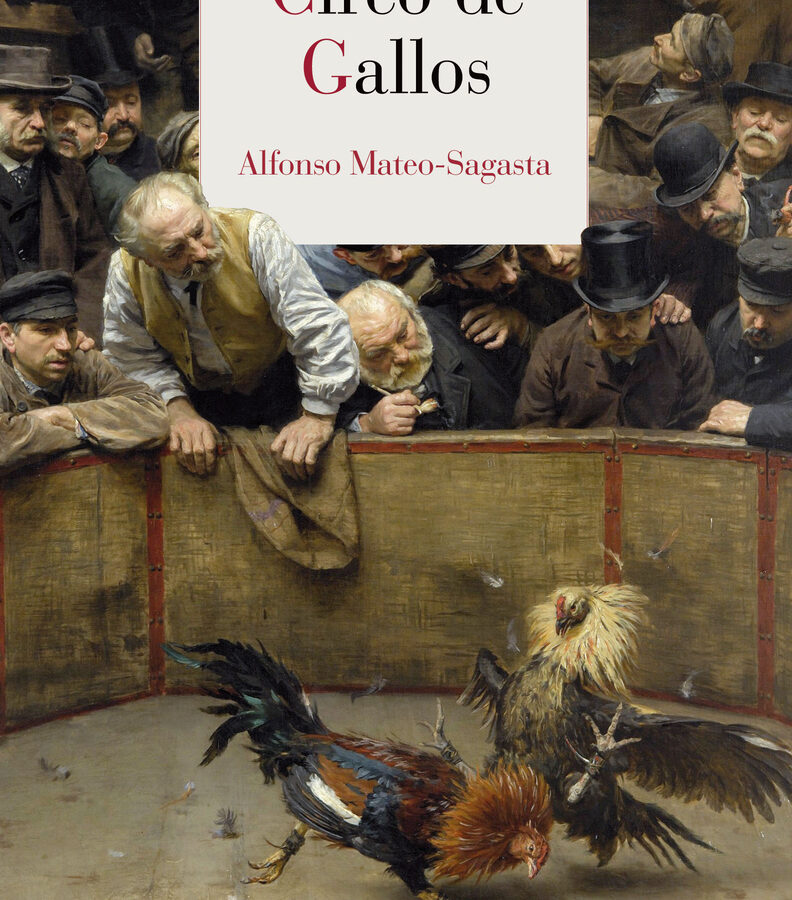
If there is a Spanish novelist capable of tackling every genre and always emerging victorious, it is undoubtedly Alfonso Mateo-Sagasta (Madrid, 1960). Known above all for his dazzling trilogy about Cervantes and the miseries of his century — Ladrones de tinta, El gabinete de las maravillas and El reino de los hombres sin amor —, he is also the author of other essential novels such as Mala hoja — masterfully set in 19th‑century Cuba —, Las caras del tigre — an extraordinarily original scientific noir set in the bicentennial of Charles Darwin —, Caminarás con el sol — about the exploits of Gonzalo Guerrero in Yucatán — or the recent El reino de Belmonte, in which he summons the spirit of neighborhood advocacy in the early years of our democracy. Multi‑awarded for his interpretation of historiography as the basis for a sane reading of social reality, he also enjoys enormous popular appeal and a legion of loyal and enthusiastic readers in both Spain and Latin America.
Maestro de la crónica histórica entreverada de la mejor novela de aventuras,
Mateo-Sagasta se atreve ahora con el carlismo y borda un relato que no deja un respiro al lector
. Desde la primera página de
Circo de gallos
(Reino de Cordelia) la peripecia de un maltrecho Francisco Querol, coronel recién llegado de la Guerra de los Diez Años en Cuba al Madrid de 1873, atrapa al lector y le obliga a seguir leyendo para entender varias cosas a la vez: cómo es posible que no haya muerto con todo lo que arrastran su maltratado cuerpo y su dolorido corazón, y de qué modo piensa parar —mandatado por el presidente de la República— a las tropas carlistas de Pascual Cucala en su ofensiva sobre Castellón. Pero sobre todo, nos hace reflexionar en cómo es posible que en la literatura contemporánea haya tan pocos que agarren el toro del carlismo por los cuernos de la ficción literaria de alta calidad.
The personification of Madrid during the years of the Third Carlist War (1872-1876) and the cantonalist uprising —it was high time that contemporary fiction tackled this essential chapter of our modern history— is so suggestive that it inevitably recalls Nikolai Gogol’s Nevsky Prospekt. The Carrera de San Jerónimo or the Arganzuela neighborhood —the account of lunch at Lhardy or the night in the opium den are pure Graham Greene, priceless— possess such expressive power in these pages that they naturally pair with the Baudelairean Spleen de París and London’s Sherlock Holmes.
Since he published his first novel, El olor de las especias, in 2002, Mateo-Sagasta has managed to become one of the most “Russian” novelists —in the best sense of the term: for his drive to understand the world in its entirety by exploring the different fields of knowledge and social reality— and one of the most original for his courage in facing topics far from fashion and the hegemonic currents in the publishing market. These twenty-five years of devotion to prose, contagiously lucid and thrilling, are the result of a conception of narrative as an inseparable part of civic responsibility; in some sense we accompany with each of his novels and essays —notably Nación: La caída de la Monarquía Católica, crónica de 1808 a 1837— the forging of a writer who is already indispensable to understanding who we are, where we come from and, above all, where we are headed if we bear in mind that there is no History without narrative nor literature without historical perspective.
That is why this delicious novel, Circo de gallos, arrives at the best moment to reflect on our immediate past and to enjoy a gripping read that leaves you wanting more. Do not miss it.
—————————————
Author: Alfonso Mateo-Sagasta. Title: Circo de gallos. Publisher: Reino de Cordelia. Where to buy: Todos tus libros.