
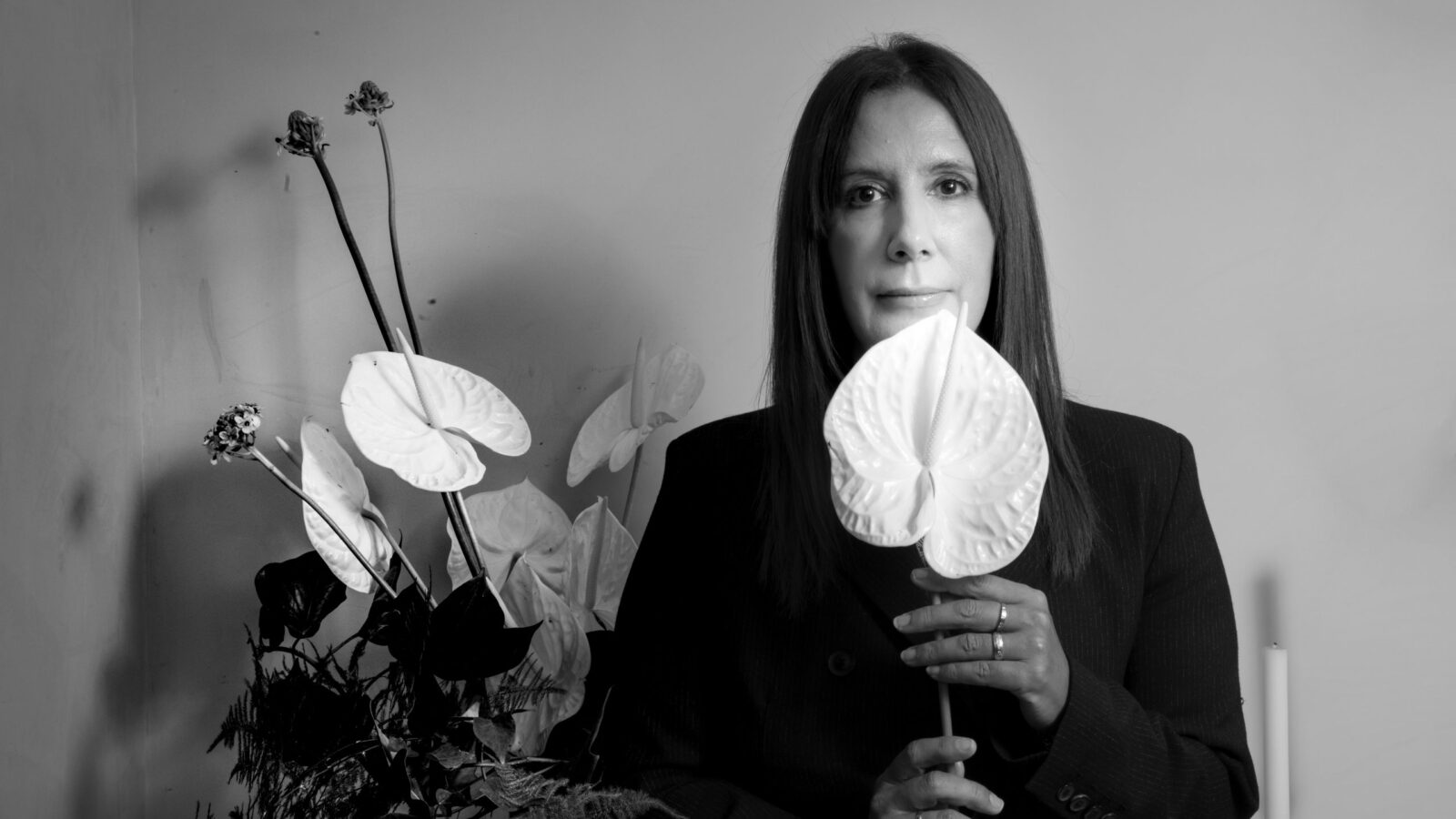
Paying attention to the headline, readers may think that Dolores Redondo (Donostia-San Sebastián, 1969) has wandered into the realms of William Peter Blatty, but, in truth, the situation resembles more closely the work of Delibes. When he received the Cervantes, the author of The Way asked himself which head he should keep: “Mine, the old Eloy’s, Mr. Cayo’s, Pacífico Pérez’s, or Menchu Sotillo’s?” The author of All the Nights, All the Cities (Destino, 2026), the third installment of the “The Quiet Valleys” quartet, tells Zenda that she had a “thought” that did not belong to her. One of the central figures in her latest novel, the writer Benedict Newman, elevates the premise to another level: he believes himself to be the detective of his own books. There is a crime. The police interrogate him because what happens in his fiction resembles real cases. And he is Nash Elizondo’s father.
We spoke with Redondo. No dissociations. And with the “Sine Machina Seal.”
*****
—What was it like, the experience of writing for the first time a novel without a setting?
—Let’s see how readers take it. It’s a novel with an intangible setting: essentially, we’re backstage in the mind of a writer. If there is a setting, it’s a fictional one, one that to him feels very real because, of course, for writers our settings feel incredibly real, wherever we are. Moreover, we can travel to it at will, in a flash, with only a connection.
—At the end, she expresses gratitude “to all the cities that for a moment have been mine, and to all the nights in which I dreamed awake to live this day.” Tell me about those nights. Tell me about those cities.
—Well, you’ll see, those nights are this very night. They are last night (the interview took place on October 21). Every night just before a book comes out is a night when you don’t sleep so well, because you still have that butterflies-in-the-stomach feeling, as if you’re about to release another creature into the world. It’s the night when all the fears you didn’t have while writing the novel surface. While you’re writing, you must be utterly free and surrender to the impulse, but the moment you see it printed, and you see the huge manuscript that remains… Look, I’ve just come back from France, from a couple of literary meetings. There, people say that readers don’t want to read anymore; they want only dialogues, not complex plots. I look at my novel and think: “I’ve done everything you shouldn’t do, I’ve done everything wrong.” In France there was a very strong story: a writer of Haitian origin, living in Canada and writing in French (Thélyson Orélien), who was one of the perfect candidates for the Goncourt and has been withdrawn because someone pointed out that his novel had been passed through an AI detector and it was entirely AI.
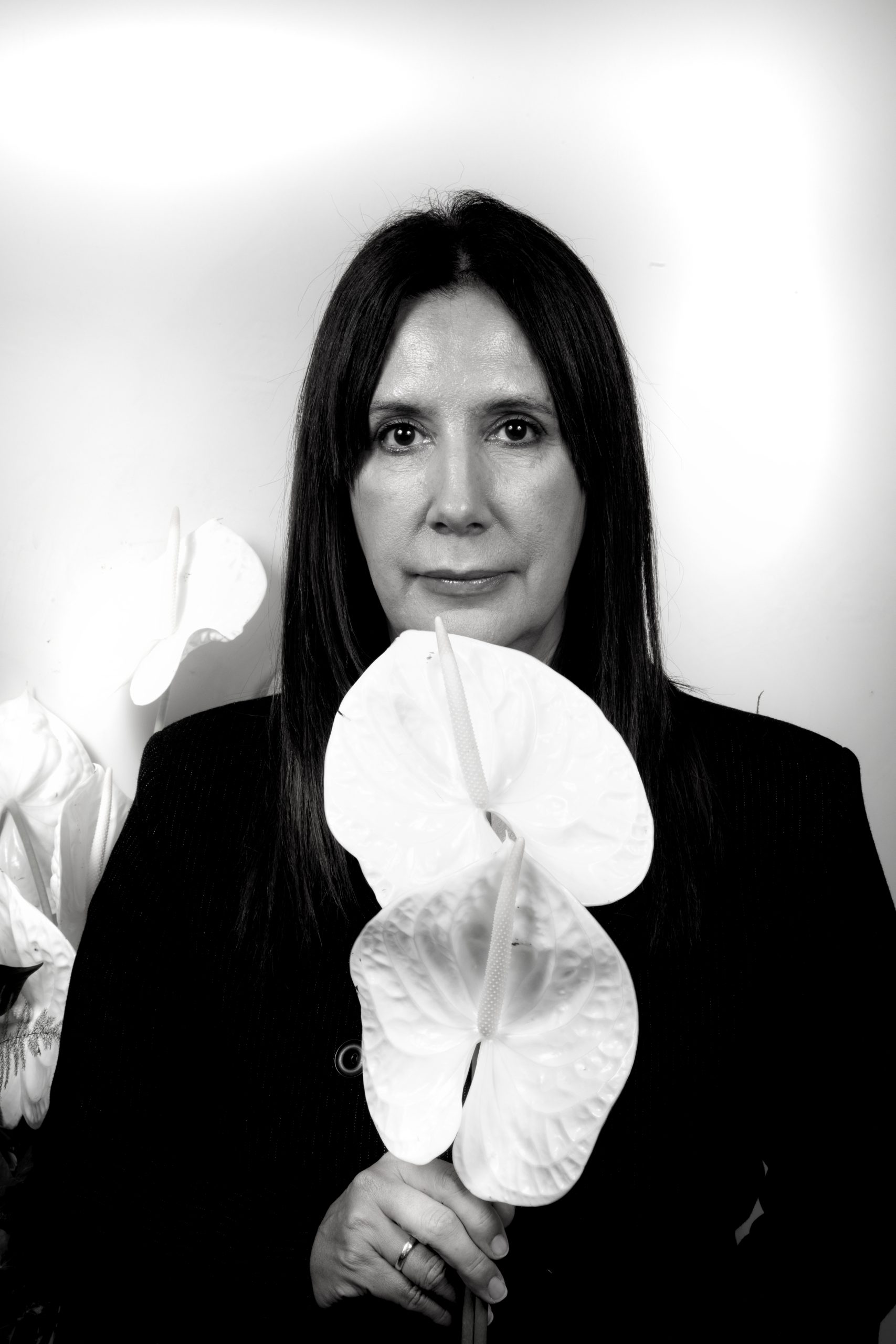
—At the beginning of the novel, Benedict Newman is interviewed by a literary critic from The New York Times, Linus Gerber. The writer maintains that “there exists a literature that operates like a Frankenstein monster: stitched together from scraps of what once had life.” He calls it “literary gentrification.” Do you agree?
—Yes, completely. That’s my view word for word. In the part of the novel where Newman appears as himself, Newman is me.
—And he continues: “The lack of internal narrative robs the story of the identity and intimate narrative, essential to know who we are, what we want, what happens to us and why we suffer.”
—Absolutely. Lola López Mondéjar won the Anagrama Essay Prize a couple of years ago with a work called Sin relato. She is a clinical psychologist and describes how the decline of the humanities, the decline of reading, and the loss of literary comprehension and vocabulary have led to patients who come to her clinic with great pain and damage to some part of themselves, yet who find it hard to name what is happening. People arrive aware but unable to name what hurts; they haven’t read, they lack humanities, they haven’t found in another human’s experience a way to relate to what’s happening to them. And this has led us, in recent times, to an absolute Adanism where everyone thinks it’s the first time in the universe that someone is broken by love, passion, or pain, like he is, and they seek 45-second solutions in Instagram videos, without going deeper.
—Is it true that Newman suffers from an excess of internal narrative?
—(Laughter) Apparently! Then we also see how it has been built…
—He quotes Delibes’ remark when he received the Cervantes: “Friends tell me with the best will: that you should keep your head for many years. Which head?” After listing some of his characters, he insists: “Which head is the one I should preserve?” Do you preserve the head of any of your characters?
—What happens to Benedict Newman comes from a personal experience, a memory that appeared in my head one day and was quite surprising to discover that it wasn’t mine. People ask me if I have anything in common with the characters. I have more in common with Manuel Ortigosa than with Amaia Salazar. Amaia is a woman and Manuel is a gay man, but I have much more in common with him because he is a writer. Of course, in these early stages of the novel, I have more in common with Benedict Newman than with any female character because I share his words, which are mine.
—Is his name deliberate? I thought that after him there are Benedict Cumberbatch and Paul Newman.
—Yes, they’re my two favorite actors.
—Tell me about Dissociative Identity Disorder.
—Dissociation appears in many people without a mental disorder. It is usually temporary and can occur after a major trauma: after a car accident, you may end up in the hospital and not know your name, what day it is, where you are, or anything. You may dissociate while other parts of your memory remain intact. It can occur after a coma, a war, or after witnessing horror. You can get stuck. The problem is that it doesn’t usually endure for long; it is typically a short segment of behavior. There are days when people arrive and either they don’t know who they are, or they know who they are but not who you are and they attribute to you another name. They may even believe they are in different places or want to go to a place that exists in another time. The parameters of reality move around quite a bit for them.
—But there is also a disease…
—There is a disease, a mental disorder that used to be called and is often exploited in cinema as “multiple personality” or “split personality.” Normally, when there is multiple personalities, there are more than two: the “double” is too limited. Cinema has exploited this badly, in a very extravagant way, portraying behaviors that feel completely out of place. In short, it is a difficult-to-diagnose illness, especially because the people who actually suffer from it hide it at all costs.
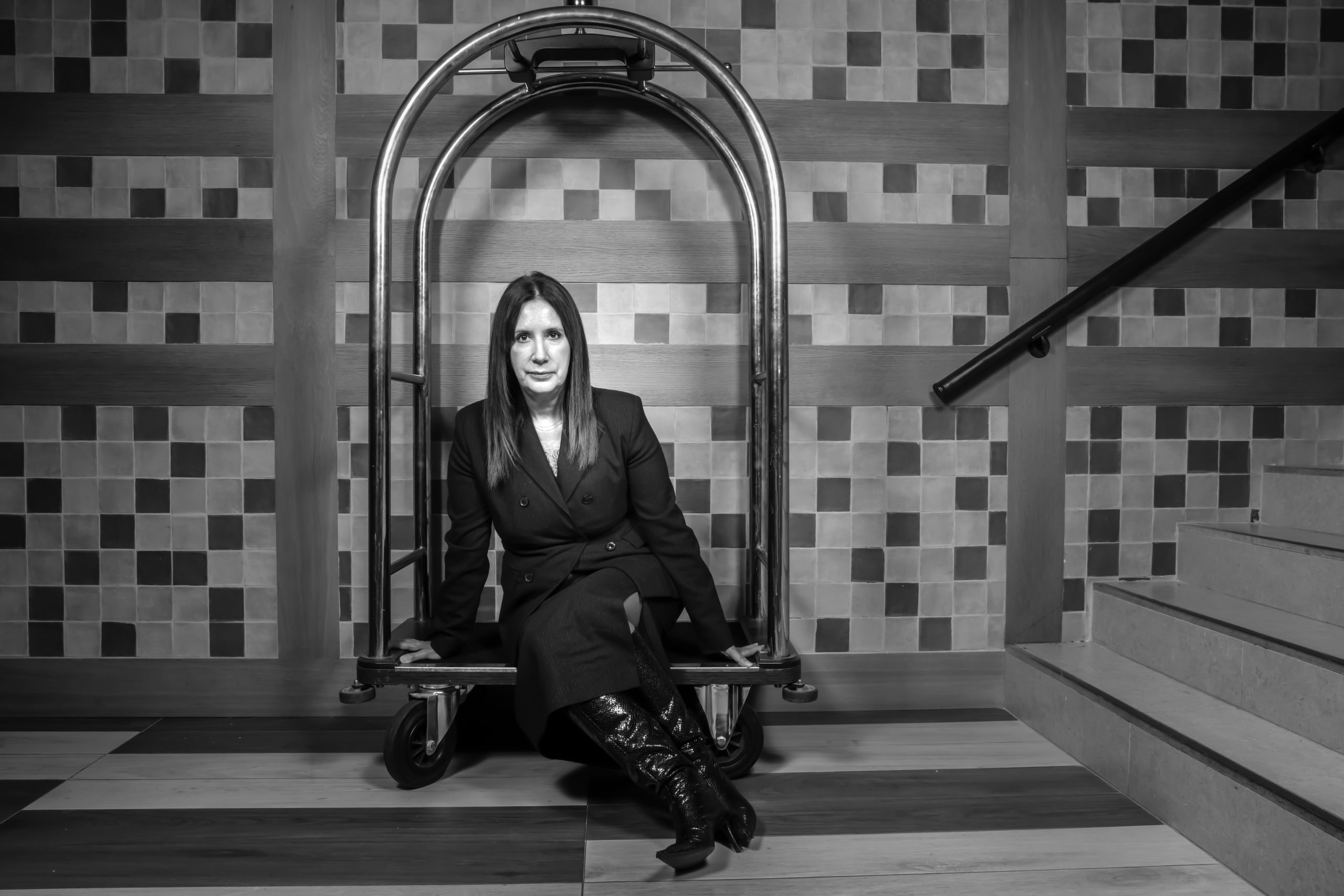
—The editor of Newman, Margot Faber, says he is “a fragile spirit.” How far does that go? Answer, as far as possible, without spoiling anything.
—I think people who are very close to those of us who write know exactly to what extent… I won’t say that all writers are fragile, but natural writers, whom we distinguish from authors who might jump on a bandwagon of writing about something trendy, we practice spiritualism. We conjure ghosts from the past, the present, or the future. We conjure demons. The mere act of writing about it acts as an exorcism and, quite often, a cure, but sometimes that session closes and the demons don’t go away. And I think the people who work near natural writers, like a editor, are very aware of how fragile the writer is: you’re told things that may not even appear in the novel, you’re told where you come from, how your process works… For example, the day I had a thought that wasn’t mine…
—What happened?
—I was walking down a street, and I thought: “I used to pass by here as a child to go to school,” and it wasn’t me who passed there to go to school. And that doesn’t appear in any novel. I told my editor: “Look at what happened to me.” We return to Delibes’ argument, who was never suspected of being a fantastical type, never given to using drugs or getting riled up…
—He was from Valladolid, not Woodstock.
—That’s it; he didn’t take psychedelic mushrooms. And I said: “Damn, if it happened to Delibes, I feel validated to talk about this and not sound crazy.”
—We’re nearly done, Dolores. How are you dealing with success?
—It’s something you wholeheartedly appreciate because you know who gives it, because you know there isn’t a publisher capable of ensuring your book reaches the top and stays there. The one who grants that is the reader. The feudal lord is the reader, our king. If you start from that, all you can do is be grateful. Grateful again for their loyalty and fidelity and, knowing that, and this is what perhaps gives me butterflies at the release of every novel—even if they’ve given it to you once, twice, three times, or in each of your previous novels, it doesn’t guarantee it will be given to you in this one.

—To finish: Todas las noches, todas las ciudades bears the “Sine Machina Seal.” Do you suspect novels that do not carry it?
—Gosh, and if you saw in the newspapers…
—I don’t think this will lead to the idea that everything will be AI, far from it. We might even witness a renaissance of the arts and letters: there will come a moment when true writing is valued again, I’m sure of it. I’m part of a tool, Save Creative, which is a registry where an author creates an account and can store everything from sketches of drawings to design drafts: the entire evolution of their work, and it has a footprint of that evolution.