
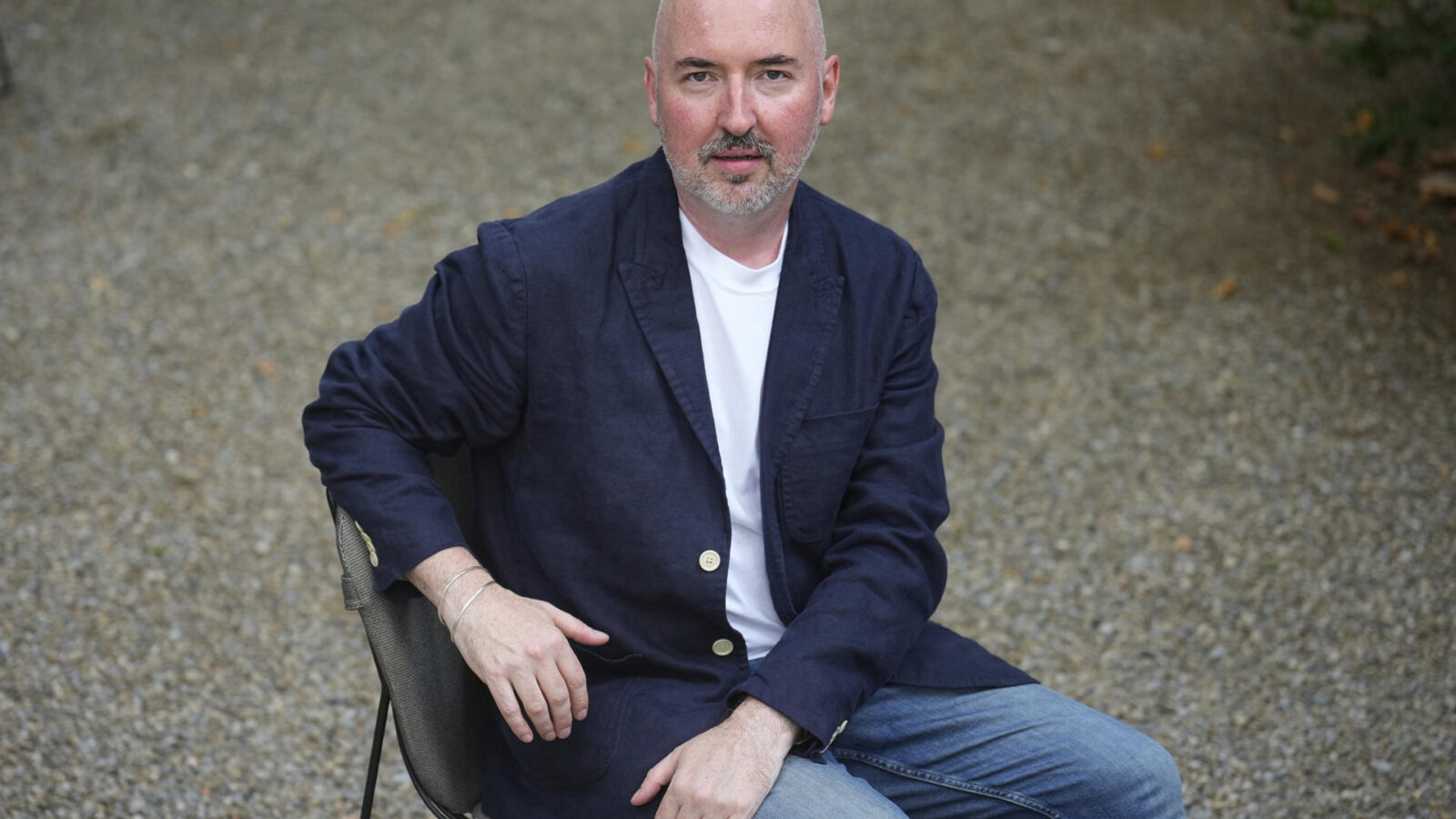
It was 2019, and with the novels Shuggie Bain and Young Mungo finished, though not published, the Scottish writer Douglas Stuart decided to visit the Hebrides archipelago, ten unique islands, from which his new title, John, Son of John, has emerged.
In a gathering with journalists, the novelist recalled that he had been a poor child from Glasgow, the son of a single mother, a cleaner in shopping centers and hospitals, who never had the means to take his children to discover other parts of Scotland. Douglas Stuart, who managed to study and graduate from the Royal College of Art in London, later relocating to New York, where he has lived and spent twenty years in the fashion world, said that seven years ago, when he was not yet well known and had not won the Booker Prize, he decided to base himself twelve weeks in the Hebrides. Thanks to a friend, he first contacted three people, and later accumulated a hundred hours of recordings from locals who, in the kitchens of their homes, opened up to him and told him about their work with sheep, fishing, or the weight of the church.
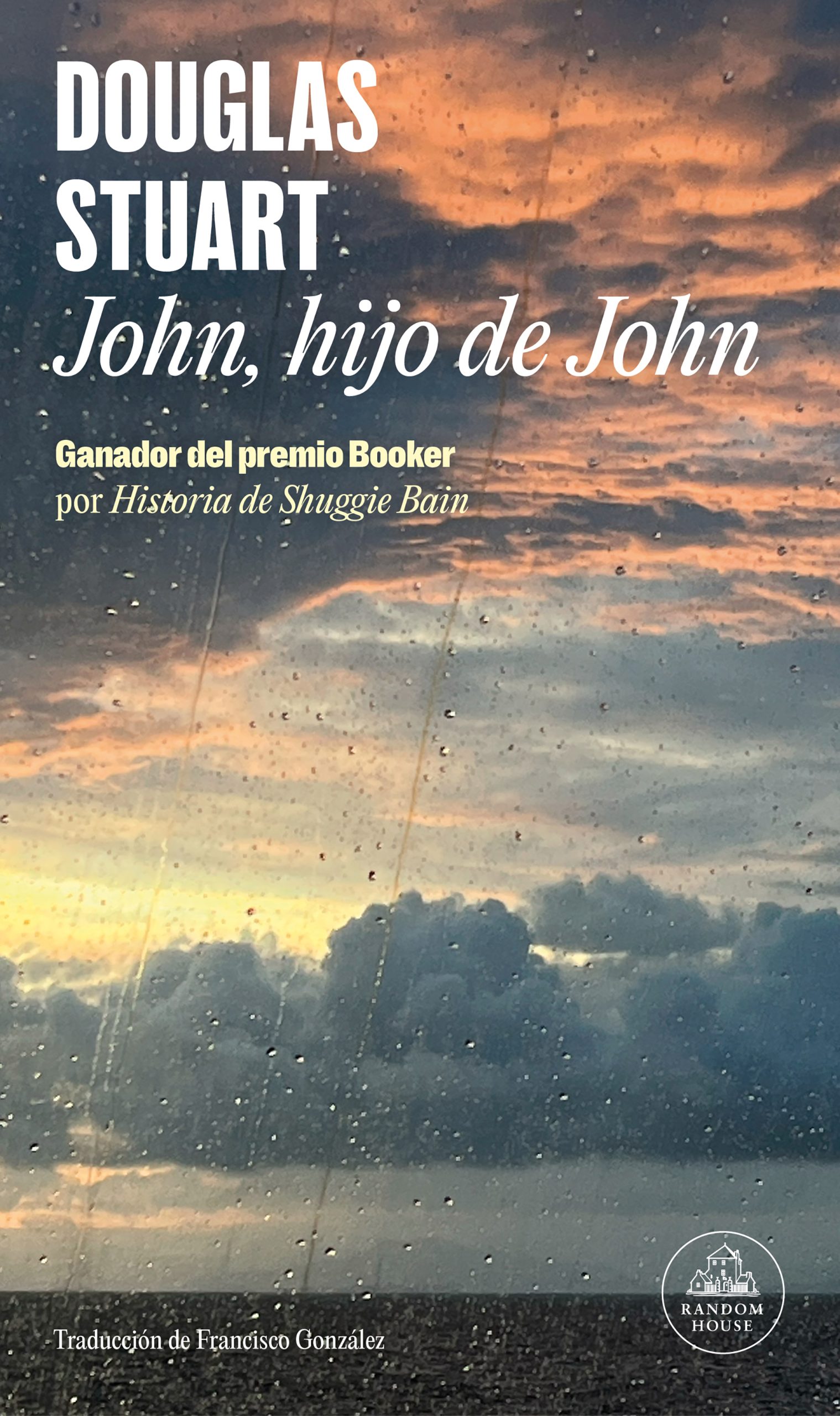
Published by Random House and in Catalan by Edicions de 1984, in John, Son of John, the reader will come to know the relationship that John-Calum Macleod maintains with his father, John Macleod, when he returns to the rocky island of Harris, where he was born, after completing his fine arts studies in Edinburgh, and where he will resume a life marked by work and prayer, in which his grandmother Ella will also carry weight. As in Stuart’s earlier novels, homosexuality is very present in the story and shapes the turning points of some characters. “When you belong to the working class and you’re in a very limited environment, it is very difficult to find yourself and know where you belong.”
Efe / Alejandro García
The first idea he had, after noticing that over the course of the 20th century these islands lost 45% of their population, was to create a young, gay protagonist who returns to Harris to take care of his grandmother, but then he also realized that there were many single men across the archipelago. When in his conversations he asked what that was due to, the predominant answer was that “the moment had passed,” but he thought that “perhaps, simply, they were gay and it was difficult to place oneself in that space.” “Speaking with an elderly woman about it—in a place where religion is omnipresent—she said that was impossible. For her, homosexuality was so distant from the scriptures that it could not be. And I thought, ‘that’s it’: the story won’t be so much about the son who returns as about those who stayed here.”
The title of the novel alludes to the fact that both John the father and John the son are really one and the same person: the former has a past he has let go of to care for the land and the house for his son, while the younger seems poised to lose his future because of the inheritance his father imposes. “In truth, the worst inheritance may not be the land, but inheriting a father or mother who has a life not lived,” he stated.
Efe / Alejandro García
In his view, family “can block you, hold you in a certain time and space, and by doing what you think needs to be done, you end up stuck in a dead end.” With some characters who speak Scottish Gaelic, silences between the protagonists are also central to this story. Nevertheless, Stuart maintains that this silence between men “never deceives the women, who always know what is happening, even if they cannot express it.”
The grandmother Ella is his favorite character, the one who has cared for John-Calum and, at the same time, for the people, for everything that has to do with the desolate family farm. For the novelist, “caregiving is the clearest form of love, of esteem.”
Another aspect that draws attention in the work is that there are men on these islands who are avid readers, who enjoy Parisian authors such as Proust, Virginia Woolf, or Wuthering Heights, although there are parts they cannot publicly discuss in their reading clubs because “it is a sin.”
Asked about new projects, Douglas Stuart has indicated that after the trilogy formed by Shuggie Bain, Young Mungo, and John, Son of John, the time has come to craft a new story, possibly set in New York.
————————
Source: Efe