
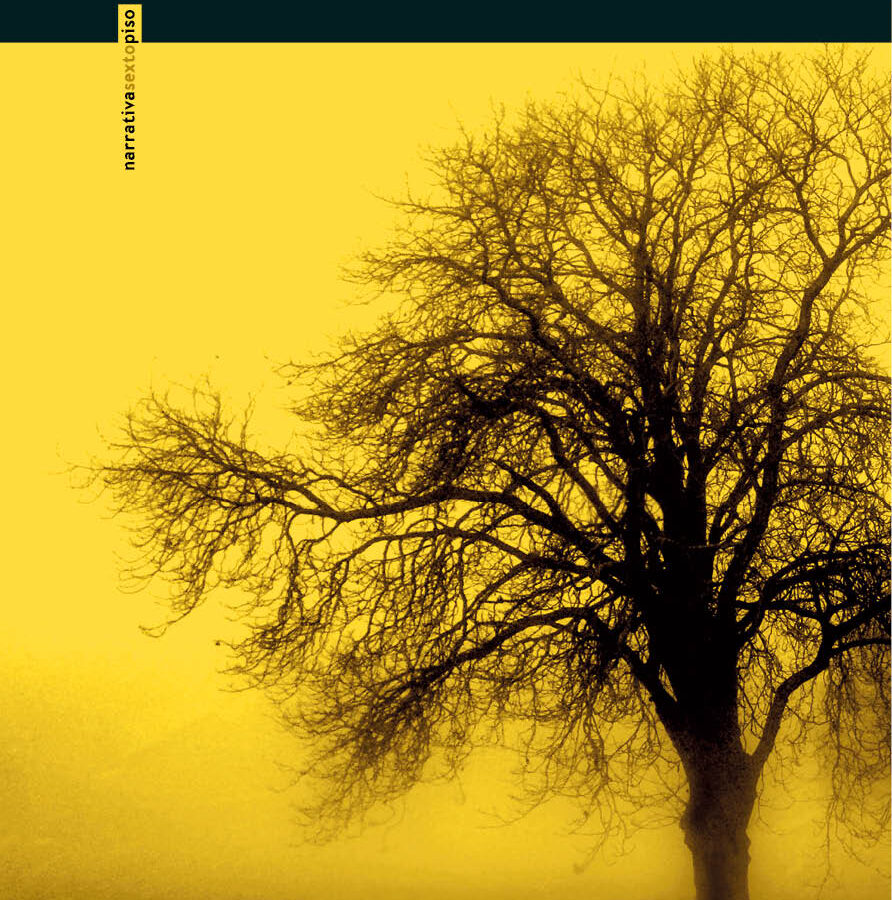
It is unusual to read a novel without knowing what the story is about, and to move through its pages without any more information about the main character, nor understanding his motivations, actions, manner of behavior, and even whether he is someone we could consider noble and upright, or criminal, sly, and despicable.
One might think many readers would abandon a book in such a situation, but an example of the opposite is
This Plague of Souls
(Sixth Floor, 2026) by
Mike McCormack
(London, 1965), which sustains attention and interest to the very end, even as it keeps us in a darkened zone for most of the time.
Nealon, the main character, returns home after spending a period in prison. It is not specified for what crime he was incarcerated, only made clear that he was acquitted of the charges against him, though we do not know whether this was because he was truly innocent or because the authorities could not prove his guilt.
Just as he is about to enter his home, he receives a call from an unknown number, and a man on the other end speaks with familiarity, as if he knows him and knows things about his life. He says he wants to talk to him in person, after he settles in one of these days, there is much to discuss, etc. Because Nealon does not know him and the other man does not identify himself, he hangs up and tries to forget the matter.
But it is not that simple, because while he adjusts to life outside prison and he wonders where his wife and young son might be, the other man keeps calling and speaking cryptically, telling him things that make evident that he knows a lot about his life, but without explaining who he is or how and why he knows all that he knows, always insisting that it would be better if they could meet in person and talk for a while.
Being back home (in rural western Ireland) awakens in Nealon memories of his childhood and his late father, as well as the beginning of his relationship with his wife Olwyn, where a troubled, even turbulent past is laid bare, including the revelation that Nealon once forcibly entered a house where Olwyn was injecting heroin (again, without dwelling on important details: who was she with? did she live there, or was it merely a place she went to shoot up? who supplied or how did she obtain the drugs she used? etc.…) and dragged her out, dragging her into his vehicle and driving her to the other side of the country.
There is more left implicit, what is not said, what remains wrapped in a kind of haze, than what the author asserts about the character, making it difficult for us to form an opinion of him. At times he seems like a good man, but there are behaviors and attitudes of his that are doubtful. And that is the aura that dominates the narration: ambiguity, an uncertainty that clouds the atmosphere and keeps us on edge, pondering possibilities about what is happening.
The back-and-forth telephone exchange between the two men continues for several days as Nealon indulges in nostalgia and waits for any news from his wife, wondering where she might have gone, why she does not call or answer, until the other announces that he knows where they are and promises to tell him if he agrees to meet face to face.
With a noir tone and atmosphere, McCormack doses this story gradually, in which echoes of a search for existential meaning tied to the land resonate, a kind of stance against the times we live in, as well as the way in which family life helps temper and anchor a person’s expectations when they run beyond the limits.
Questions arise as we read: Why such keen interest from the other man in speaking with Nealon? What did he do that led him to prison? Does the other man actually know what happened to his family? Who is he and what are his intentions?
A dual fear of wanting to know what is really happening and the danger of uncovering a truth that could be devastating leads us toward a conclusion that operates differently from a closing.
There are very few stories whose climax is a conversation, and that is the author’s strong point, drawing on the most intriguing elements of noir, but reversing expectations and always maintaining tension and ambiguity.
McCormack is also the author of the short story collection Getting It in the Head (1996), which earned him the Rooney Prize for Irish Literature. His first novel, Notes from a Coma, was a finalist for the Irish Book of the Year Award in 2006. Solar Bones, published in 2018, received the Goldsmiths Prize, the Irish Book of the Year Award and the International Dublin Literary Award, and was shortlisted for the Booker Prize. This Plague of Souls is his fourth novel.
—————————————
Author: Mike McCormack. Title: This Plague of Souls. Translation: Magdalena Palmer. Publisher: Sixth Floor. Sales: Todos tus libros.