
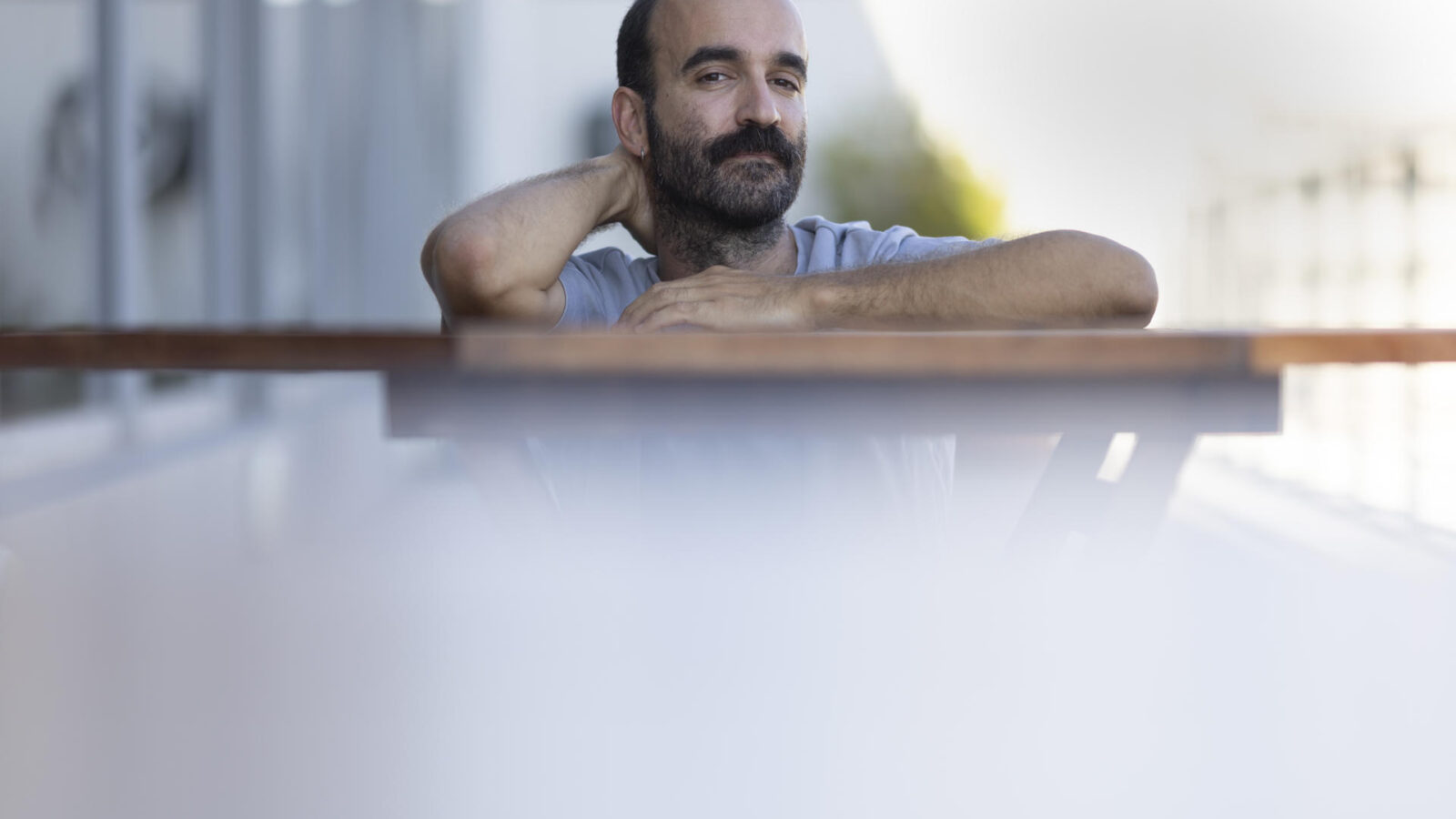
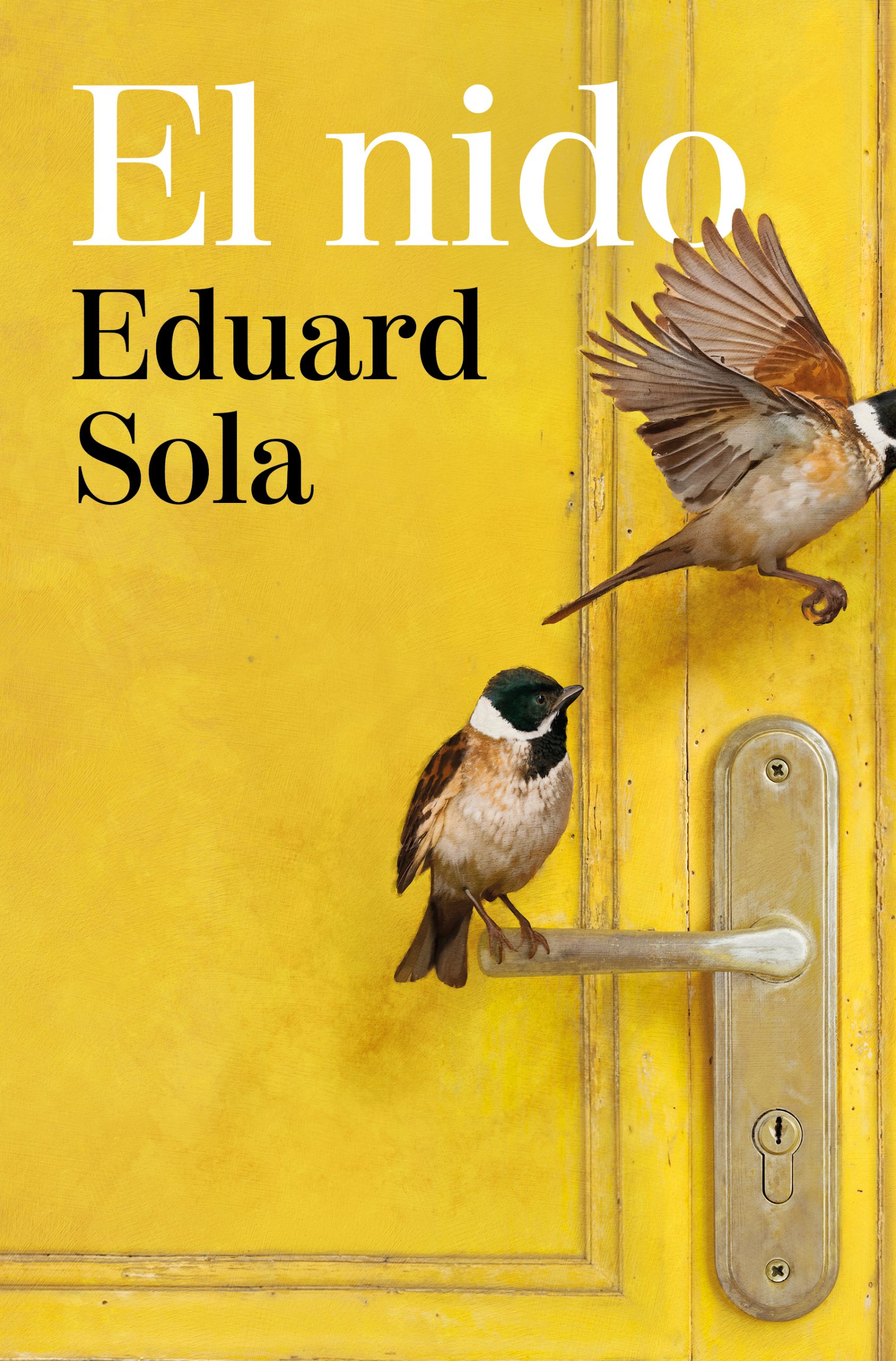
As soon as he hits the record button, screenwriter Eduard Sola asks to be cut off if he “rambles” too much, because he tends to let himself go and connect one topic to another. With a sense of vertigo, of feeling “naked” before the reader, he has just debuted in fiction with The Nest (Ediciones B).
In an interview with Efe, he explains that when he writes screenplays for celebrated films such as Casa en llamas or for the series Querer he goes with armor, because, in the end, the text is part of a large mechanism and is not exposed as it is now.
Author of both the Spanish and Catalan versions, published by Ediciones B and La Campana, in The Nest he narrates what happens to Sara, an ornithologist who has just turned fifty, when, after her youngest son leaves the family home to become independent, he decides to travel to the Ebro Delta, where her old vacation home is located.
“I find it very hard to synthesize, but I would say it is a story about a family, which addresses, especially, motherhood, grief and, in some sense, sexuality.” A shaper of female characters such as Montse from Casa en llamas or Miren from Querer, he does not hesitate to affirm that creating this kind of characters, mature women, mothers, has been “something conscious. To be fair, this motherhood is not pleasant nor perfect. I think it is the best way to honor our mothers. It is a way of paying them homage, it is to explain their B, D, Z faces, their dark parts, to give them three dimensions, that are not pure and chaste, as we have been sold until now.”
Regarding the fact that families carry so much weight in his stories, he does not dodge that it is because everyone has one and can identify with it. “It’s the place where we really have no masks. It has an indestructible quality, which makes us allow ourselves things we wouldn’t with friends.” Eduard Sola, for his part, confesses that he is an only child and that perhaps in some of his stories he reflects the longing for the brother he never had.
In The Nest, where the entire Ebro Delta region plays a major role, with native characters from the area, such as the young Víctor, the author considers that the male characters he has drawn “have the tropes, the deficiencies and the misfortunes of masculinity, all of them full of flaws”. Especially, he asserts, David, Sara’s husband, who doesn’t quite know how to be with her in life. However, he warns, “with their flaws, they are all good people; they did not come into the world to hurt and much less to hurt Sara, for whom they would be willing to cut off a hand.”
Although at the start of the interview he stated that he had suffered “a lot” during the writing process and that he finished the novel because he had already committed to his editors Ana Caballero and Mireia Lite, Eduard Sola hints that, as time has passed, he is already thinking about another one and shaping it.
Likewise, he has not interrupted his work as a screenwriter and, although he cannot say much, he hints that the second part of Casa en llamas, Casa en cenizas, will be shot soon, directed again by Dani de la Orden. “We promised each other, when Dani made the absolute crazy move of saying we would do a second part, that it had to be as good as or better than the first. And today I think we have a film as good or better, although now we have to shoot, edit and then I’ll say more.” Regarding the actors, he does not reveal any names but confirms that the protagonist will be the same family.
He stresses that a “miracle” has happened with Casa en llamas because, behind and in front, there are names and surnames, from Dani de la Orden directing to the actors themselves, who “are a lottery that has fallen to us, because they do it very well.” In his view, if the script has been highly celebrated it is because all of them have interpreted it very well, because with bad actors a good script can end up looking like crap.
As for turning his first novel into a film, he does not hide that he sees everything in images and that if someone dares, he jokes, “we’ll fight with the director.” On the other hand, he is about to premiere as a screenwriter Verdict, a Movistar series, of three episodes, about a popular jury.
————————
Source: Irene Dalmases, Efe.