
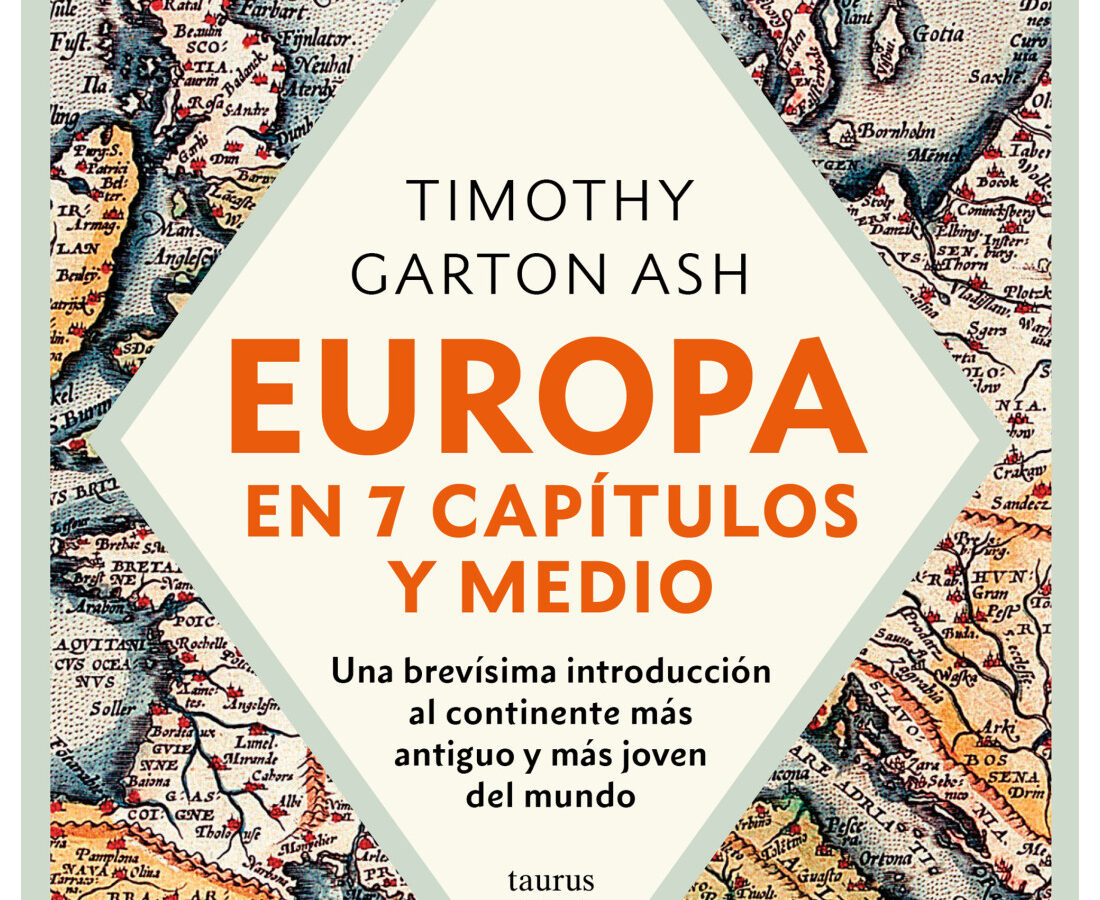
The history of Europe is as ancient as it is melancholy. An object desired, impossible, a construction pending, always unfinished. And yet, it remains our only hope. Timothy Garton Ash advocates here for a view of the continent, focused on the challenges of the present moment, in a world that is utterly blurred, orphaned of any reference. And he does so as a journalist, as a historian, as a traveler and European citizen, knowledgeable, above all, about the changes in Germany and in Eastern Europe that he experienced firsthand. An open spirit, full of curiosity and experience, sometimes bitter, that keeps hundreds, thousands of photographs and images in the retina, memories, in short, with which he approaches this European cultural history and the history of Europeans. A double perspective that has been present since the founding of this brief but concise essay about what characterizes us and that we very rarely value, especially what we ultimately are.
Con ese objetivo, el reciente Premio Príncipe de Asturias de las Ciencias Sociales propone un recorrido por los condicionantes esenciales de los europeos, empezando por el principio, por la geografía. El espacio manda más que cualquier otro discurso sobre la unidad o el espíritu europeísta. Las coordenadas del Mediterráneo antiguo, del mundo grecorromano, pero también del Báltico, del mar del Norte, de las grandes llanuras y ríos centroeuropeos, mantienen su posición como testigos mudos del mundo de ayer en la geopolítica actual.
Ash, sin embargo, no cae en el típico y manido ensayo del nacimiento del mundo occidental. Evoca sus orígenes, claro, pero traza un recorrido por las huellas del pasado en el mapa actual de Europa. Tampoco escribe a modo del cronista que ordena las esencias de lo que hay que mantener, no. La historia, su segunda parada, es algo más complejo. Es el mayor tesoro europeo, toda una cadena de conocimiento que, sin embargo, no sirve de nada si no se incorpora a la vida misma. Esa es parte de la tragedia europea, su propia desmemoria, que el libro asume con una fina ironía, en torno a la gastronomía, por ejemplo, que no es incompatible con la firmeza con la que denuncia la manipulación del pasado al servicio del odio. Porque de nada nos sirve saber que la primera mención a los europeos aparece en una crónica de la batalla de Tours, fechada en el 732, contra los musulmanes, si no se comprende cómo y por qué se utiliza ese hecho en el presente.
The central part of the book then reviews a selection of historical elements that repeat in many places, situations and behaviors over time. The selection criterion used by the author is clear: its importance depends on how it reappears and combines up to our days. A blend of religious and political diversity, added to geographical diversity, which has contributed enormously to the dynamism and creativity of Europe, but has also led to violence, to the most extreme and deadly wars in all of humanity. Beginning with the Thirty Years’ War, a conflict that devastated the continent, sowing a grim omen of total destruction. Winston Churchill, in fact, described World War II as a new version of that same conflict, long before measuring its ultimate impact on human lives and material costs. After the colonial experience and the disaster of the interwar period, Europe definitively yielded its space on the international stage. A pause followed by a period of splendor, the consolidation of the middle classes and the welfare state, which today seems farther away in our collective imagination than the religious wars themselves.
The third scenario that runs through the book is migration. Without it there would be European history, in all its splendor and its horror. The mobility of the population, within and beyond our borders, but also ethnic cleansing, genocides, are part of Europe’s tradition. It had one last bloom in the Yugoslav Wars and it continues to this day in Ukraine. It is a past that is far from being a thing of the past, especially because it is often instrumentalized by those who compete for political power. Today, indeed, this clash of civilizations, as Huntington defined years ago, is internal, it occurs within Europe itself, just as within the United States.
The book, finally, analyzes present Europe through its political facet, that of the European Union. A world that seems simple, since it has barely two formats, the normal and the crisis, notes the connoisseur of the intricacies of Brussels’ massive bureaucracy, who offers a sweeping diagnosis of the position in which our old continent finds itself. To the impact of the successive financial crises since 2008 are added two threats that have ended the traditional European scenario of splendid isolation and prosperity: the rise of Trump-era policies and Putin’s. “Today’s Europe is a cross between an open-air museum and a retirement home. It is unable to defend itself and is in economic decline,” concludes a book with little room for optimism, but which, above all, teaches us to think, to look at the post-occidental, post-European world, with the same doses of realism and humor necessary to inhabit, at least consciously, in it.
—————————————
Author: Timothy Garton Ash. Title: Europe in Seven Chapters and a Half. Translation: Andrés Barba and Álvaro Marcos Lantero. Publisher: Taurus. Sales: All Your Books.