
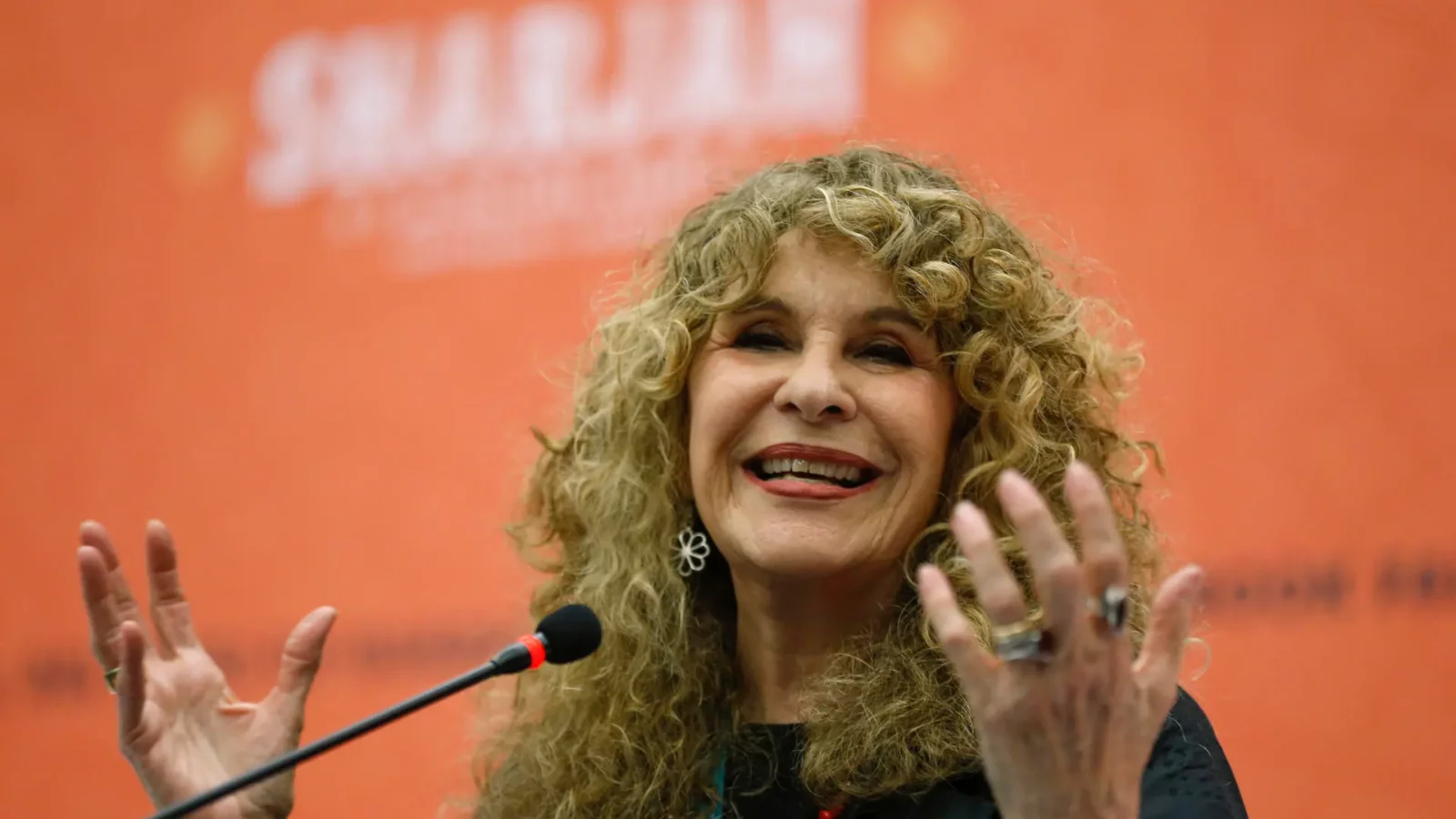
Her country is a portable one, carried with her wherever she goes. Since she sought refuge in Mexico and Costa Rica between 1975 and 1979 because of her political stance against the Anastasio Somoza dictatorship, up to her move to Madrid in 2021 in opposition to Daniel Ortega’s dictatorship, who stripped her of nationality in 2023, Gioconda Belli (born 1948) has kept her homeland and the promises of its landscapes etched on her skin. This is something that, as she herself has stated, can never be taken away, and as she also says, when that tyranny ends and no one remembers them, she will continue to live in her books and in the universal memory of literature as a Nicaraguan writer. On November 28, when a new edition of the Guadalajara International Book Fair opens its doors, Belli will headline the fair’s first major event, where she will speak about women, poetry, and exile as she delivers her acceptance speech for the FIL Prize for Literature in Romance Languages 2026. One of her strongest convictions now is that exile is temporary, because she has labored to ensure that her center as a human being does not depend on where she is, but on who she is, and she has learned that moving between places enriches her by allowing her to see other worlds, confront different mindsets, and encounter other cultures. Yet the truth is she herself has confessed that she never imagined that, even when back in Nicaragua, where she hoped to remain until her death, she would have to leave her beloved Managua home—one house at the edge of a crater, surrounded by greenery, from which you can see the volcanoes. That, she states, is her homeland, and there she had carefully planned her death, a sweet goodbye in which she pictured herself sitting and gazing at that landscape. But life, as we know, takes many turns. And now her time belongs to poetry, the literary genre closest to her heart, because the poetic voice, she notes, was what first emerged for her, what made her a writer. The author of poetry collections such as Line of Fire, Insurgent Love, Honey Scandal, The Red Fish That Swims in the Chest, and A Woman with a Fierce Skin, and of novels such as The Inhabited Woman, The Country of Women, or A Silence Full of Murmurs, each time poetry comes to her it feels like a miracle, because she does not sit down to write poetry; it descends on her and arrives suddenly, a spontaneous quality that fascinates her and that she preserves because it is like the vibration of her soul. So, friends, let us celebrate this well-deserved prize for Gioconda Belli and resonate with her, with her poetry, with her joy, and with the country that is all of her.
ADIEU, MASTER MUSACCHIO
Regarded as the quintessential historian of Mexican cultural journalism and one of the great chroniclers of Mexico’s cultural life, Master Humberto Musacchio has bid farewell to the lands of the volcano at the age of 83, leaving a void that will be hard to fill. The author of works such as Ciudad Quebrada, Diccionario Enciclopédico de México, Historia del periodismo cultural en México, and Ritos y retos del oficio, Don Humberto described himself as “a simple newspaper man” who performed his work in a practical, objective way, distant from the romanticism that, he argued, surrounds the finest craft in the world—the craft to which he dedicated his life and to which, he noted with a broad smile of gratitude, he owed his ability to eat and live. In this brief farewell, it is worth recalling Musacchio’s view of culture. “Without culture,” he asserted, “society is condemned to spiritual misery, because if there is no appreciation for culture, there is no appreciation for education.” And it is to that disdain that he attributed, and lamented, the decline of education and the level of Mexican scholarship today, which, alas, has become so miserable. Farewell forever, maestro.