
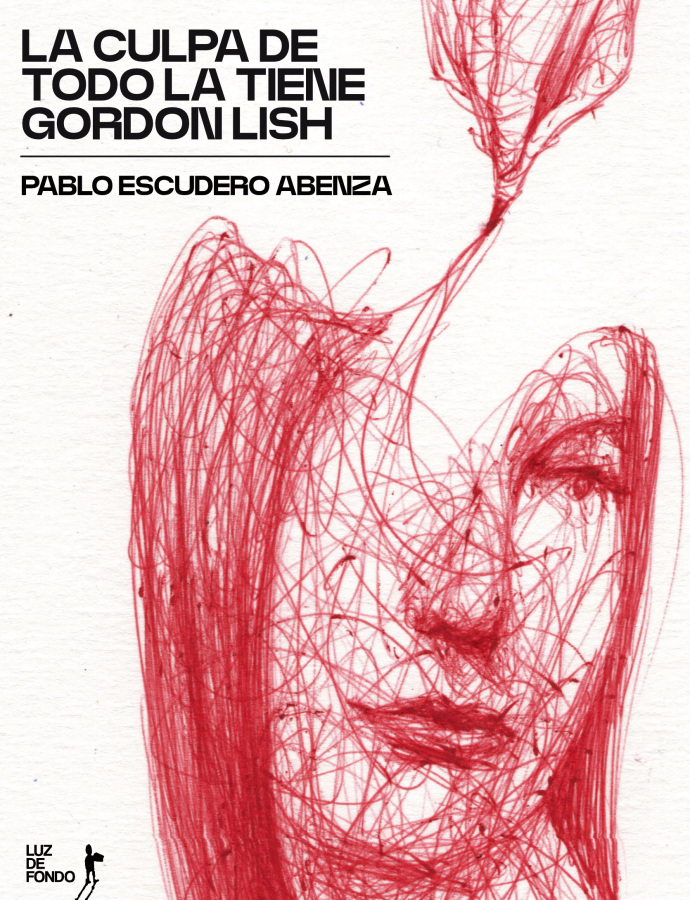
The first title from Luz de Fondo arrives in bookstores, a publishing house that, in the words of its director, champions “the book that moves.” This inaugural volume is a collection of stories about desire, family, partnership, precariousness, and power dynamics.
At Zenda we offer the opening of one of the stories included in The Blame for Everything Lies with Gordon Lish (Luz de Fondo), by Pablo Escudero Abenza.
*****
Half a Dozen Liqueur Chocolates
And the comments of the elderly people would make him tremble to his very bones.
Carson McCullers
At home we were modern, and I didn’t have a godfather or a godmother. My father wore a beard and didn’t wear a tie at weddings, only a bow tie. My mother decided she would marry him when she realized she was pregnant, and instead of hiding it in an early wedding in a church in another city, she waited until she was six months along so there wouldn’t be any doubts. And if there were any doubts left, in almost every photo from the day of their wedding she was seen in profile or three-quarter view, and I had always been reminded that that belly, that curve beneath her white dress, was me.
In school everyone had one of each—your godfather and your godmother—usually a couple with more experience in parenting who should guide the new parents, sometimes a couple who hadn’t been able to have them, usually the most beloved uncles, the closest friends, the people you would trust if, God forbid, death came hungry and took not just one of your parents, but both. Everyone had them, and from time to time they would say that that day they would go to their godmother’s house to eat, or at night their godfather would take them to play football. At home we weren’t the type to eat out or to go to football either. I never asked why. But I don’t think that was simply because of modernity.
One day I asked Mom who my godfather was and she told me that I didn’t have one. I didn’t get discouraged and asked about my godmother. She told me that I also didn’t have one. I asked why it seemed that everyone had one or the other, or both, and I did not.
Mom looked at me very seriously, as she always did when faced with my most important questions, and told me that we didn’t believe in that.
I was about seven years old and I nodded. We, essentially just Mom and I, though Dad somehow also seemed invited to the pronoun, didn’t believe in that. I’m not going to say I understood it. I accepted it. I already knew, at seven years old and used to my mother’s solemn declarations, that we didn’t believe in that; whatever else we didn’t believe in, it wasn’t the kind of thing I had to announce at school.
So one of those afternoons of that term when Olivia came to pick me up, I told my friends that she was my godmother. “Today my godmother is picking me up,” I told them, because I was aware that Mom wasn’t coming. “And she’s going to take me to a pastry shop to have a snack.”
I only had to tell Olivia to take me to a pastry shop to snack, and she did it. Dealing with Olivia was simple. With her there were no negotiations or bureaucracies. She asked me what I wanted to do, I told her, and that’s what happened. If she didn’t ask me, I would tell her anyway, and it would be done.
That afternoon we had a glass of milk with a couple of ensaimadas. Well, I had that. Because I was crazy about ensaimadas. Even those awful ones that came in plastic packages from the supermarket went crazy on me. Much more those from that pastry shop. I would order one and then another, and if the afternoon was a bit wild, Olivia would ask if I wanted a third. I would tell her no because I didn’t want to burst. And she would order one or two coffees and a half dozen artisanal liqueur chocolates. She loved the pastry shop’s liqueur chocolates. She always ordered half a dozen per visit.
If we had been the kind of people who like to compete, a boy and his pretend godmother competing just for the sake of competing, we would have asked whether I loved the ensaimadas more or whether she loved the homemade liqueur chocolates more.
I would ask if I could try them and she would get very serious to tell me that no. “And why?” I would press. “Because they’re for older and sad girls,” she would always reply, as if repeating a joke that had been told a thousand times. I would stay quiet and not push it.
When she finished her half dozen chocolates, she would always tell me it was time to go. “I hope I can get out of here without stumbles after all that liquor,” she joked. And when we got home I would tell Mom the same thing. Mom would laugh and call her silly. Olivia would say that she had once asked how they were made and that the liquor was real. She told my mother that the pastry master had told her they used a kirsch brought from Switzerland. She had a cousin who had gone there twenty years ago and handled the arrangements. Mom asked what kirsch was. “Well, cherry liqueur,” Olivia replied, as if the question were so obvious that it didn’t need asking.
And if they could, they would stay a while talking in the kitchen, while Mom got a head start on the dinner. And if Mom was busy, Olivia would come to my room to read to me a little, or to admire my drawings, or to play a hand or two of cards.
Olivia taught me to play Brisca and at seven-thirty. A bit later she also taught me a simplified version of Texas Hold’em and blackjack. And her eyes would light up, almost like when she ate those chocolates, when she spoke to me about the nights she had spent with her first and only boyfriend in the casino, challenging players much older than them at poker, wearing sunglasses all night so that they couldn’t read his bluffs. That boyfriend of Olivia’s was an idiot, Mom said one day.
She didn’t tell me whether he won or lost in the casino. But that seemed like the least important thing to me. It was enough to imagine that smoky night and the white glare of the lights, those threats in the form of deceitful bets, all those vultures stalking her money and her hands. I think it didn’t seem the most important thing to her either whether he had lost five thousand pesetas or if she had carried home a small sweaty wad of bills as an unexpected souvenir.
Olivia lived four doors down from ours, in her parents’ house. And she was something like my mother’s best friend.
Mom, I would ask from time to time, tell me the story of how you became friends with Olivia. Olivia had told me all of that two hundred times, but I liked to test Mom. I liked to compare her awkwardness at telling stories with the ease and grace with which Olivia told every detail. Mom gave private lessons in our house. She had always done so. She continues to do so, many years after we lost Olivia, years after I no longer lived there. Olivia had been her pupil. One of the worst she had ever had, Olivia would say. Not at all, Mom would explain, used to dealing with truly difficult and incapable students.
That summer, Olivia told me, I was sixteen and had failed everything up to recess. So my mother asked around the neighborhood and they spoke of your mother. Mom was young, very pregnant, newly married and settled there; she had missed a few trains, earned what she could giving lessons in the little room of my home, around a large table where four or five students and their questions would crowd. Mom had infinite patience, according to Olivia. I hadn’t learned anything all year, and if I didn’t learn something, I would have to repeat. In my school, the kids who repeated were those with real problems—those who couldn’t even tie their shoes by eight. Those, for example, repeated. But not people like Olivia.
“And did she pass?” I asked Mom. “She passed,” she told me. “But it was hard. Because you were born and I had to stop teaching for a few days and it almost jeopardized the exams.” I was born on August 22, and there was just over a week left before the exams. My mother told her students that she would be out for a few days without teaching. It was the early eighties. There were no leaves of absence or any such awareness. On the 26th she returned to class. I don’t know how she could give them classes with me by her side, nursing, and with postpartum worries, followed by questions about systems of equations, and later inorganic chemistry.
Olivia used to say that I was like one of those hairless kittens that are worth a lot of money—crumpled, reddened, very ugly. I pretended to be offended when she said that. “I passed everything except English,” she told me. But my mother didn’t teach English. I don’t know if teachers of private lessons who could teach that subject had been invented yet. In the following year her mother continued sending her to classes with mine, so she wouldn’t fall behind. I didn’t fail again like that sixteen-year-old year, Olivia would say. My mother was twenty-two, almost twenty-three. They became friends. Olivia would stay with me for a while after her classes, so that my mother could teach the next hours without too many complications.
Since I was little I remember myself in my room, with the door ajar, receiving clandestine visits from my mother to ask if everything was all right and tell me to go back to class, to stay calm. If I wanted, I could go to the kitchen and put on the small TV there. But I didn’t like the small TV. The big one in the living room couldn’t be used, because it would be too loud from the sitting room.
Olivia wore the heels that Mom would never wear. Very fine, colorful heels, daring shoes to crack the city’s sidewalks. Olivia wore makeup as Mom did not. Mom didn’t wear makeup, or when she did, she wore it like a proper lady, and Olivia knew how to apply makeup like a movie actress.
Olivia smelled of a batch of muffins and orange blossoms, and she sang out of tune like I had never heard anyone sing before when she tried to sing a song she liked for me to pick up a trace of music.
—————————
Author: Pablo Escudero Abenza. Title: The Blame for Everything Lies with Gordon Lish. Publisher: Luz de Fondo. Sales: Todostuslibros.