
For far too long it has been repeated that history interests the general public little, that citizens keep their backs to the past, and that the events that have led us to the present barely spark curiosity outside academic circles. Yet, a look at the numerous days, cycles, meetings, and history outreach events currently held in Spain shows that perhaps we were looking at the problem through the wrong lens.
It is not that history has ceased to interest; perhaps what has changed is the way it is told. For the public, listening to it up close is far more engaging than in solemn and austere classrooms.
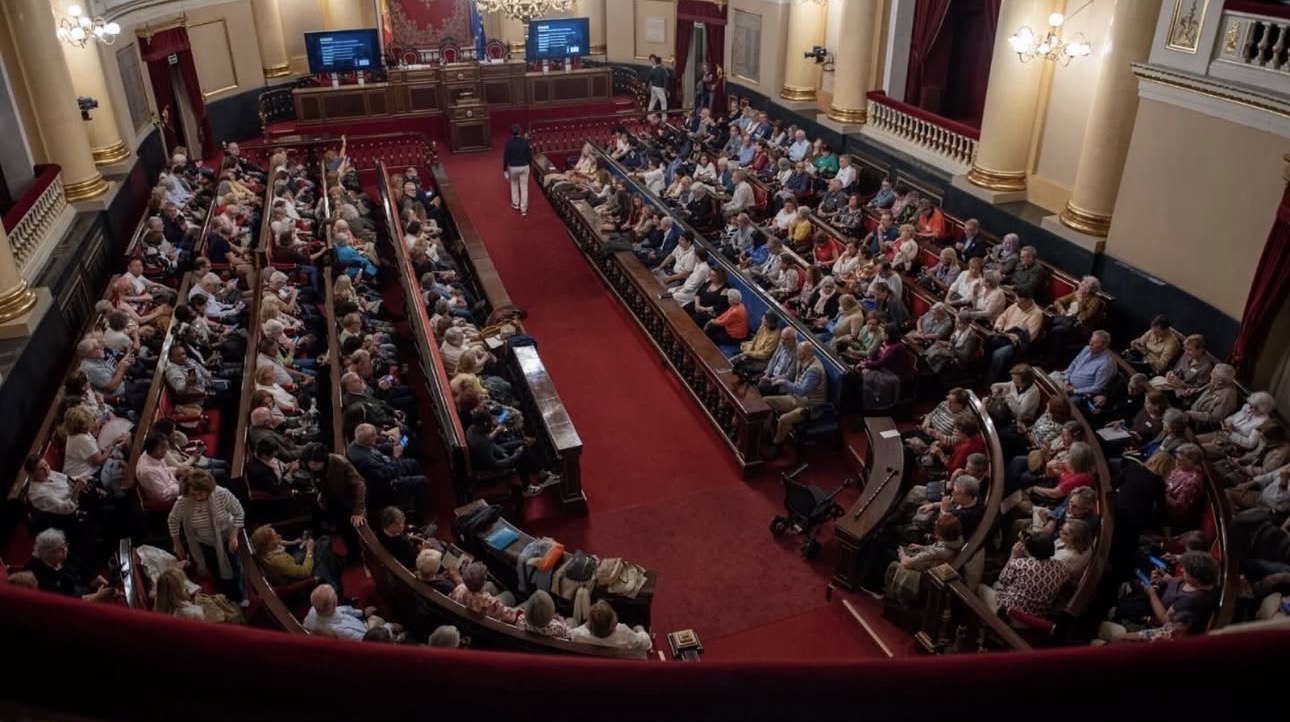
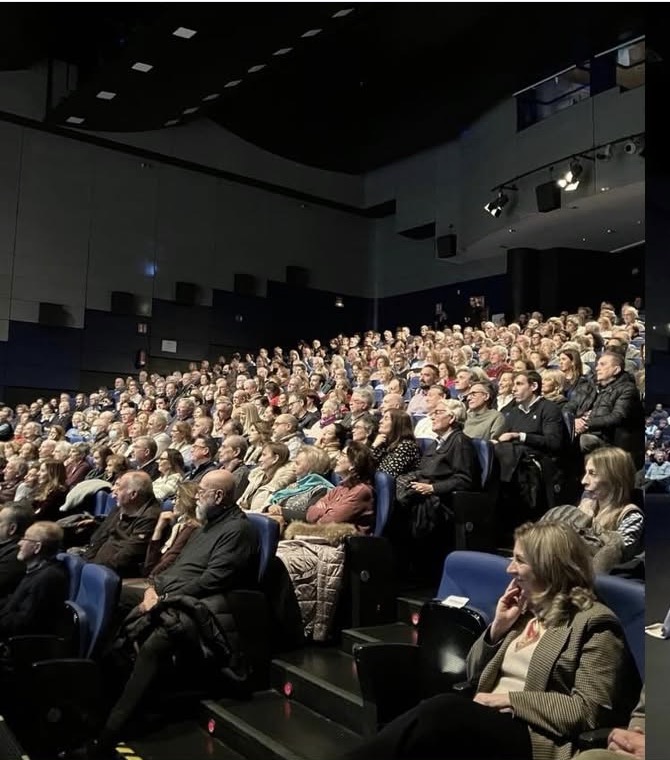
In recent years we have witnessed a real boom in presencial historical outreach. Dozens of towns organize sessions dedicated to periods or events from our history, in which writers and historians participate. The historical novel competitions also incorporate a significant outreach activity. And the most meaningful thing is the audience response: full venues, long queues, spectators left outside, and events that must be moved to larger spaces are increasingly common. In some jornadas, online reservation systems or free entry collection at the box office have even been established.
The history leaves the classroom
A significant part of the success lies in history stepping out of strictly academic spheres to meet the general public. Novelists have gained notable prominence because they know that behind a date, a battle, a dynasty, or a treaty there are human beings.
The novel allows approaching the past through emotion and identification with its protagonists, a narrative capacity that is also present in lectures, where documentary rigor can coexist with an engaging and accessible exposition.
It is not about replacing the historian with the novelist: both play different and complementary roles. The researcher provides specialized knowledge, and the writer can turn it into an engaging and comprehensible narrative. The format itself also helps: a lecture can be transformed into a colloquium and allow audience participation. The encounter with the author thus makes the activity into a cultural experience that goes beyond a masterclass.
Much more than talking about “my book”
At times these jornadas have been interpreted as a simple promotional tool for publishers. It is true that some feature points of sale, but reducing these gatherings to a commercial operation would be very unfair. The book is present, but it is not their main goal. This is shown by the variety of contents: talks about lesser-known episodes, debates among specialists, round tables, etc., on historical questions that would hardly reach the public by other channels.
A this work is added the involvement of public institutions and private entities. Numerous town councils and cultural ministries have discovered that these activities offer a high-quality cultural program, while companies and other entities show interest in financing them. We are facing a phenomenon that brings together writers, historians, public and private institutions, and citizens around the same concern: learning more about our past.
The Role of the Association of Writers with History
In this growth, it is essential to highlight the role of the Association of Writers with History, founded in 2017 to bring together writers and historians and contribute to the dissemination of our past. The Association has become one of the main driving forces: many of its members participate as speakers, organizers, coordinators, or directors of the various jornadas.
Its approach starts from a fundamental idea: knowing our history is a way to understand who we are. And doing so does not mean building a complacent view of the past. The history of Spain, like that of any people, is full of lights and shadows, of grandeur and misery, and above all of painful episodes. Knowing both allows us to understand our past better without turning it into ideological propaganda. Perhaps this is one of the keys to the phenomenon: these events do not aim to indoctrinate, but to reveal to the public episodes they did not know.
Disseminating without Renouncing Rigor
Naturally, there is a debate that we must not ignore: the need to attract the public should not override historiographical rigor. Organizers cannot oversimplify the narrative or prioritize spectacle over rigor. However, it would be unfair to turn that risk into a blanket accusation, for the quality of these events, the documentation handled, and the professionalism of their speakers place them, in many cases, at a remarkable cultural level.
I have attended dozens of these jornadas, and there is one image that recurs. While the speaker talks, sometimes as if they form a single body, hundreds of people remain motionless, listening. The movement in the seats is barely audible. On occasion I have felt overwhelmed by arriving at the moment when I can appreciate the “sound of silence” that floods the auditorium.
This muteness is revealing. Those who have attended have not come because of an academic program, but because they want to learn.
Zenda Libros and YouTube, amplifiers of historical outreach
It is also worth highlighting the role played by the literary and cultural portal Zenda Libros, which since its inception has contributed to the dissemination of numerous jornadas and meetings devoted to history, allowing local initiatives to reach thousands of readers and become part of a broader conversation.
Added to this is the important role of the organizers’ and sponsors’ YouTube channels, which bring the jornadas to those who cannot attend in person. The recordings extend their reach beyond the place and date of celebration, and their view counts allow us to gauge the scale of the phenomenon: some interventions reach tens of thousands of views and one of them reaches hundreds of thousands. Cultural, journalistic media, podcasts, and social networks have also contributed to its growth.
A Growing Cultural Demand
The relation of some of the jornadas accompanying this article makes it possible to verify the geographic dimension of the phenomenon. It should be noted that not all that exist are included, since I have only collected those with broad reach. I ask organizers whose jornadas do not appear in this article to forgive their absence; this is exclusively due to the author’s lack of knowledge about them.
Activities have been documented across virtually the entire national territory. Catalonia constitutes an exception in this collection, not because it lacks outreach activity, but because I have not been able to gather enough information about its jornadas and cycles to include them under the same criterion used for the rest of the Peninsula. Some jornadas have more than a decade of history, while others emerged in response to this boom. In the latest year I have documented nearly forty historical outreach activities.
I have also included, for their importance and success, the summer courses organized years ago by the Association of Writers with History at the Menéndez Pelayo International University in Santander, as well as the summer courses at San Lorenzo de El Escorial of the Complutense University of Madrid and occasionally documented in various articles by Zenda Libros. I have not included university master’s programs, as they serve a different purpose, nor the dozens of jornadas organized solely on the occasion of a specific anniversary or cycles that have not continued. I have included the three currently active historical novel contests — Cartagena, Úbeda, and Pozuelo de Alarcón — whose programs include a significant outreach activity and the awarding of prestigious literary prizes.
The list is not intended to be an exhaustive catalogue, but to offer a snapshot of a cultural phenomenon that has acquired national scope.
History Is of Interest
There is one final reason, in my view, that explains the success of these initiatives. In a society subjected to an extraordinary rate of change there is also a need to know where we come from and to recover a history that, too often, remains distant from collective memory. Discovering how our ancestors lived, what their conflicts were, their decisions, sorrows, and joys allows approaching the past from a different perspective. History then ceases to be a sequence of dates and names and becomes part of our collective memory.
Paraphrasing George Santayana, who left a line for posterity that has become a symbolic reference about our historical past: “Those peoples who do not know and cannot remember their past are condemned to repeat it.”
Perhaps that is why the rooms fill up. Perhaps that is why hundreds of people queue to listen for an hour or more to the explanation of an episode that occurred centuries ago. And perhaps that is why, when the speaker begins to talk and the auditorium audience remains silent, we discover something we had forgotten: history continues to be of great interest.
What has changed is that it has left the classrooms and is told in a different way.
To confirm this new phenomenon, you only need to approach the door of an auditorium or its box office to find, increasingly often, a sign that sums it all up:
“FULL CAPACITY. NO TICKETS AVAILABLE.”
***
Anexo I. List of conferences and events documented that have been held over the last few seasons.
-XX Artillery Conferences. Spain in the world, universal culture.
-XI Letters in Seville. (https://www.zendalibros.com/letras-en-sevilla-se-celebrara-en-octubre-de-2026/)
-IX History Conferences of Cabra.
-VII Historical Novel Festival of Torrent.
-V Historical Novel Conferences of Cañete de las Torres.
-V Historical Novel Conferences of Montilla.
-V Historical Novel Conferences of Herrera.
-V Historical Novel Conferences of Priego, Córdoba.
-V Week of Historical Novel of Oviedo. Culture and heritage of the Primitive Route. (https://www.zendalibros.com/oviedo-origen-del-camino/)
-V Historical Novel Festival City of Tacoronte.
-VI Mario Vargas Llosa Biennial. (https://www.zendalibros.com/la-vi-bienal-mario-vargas-llosa-anuncia-los-seis-finalistas-de-su-premio-de-novela/)
-IV Historical Novel Jornadas of Baena.
-IV Historical Novel Jornadas of Montilla.
-IV Historical Novel Jornadas of Linares.
-III Senate of Spain. Encounters with History and Literature. (https://senadocultural.senado.es/ciclo-de-conferencias)
-III Cycle of Historical Novel Toledo Light of Europe. (https://www.lacerca.com/noticias/toledo/jose-soto-ciclo-novela-historica-toledo-luz-europa-806021-1.html)
-III Festival of Historical Literature. What is History For? Santa Fe.
-III Letrahistoria Festival of Granada.
-III Historical Novel Jornadas of Puente Genil.
-III Cycle of Historical Novel in Sanchinarro. Around Hispanidad.
-II Historical Novel Jornadas of Portugalete.
-II Cycle of Historical Outreach Writers with History
-II Historical Novel Jornadas of Lucena.
-I Heritage and History Jornadas of Rute.
-III Historical Novel Jornadas of Tres Cantos.
-III Mondays with History Jornadas in Arganzuela.
-II Conference Cycle Jornadas: Around Hispanidad. (https://www.zendalibros.com/ciclo-de-conferencias-hispanidad-2021-ii-el-espanol-primera-lengua-franca-del-globo/)
-II Hispanidad Jornadas. Ateneo de Madrid.
(https://www.zendalibros.com/el-viaje-mas-trascendental-en-la-historia-de-la-humanidad/)
-I Historical Novel Jornadas in Extremadura.
-I Extremadura Conference Cycle. “Extremaduans Who Changed the World”.
-Compostela Histórica. Historical Outreach Days.
-Uría Menéndez Literary Encounter.
-Tineo, Asturias Encounter. The Palacio de Merás on the Camino Primitivo. (https://www.zendalibros.com/doce-siglos-contemplan-al-camino-primitivo/)
-Summer Courses of Writers with History in San Lorenzo de El Escorial with the Complutense University of Madrid.
(https://www.zendalibros.com/trece-personajes-encuentran-a-su-autor-i/)
-Summer Courses of Writers with History at the Menéndez Pelayo International University in Santander.
(https://www.zendalibros.com/curso-de-escritores-con-la-historia-2019-en-la-uimp-de-santander/ )
-XXVIII Week of Historical Novel of Cartagena. (https://www.zendalibros.com/xxiv-semana-de-novela-historica-de-cartagena/)
-XV International Contest of Historical Novel City of Úbeda. (https://www.zendalibros.com/novela-patrimonio-y-convivencia-la-magia-del-certamen-de-ubeda/)
-VIII Jornada of Historical Novel, Writers with History, in Pozuelo de Alarcón. (https://www.zendalibros.com/viii-semana-de-novela-historica-escritores-con-la-historia-de-pozuelo-de-alarcon-2026/)
***
Anexo II. List of some of the authors and researchers who have served as speakers at some of the various jornadas
-Arturo Pérez-Reverte – Chani Pérez Henares – Isabel San Sebastián
Javier Sierra – Carmen Posadas – Luz Gabás – José Calvo Poyato
Almudena de Arteaga – Jorge Molist – Gonzalo Giner – Juan Eslava Galán
Juan Luis Arsuaga – Santiago Posteguillo – Alicia Vallina – Sandra Aza – María Teresa Álvarez – José Soto Chica – Daniel Arveras
José Aparicio – Luis Zueco – José Zoilo – Rodrigo Costoya
Jesús Sánchez Adalid – Juan Torres – María Vila – Olga Luján
Begoña Valero – Javier Rubio Donzé – José Luis Gil – Jesús Maeso
Lorenzo Silva – José Ángel Mañas – José Manuel Sala
Emilio Lara – Nieves Muñoz – Marcos López – Fernando Lainez
Mari Pau Dominguez – Marcos Chicot – Rafaela Cano
Fernando García de Cortázar – Mario Villén – Enrique Baquedano