

The British writer Ian McEwan, the author of novels such as Amsterdam and Atonement, has predicted that “a catastrophe will be needed for humans to react to artificial intelligence (AI)” and to take action to “regulate it.”
McEwan spoke this way during an encounter with international media on the occasion of the release of his latest novel, What We Can Know (Anagrama), in which the protagonists are set in the year 2119, from which they look back on this first quarter of the twenty-first century with envy and curiosity about the possibilities and resources still available. The protagonist is the academic Thomas Metcalf, who investigates a literary dinner held in 2014. There, the poet Francis Blundy read a love poem dedicated to his wife, a poem that left no trace but that marked everyone present.
Set in a future shaped by floods, climate collapse, and mass displacement, the novel engages with the most urgent concerns for the reader’s present, such as loneliness or climate change, a topic that has interested McEwan “for more than twenty-five years.” Although the future forecast in the novel does not seem particularly flattering, the writer defends “a certain optimism” as the best stance “in the face of a world that is increasingly strange and anxious.”
“Collective pessimism has a paralyzing effect; it is like a metaphysical glue we must rid ourselves of,” he has remarked. It is a present world in which, unlike centuries past, what will remain of us will not be letters, but thousands of data on the internet, emails, photographs, and WhatsApp messages—a digital trail that although it will be “very extensive,” he pointed out, “will not come even close to providing the same amount of information about who we were or how we felt as a personal letter recovered from someone in the eighteenth or nineteenth century would.” If the internet, as we know it, survives, future people will have a lot of material, but there will be a lack of depth to reach the soul of people.
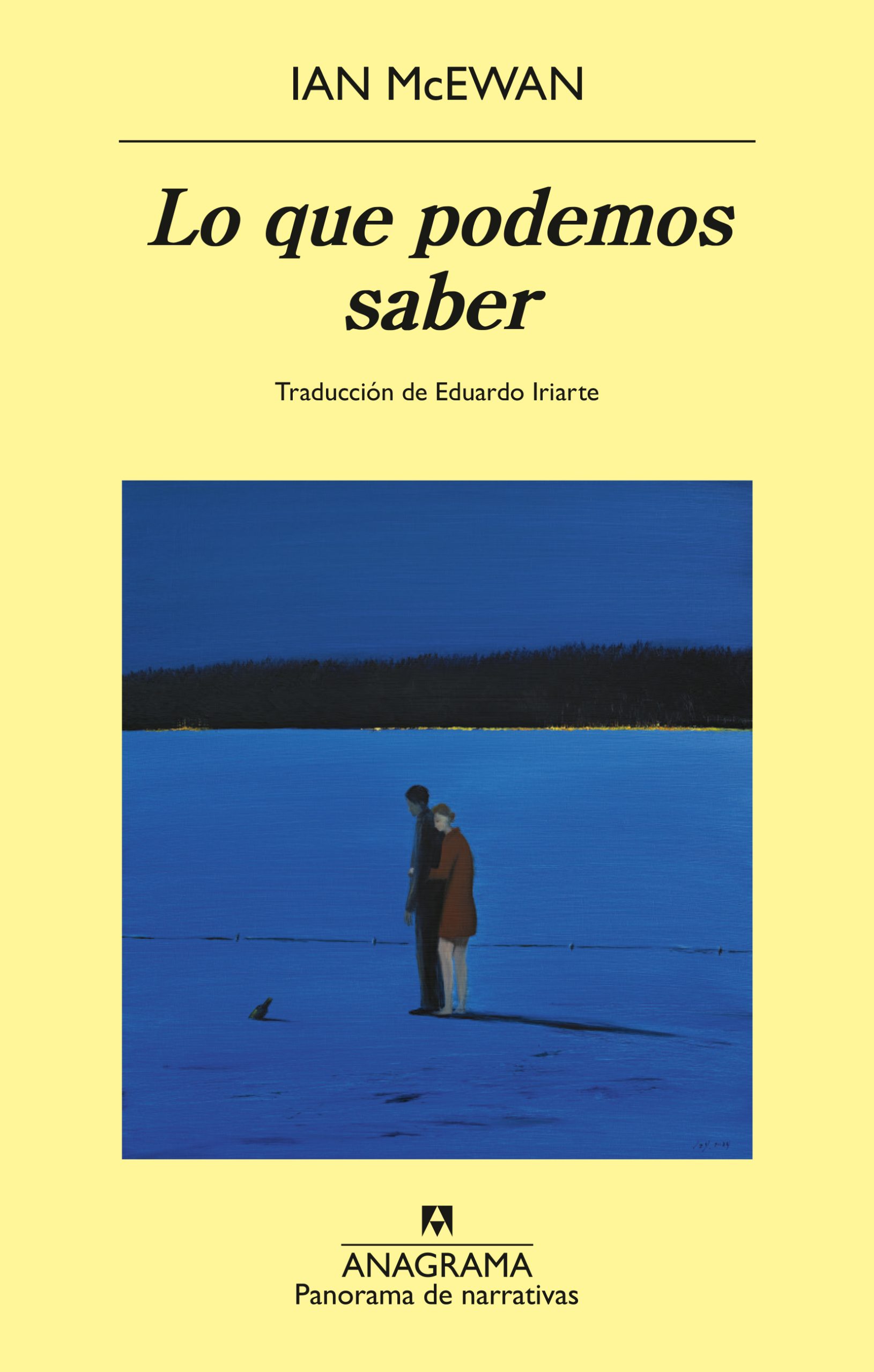
The Briton has argued that major tech companies and AI should be regulated, despite financial hesitations, because, in the end, “it is a political matter. We live in a moment when privacy is under threat. But also in a time when it is increasingly difficult to keep the mind free to think and imagine and even to enjoy the pleasure of solitude.”
The prolific McEwan, who has confessed that new stories occur to him every time he goes for a walk, has stated that for both this latest work and the previous one, Lessons, he did not over-research. “I’m 78 years old and I’ve lived so much that I can allow myself to google in my head, among my many thoughts.” In the book, which Anagrama also publishes in Catalan under the title Què podem saber (What Can We Know), he reflects on the difficulty of knowing what a person truly lived through in the past and what truly happened at a historical moment. In relation to that reflection, he insists on defending the importance of teaching History in schools as a basic competence that cannot “disappear,” something that, he notes, “unfortunately” would be happening in the United Kingdom.
Regarding the rise of AI, he denies that anything can replace the pleasure of entering a novel. “The novel cannot die, because it remains our best means of examining our lives and probing our minds.”
The works of Ian McEwan have earned him recognition from global critics. He won the Somerset Maugham Award in 1976 for his first collection of short stories, First Love, Last Rites; the Whitbread Novel Award (1987) and the Femina Foreign Prize (1993) for The Children in Time, and the Shakespeare Prize in Germany in 1999. With Amsterdam he won the 1998 Booker Prize for fiction and his novel Atonement received numerous honors, in addition to being adapted into a film directed by Joe Wright that earned an Oscar.