
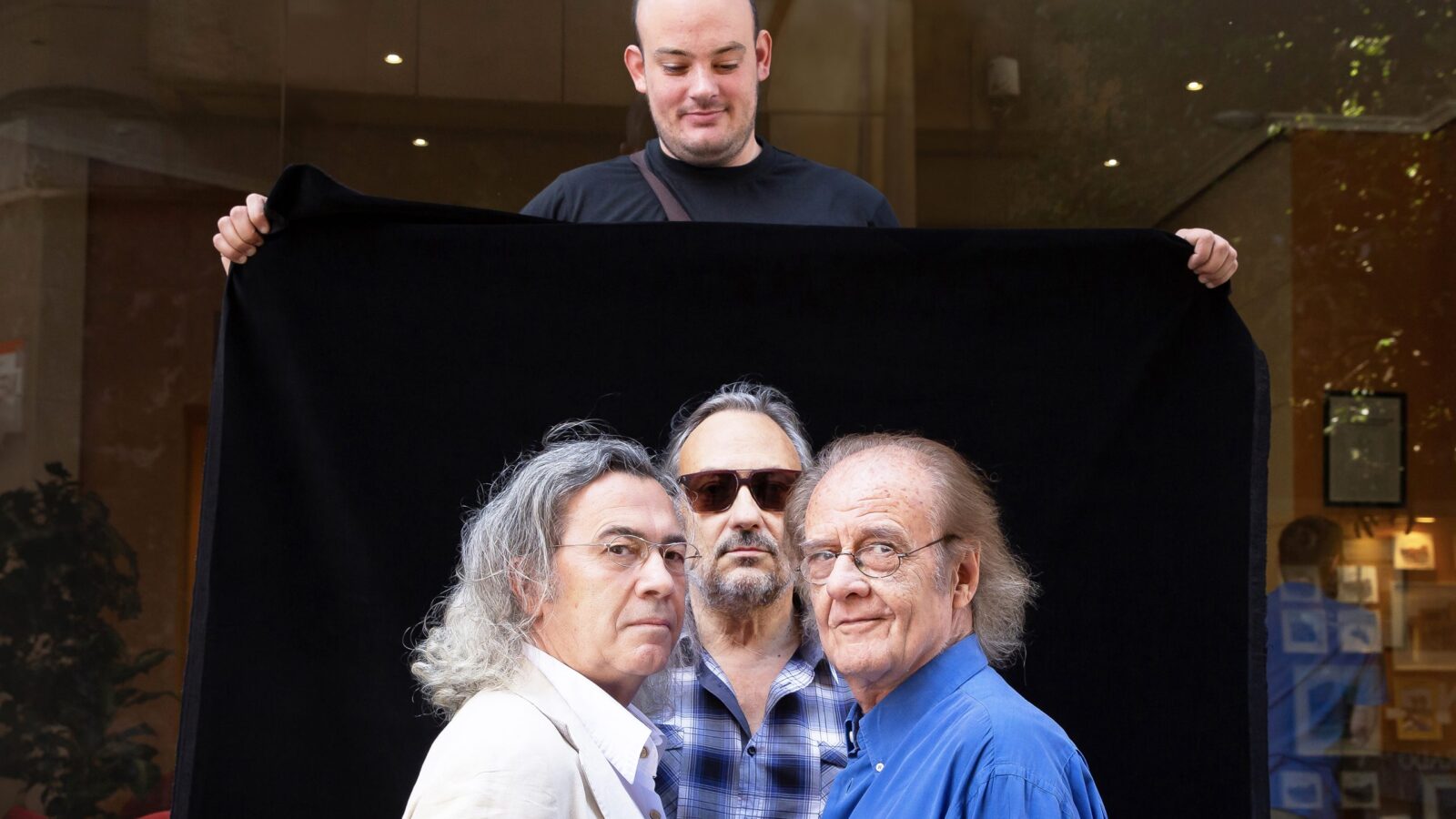
Cover photo: Miguel Barrero, Fernando Beltrán, Miguel Munárriz and Luis Eduardo Aute, photographed during the Semana Negra in Gijón, 2016. ©Daniel Mordzinski
Julio Cortázar believed that to photograph is the epic of catching the uncatchable, because time, by its nature, is elusive: it flows, escapes, and hardly allows itself to be captured.
Photographing is an attempt to fix the ephemeral in an image, just as literature tries to give words to that which we barely know how to name. Both seek to capture the emotion that hides behind a gesture, the memory that dwells in a face, the truth that beats beneath the surface of the page.
And although it might seem impossible to portray Iberoamérica —its 22 countries, its voices, its stories— in a single flash, I have tried to portray through photography the emotions that give life to its literary universes. Because behind every work there is a face, a landscape, a wound and many dreams.
Those strolling along the Paseo de Recoletos and the National Library, in the very heart of Madrid, will during these days encounter an exhibition of photographs by some of the great figures of Iberian-American literatures.
Iberoamérica Literaria began with the invitation of Santiago Herrero, director of Cultural and Scientific Relations of the Agencia Española de Cooperación Internacional para el Desarrollo (AECID) and has been organized by the AECID on occasion of the XXX Ibero-American Summit in Madrid. The exhibition is the culmination — I say this with all humility, perhaps I should use the word “consequence” — of my nearly fifty years trying to give a face to the universe of letters, in which I grew as a reader and in which I continue to grow as a person.
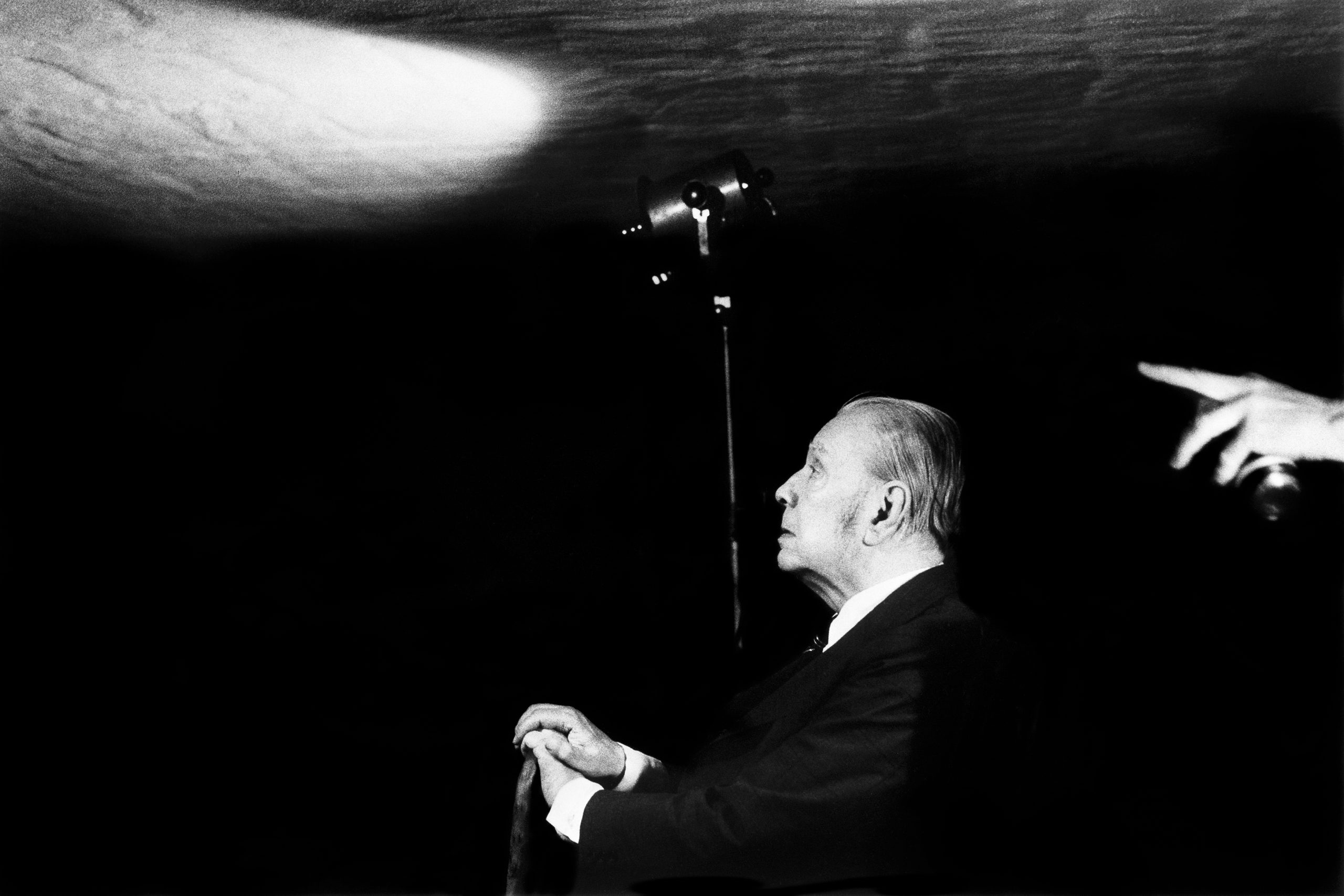
Jorge Luis Borges photographed in Buenos Aires, in 1978.
In the exhibition you will be able to discover my first photograph: the portrait I took of Jorge Luis Borges in 1978, at the National Library of Buenos Aires. Alongside him you will find images of key figures in literature, such as Julio Cortázar, Nélida Piñón, José Saramago, Mario Vargas Llosa, Almudena Grandes, Gabriel García Márquez, Jorge Amado, Claribel Alegría, Mario Benedetti, Luis Sepúlveda, Roberto Bolaño, Jorge Edwards, Rosa M. Britton and José Rafael Lantigua, among many others. The show also makes room for new voices in contemporary literature, those who keep languages and traditions alive.
These two emblematic spaces in Madrid represent, for me, two distinct yet complementary ways of approaching literature: one through the movement and everyday life of the city; the other, from an institution that guards a fundamental part of our written memory. I like to imagine my work as an entryway to the work of these writers. I would be especially pleased if someone, stopping before one of their portraits, sought out one of their books and began to read it. If my photographs manage to awaken that desire, even if only in a single person, I will feel that it has been worth it.
Always I have photographed with the same respect and dedication both the person who has just published their first book and the one who has received a Nobel Prize. And every day I keep intact the curiosity and the need to know and to give a face to the new protagonists of our letters. If there is one thing I’m proud of, it’s having always backed the younger and marginal voices. One of my greatest challenges has always been to incorporate into my projects the literary otherness that comes from non-hegemonic linguistic and cultural environments, and that is why I always try to be a point of connection between different generations of authors and a bridge for dialogue between writers on the two sides of the Atlantic.
Each one of the writers I have photographed carries with them my gratitude and affection. All occupy, with equal intensity, a place in the atlas of letters, even if it is impossible to bring them all together in a single exhibition or in a book.
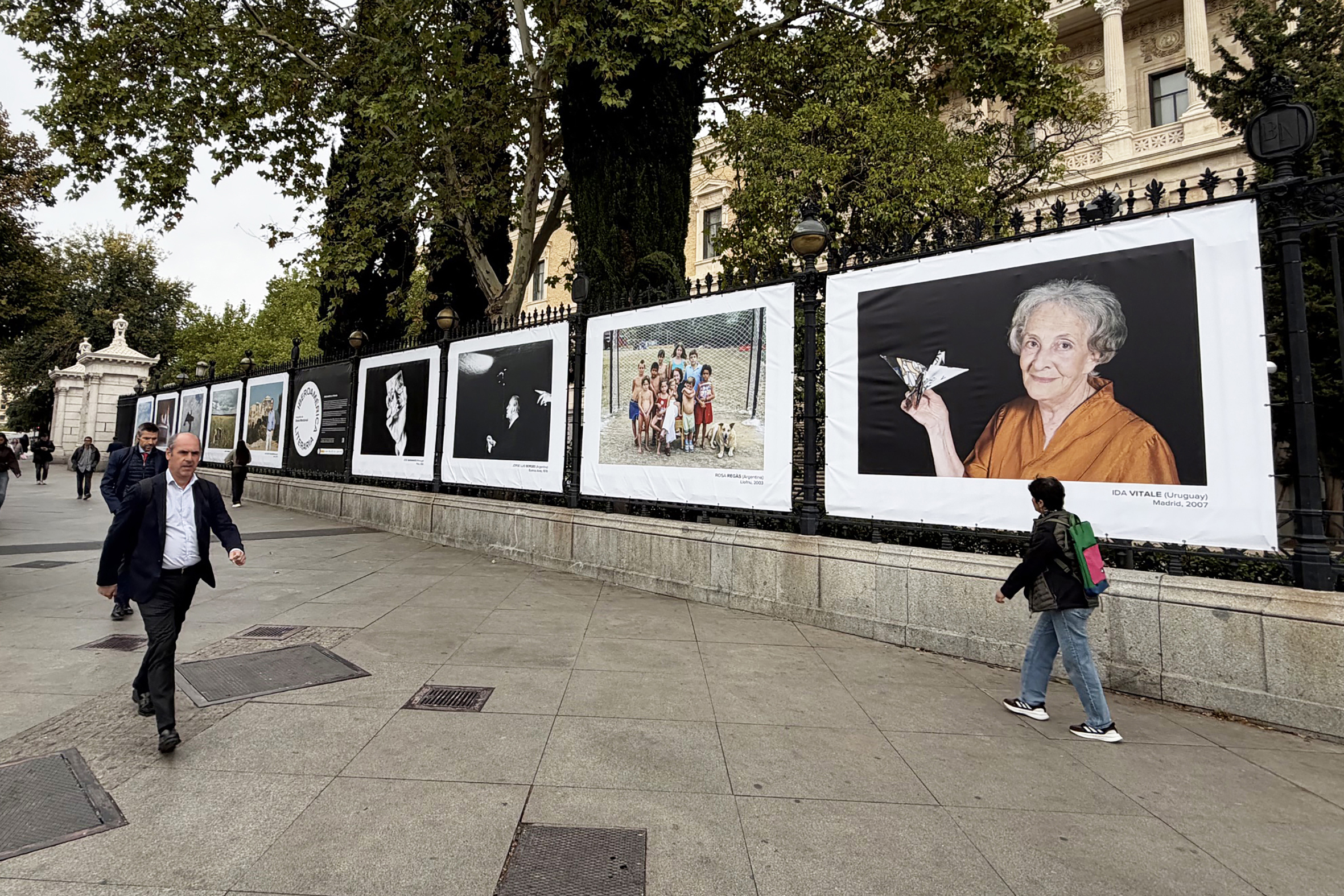
Ambiente Biblioteca Nacional – Daniel Mordzinski
I also want to thank the literary festivals that, for many years, contribute to renewing the international literary scene and bring literature closer to citizens in a creative and open manner. My work would not have the same reach or meaning without these gatherings, which bring books to life, put faces to their authors, and create new opportunities for readers to approach literature. To all of them, my recognition and gratitude.
And if there is one thing these encounters have taught me, it is that behind every book there is a presence, a gaze, a way of being in the world. A few days before the Nicaraguan writer Sergio Ramírez joins the Real Academia Española, I again think of his exile in Madrid as I look at his photograph. I see him standing there, beside Masaya volcano, in Nicaragua, and I feel I cannot help but admire him even more. Every gesture contains a world, and in that image I like to think that his gaze is set on his future return.