
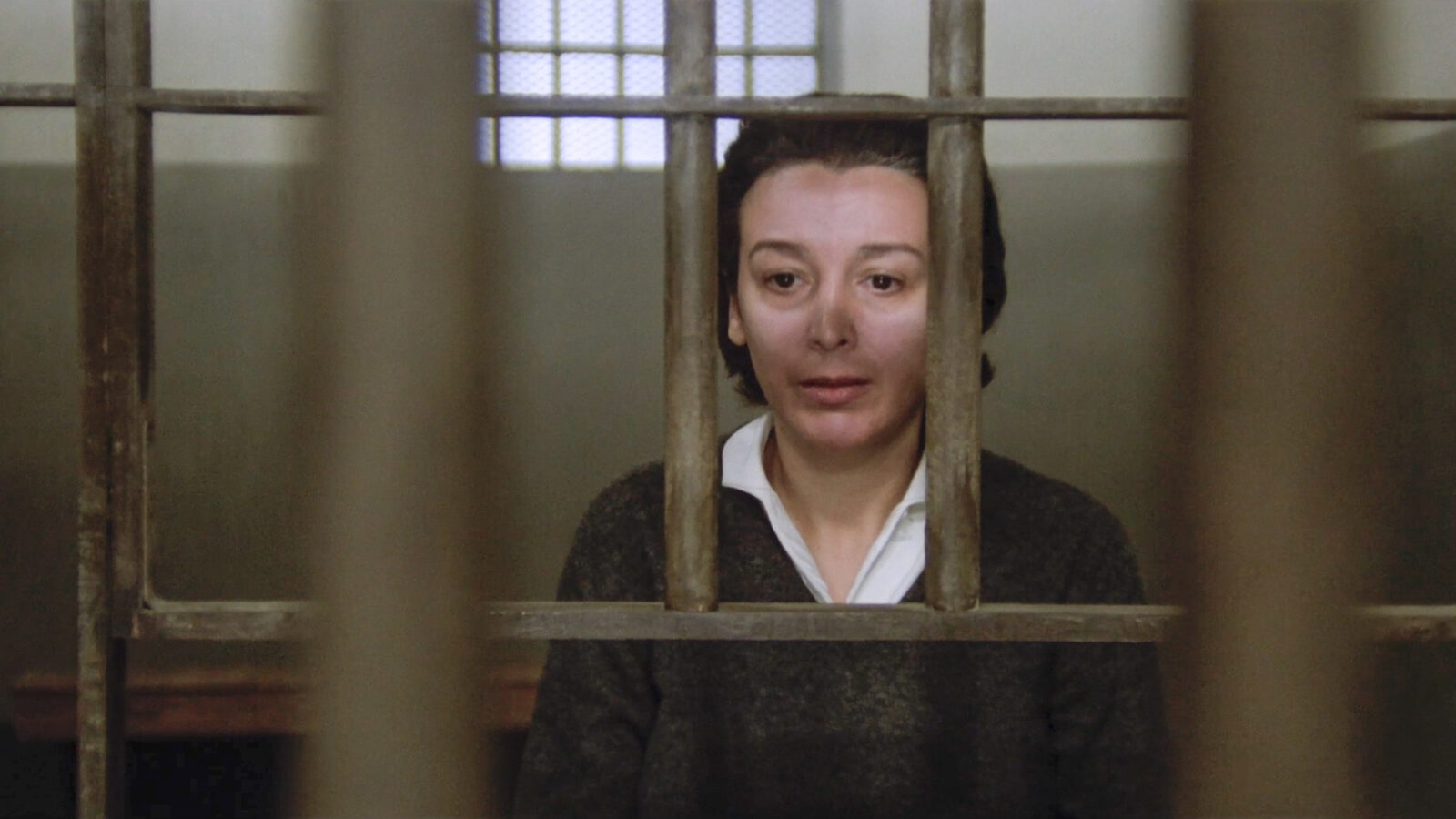
Cover image: still from the film ‘Carne apaleada’ (Javier Aguirre, 1978)
Inés Palou Ros (Agramunt, 1923 – Gelida, 1975) came from a bourgeois family, had academic training, and worked managing the accounts in a flour factory. She was responsible for keeping the company’s double entry and for bribing inspectors. The fraud came to light, and she was accused and convicted of fraud and documentary falsification. She went to prison. Even under the Franco dictatorship, within that context she shared spaces with foreign hippies, Roma prisoners, common inmates, politicians, and even ETA militants.
In 1975 Planeta published her novel Carne apaleada, whose plot revolves around the prison experiences of the character Berta, a figure drawn from herself, revealing the inner life of women’s prisons in late Francoist Spain. Berta meets Senta, a much younger woman who enters prison after killing her former partner, a 45-year-old woman. From the outset the two are attracted to each other. With autobiographical overtones, it can be described as a prison novel, a subgenre that was almost non-existent in Spain and, therefore, particularly worthy since it was written by a woman. Just a year earlier, the novel would not have passed censorship, as it tackled themes such as homosexuality or drugs—the same move that Chester Himes made in the United States, who, fed up with critics, eventually left America, first to Paris and then to Moraira (Alicante), where he died on November 12, 1984.
It is true that Emilia Pardo Bazán published in 1911 The Drop of Blood, even before Agatha Christie published, in which she introduced the detective Selva, a character who would recur later in various stories. But he was a detective based on Sherlock Holmes, a deductive, Madrid-dwelling dandy dedicated to solving mysteries and thus squarely within the conventions of the mystery novel. Noir fiction did not yet exist.
It is important to note a few points about titles and writers who came later, who wrote without the yoke of Francoist censorship and who adopted the conventions of American hard-boiled fiction invented by Carrol John Daly and Dashiell Hammett, but adapted to Spain, especially to the cities of Madrid and Barcelona:
- Jorge Martínez Reverte published Demasiado para Gálvez, the first in the Julio Gálvez journalist saga, in 1979.
- Andreu Martín published his novel Aprende y calla in 1979.
- Juan Madrid published Un beso de amigo, the first in the Toni Romano series, in 1980.
- Julián Ibáñez published La triple dama in 1980.
- Francisco González Ledesma published Expediente Barcelona, the first in the Méndez saga, in 1983.
- Alicia Giménez Bartlett published her first novel, Exit, in 1984.
- Mariano Sánchez Soler published the novel Carne fresca in 1987.
- José Luis Muñoz published his novel El cadáver bajo el jardín in 1987.
- Víctor Claudín published El antro de la Buscontra in 1989.
Carne apaleada was adapted to cinema by Javier Aguirre, with a screenplay by Aguirre himself and Alberto S. Insúa, featuring a cast that included notable names such as Esperanza Roy, Bárbara Rey and Pilar Bardem.
The stint in prison did not leave anyone indifferent. It was no longer only about the loss of freedom. Once convicted, you could be moved to the farthest end of the country, making regular visits almost impossible. Not to mention the regime of torture and punishments, and even more so in those days. Or the idiosyncrasy imposed not only by officials but by fellow inmates. The weak did not survive. And when you got used to it, you faced a new regime and another prison. Back to square one.
Inés left prison, but she never adapted, and eventually did what many do: returned to crime. She passed bogus checks until she was caught. Her family, except for her father, wanted nothing to do with her. She also bore the trauma of her father’s subsequent suicide. Contemporary critics were anything but generous to her; on the contrary. Francisco Umbral or Eduardo Tijeras were especially vicious toward her.
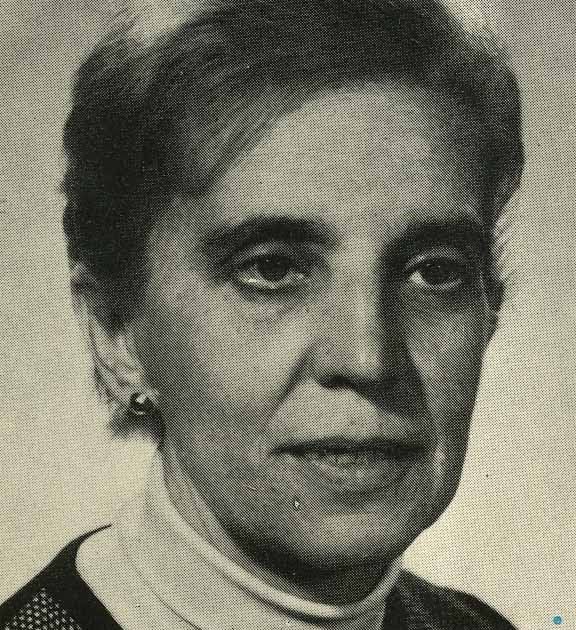
Be that as it may, after the prison novel she wrote another book, titled Operación dulce. This one is a bona fide crook story. It is divided into three parts: the twenty-four hours before a bank heist and what the members of the gang do and think, the day of the robbery, and the consequences of the robbery on each of the robbers. Palou refers to these consequences as “the loot of each one,” and they are as forceful as nostalgia, fear, shame, hatred, and death. Each gang member bears these effects as an inner weight that is almost impossible to shake off.
On September 9, 1975, Inés Palou left her home and, at 7:30 a.m., arrived at Planeta’s offices. She handed to one of the doormen a package containing a manuscript and a letter addressed to either Mr. Borrás or Mr. Pujol. In the letter, the writer stated that she owed her landlord one hundred thousand pesetas and that she had been passing bad checks. A few days later a second letter arrived at the publishing house, this time addressed to José Manuel Lara. Among other things, it read: “Think that with my death I serve you on a silver platter the year’s editorial boom. Value Carne apaleada and Operación dulce. Think of a posthumous Planeta Prize. Sensational.” The letter not only failed to clarify the circumstances stated in the first message, but it increased secrecy and doubt, since by then no one knew where Inés Palou was. It was necessary to wait a few days to resolve the uncertainty. On the morning of September 9, a woman who was traveling by train to Lleida got off at Gelida station. She walked a few meters away from the station and, as a train approached, threw herself onto the tracks at a moment when the locomotive had no time to react. The body was unrecognizable. It would not be possible to confirm that the corpse was Inés Palou until September 15.
Inés Palou ended her days in a tragic way, scarred by her prison experience and terrified at the prospect of having to return to prison. Carne apaleada went through several editions and has been reissued in 2023 by Colectivo Bruxista. Operación dulce was a finalist for the Planeta Prize in 1975, continued to sell, and there might be an unpublished posthumous novel. José Manuel Lara claimed in an interview that there existed, titled Una mujer cualquiera, and that he had paid the author an advance of fifty thousand pesetas. It is probably tucked away in a file somewhere. We hope it is not lost forever, and we hope it will be published so that Inés Palou can finally receive the merit and recognition she undoubtedly deserves as a pioneer of Spanish crime fiction.