
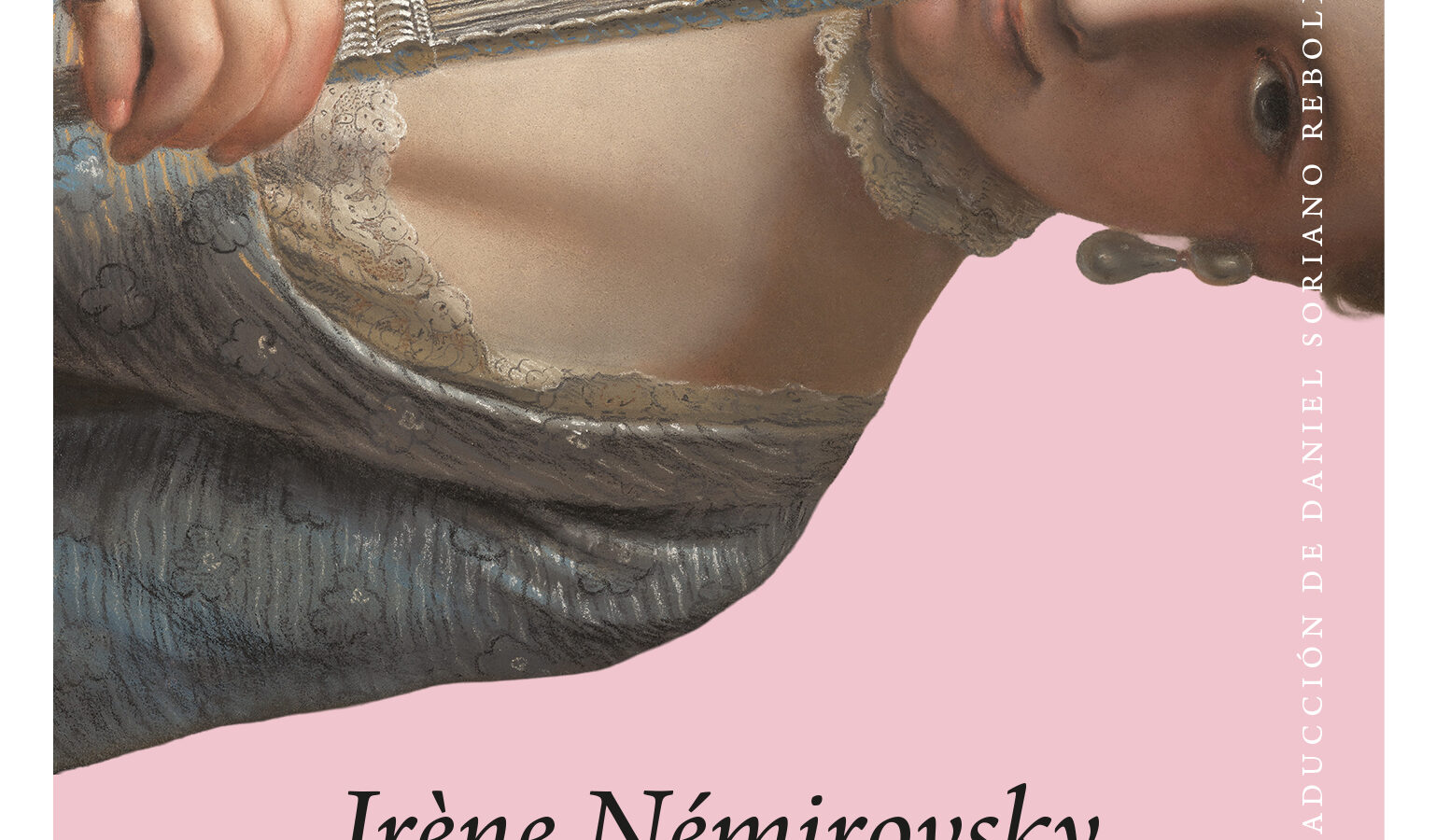
This unpublished Némirovsky novel delves into the solitude of a sixteen-year-old girl in interwar Paris. A tale doomed to the final rupture of the relationship and the collapse of its two protagonists, narrated through a cinematic storyteller whom the writer conceived precisely at the dawn of sound cinema.
At Zenda we present the opening pages of Talking Film (Nordica), by Irène Némirovsky.
*****
A soft, confused bustle grows louder and approaches like a wave on the sea. It’s raining. The tall houses wear a cloak of shadow and fog; the headlights of a massive automobile slice through the haze; the wet sidewalks, the opera house roof gleams in the downpour like a dark mirror. It is Paris in late March at dusk. The lights race by so quickly that only a torrent of glare remains discernible. Then, voices, always the same, rise, draw near, and swell excessively; they vibrate through the rain. A bar, a hotel, a dance hall. When the honking noise subsides, a somber, empty street, wet, reveals itself. Letters glow from top to bottom and extinguish. Willy’s Bar. The door swings open with a whir of a fan. The deep little room is lined with mirrors, furnished with velvet divans, with tables. In the middle of the room, on a stool, a black man muffles his horn. You hear the rain from the moment the door opens until it closes, and the soft squeak of the bath the whole time; the man whistles very softly, lips sealed, head leaning to one side like a watchful bird. It’s four o’clock. Behind the bar, the proprietor reads the newspaper and dozes. Some women sit on the benches; they look resigned, sorrowful, rapt. Some are half asleep, lying down, cigarette between their lips. A fat woman, with enormous bosoms, cinched into a masculine-cut suit, with a fake stiff collar and a cigarette at her lips, weaves carefully. A short woman, perched on a stool, sips a cocktail; she wears a pearl necklace that catches in her hands like a dog tangled in the fringe of a chair. Another young woman plays dice with the waiter. Another, slim, bent over, coughs. Quiet, stillness. A guest-house vibe. A dwarf with a large hat adorned with flowers, bleach-blond hair, a bare neck, miserable, slips through. You hear: “Shit!, Mother Sarah.” She sits between two very young girls, sets her purse on the table, wears a witch’s look.
—Well, dear, this isn’t right, what you’re doing isn’t serious… You have a respectable gentleman, a wealthy, older man, who, God knows how long it took me to find you, and you stand him up all afternoon at my house; does that seem right to you?
The woman, very young, with a face round as a fist and eyes long, moist and with a lamb-like gaze, murmurs:
—I was repulsed by him… too much.
—Darling, I did it to pressure you, you know? If you can think of another way to repay what you owe me…
—I’ll repay the money…
—When frogs grow hair? It doesn’t matter, I’ll speak with your friend…
The young woman trembles, lowers her head, whispers:
—No, no, I’ll manage it, I…
—All right, do what you want, what do I care?
A girl passes by, letting go:
—Hey, Mother Sarah, how much is this? Do you want to buy it? I need the money now.
—Now, now… They don’t know what else to say…
She takes the ring, blows on it, makes it shine, regards it with her nose pressed against the stones.
Éliane enters. She wears a black coat, a black hat, no adornments; she carries an umbrella in hand. She looks disheveled, tired, numb, abandoned, with the scent of a bed left in ruin. She twirls the hat with her hands, tosses it onto the table; then shakes out her short blonde hair, sits, signals the waiter. The waiter agitates the shaker.
—Everything all right, Mrs. Éliane?
She answers “yes” with a nod. She wears a beautiful double-stranded pearl necklace. They greet her with a certain fervor, with deference.
—How are you, Mrs. Éliane? Is everything well?
She composes a forced smile that barely lifts the corners of her lips, rests her cheek on her hand, listens to the black man. It is five o’clock. The courtesans, all at once, sit up, dust themselves. The fat woman in the suit quickly hides the dot and puts on a monocle. All eyes swing toward the door with eager, anxious looks. But only a few women enter, going to sit at their usual places, like vendors behind their counters. The dwarf stands up. She passes Éliane and halts, as if spellbound by the pearls glimpsed. She draws nearer, takes small steps, clambers onto the stool opposite Éliane, seizes the pearls that dangle, brings them to her mouth, bites one with her teeth. Laughter circles around her. Éliane strokes the necklace with half-closed eyes. The dwarf nods in admiration.
—When you want to get rid of this, remember me. I know someone who would buy it…
Éliane yanks the necklace away with a abrupt motion, turns. The dwarf rises, slides to the floor, and exits. Through the glass, you can see her joining a woman standing under a gas lamp—a terrifying creature with a fixed gaze and long, cadaverous teeth. The two disappear into the rain, into the night. The short woman who played dice has moved closer to Éliane and watches, just as the one who drank while fiddling with her pearl necklace; they are one beside the other. Éliane regards them intently and, before her gaze, the two faces for a moment seem to distort, recede, becoming the famished masks of poor old women. Éliane seizes the necklace roughly, clenches it. The image dissolves. She drinks and, with a hand, lets the pearls fall onto the table, as if looking through them. A few features of a man appear for a moment; at first ordinary, smiling, and then contort, grimace in pleasure, transform into faces of nightmare and madness. One in particular, of an old man with a white beard, calm, respectable, repeats several times and each time grows more terrifying, with a huge, soft mouth stretched to kiss. They dissipate. The necklace flows like a bright river, captivating Éliane with the image of a white house, a large garden and herself, aged, with a black skirt sweeping the path, leaning on the arm of a young girl. The future… Éliane smiles at her dream. The profile of a young girl, clear and austere, bent over a book, conveys peace and happiness. The dark music, increasingly loud and wild, is suddenly pierced by a sonorous tolling of bells and the chords of an organ, struggles briefly, then fades. One hears only the bells, but their sound becomes weaker, more stingy; it is a provincial church after mass.
———————
Author: Irène Némirovsky. Title: Talking Film. Translation: Daniel Soriano. Publisher: For sale: Todostuslibros.