
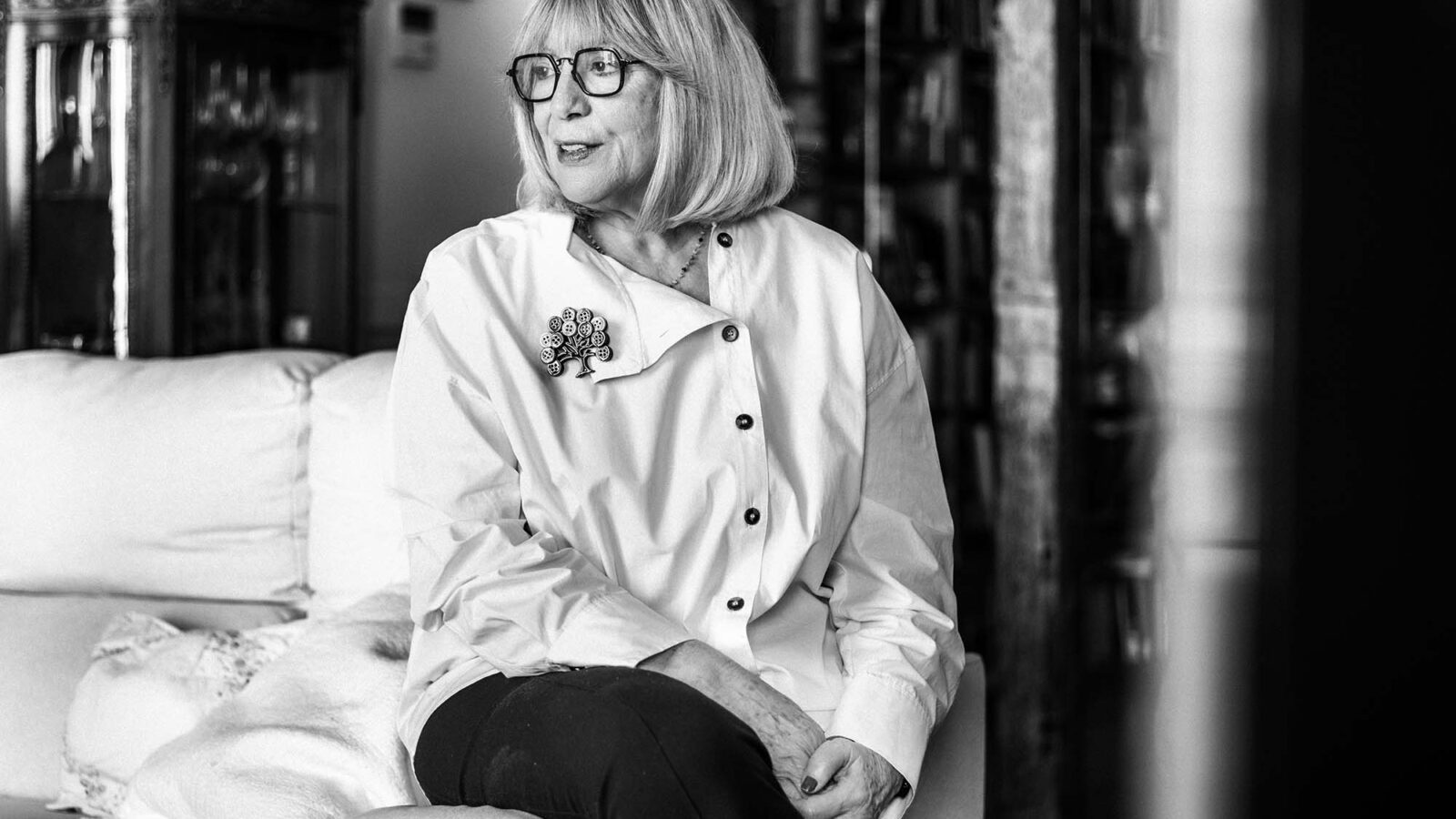
For centuries, the biography of Miguel de Cervantes has been accompanied by a female circle of dubious reputation: sisters living in concubinage, women of loose morals, love quarrels and a daughter born out of wedlock. Historian and anthropologist Isabel Castro Latorre has devoted years to studying original documents and debunking a legend she considers deeply unjust. In Las Cervantas (Crítica 2026) she rescues ten extraordinary women who lived beside the writer, protected him, financed his ventures and challenged the conventions of their era. A story of intelligence, money, love, freedom, and above all, of women who refused to be governed by anyone.
*****
—Isabel, I’ll start with a confession: I thought I knew Cervantes’ life quite well, yet I had no idea who the Cervantas really were. How is it possible that we took four centuries to uncover them?
—That is to say, to forge an exemplary Cervantes, you had to remove the women from the equation.
—Exactly! The early biographers confronted women who did not fit into their moral blueprint. They had children out of wedlock, argued with their lovers, managed money, dealt with men, traveled… And they concluded they were women of ill repute. But when you read the records, you discover something entirely different.
—Let’s begin with the mother, Leonor de Cortinas. I confess she has fascinated me. A true Renaissance lady.
—An exceptional woman! Born around 1530, she could read and write, a rarity among women of her time, and she cared deeply about her children’s education. I believe some of Cervantes’ moral teachings trace back to that mother. She was cultivated, intelligent, resolute.
—And a mother of courage. Because when Miguel and Rodrigo were captured in Algiers, who moved Heaven and Earth to secure their ransom?
—She and the elder sister! Leonor begged merchants, friends, acquaintances for money, turned to institutions, did everything within her power. Meanwhile, the father, Rodrigo de Cervantes, faced enormous difficulties in supporting the family.
—You leave the poor Rodrigo in a pretty bad light.
—He was a bit of a loser! (Laughs) A man with hearing problems, probably pleasant to speak with, but unable to manage his finances. The women had to continuously rescue him from disaster.

—And among those women appears Andrea, the elder sister, who is one of the most extraordinary characters in the book.
—Andrea was formidable. She established a workshop in Madrid dedicated to fine linens, embroidery, collars, lace, and luxury garments. And she hired apprentices. A single, working, unmarried woman with her own workshop in a time when guilds imposed enormous barriers on women pursuing those trades! An entrepreneur in the Golden Age.
—And she earned far more money than her brother did writing novels.
—Of course! We have an invoice for 2,520 reales for a trousseau commissioned for a noble family. Compare that with what Cervantes earned for some of his works. Those women were not poor seamstresses. They were skilled embroiderers serving an important clientele.
—It’s wonderful to imagine Cervantes composing the Quixote while his sister stitched embroideries worth a fortune. And yet, posterity turned Andrea into a woman of dubious reputation.
—Because she had romantic liaisons, because she fought in court, because she was independent. But those lawsuits over broken marriage promises must be understood within their historical context. Before the Council of Trent, a marriage promise could have juridical effects that differ greatly from what we imagine today. These women cannot be judged by the morality of the nineteenth century, which is when cervantists began studying them. Nor is it fair the neglect to which they have been subjected in later centuries.
—Here is one of the major revelations of your research. Cervantists interpreted the lawsuits as proofs of immorality, when in reality they demonstrated that these women knew their rights and knew how to defend them.
—Exactly. I have studied numerous chancery lawsuits. The men’s lawyers attempted to discredit them, of course. But one thing was what the other party claimed and another what the documents proved. Those women knew how to navigate legally. They possessed extraordinary preparation and autonomy.
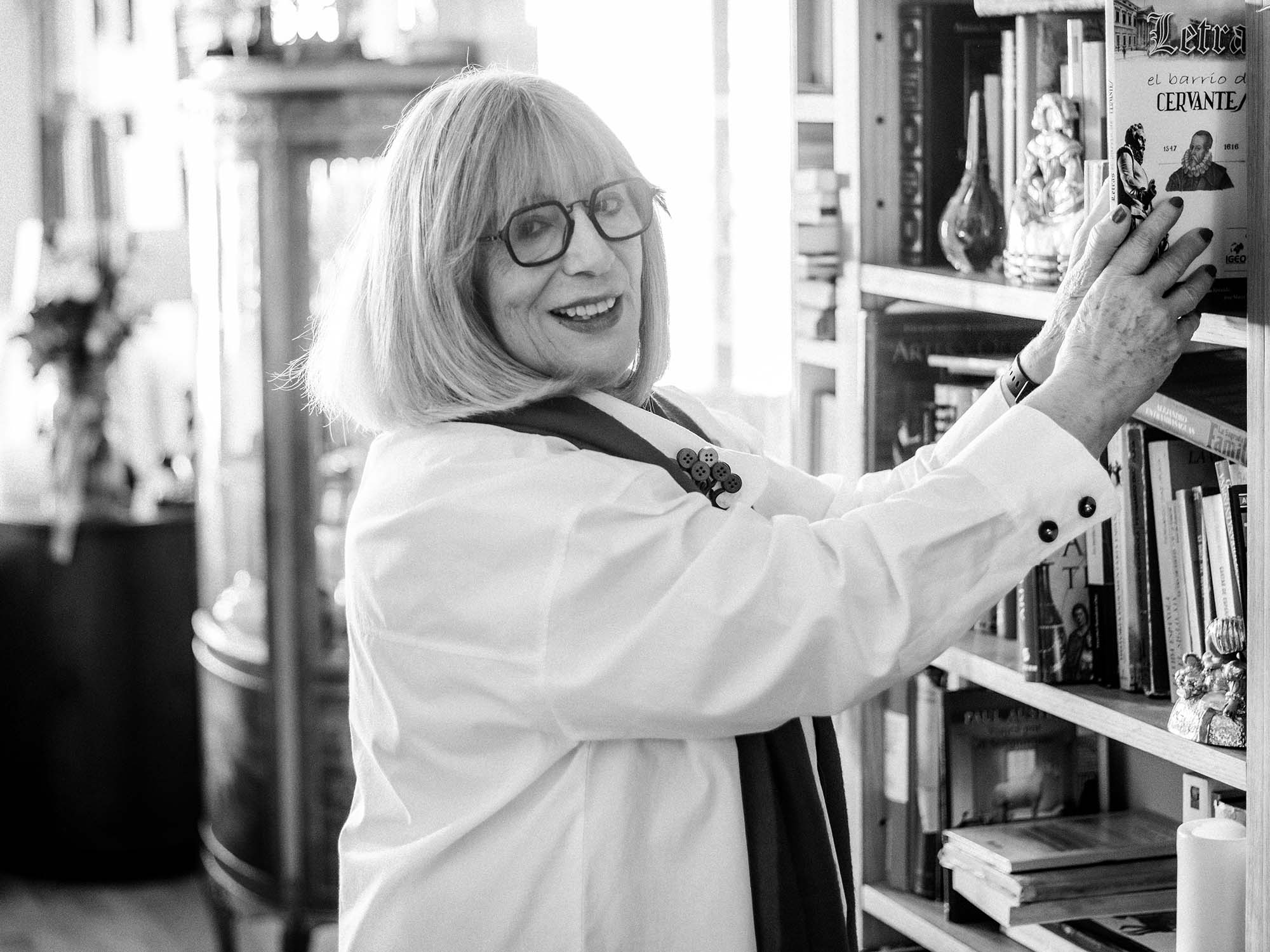
—And then there’s the nun sister. Another major surprise. How is it possible that Cervantes’ sister lived alongside Saint Teresa and we scarcely know anything about her?
—That discovery thrilled me as well. She was prioress three times and participated in that milieu of religious reform. She was a strong-willed woman, with spiritual ambitions and a fascinating trajectory. Moreover, there are interesting parallels between the family origins and the education of both women.
—Speaking of Saint Teresa, I was greatly amused by that anecdote about palace ladies who went to her hoping to witness one of her famous ecstasies.
—And they were left flat-footed! (Laughs) The order’s chronicler tells it. They knew Teresa was reputed to undergo those ecstasies and would go hoping to witness it. But she, fully aware of their intentions, refused to perform the spectacle. She had to be an incredibly intelligent and highly strong-willed woman!
—A saint who refused to satisfy the curiosity of the aristocrats. Cervantes would have enjoyed writing that scene.
—Absolutely! And it’s interesting to compare those female environments with the women who appear in his literature.
—Because that is another of the book’s captivating theses: Cervantes’ fictional women resemble the real women who surrounded him.
—I am convinced there is a connection. Think of Marcela, those Cervantine women who say: “This is as far as we’ll go.” Women who claim their freedom, who decide their own lives and won’t let men control them. Cervantes grew up surrounded by women like that.
—And, in addition, they had traveled across half of Spain.
—And that is essential! They lived in Alcalá, Córdoba, Seville, Valladolid, Madrid… Seville was one of Europe’s most cosmopolitan cities. They had encountered different environments, dealt with merchants, jurists, religious figures, travelers. Their world was far broader than that of other women in similar circumstances.
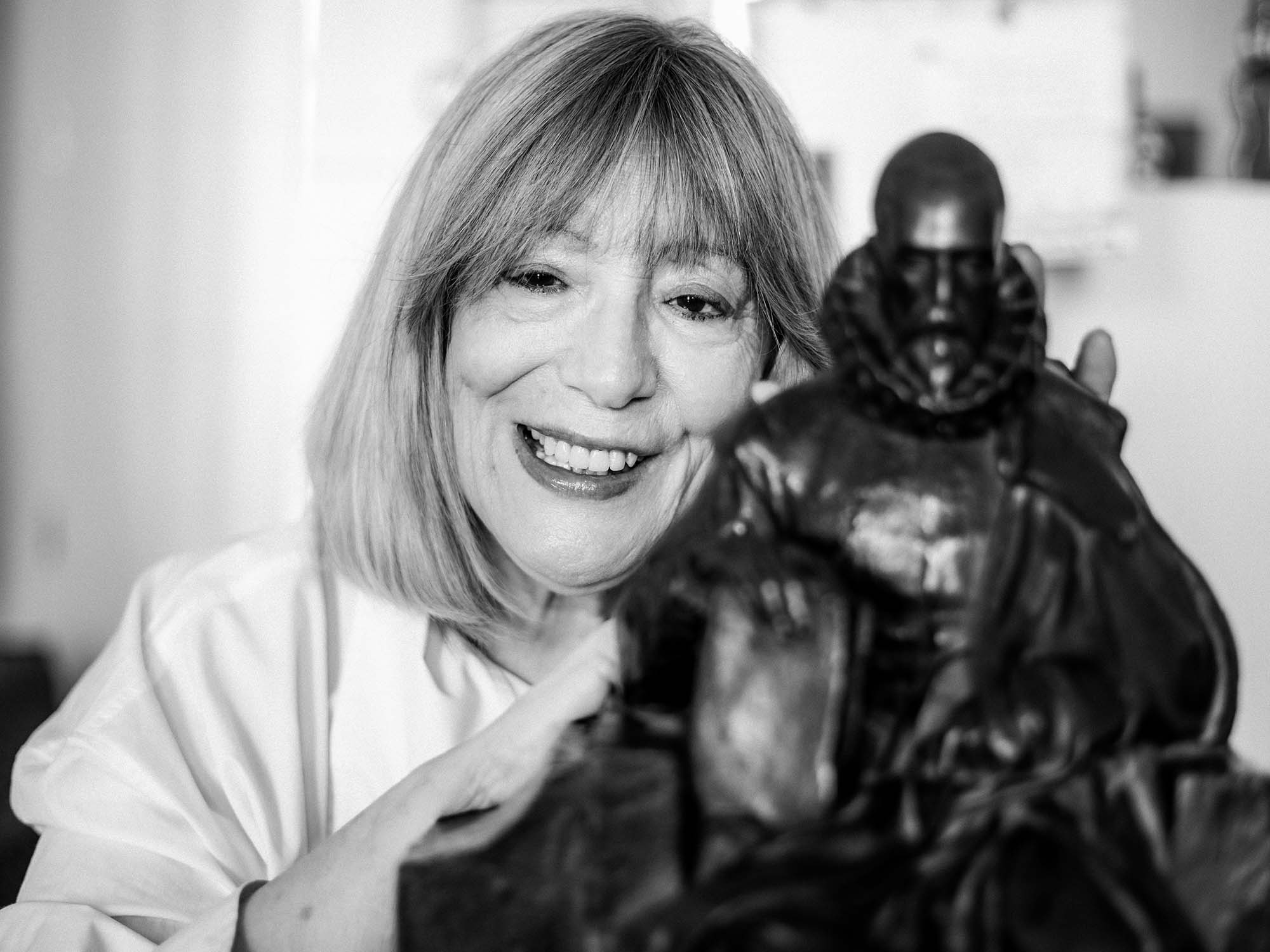
—There’s another figure that moves me particularly: Isabel de Saavedra, Cervantes’ natural daughter. For centuries she was nearly erased from the writer’s biography because her mother ran a tavern.
—A horrific injustice! The biographers preferred to imagine that Cervantes had a liaison with a Portuguese lady. But Isabel’s mother ran a tavern, and that seemed beneath the great writer. I studied her belongings, her trousseau, the way she dressed. She wasn’t that impoverished, marginal woman they had painted us.
—Your, as an anthropologist, method of reconstructing history from objects is very compelling. A sheet, a dress, a needlepoint shirt…
—Objects speak. Domestic inventories reveal a family’s economic position, their tastes, their habits. It isn’t the same to own six sheets as twenty-four. And clothing choices show the materials at hand. The trousseaus helped me reconstruct the Cervantes’ everyday world.
—And it also demonstrates that the family wasn’t merely the miserable clan some biographers described.
—They were a cultured family, educated, with significant social connections. They had faced financial difficulties, of course, but that does not mean they belonged to a marginal milieu. They owned books, furniture, knowledge, and a family tradition stretching back generations.
—There’s a detail I find especially revealing: while people said Andrea’s sisters lived at Cervantes’ expense, you find documents showing he used their property to solve his own troubles.
—Of course! In 1583 Cervantes personally pawned fabrics belonging to his elder sister’s dowry. Later, when he couldn’t recover them, they had to be sold. What “kept women” are we talking about? Those women sustained their brothers and the entire family on more than one occasion.
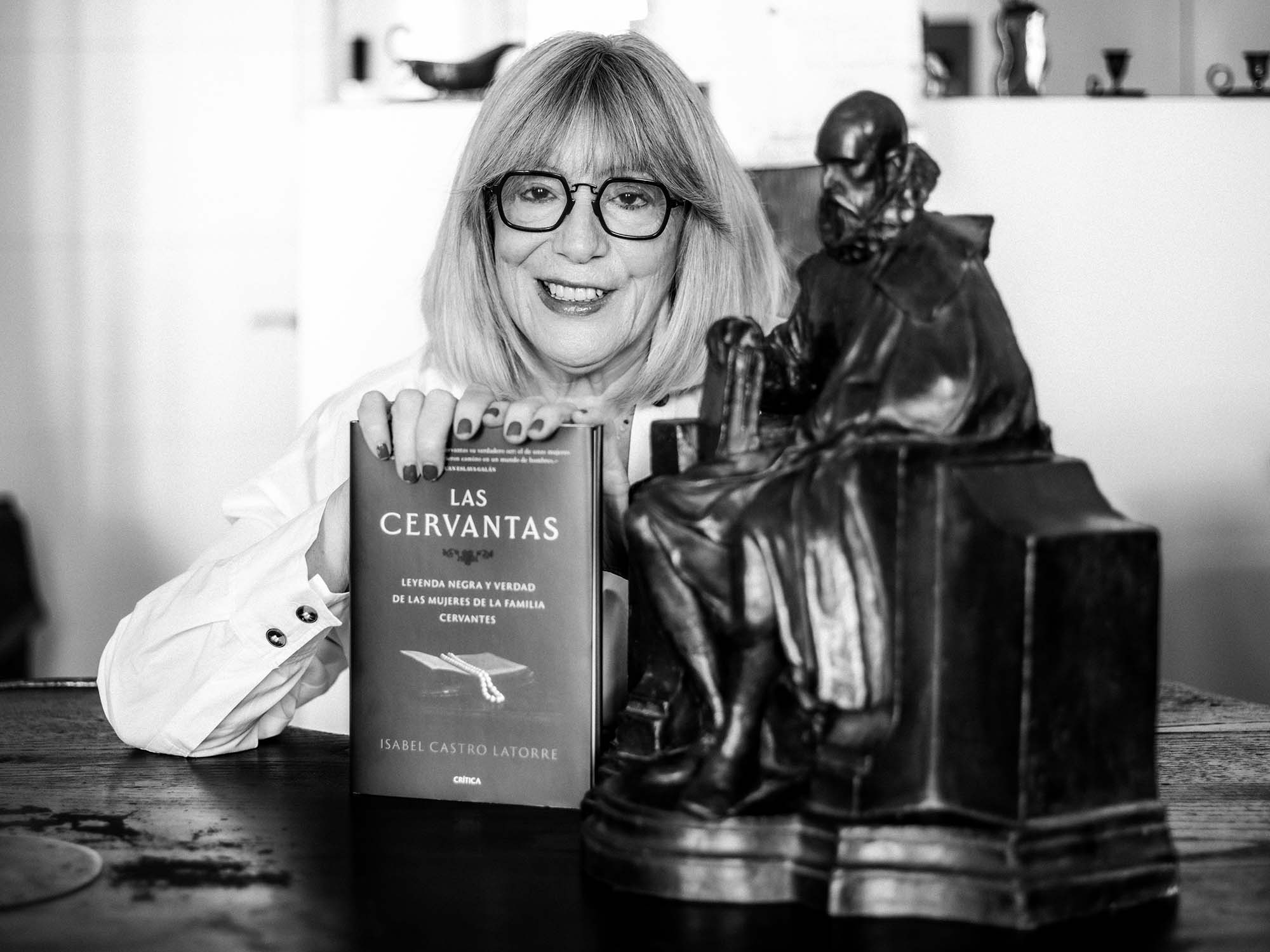
—And how is it that entire generations of cervantists, with all their erudition, failed to see what you have found?
—Because they read the documents with a preconceived idea. They wanted an exemplary Cervantes, a national hero, and those women got in their way. I have not manufactured anything. I have read the documents, connected them, and attempted to understand them within their own era. That’s all. But it has taken me many years.
—And there remains one marvelous figure with which you open this book: Emilia Pardo Bazán arriving in Esquivias by a mule-drawn carriage, determined to trace the places where Cervantes had found happiness.
—What a woman! She had money, curiosity, intelligence, and an immense desire to travel and to see everything. She reached Esquivias in search of Cervantes and Catalina de Salazar. Yet, even she skimmed over much of the female family. Biographical tradition weighed heavily.
—Isabel, of all those Cervantas, which one would you choose to stay with?
—The mother strikes me as extraordinary. Yet Andrea, the elder sister, is perhaps the one who impresses me most for her ability to solve problems, work, earn money, and face challenges. They were women of admirable fortitude.
—And now that you’ve restored their story, we must keep a promise that came up in our conversation: to go to Madrid’s San Martín Square and toast to them.
—Of course! I do it often. I go there, near the Descalzas, and I toast to Doña Leonor, to the tavernkeeper, to Isabel, and to all the others. It’s a square steeped in Cervantine memory.
—Then we’ll go. And we’ll toast also to Andrea, to the nun, to Catalina, and to those women who had to wait four hundred years for someone to bother listening to them.
—That’s settled!
—And to Cervantes, of course. Although after reading your book I begin to suspect that, in that family, the real salvation army wore skirts.